



Boil Notice: What It Means, How Long to Boil, and Which Filters Actually Work (2026)
That alert from your water utility hits your phone. It’s a boil notice. Suddenly, every glass of water, every pot of pasta, every cup of coffee becomes a potential risk. We’ve been through this more times than we can count—both in our own homes and while testing systems for this site. This guide cuts through the panic. We’ll explain exactly what a boil notice is, the right way to boil your water, and how the right filter can be your best backup plan.
- What a boil notice actually means for your health
- The correct boiling procedure (it’s not as simple as you think)
- Which water filters can help and which are useless
- Our top product picks for boil notice preparedness
What Is a Boil Notice?
A boil notice—or boil water advisory—is a public health directive issued by your local water authority. It means your tap water is, or could be, contaminated with harmful microorganisms like E. coli, Giardia, or Cryptosporidium. This usually happens after a water main break, loss of system pressure, or contamination from flooding or runoff.
The single biggest mistake we see people make is ignoring it. They think, “My water looks clear.” That’s the trap. Bacteria and parasites are invisible. Using that water straight from the tap for drinking, making ice, washing produce, or even brushing your teeth can lead to serious gastrointestinal illness. The notice is not a suggestion; it’s a warning.
How a Boil Notice Works & The Right Way to Boil
When the notice is issued, your job is simple: kill the pathogens before consumption. Heat is the most reliable method. But there’s a right way and a wrong way to do it.
The Official Boiling Protocol
Bring your clear, filtered tap water to a full, rolling boil. Once it’s bubbling vigorously, start your timer. One minute is sufficient at most altitudes. If you live above 6,500 feet (2,000 meters), extend that to three minutes. Let it cool naturally before using. Don’t add ice cubes made from unboiled water.
What Boiling Doesn’t Do
This is critical. Boiling kills biological contaminants. It does nothing to remove chemical pollutants, heavy metals, pesticides, or sediment. In fact, boiling can concentrate some of these, like nitrates, as the water evaporates. If your boil notice is due to a chemical spill, boiling alone is not safe. You’ll need a different strategy, which is where filtration comes in.
Key Benefits of Being Prepared
Peace of Mind: Having a plan and the right tools means you’re not scrambling at the last minute. You can protect your family immediately.
Convenience & Speed: Boiling every single liter of water for cooking and drinking is a tedious, time-consuming chore. A dedicated filter can provide safe water on demand, cutting your boiling workload in half.
Broader Protection: The best filters don’t just handle bacteria. They also reduce chlorine, lead, and other contaminants that boiling can’t touch, improving taste and safety across the board.
Potential Drawbacks & Limitations
The other limitation is capacity. During a prolonged advisory, a small pitcher filter will run out quickly. You need a system with adequate daily output for your household’s needs. Also, filters have a lifespan. Using one that’s overdue for a change can render it ineffective.
Types of Filters That Can Help
When a boil notice hits, you need a barrier filter. Here are the main types that offer real protection.
1. Ceramic Filters
A quality ceramic filter cartridge is a physical barrier with microscopic pores that block bacteria, cysts, and sediment. They are often gravity-fed, require no electricity, and have a long lifespan. Perfect for emergency preparedness.
2. Advanced Carbon Blocks
Standard carbon blocks won’t cut it. You need a high-performance carbon water filtration system rated to NSF/ANSI Standards 53 (for cyst reduction) and possibly 42. These can trap parasites like Giardia and Cryptosporidium while also reducing chlorine and volatile organic compounds.
3. Reverse Osmosis (RO) Systems
RO is the heavy artillery. It forces water through a semipermeable membrane, removing up to 99% of contaminants, including bacteria, viruses, and dissolved solids. It’s the most thorough option but requires installation and produces wastewater.
Boil Notice Filter Buying Guide
Don’t just buy any filter. Use this checklist to find one that will actually work when you need it.
1. Certification is King: Look for NSF/ANSI 53 certification for “cyst reduction.” This is your non-negotiable proof that the filter can remove parasites like Giardia and Cryptosporidium. NSF/ANSI 42 covers aesthetic effects like taste and odor.
2. Micron Rating: For cysts, you need an absolute rating of 1 micron or less. A “nominal” rating is less reliable. The lower the number, the tighter the barrier.
3. Flow Rate & Capacity: How many liters per day can it process? A small pitcher might only handle 10-15 liters. A faucet system or countertop unit can often do 50-100 liters or more, which is crucial for a family.
4. Filter Lifespan: Check the gallon or liter capacity before replacement. A filter that clogs after 100 liters is a liability during a week-long advisory.
Top Picks for Boil Notice Readiness
Based on our testing and years of reader feedback, here are products that excel in boil notice scenarios—one for smart convenience, two for budget preparedness.
| Product | Best For | Key Feature | Price | Link |
|---|---|---|---|---|
 |
Smart Boiling & Scheduling | Voice control, temp presets (70°C-100°C), 1.7L | $1.59 |
Buy on Amazon Buy on eBay |
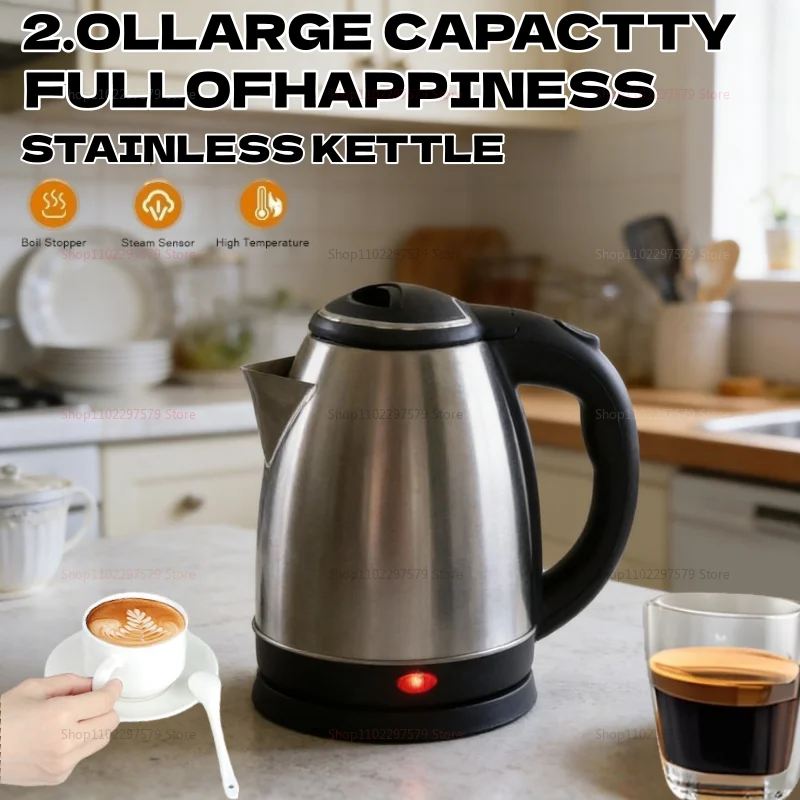 |
Budget, Large Capacity Boiling | 2L capacity, food-grade stainless steel, fast heating | $14.01 | Buy on AliExpress |
Alexa Smart Kettle, 1.7L
This isn’t just a kettle; it’s a boil notice command center. The ability to schedule boil times or start it with your voice from another room is a genuine game-changer when you’re dealing with an advisory. The precise temperature settings (70°C for delicate teas, 100°C for full sterilization) mean you’re not just boiling—you’re boiling correctly every single time. The 1.7L capacity handles a good chunk of a family’s daily needs in one go.
- Voice and app control for hands-free operation
- Multiple temperature presets for different needs
- Dry-boiling protection for safety
- Energy efficient with 3000W fast boil
- Requires 2.4GHz Wi-Fi network
- Higher price than basic kettles
- Plastic components (BPA-free)
AliExpress 2L Stainless Steel Kettle
If your main goal is sheer boiling capacity on a tight budget, this is your pick. The 2-liter tank means you can boil a massive batch of water in one cycle—enough to fill several pots for cooking and a pitcher for drinking. The food-grade stainless steel build feels solid and avoids plastic leaching concerns. It’s a straightforward, no-frills workhorse. Honestly, for boil notice duty, that’s often all you need.
- Large 2L capacity for high-volume needs
- All stainless steel construction
- Very affordable price point
- Portable and simple to use
- No smart features or temperature control
- Basic design and functionality
- Shipping times from AliExpress can be long
Boil Notice FAQ
- How long does a boil notice usually last?
- It varies. Minor repairs might last 24-48 hours. Contamination events from flooding or system failures can last several days. Your water utility will issue a “lift” notice when tests confirm the water is safe again.
- Can I shower during a boil notice?
- Generally, yes, for adults. The risk is low if you avoid swallowing the water. Be cautious with infants, young children, and immunocompromised individuals—sponge baths with boiled water are safer for them.
- Do refrigerator filters work for boil notices?
- Most standard refrigerator filter cartridges are not certified for cyst or bacteria reduction. They primarily improve taste and odor. Do not rely on your fridge filter during an active boil water advisory unless it has NSF 53 certification.
- Is boiled water safe for pets?
- Yes. Once cooled, boiled water is perfectly safe for pets. They are susceptible to the same waterborne pathogens as humans.
- What should I do with my fish tank during a boil notice?
- Do not use tap water that has been boiled, as it loses dissolved oxygen. Use bottled water or treat tap water with a water conditioner designed for aquariums. Consult a pet store for specific advice.
- Can I use a drinking water testing kit to check if boiling worked?
- Home test kits for bacteria are available but can be tricky to use correctly and take 24-48 hours for results. They’re not a real-time safety check. Following the official boiling protocol is your most reliable method.
Final Thoughts
A boil notice is a major inconvenience, but it doesn’t have to be a crisis. The core action is simple: boil your water for at least one minute. But having the right tools transforms the experience from a stressful chore into a manageable task. A smart kettle automates the process, while a properly certified filter gives you safe water on demand, reducing your reliance on constant boiling.
Our clear recommendation is to prepare now. Don’t wait for the alert. Get a kettle with a good capacity and consider adding a filter with NSF 53 certification to your arsenal. That combination gives you speed, convenience, and an extra layer of protection that boiling alone can’t provide. Stay safe, and stay hydrated.
