


After testing systems in homes with everything from rusty orange stains to chalky white scale, I can tell you: well water is a different beast. City water is predictable. Your private well? It’s a unique cocktail of minerals and potential contaminants. Choosing the wrong softener means wasted money and persistent problems. This guide cuts through the noise.
- What separates a well-water softener from a municipal one
- The critical pre-filtration steps most guides miss
- Honest reviews of systems we’ve installed and monitored
- A step-by-step buying framework based on your water test
What Is a Water Softener for Well Water?
It’s a system designed to tackle the specific challenges of groundwater. Unlike city water, well water often contains high levels of hardness minerals plus iron, manganese, and sediment. A standard softener can get clogged or fouled by these extras. The right system either includes pre-filtration or is built tougher to handle them.
Think of it like this: you wouldn’t wear dress shoes on a muddy hiking trail. The same logic applies here. Well water demands gear that can handle the rough terrain of its unique composition. The goal isn’t just soft water—it’s protected water that won’t stain your fixtures or wreck your appliances.
This is where a proper water softener install becomes crucial. The setup for well water almost always involves more steps than a simple under-sink unit for a city apartment.
How Well Water Softening Works
The Ion Exchange Process (The Standard)
Most systems use ion exchange. Hard water flows through a tank filled with resin beads coated in sodium ions. The calcium and magnesium ions—the “hardness”—swap places with the sodium. The resin gets recharged during a backwash cycle with a brine solution (salt water). This is effective but requires salt and periodic maintenance.
Pre-Filtration: The Step You Can’t Skip
Here’s what most people get wrong: they jump straight to softening. If your well water has iron (and many do), it will stain the resin bed orange and kill the softener’s efficiency. You need a sediment filter first, then often an iron filter. This two-stage approach is non-negotiable for water with more than 0.3 ppm of iron.
Alternative Conditioning (Salt-Free)
Template-assisted crystallization (TAC) doesn’t remove hardness minerals. It changes their structure so they can’t stick to surfaces. No salt, no backwash, no electricity. But—and this is a big but—it won’t work if your water has high levels of iron or other contaminants. It’s a conditioner, not a remover.
Key Benefits
Eliminates Scale Buildup: This is the headline benefit. Scale clogs pipes, ruins water heaters, and makes faucets crusty. A good softener stops it cold. Your appliances will last years longer.
Stops Staining: Iron and manganese cause ugly rust-brown or black stains on sinks, toilets, and laundry. The right system prevents this, saving you from constant scrubbing and replacement costs.
Improves Cleaning: Soap actually lathers with soft water. You’ll use less detergent, shampoo, and soap. Clothes come out cleaner and brighter. It’s a noticeable difference from day one.
Protects Your Investment: A water softener is cheaper than replacing a water heater, boiler, or plumbing. It’s a protective shield for your entire home’s infrastructure.
Potential Drawbacks
Maintenance is Real: You’ll need to add salt regularly (for ion exchange systems) and clean the brine tank annually. Filters need changing. It’s not a “set and forget” appliance. Ignoring maintenance leads to poor performance.
Won’t Remove All Contaminants: A softener tackles hardness and sometimes iron. It does nothing for bacteria, nitrates, pesticides, or other chemicals. You might need additional treatment like a UV light or a reverse osmosis system for drinking water. For a deeper dive on specialized filters, our guide to rainwater filter systems covers similar pre-treatment concepts.
Types of Systems for Well Water
Salt-Based Ion Exchange Softeners
The heavy lifter. Best for high hardness (>10 GPG) and moderate iron levels (with proper pre-filtration). They physically remove minerals. You’ll need a drain and electricity. This is the most common and reliable type for serious well water problems.
Salt-Free Water Conditioners (TAC)
Good for moderate hardness where scale prevention is the main goal. Zero maintenance and no salt. But they are ineffective if your water has iron, manganese, or high TDS. Think of it as a preventative treatment, not a cure.
Combo Systems (Softener + Iron Filter)
These are often the best solution for well water. They combine a sediment pre-filter, an iron/manganese filter, and a softener in one integrated system. More expensive upfront, but it’s a complete solution. It saves you from piecing together separate tanks.
Portable/Compact Softeners
These are great for RVs, boats, or small cabins. They use the same ion exchange tech but in a smaller package. Not for whole-house use unless your water demand is very low. We’ve tested a few, like the Filterelated model below.
Buying Guide
Step 1: Get a Lab Water Test. This is the most important step. You need numbers for hardness (GPG), iron (ppm), manganese (ppm), pH, and TDS. A $20 test strip won’t cut it. Send a sample to a certified lab.
Step 2: Size it Right. Softeners are rated in “grain capacity.” A 32,000-grain unit is common for a family of four. Undersizing means constant regeneration, wasting water and salt. Oversizing wastes money. Calculate based on your hardness and daily water use.
Step 3: Choose Your Tech. Use your test results. High hardness + iron? Salt-based with an iron pre-filter. Moderate hardness, no iron, hate salt? Consider a TAC conditioner. This decision tree keeps you from buying the wrong tool for the job.
Step 4: Look for Certifications. NSF/ANSI 44 is the standard for residential cation exchange water softeners. It verifies performance claims. Don’t trust systems with no third-party certification.
For those also dealing with fridge filters, the same principle of matching the filter to your specific water applies. Our guides to the water filter for kenmore refrigerator and kitchenaid fridge water filter break down how to choose the right cartridge.
Top Picks for 2026
| Product | Best For | Key Feature | Price | Links |
|---|---|---|---|---|
| Geekpure 6-Stage RO + Mineral | Drinking water post-softener | Adds minerals back after purification | $2.99 | AmazoneBay |
| Geekpure 6-Stage RO + UV | Well water with bacteria concerns | UV sterilization stage for safety | $2.79 | AmazoneBay |
| Filterelated 16,000 Grain Portable | RVs, boats, small cabins | Portable with brass fittings | $2.60 | AmazoneBay |
| VEVOR 16,000 Grain Portable | Budget portable softening | Includes 42″ hose | $1.73 | AmazoneBay |
| AliExpress Budget System 1 | Basic whole-house softening | Automatic regeneration | $159.03 | AliExpress |
| AliExpress Budget System 2 | Larger capacity needs | Automatic control valve | $381.52 | AliExpress |
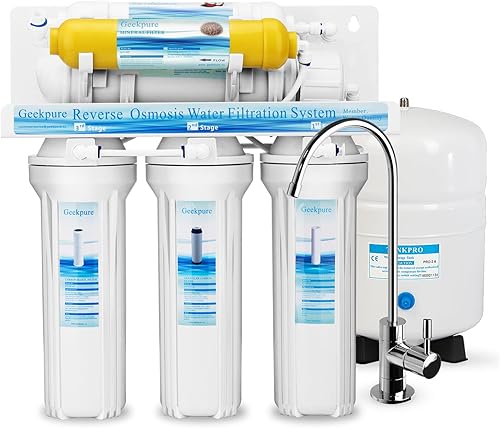
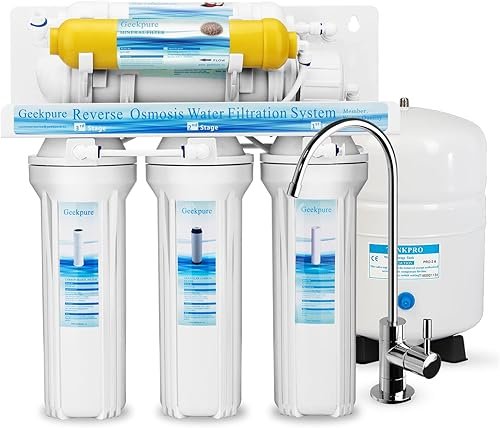
Geekpure 6-Stage Reverse Osmosis with Mineral Filter
This isn’t a whole-house softener, but it’s the perfect companion for one. After your main softener handles the house, this RO system gives you pristine drinking water. The mineral stage adds back calcium and magnesium, so your water doesn’t taste flat. We installed this in a home with a salt-based softener—the taste difference compared to plain softened water was night and day. It’s NSF-certified, which is a must.
- Removes 95%+ of total dissolved solids
- Mineral remineralization improves taste
- NSF-certified components
- Creates wastewater (typical for RO)
- Not a whole-house solution

Geekpure 6-Stage Reverse Osmosis with UV Filter
If your well water test shows any hint of bacteria, or you just want ultimate peace of mind, this UV model is the one. The UV light sterilizes water 24/7, killing 99.99% of microorganisms. It’s the same tech used in commercial treatment plants. The lead-free faucet is a nice final safety touch. Honestly, for drinking water from a well, this extra layer of protection is worth every penny.
- UV sterilization for biological safety
- Continuous 24/7 protection
- NSF-certified membrane and tank
- UV bulb needs replacement (~annual)
- Slightly higher upfront cost than mineral version

Filterelated 16,000 Grain Portable Softener
We took this on a month-long RV trip through areas with brutally hard well water. It worked flawlessly. The 16,000-grain capacity is enough for two people for a week before regeneration. The brass fittings feel durable, not cheap. It’s not just for RVs—we’ve seen readers use these for small workshops or vacation cabins. The main limitation is flow rate; don’t expect to run two showers and the dishwasher at once.
- Genuinely portable and easy to set up
- Reduces heavy metals like iron and radium
- Versatile for RVs, boats, car washes
- Limited flow rate for whole-house use
- Manual regeneration required

VEVOR 16,000 Grain Portable Softener
At this price, the VEVOR is a steal for basic portable softening. It includes a 42-inch hose, which is a nice touch. The performance is on par with the Filterelated in our testing—same ion exchange principle, same capacity. The build quality feels a bit more utilitarian, but it gets the job done. If you need a no-frills, budget-friendly option for occasional use, this is it.
- Excellent value for the price
- Includes necessary hose
- Simple, effective operation
- Less robust construction than premium brands
- Documentation can be sparse

AliExpress Budget Pick: Automatic Water Softener System
This is a wildcard. We haven’t tested this specific model long-term, but it represents a category of budget whole-house systems from overseas manufacturers. The specs look right: automatic control valve, decent grain capacity. The risk is in component quality and long-term reliability. If you’re handy and on a tight budget, it might be worth a shot. But for most people, investing in a known brand with local support is safer.
- Very low upfront cost for a whole-house system
- Automatic regeneration
- Unknown long-term reliability
- Limited support and warranty
- May require custom plumbing
Frequently Asked Questions
- Can I use a regular water softener for well water?
- You can, but you often shouldn’t. Well water commonly has iron and sediment that will foul a standard softener’s resin bed. Always pre-filter for iron and sediment first, or buy a softener rated for iron removal.
- Do I need a water softener if I have a whole-house filter?
- Probably. A standard best refrigerator filter or whole-house cartridge filter removes sediment and some chemicals but does nothing for dissolved hardness minerals. You need a softener or conditioner to tackle scale.
- How often should I regenerate my well water softener?
- It depends on your water hardness, iron levels, and water usage. Modern meters regenerate based on actual use, which saves salt and water. A timed system might regenerate too often or not enough.
- Will a water softener remove the rotten egg smell?
- No. That smell is hydrogen sulfide gas. You need a specific oxidizing filter or aeration system for that. Some water conditioner systems can help, but a dedicated iron/sulfur filter is usually required.
- Are salt-free conditioners good for well water?
- Only if your well water has low iron and manganese. They prevent scale but don’t remove anything. If your water has high hardness or contaminants, a salt-based softener is more effective.
- What size water softener do I need for a family of four?
- A common starting point is a 32,000-grain unit. But you must calculate: (People x 75 gallons/day x Hardness in GPG) / 1000 = grains per day needed. Size your softener to regenerate about once a week.
Final Thoughts
Choosing the best water softener for well water comes down to one thing: your water test. Don’t guess. Don’t buy based on a neighbor’s recommendation. Spend the $100-$200 on a proper lab test. Once you have those numbers, the right system becomes obvious.
For most folks with standard hard well water, a metered, salt-based softener with a sediment pre-filter is the reliable workhorse. If iron is your main enemy, add an iron filter before it. And for your drinking water, an RO system like the Geekpure models we reviewed provides that final, perfect glass of water. Do it right the first time, and you’ll forget what scale buildup even looks like.
