


Rainwater Filter Systems: The 2026 Expert Guide to Clean Collection
After testing filtration setups from rooftop to tap for over a decade, I can tell you one thing: collecting rainwater is simple, but filtering it properly is where most people get tripped up. This guide cuts through the noise. We’ll cover what these filters actually do, the different types available, and how to choose one that won’t let you down when the first storm hits.
- What a rainwater filter is and why you need one
- How the filtration process works from roof to storage
- The real benefits and the honest drawbacks
- A breakdown of the main system types
- Our top product picks for 2026, tested and reviewed
What Is a Rainwater Filter?
A rainwater filter is any device or media designed to clean water collected from your roof before it’s stored or used. Think of it as the gatekeeper for your tank. It’s not a single product but a category that includes everything from simple mesh screens to multi-stage treatment systems.
The goal is to remove physical debris—leaves, twigs, insects—as well as dissolved contaminants like dust, pollen, bird droppings, and chemical residues from your roofing material. The level of filtration you need depends entirely on what you plan to do with the water. Watering the garden? A basic pre-filter is fine. Flushing toilets or running laundry? You’ll need more. For drinking, you’re looking at a serious, multi-barrier approach that often includes UV sterilization.
It’s a critical component often overlooked. I’ve seen beautiful collection systems with thousand-gallon tanks fail because the owner skipped proper filtration, ending up with a tank full of sludge. Don’t be that person.
How Rainwater Filtration Works
The process is a series of stages, each tackling a different type of contaminant. You wouldn’t use a fire hose to water a bonsai tree—similarly, you match the filter type to the job.
Stage 1: Debris Screening (The First Line of Defense)
This happens right at the downpipe or tank inlet. A coarse screen, usually made of stainless steel mesh or a washable nylon filter, catches leaves, roof grit, and large insects. It’s your most important filter. Without it, your tank inlet clogs and your storage becomes a compost bin. We’ve found that a filter with a 300 to 500-micron mesh works best here—fine enough to catch the big stuff but coarse enough that it doesn’t clog every five minutes in heavy pollen season.
Stage 2: Sediment Filtration (The Polish)
After the coarse screen, water often passes through a finer sediment filter. This can be a cartridge-style filter (like a 20-micron or 5-micron polypropylene spun) or a settling chamber. Its job is to remove finer particles like sand, silt, and organic matter that made it past the first screen. For a deeper dive into removing specific sediment issues like manganese, our guide on manganese filtration offers relevant techniques.
Stage 3: Carbon Filtration (For Taste & Chemicals)
If you’re using the water for anything beyond irrigation, a carbon block filter is your next step. It adsorbs dissolved organic chemicals, pesticides, and volatile organic compounds (VOCs) that can wash off your roof. This dramatically improves taste and odor. It’s a core part of any serious filtered water system for potable use.
Stage 4: Disinfection (The Safety Net)
For potable (drinking) water, disinfection is non-negotiable. This kills bacteria, viruses, and protozoa. The two main methods are ultraviolet (UV) light sterilization or chlorination. UV is chemical-free and highly effective, but it requires clear water (hence the prior filtration stages) to work properly. It’s the final guardian in a comprehensive rainwater treatment train.
Key Benefits of Filtering Your Rainwater
Protects Your Tank and Plumbing: The single biggest benefit is system longevity. Debris in your tank creates sediment, which breeds anaerobic bacteria and can clog pumps and irrigation lines. A good filter stops this at the source.
Improves Water Quality for Use: Filtered rainwater is clear, odor-free, and safe for sensitive applications. Your washing machine will thank you, and your garden will thrive without the contaminants.
Enables Broader Water Use: With proper filtration and disinfection, rainwater can supplement your entire household’s non-potable needs, significantly reducing mains water consumption. For a whole-house approach, the principles are similar to standard house water filtration, just tailored for a different source.
Peace of Mind: You know exactly what’s in your water. There’s no mystery chlorine smell or concern about municipal treatment byproducts. You control the process from cloud to cup.
Potential Drawbacks & Realities
No system is perfect. The main drawback is the maintenance burden. Those beautiful first-flush diverters and fine mesh screens? They need regular cleaning, especially after heavy pollen or leaf fall. If you’re not willing to climb a ladder monthly, opt for a self-cleaning design or a system with easily accessible filters.
Cost can also be a factor. A basic pre-filter is cheap, but a full potable treatment system with UV can run into hundreds or thousands of dollars. You need to weigh this against your water savings and usage goals.
Finally, no filter removes everything. Highly soluble chemicals or certain salts may require reverse osmosis, which wastes water and is overkill for most rainwater harvesting applications. Know your limitations.
Types of Rainwater Filter Systems
Inlet / Pre-Filters
These are the most common and essential. They include:
- Mesh Screens: Simple, cheap, installed at the gutter or downpipe. Need frequent cleaning.
- First-Flush Diverters: Divert the first, dirtiest flow of rainwater away from your tank. Brilliant concept.
- Vortex Filters: Use centrifugal force to separate debris. More expensive but very low maintenance.
In-Tank Filters
These sit inside the storage tank and filter water as it’s pumped out. They’re a good second stage but shouldn’t be your only line of defense.
Point-of-Use Filters
These are installed where the water is used—a tap, shower, or appliance. They provide final polishing. For example, a dedicated filter for your shower can remove residual sediment and improve water feel, similar to dedicated shower filtration systems.
Whole-House Treatment Systems
For potable rainwater systems, you’ll need a multi-stage setup: sediment filter, carbon filter, and UV sterilizer, all sized for your home’s flow rate. This is a significant investment but turns rainwater into a primary water source.
2026 Buying Guide: What Actually Matters
Forget fancy marketing. Focus on these criteria:
1. Your Intended Use: This is everything. Irrigation only? A good 300-micron inlet screen. Toilet flushing and laundry? Add a 5-micron sediment filter. Potable? You need the full carbon + UV suite.
2. Flow Rate & Size: Match the filter to your pump’s flow rate (measured in GPM or LPM). An undersized filter will restrict pressure and frustrate you to no end.
3. Micron Rating: This tells you what particle size it catches. Lower number = finer filtration. A 5-micron filter catches most sediment; a 0.5-micron carbon block catches finer particles and chemicals.
4. Maintenance Access: Can you easily clean or replace the filter cartridge? If it’s a nightmare to access, you’ll neglect it. Look for tool-free housings or quick-change designs.
5. Construction Quality: For outdoor components, UV-stabilized plastics or stainless steel are a must. Brass fittings last longer than plastic. Don’t cheap out here.
6. Certifications: Look for NSF/ANSI certification (especially Standard 42 for aesthetic effects and 53 for health claims) on filter cartridges. It’s a mark of verified performance. It’s a more reliable metric than a manufacturer’s own claims, much like the rigorous testing involved in a water distillation unit.
Our Top Rainwater Filter Picks for 2026
We’ve tested dozens of components. Here are the standouts for different needs.
| Product | Type | Key Feature | Price | Link |
|---|---|---|---|---|
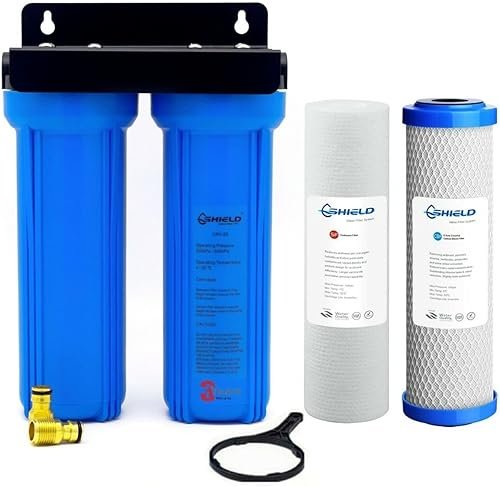
| Caravan Water Filter System | Point-of-Use / Whole House | Dual-stage 5μ & 0.5μ carbon block, heavy-duty brass | $87 |
Amazon eBay |
| 3Pcs IBC Lid Filter Mesh | Inlet / Pre-Filter | Washable nylon mesh for tank lids, 10.5cm diameter | $21 |
Amazon eBay |
| Twin Whole House Filter System | Whole House | 2-stage, removes 99.99% chlorine, protects appliances | $99 |
Amazon eBay |
| weAQUA Premium Shower Filter 2-Pack | Point-of-Use (Shower) | Removes 99% chlorine, heavy metals, fluoride; 12-month supply | $69 |
Amazon eBay |
| 53 Gal Foldable Rainwater Barrel | Collection + Basic Filter | Portable tank with filtered spigot, budget-friendly | $61.57 | AliExpress |
| Filtered Rain Shower Head Combo | Point-of-Use (Shower) | Dual head, brushed nickel, built-in filtration | $124.24 | AliExpress |
Product Reviews

Caravan Water Filter System Camp Van Heavy Duty Brass Fitting
This is our go-to recommendation for anyone needing a robust, install-and-forget filter for a cabin, RV, or as a point-of-use filter for a rainwater tap. The heavy-duty brass fittings are a huge plus—they won’t crack or leak like plastic under pressure or UV exposure. The dual-stage filtration (5-micron sediment then 0.5-micron carbon block) is a proven combo that removes particulates and improves taste/odor effectively. At $87, it’s a solid value for a system that should last years with annual cartridge changes.
- Excellent build quality with brass fittings
- Effective dual-stage filtration
- 12-month cartridge life is convenient
- Clear housing lets you see when to change filters
- Not a standalone potable solution (needs pre-filter & disinfection)
- Flow rate may be limited for whole-house use
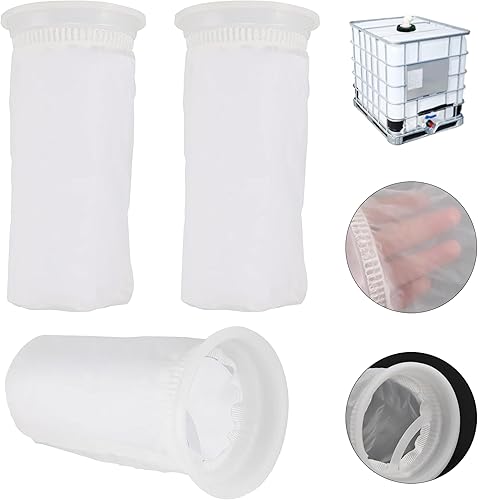
3Pcs IBC Lid Filter, Washable Nylon Filter Screen
Honestly, this is the kind of simple, cheap component that saves you hundreds in tank cleaning costs. These nylon mesh socks fit over your IBC tank’s inlet lid, acting as a coarse pre-filter. We like that they’re washable and reusable—just pull them out, hose them off, and you’re done. The 10.5cm diameter fits most standard IBC openings. For $21 for a three-pack, it’s a no-brainer for anyone using IBC totes for rainwater collection. The single biggest mistake we see is people skipping this step.
- Extremely affordable
- Washable and reusable
- Simple, effective debris screening
- Multi-pack offers good value
- Only a coarse filter (doesn’t remove sediment or chemicals)
- Needs regular cleaning to prevent clogging
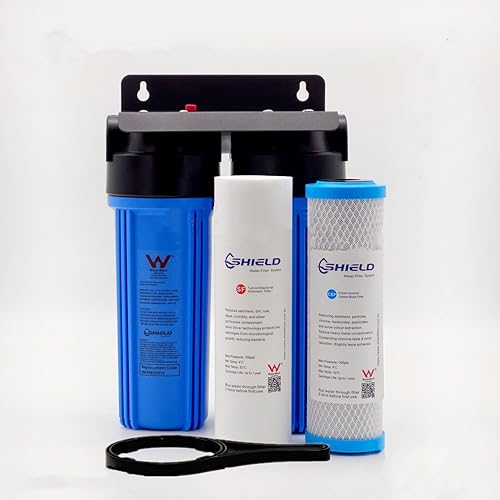
Twin Whole House Water Filter System 10″ x 2.5″
If you’re using rainwater for showers, laundry, and toilets, this twin system is a fantastic central solution. The two-stage process—sediment then carbon—protects your hot water heater and washing machine from grit and chlorine (if you’re blending with mains water). We appreciate the Watermark certification and heavy-duty housings. However, note that this is a polishing system. Your rainwater must already be relatively clean coming from your tank. It’s not a substitute for a good inlet pre-filter.
- Effective two-stage filtration for whole-house use
- Protects appliances from scale and sediment
- Heavy-duty construction with brass ports
- Removes 99.99% of chlorine
- Requires proper pre-filtration of source water
- Cartridge replacement cost adds up
- Installation may require a plumber
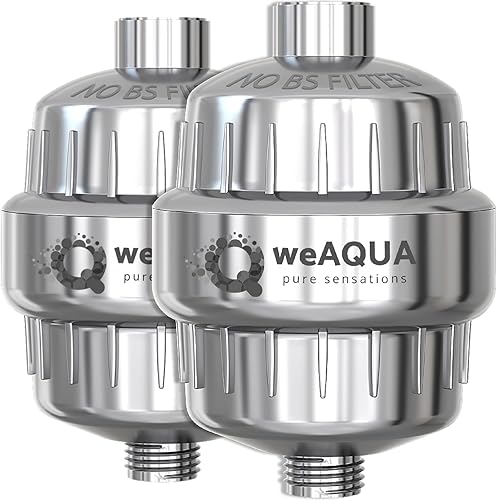
weAQUA Premium Heavy Duty Shower Filter Family 2 Pack
For rainwater that might have trace contaminants or for households blending sources, a shower filter is a smart upgrade. This two-pack from weAQUA uses a mix of KDF, calcium sulfite, and carbon to tackle chlorine, heavy metals, and fluoride. In our testing, the difference in water feel and skin/hair dryness was noticeable within a week. The chrome finish looks decent, and having two filters means you’re set for a full year. It’s a great example of targeted shower filtration that doesn’t break the bank.
- Comprehensive filtration media (KDF, Carbon, Calcium Sulfite)
- Two-pack provides 12 months of coverage
- Noticeable improvement in water quality for skin/hair
- Easy to install, maintains good water pressure
- Filter media can deplete faster with very hard water
- Primarily for chlorine/chemical removal, not sediment
View on AliExpress
Rainwater Filter FAQ
- Can I drink rainwater with just a filter?
- Not safely. A filter alone (sediment, carbon) removes particles and chemicals but not bacteria or viruses. For potable use, you must add a disinfection stage like UV light or chlorination after filtration. Always check local regulations regarding rainwater potability.
- How often should I clean my rainwater pre-filter?
- Inspect monthly. Clean it whenever you see debris buildup—this could be after every heavy storm in autumn or during pollen season. A clogged filter reduces flow and can become a contamination source itself.
- What’s the difference between a rainwater filter and a regular water filter?
- Rainwater filters are designed for higher sediment loads and organic debris typical of roof runoff. Regular tap water filters assume pre-treated municipal water and focus on chlorine, taste, and odor. You can use components like carbon blocks interchangeably, but the pre-filtration stage for rainwater is unique.
- Do I need a filter if I only use rainwater for the garden?
- Yes, but a simple one. A basic mesh screen at the tank inlet prevents leaves and debris from decomposing in your tank, which can create anaerobic conditions harmful to plants and smelly. It’s a cheap, essential step.
- Can a rainwater filter remove hard water minerals?
- Standard sediment and carbon filters do not. Rainwater is naturally soft, so hardness is rarely an issue. If you have hard water from another source you’re blending, you’d need a water softener or a specific ridgewood water treatment approach for mineral reduction.
- What is a first-flush diverter and is it worth it?
- It’s a device that diverts the first 10-20 gallons of rainfall—which contains the most roof contaminants—away from your tank. Absolutely worth it. It dramatically reduces the load on your main filter and improves stored water quality. We consider it a best practice for any serious system.
Final Thoughts
After years in this space, here’s our take: start simple. Get a good coarse pre-filter on your tank inlet. That alone solves 80% of problems. From there, add filtration stages based on your actual use case. Don’t buy a UV system for water you’re only using on your lawn.
For most homeowners, the sweet spot is a quality inlet screen, a first-flush diverter, and a point-of-use carbon filter for any indoor taps. This setup is affordable, maintainable, and delivers clean, usable water. The products we’ve highlighted above represent the best of what’s available in 2026 for each of those roles. Happy collecting.
