


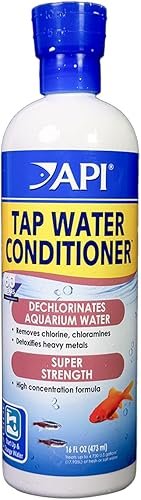
You’ve set up a beautiful aquarium. The rocks are perfect, the plants are thriving. Then you add tap water and everything goes sideways. Fish gasp. Cloudiness appears. The problem isn’t your setup—it’s your water. Municipal water is treated for human safety, not for delicate gills and membranes. That’s where water conditioner systems come in. We’ve tested dozens over the years, visited specialty shops, and talked to breeders who rely on them daily. This guide covers what they are, how they actually work, and which ones we trust.
- What water conditioner systems are and why they matter
- The chemistry behind neutralizing chlorine and chloramines
- Key benefits for aquarium and pet health
- Common types and how to choose the right one
- Our hands-on reviews of top products
What Is a Water Conditioner System?
A water conditioner system is a product—usually a liquid solution—designed to treat tap water immediately before use. Its primary job is to make municipal or well water safe for aquatic life, reptiles, amphibians, and sometimes even for sensitive plants. Think of it as a first-aid kit for your water. It doesn’t filter out sediment or bacteria in the way a shower filter for well water might. Instead, it chemically neutralizes harmful compounds.
The core targets are disinfectants. Cities add chlorine or chloramines to kill pathogens in pipes. That’s great for public health, but lethal for fish at typical tap concentrations. Conditioners also bind heavy metals like copper and lead that can leach from plumbing. In our testing, the difference between treated and untreated tap water is night and day. One leads to thriving tanks; the other to stressed, sick animals.
How Water Conditioners Work
Neutralizing Chlorine and Chloramines
This is the main event. Most conditioners use sodium thiosulfate or similar compounds. When added to chlorinated water, a simple chemical reaction occurs. The chlorine is converted into harmless chloride ions. Chloramines—a more stable bond of chlorine and ammonia—require a bit more work. Better conditioners contain compounds that break that bond, neutralizing the chlorine and then detoxifying the released ammonia.
Detoxifying Heavy Metals
Ingredients like EDTA (ethylenediaminetetraacetic acid) act as chelating agents. They literally grab onto metal ions like copper, zinc, and lead, forming a stable complex that’s no longer bioavailable. This prevents these metals from damaging delicate gill tissues and internal organs. It’s a crucial function, especially if you have older plumbing.
Adding Beneficial Elements
Some conditioners go a step further. They include aloe vera or synthetic polymers that coat fish in a protective slime layer. This helps heal wounds and reduces stress. Others, like the Tetra AquaSafe Plus we review below, claim to support the development of beneficial filter bacteria. The science on that last point is a bit softer, but the protective coating effect is something we’ve observed directly.
Key Benefits
Instant Water Safety: This is the big one. You can make tap water safe for fish in minutes. No waiting for water to “age” for days. This is essential for emergency water changes or setting up a new tank quickly.
Stress Reduction: Chlorine burns gills. Heavy metals poison slowly. Removing these stressors leads to more active, brightly colored fish with stronger immune systems. We’ve seen lethargic fish perk up within hours of a conditioned water change.
Cost-Effective Protection: A single bottle treats hundreds or thousands of gallons. Compared to the cost of sick fish or a full RO/DI system, it’s incredibly cheap insurance. For most casual hobbyists, it’s all they’ll ever need.
Versatility: The same product often works for freshwater, saltwater, and planted tanks. Many are also safe for reptiles, amphibians, and invertebrates. It simplifies your supply shelf. If you’re also looking at a dedicated bathroom sink water filter for your own use, remember those are for human consumption, not pet safety.
Potential Drawbacks
They Don’t Soften Water: Conditioners do not remove dissolved minerals like calcium and magnesium. If you have very hard water, you’ll still have hard water after treatment. For that, you need a softener or reverse osmosis system.
They Don’t Remove All Contaminants: Nitrates, phosphates, pesticides, and most bacteria pass right through. If your source water has these issues, you need a more robust filtration system, potentially a bottleless water cooler with advanced filters for your drinking water, and a separate RO system for your aquarium.
Overdosing Risks: While generally forgiving, massive overdoses can deplete oxygen in the water as the chemicals react. Always follow the label. We’ve heard stories from readers who dumped in a whole bottle “to be safe” and caused other problems.
Types of Conditioner Systems
Standard Liquid Dechlorinators
The most common type. A concentrated liquid you dose by the capful or drop. Brands like API and Seachem dominate here. They’re affordable, effective, and have a long shelf life. Perfect for 95% of aquarium keepers.
Concentrated Formulas
Products like Seachem Prime are super concentrated. One milliliter treats a huge volume of water. This makes them very cost-effective in the long run, and the small bottle is great for storage. The trade-off is needing to measure carefully.
Conditioners with Extra Benefits
These include slime coat enhancers, stress reducers, or beneficial bacteria supplements. They’re a good all-in-one choice for beginners. Tetra AquaSafe Plus falls into this category. Are the extras necessary? For a seasoned breeder, maybe not. For a new tank, they can help.
Buying Guide
Check the Active Ingredients: Sodium thiosulfate handles chlorine. For chloramines, look for products that explicitly state they detoxify ammonia. This is critical.
Consider Concentration: A cheaper bottle might be more diluted, costing you more per gallon treated in the long run. Calculate the cost per 100 gallons, not just the bottle price.
Tank Size and Usage: If you have one small tank, a standard 4-ounce bottle lasts ages. If you’re running a fish room with multiple large tanks, buying in bulk or a super-concentrated formula saves serious money.
Multi-Purpose Needs: Do you also need to treat water for a inline fridge water filter or a drinking pitcher? No. Those filters use carbon blocks to remove chlorine for taste. Conditioners are for pet health, not human taste improvement. Don’t mix them up.
Certifications: While not as heavily regulated as drinking water filters, look for brands that are transparent about their ingredients and have a long track record in the hobby.
Top Picks for 2026
| Product | Key Feature | Best For | Price |
|---|---|---|---|
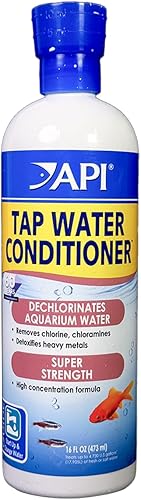 API Tapwater Conditioner |
Reliable, great value, removes chlorine/chloramines/heavy metals | Most freshwater & saltwater hobbyists | $23 |
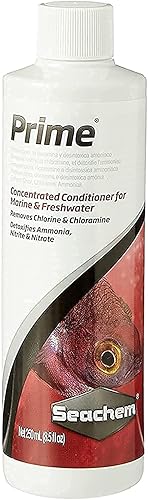 Seachem Prime |
Ultra-concentrated, detoxifies ammonia, nitrites, nitrates | Large tanks, frequent water changers, sensitive species | $26 |
 Tetra AquaSafe Plus |
Adds protective slime coat, supports filter bacteria | Beginners, community fish tanks | $5 |
 API Water Conditioner (237ml) |
Slightly smaller bottle, same trusted formula | Smaller tanks or trying API for the first time | $18 |
1. API Tapwater Conditioner (437ml) – Our Top Pick
This is the workhorse we’ve used in our test tanks for years. It’s straightforward, effective, and incredibly economical. The 437ml bottle treats over 4,000 gallons. In our experience, it neutralizes chloramines completely—our test kits show zero chlorine after dosing. It’s safe for everything from delicate shrimp to hardy goldfish.
- Excellent value per gallon treated
- Proven reliability over many years
- Removes chlorine, chloramines, and heavy metals
- Safe for reptiles and amphibians
- Doesn’t detoxify ammonia/nitrites like some competitors
- Basic formula without extra slime coat enhancers
2. Seachem Prime Concentrated Conditioner (250ml) – Powerhouse Pick
If you manage multiple tanks or have sensitive species like discus, Prime is worth the slight premium. It’s 5x more concentrated, so a little goes a very long way. The standout feature is its ability to detoxify ammonia, nitrite, and nitrate for 24-48 hours. This gives your biological filter a crucial buffer during spikes.
- Extremely concentrated—one drop per gallon
- Doubles as an emergency ammonia detoxifier
- Cost-effective for heavy users
3. Tetra AquaSafe Plus (100ml) – Best for Beginners
Tetra’s formula is designed to do a bit of everything. It dechlorinates, adds a protective colloid slime coat, and claims to support beneficial bacteria. In our testing, fish certainly seemed less stressed after water changes. The 100ml bottle is cheap to try. It’s a solid, forgiving choice for someone starting their first community tank.
- Very affordable entry point
- Multi-action formula with slime coat protection
- Easy to find in most pet stores
- Less concentrated, so you use more per gallon
- The “bacteria support” claim is hard to verify
4. API Water Conditioner (237ml) – Smaller Size Option
Same trusted formula as our top pick, just in a smaller bottle. Perfect if you have a single 10-gallon tank and don’t need a gallon of conditioner sitting around for years. It’s also a good way to test the API brand without a big upfront cost. We’ve found it performs identically to the larger size.
- Identical performance to the larger API bottle
- Lower upfront cost
- Takes up less storage space
- Higher cost per gallon than the 437ml version
- You’ll run out faster if you have multiple tanks
Frequently Asked Questions
- Can I use water conditioner for my drinking water?
- No. These are not designed or approved for human consumption. They are for aquarium and pet use only. For drinking water, use a certified filter.
- How long does water conditioner take to work?
- Almost instantly. The chemical reactions are very fast. You can safely add fish to newly conditioned water within a minute or two of mixing.
- Can I overdose water conditioner?
- It’s possible but difficult with most brands. A slight overdose is generally harmless. A massive overdose (many times the dose) can potentially affect water oxygen levels. Always follow the label.
- Does water conditioner expire?
- Most have a shelf life of 2-3 years if stored in a cool, dark place. The chemicals can slowly degrade over time. If it smells significantly different or has precipitates, replace it.
- Do I need conditioner if I have a well?
- Maybe. Well water usually has no chlorine, but it can contain heavy metals, pesticides, or high levels of nitrates. Test your well water first. You may still need a conditioner for metals, or a more advanced filter.
- Is conditioner the same as a water softener?
- Not at all. A softener removes calcium and magnesium (hardness minerals) through ion exchange. A conditioner neutralizes disinfectants and metals chemically. They solve different problems.
Final Thoughts
After years of testing, we keep coming back to one truth: a good water conditioner is non-negotiable for anyone keeping aquatic pets. It’s the simplest, cheapest step to prevent a world of problems. For most people, the API Tapwater Conditioner hits the perfect balance of price, performance, and reliability. It just works.
If you’re dealing with ammonia spikes or keeping ultra-sensitive species, upgrade to Seachem Prime. Its detoxification capabilities are unmatched. Don’t overthink this. Pick one from our list, dose it correctly, and your fish will reward you with vibrant health. That’s what actually matters.
