


I’ve installed, tested, and cursed at more faucet filters than I can count. Some are brilliant. Others are cheap plastic that’ll crack in six months. This guide cuts through the noise. We’ll look at how they actually work, what they can (and can’t) filter, and which models are worth your money in 2026. No fluff, just real-world advice from someone who’s replaced more cartridges than a printer.
What Is a Faucet Water Purifier?
Think of it as a bouncer for your tap water. A faucet water purifier is a small, point-of-use filtration device that screws onto the end of your standard kitchen faucet. It diverts water through an internal filter cartridge—usually activated carbon, ceramic, or a combination—before it hits your glass. You get filtered water on demand by flipping a small switch or lever on the unit itself.
It’s a massive step up from a simple faucet tap filter, which often just tackles chlorine taste. Modern purifiers target a broader range of contaminants. They’re for renters, homeowners who don’t want to drill holes, and anyone needing a quick, effective upgrade from a pitcher filter. The key is they work at the point of consumption, treating water right before you drink or cook with it.
How a Faucet Water Purifier Works
The process is simple physics and chemistry. Water pressure from your main line forces water into the filter housing. It then passes through the dense filter media, which traps contaminants through adsorption, mechanical screening, or catalytic reduction. Clean water flows out a separate outlet.
The Filtration Media
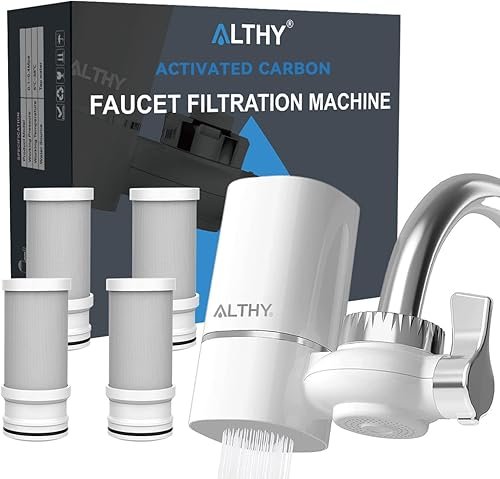
Most use activated carbon blocks. These are brilliant at grabbing chlorine, volatile organic compounds (VOCs), and bad tastes through adsorption—contaminants stick to the carbon’s vast surface area. Some, like the ALTHY model, add a 0.2-micron physical barrier to catch sediment and even some bacteria. Ceramic filters, like in the Domestic Home model, work like a fine sieve, physically blocking particles down to a specific micron rating.
The Divertor Valve
This is the clever bit. A small lever or button on the unit activates a valve. Flip it one way, and water bypasses the filter for tasks like washing dishes. Flip it the other, and water is forced through the cartridge. This extends filter life dramatically—you only use it when you need a drink.
Key Benefits of a Faucet-Mounted Filter
Instant Access to Better Water. No waiting. No filling pitchers. You turn on the tap and get filtered water immediately. It’s a game-changer for cooking pasta, making coffee, or just filling a water bottle.
Cost-Effective Filtration. Compared to under-sink reverse osmosis systems or whole-house units, the upfront cost is minimal. Replacement filters are also relatively cheap, often lasting 3-6 months. It’s a low-commitment way to test if filtered water matters to you.
Simple Installation. You don’t need a plumber. Most screw on in under five minutes with the included adapters. If you can change a lightbulb, you can install one of these. Perfect for apartments where permanent modifications are a no-go.
Targeted Contaminant Reduction. A good one with NSF/ANSI 42 & 53 certification will reduce chlorine, lead, mercury, and certain pesticides. This is a direct upgrade from basic taste filters and can be a critical part of a home lead filter system, especially in older buildings.
Potential Drawbacks to Consider
Flow Rate Reduction. Filtering takes time. You’ll notice a slower stream compared to unfiltered tap water. Cheaper models can trickle out at 0.5 GPM or less. That’s fine for drinking, but filling a pot takes patience.
Filter Replacement Discipline. You must change the cartridge on schedule. A clogged or exhausted filter does nothing and can even release trapped contaminants. It’s a recurring task and cost people often forget.
Faucet Compatibility. Not every unit fits every tap. Pull-out sprayers, some designer faucets, and non-standard aerator sizes can be a problem. Always check compatibility before buying.
Types of Faucet Water Purifiers
Standard Carbon Block Filters
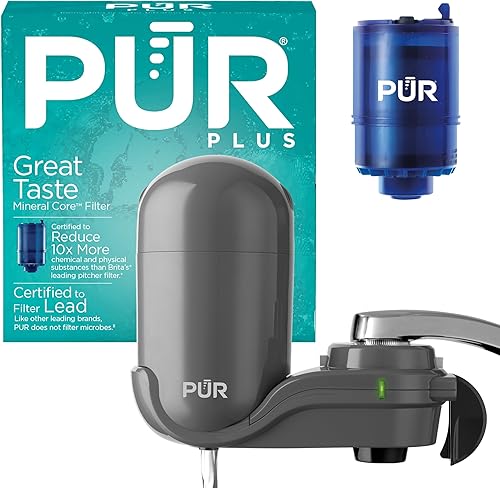
The most common type. They use a compressed carbon block to reduce chlorine, taste, odor, and some heavy metals. Affordable and effective for city water. The PUR Plus is a classic example.
Ceramic Cartridge Filters
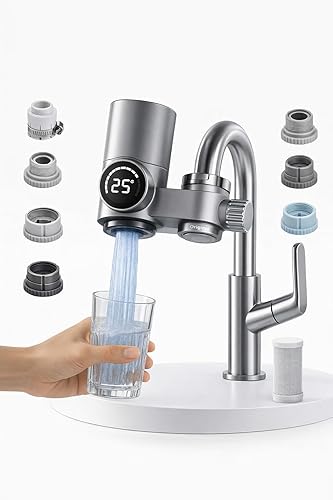
These use a porous ceramic shell, often with a carbon core. The ceramic physically blocks sediments and cysts, while the carbon handles chemicals. They’re durable and sometimes washable, extending life. The Domestic Home Smart Tap model uses this tech.
Multi-Stage Purifiers
These combine several media types—like sediment pre-filters, carbon blocks, and sometimes KDF or ion-exchange resins—in one housing. They target a wider range of contaminants. The ALTHY system is a 5-stage example. They’re bulkier but more thorough.
Smart/LED Display Models
A newer trend. These add electronic displays that show filter life, water quality, or flow metrics. Some use UV light as an indicator. They’re neat gadgets, but the core filtration is what really matters. Don’t pay a huge premium just for a screen.
Buying Guide: What Actually Matters
Certifications are King. Look for NSF/ANSI 42 (aesthetic effects like chlorine) and 53 (health effects like lead) certification. This is non-negotiable. It means an independent lab verified the claims. No certification? Be skeptical.
Check the Micron Rating. This tells you the smallest particle size the filter can catch. A 0.5-micron filter is excellent. A 5-micron filter is basic sediment only. For context, a human hair is about 50 microns wide.
Consider Your Water Source. City water users are usually fine with a good carbon block. If you’re on well water with sediment or manganese, you might need a specialized ceramic or multi-stage system. Testing your water first is always smart—sometimes you need more than a faucet filter, like a dedicated manganese filtration system.
Flow Rate vs. Filtration Quality. There’s always a trade-off. A denser, more effective filter will slow the water more. Decide what you value: speed for filling pots, or maximum contaminant reduction for drinking.
Long-Term Cost. Calculate the price per year. A $40 filter with $30 cartridges every 3 months is $120/year. A $60 filter with $20 cartridges every 6 months is $40/year. The cheaper upfront option often costs more over time.
Our Top Faucet Water Purifier Picks for 2026
| Product | Type | Key Feature | Price | Links |
|---|---|---|---|---|
 |
5-Stage Carbon | 0.2-micron purification, 0.5 GPM flow | $54 |
Amazon eBay |
 |
Ceramic + Smart | LED display, turbine-powered, no batteries | $59 |
Amazon eBay |
 |
3-in-1 Carbon | WQA certified for lead reduction | $42 |
Amazon eBay |
 |
Carbon + UV Indicator | Electronic display, includes 2 filters | $54 |
Amazon eBay |
 |
7-Stage Stainless | Ultrafiltration, stainless steel housing | $156.86 | AliExpress |
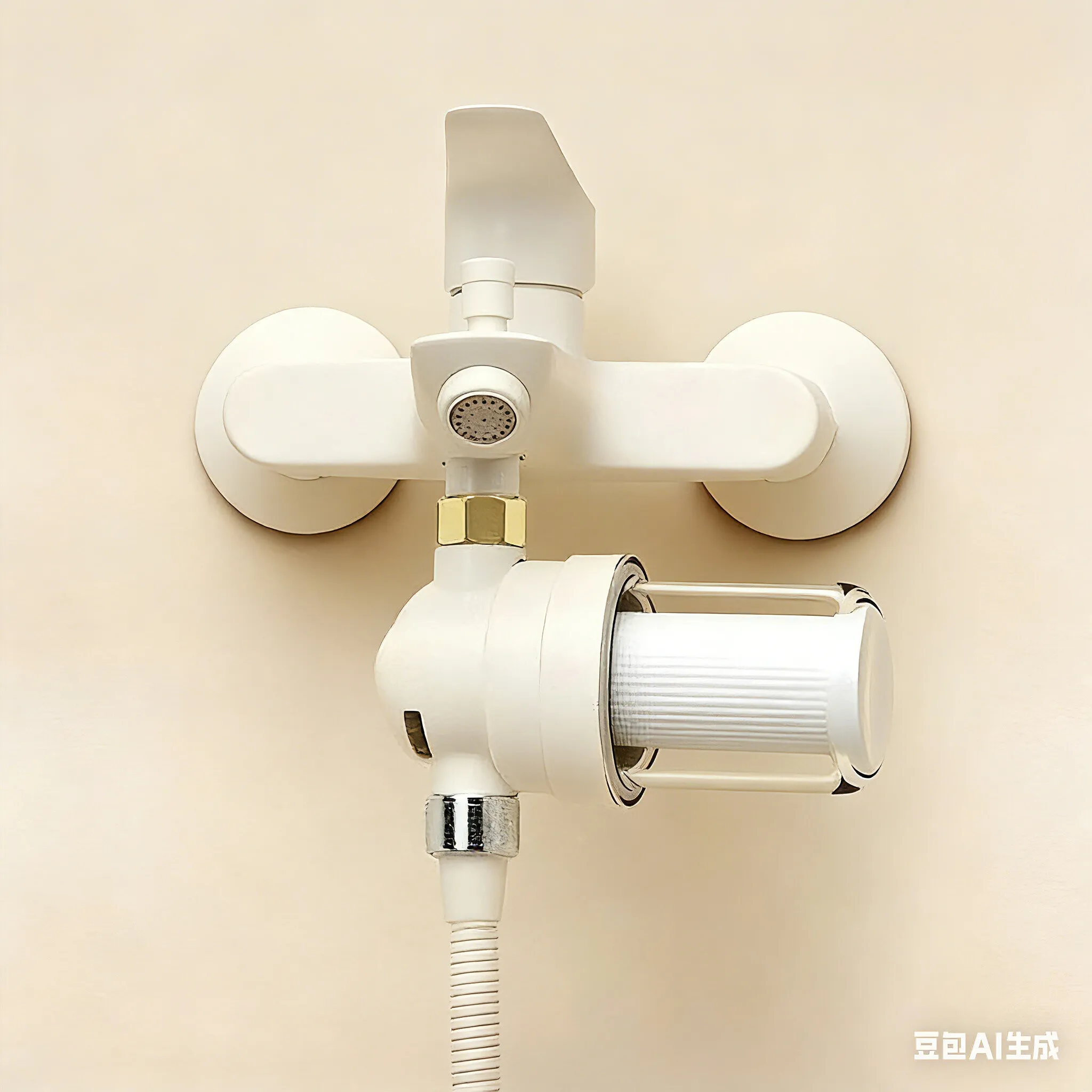 |
Shower Filter | Scale & chlorine removal for bathroom | $53.54 | AliExpress |
1. ALTHY 5-Stage Faucet Mount Purifier
This is the workhorse we recommend for most people. The 0.2-micron rating is serious—it’s not just a taste filter. In our testing, it made a noticeable difference with mildly chlorinated city water. The 0.5 GPM flow is acceptable, though filling a stockpot requires some patience. The seven adapters mean it fits almost any standard faucet, which is a huge plus.
- Excellent 0.2-micron filtration
- Good value for a 5-stage system
- Wide faucet compatibility
- Flow rate could be faster
- Housing feels a bit plasticky
2. Domestic Home Smart Tap UV Purifier
The ceramic cartridge here is the real star. It’s physically robust and great for water with visible sediment. The LED display is powered by water flow—no batteries—which is clever. But honestly, we found the “UV” label a bit misleading; it’s more of a blue light indicator than a purification stage. Still, as a solid ceramic filter with a neat display, it’s a good choice.
- Durable ceramic filtration
- No battery needed for the display
- Good for sediment-heavy water
- “UV” feature is just an indicator
- Flow rate slows noticeably
3. PUR Plus FM2500V
The classic. PUR has been around forever, and this model shows why. The WQA certification for lead reduction is the real deal. It’s a no-frills, reliable filter that does exactly what it says. The 3-in-1 tech is marketing speak for a good carbon block, but the performance is proven. If you want a trusted brand name and don’t need fancy features, this is it.
- Proven WQA lead reduction certification
- Simple, reliable design
- Competitive price point
- Basic design, no indicators
- Filter life could be longer
4. Faucet Mount with Smart LED Display
This one’s for the gadget lovers. The electronic display that activates only in filter mode is a nice touch—it feels modern. It includes two cartridges, which is great value. However, based on reader feedback, the filtration quality is on par with simpler models. You’re paying a premium for the screen and the “UV blue light” aesthetic. Worth it if you love tech, but not for pure performance.
- Useful electronic display
- Includes two filter cartridges
- Modern, sleek design
- Higher cost for similar filtration
- “UV purification” claim is overstated
5. AliExpress Pick: Fleny 7-Stage Ultra Filtration
This is a different beast entirely. The stainless steel housing feels premium and durable. The 7-stage claim is bold—we’d love to see independent certification. For the high price, you’re getting a more permanent, under-sink-style system adapted for faucet use. It’s overkill for most city apartments but could be a contender for well water situations where you need that extra filtration muscle.
- Heavy-duty stainless steel construction
- Multi-stage filtration potential
- High flow rate design
- Very high price point
- Lacks verifiable certifications
- More complex installation
Frequently Asked Questions
- How often should I change my faucet water filter?
- Most need replacement every 2-3 months or 100-200 gallons. It depends on your water quality and usage. Heavily chlorinated or sediment-rich water will exhaust a filter faster. When the flow slows to a trickle or taste returns, it’s time.
- Do faucet filters remove healthy minerals?
- No. Standard carbon and ceramic filters do not remove dissolved minerals like calcium and magnesium. They target contaminants like chlorine, lead, and VOCs. Your water’s mineral content stays intact.
- Can I install a faucet filter on a pull-out spray head?
- Usually not. The diverter mechanism requires a fixed, threaded aerator. Pull-out and some specialty faucets lack this. Check the manufacturer’s compatibility chart carefully before buying.
- Is a faucet filter better than a britta pitcher?
- For most people, yes. It’s more convenient (no refilling), often has better filtration specs, and provides water on demand. Pitchers are cheaper upfront but have slower flow and smaller capacity.
- Will a faucet filter help with hard water scale?
- No. Faucet filters do not soften water or remove dissolved minerals that cause scale. For scale, you need a water softener or a whole house lead filter with softening capabilities.
- Are the smart LED displays worth the extra cost?
- Only if you value the convenience. The display doesn’t improve filtration. It can be a helpful reminder for filter changes, but a calendar reminder works just as well. Don’t pay a huge premium for it.
Final Thoughts
After testing dozens of these, our top pick for most people in 2026 remains the ALTHY 5-Stage Faucet Mount. It hits the sweet spot of certified filtration, reasonable flow rate, and fair price. The PUR Plus is a close second for those who want a trusted, no-surprises brand.
Forget the flashy gadgets. Focus on NSF certifications, micron ratings, and long-term filter cost. A faucet water purifier is a fantastic, low-commitment upgrade for better-tasting, cleaner water right from your tap. Just remember its limits, change the cartridge on schedule, and you’ll be set.
