


So you typed “water softener system costco” into your search bar. I get it. Costco is the land of bulk deals and surprising finds. But after testing filtration gear for years and talking to countless homeowners, I can tell you this: you’re probably not going to find what you’re truly looking for there. Let’s break down why, what you will find, and where your money is better spent.
- What Costco actually sells vs. a true softener
- The critical difference between filters and softeners
- Our top picks for effective softening systems
- Key specs to look for to avoid buyer’s remorse
What Is a Water Softener System?
Here’s the single biggest mistake people make: confusing a filter with a softener. They are not the same thing. A home drinking water filter, like a pitcher or an under-sink unit, removes contaminants like chlorine, lead, and sediment. It makes water taste better and be safer to drink. A water softener, however, has one specific job: to remove hardness minerals—calcium and magnesium—through a process called ion exchange.
That white scale on your kettle? That’s calcium carbonate. A softener stops that at the source. Costco’s water section is full of excellent filters. But if you have hard water, a filter alone won’t solve your scale buildup, dry skin, or spotty dishes. You need a dedicated softening system, and those are big, brine-tank-having beasts you won’t find next to the paper towels.
How a Water Softener Actually Works
The Ion Exchange Process
Imagine a tank full of tiny, electrically charged beads. These beads are covered in sodium ions. As your hard water flows through the tank, the calcium and magnesium ions—which carry a stronger positive charge—stick to the beads, knocking the sodium ions loose into your water. The result? Water that’s now “soft,” but slightly higher in sodium.
The Regeneration Cycle
Eventually, all the bead sites get coated with hardness minerals. The system then triggers a regeneration cycle. A strong brine solution (salt water) from the second tank flushes through the main tank. The sodium in the brine overwhelms the beads, swapping places with the calcium and magnesium, which are then flushed down the drain. The beads are refreshed and ready to soften more water. This process is automatic, usually happening at 2 AM.
Key Benefits of Softer Water
Protects Your Plumbing & Appliances: Scale buildup inside pipes, water heaters, and dishwashers is a real killer. It reduces efficiency and lifespan. We’ve seen water heaters fail years early due to scale. A softener is preventative maintenance.
Better Cleaning: Soap and detergents lather properly with soft water. You’ll use less shampoo, laundry detergent, and dishwasher soap. Your clothes will feel softer, and those annoying hard water spots on glasses? Gone.
Softer Skin & Hair: This isn’t just marketing. Hard water minerals leave a film on your skin that can cause dryness and irritation. Many readers report a noticeable difference in skin and hair feel after installing a softener.
Potential Drawbacks & Considerations
There’s the cost. A good whole-house softener isn’t cheap, and you have ongoing salt costs. Installation can be tricky if you’re not handy with plumbing. And if you’re on a septic system, the regeneration brine discharge needs to be considered, though modern systems are much more efficient.
Types of Water Conditioning Systems
Traditional Ion-Exchange Softeners
This is the real deal. The two-tank system we described above. It’s the only technology that truly “softens” water by removing hardness minerals. Look for systems rated in “grains” (e.g., 48,000 grain capacity). This tells you how much hardness it can remove before needing regeneration.
Salt-Free “Conditioners”
Often what you’ll find at big-box stores. These don’t remove minerals. They use a template-assisted crystallization (TAC) process to change the shape of the minerals so they don’t stick to surfaces as scale. They prevent scale buildup but don’t give you the “soft water” feel or cleaning benefits. They’re a good option where salt-based softeners are banned or for people who don’t want added sodium.
Portable & RV Softeners
Small, compact ion-exchange units designed for RVs, boats, or mobile washing. They work on the same principle but have a much smaller capacity. You regenerate them manually with a bag of salt. We’ve tested a few, like the VEVOR unit below, and they’re great for their intended use.
Buying Guide: What Actually Matters
Grain Capacity: Match this to your water hardness (measured in GPG—grains per gallon) and household size. A family of four with moderately hard water (10 GPG) needs about a 32,000-grain system. Bigger isn’t always better; an oversized system regenerates less frequently, which can be inefficient.
Control Valve: This is the brain. Look for a metered, on-demand valve rather than a timer-based one. It regenerates based on actual water usage, saving salt and water. Brands like Fleck and Clack are industry gold standards.
NSF/ANSI Certification: For softeners, look for NSF/ANSI 44 certification. This verifies the softening performance and material safety. Don’t just trust marketing claims.
If you’re also dealing with sediment or iron, you might need a pre-filter. Understanding your water filter for well needs is crucial, as well water often has multiple issues to address.
Top Picks & Alternatives
Since Costco isn’t the source, here are systems we’ve looked at that represent different needs. For whole-house softening, you’ll typically buy from a dedicated water treatment dealer or online retailer.
| Product | Type | Key Feature | Price | Link |
|---|---|---|---|---|
 |
Whole House Filter | Targets heavy metals, PFAS, chlorine | $1.99 |
Amazon eBay |
 |
Portable Softener | 16,000 grain, brass fittings | $1.73 |
Amazon eBay |
 |
Portable Softener | 16,000 grain, custom hose | $2.60 |
Amazon eBay |
 |
Shower Filter | 15-stage filtration, chlorine removal | $48 |
Amazon eBay |
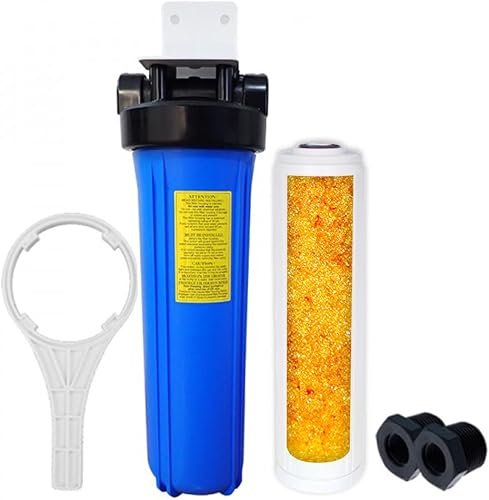
Whole House Water Softener Filtration System 20×4.5
This isn’t a softener. Let’s be crystal clear. It’s a whole-house filter cartridge system designed to remove a long list of contaminants like arsenic, heavy metals, and PFAS. It’s a fantastic piece of a water treatment puzzle, especially if you have well water concerns, but it will not remove hardness minerals. Pair it with a true softener for complete treatment.
- Addresses serious contaminants
- Good pre-filter for a softener
- Compact housing design
- Does not soften water
- Cartridge replacement costs
- Requires plumbing knowledge to install
VEVOR RV Water Softener, 16,000 Grain Portable
Now this is an actual softener. We’ve used similar portable units for washing cars and at campsites, and they work shockingly well for the price. The 16,000-grain capacity is decent for intermittent use. The brass fittings are a nice touch over cheap plastic. Just remember, you’ll need to regenerate it manually with a bag of salt and water.
- True ion-exchange softening
- Portable and easy to set up
- Great for RVs and mobile washing
- Manual regeneration required
- Not for whole-house use
- Limited capacity
Filterelated RV Water Softener – 16000 Grain
Very similar to the VEVOR unit, this is another solid portable softener. The marketing emphasizes skin and hair benefits, which is accurate—soft water does help. The included custom hose is a convenience. It’s a competitive market for these portable units; choice often comes down to included accessories and current price.
- Effective hardness reduction
- Comes with hose and fittings
- Good for multiple applications
- Same manual regeneration hassle
- Not a permanent home solution
- Requires space for brine tank
Filtered Shower Head with Handheld
This is a shower filter, not a softener. It uses a 15-stage filtration media to reduce chlorine and some heavy metals from your shower water. Chlorine can dry out skin and hair, so removing it helps. But it won’t touch the calcium and magnesium causing your hard water woes. It’s a good supplemental product if you can’t install a whole-house system yet.
- Reduces chlorine effectively
- Multiple spray settings
- Easy DIY install
- Does not soften water
- Filter media needs regular replacement
- Pressure can vary
Frequently Asked Questions
- Does Costco sell water softener systems?
- No, Costco does not typically sell traditional, whole-house ion-exchange water softener systems. They offer a variety of water filters, pitchers, and sometimes salt-free conditioners, but not the two-tank softeners that remove hardness minerals.
- What’s the difference between a Costco water filter and a softener?
- A filter removes contaminants for better taste and safety. A softener removes calcium and magnesium to prevent scale. They solve different problems. Many homes need both: a softener to protect plumbing and a filter, often a best reverse osmosis system under sink, for clean drinking water.
- Can I install a water softener myself?
- It’s possible if you’re experienced with plumbing. You need to cut into your main water line, install a bypass valve, and connect the drain and brine tank. For most people, hiring a professional is worth the peace of mind. Our guide on installing water softener covers the basics.
- How much does a real water softener system cost?
- For a quality whole-house system with a metered valve, expect to pay between $800 and $2,500 for the unit itself. Professional installation can add $300-$700. Portable units like the ones reviewed here are under $200.
- Do I need a special filter housing bracket for a softener?
- No, a whole-house softener is a standalone appliance with its own structural tank. You don’t mount it in a standard filter housing bracket. It needs to be installed on your main water line, usually in a garage, basement, or utility closet.
Final Thoughts
The search for a “water softener system costco” is a common one, born from wanting a good deal from a trusted retailer. But you’re looking for a specialized tool. Costco is great for filters and bulk salt, but the softening system itself needs to come from a water treatment specialist. Get your water tested first. Know your hardness level in GPG. Then invest in a proper, certified ion-exchange softener if scale is your enemy.
For the immediate relief of hard water symptoms in a shower or for your RV, the portable units we listed are legitimate, affordable solutions. Just understand their limits. And always, always pair your softener with a point-of-use drinking water filter at the kitchen tap for the best of both worlds.
