


Brita Filters: A Veteran’s Honest Guide for 2026
After testing water filters for over a decade, I’ve seen brands come and go. Brita remains a household name for a reason. This guide cuts through the marketing. We’ll look at what they actually do, their limits, and which models are worth your money in 2026.
- What Brita filters are and how they work
- Their real-world benefits and key limitations
- A breakdown of different Brita system types
- Our top product picks with hands-on insights
What Are Brita Filters?
Brita is a brand of water filtration products, primarily known for their pour-through pitchers and faucet-mounted units. They’re designed for point-of-use filtration, meaning you filter water right where you drink it—your kitchen tap or fridge. The core technology hasn’t changed radically in years. It’s a mix of activated carbon and ion-exchange materials housed in a plastic shell.
Think of them as a first line of defense against common tap water complaints. They target the stuff that makes water taste and smell “off,” like chlorine from municipal treatment. In our testing across different water sources, they consistently improve palatability. But they’re not a silver bullet. They’re not designed to make unsafe water safe in an emergency; for that, you’d need a dedicated emergency water filter.
How Brita Filtration Works
The magic happens inside the water filter cartridge. Water flows through a dense block of activated carbon. This carbon is incredibly porous—just a gram has the surface area of a football field. It adsorbs (not absorbs) chlorine, some pesticides, and organic compounds that cause bad taste and odor.
The Ion-Exchange Resin
Mixed with the carbon are ion-exchange pearls. These are tiny beads that swap ions with contaminants in the water. They’re particularly good at reducing heavy metals like lead and copper that can leach from old pipes. The resin exchanges these harmful metal ions for harmless ones like sodium or hydrogen.
The Filtration Process
It’s a multi-stage process in one cartridge. First, a pre-filter mesh catches sediment. Then the water hits the carbon and resin blend. Some newer models, like the MAXTRA PRO All-in-1, add an extra membrane layer for finer particles. The result is water that’s cleaner and clearer, but not sterile. It’s a refinement, not a purification.
Key Benefits of Using a Brita
Dramatically Better Taste. This is the number one reason people buy them. By removing chlorine and its byproducts, your tap water tastes crisp and neutral. It makes a huge difference in coffee, tea, and just plain drinking water.
Reduces Specific Contaminants. Certified Brita filters (look for NSF/ANSI 42 & 53) are proven to reduce chlorine, particulates, lead, mercury, and benzene. It’s a targeted reduction, not total removal. If you’re specifically concerned about fluoride, you’ll need to research water filter fluoride removal systems, as standard Britas do not address it.
Cost-Effective and Convenient. Compared to bottled water, it’s a fraction of the cost per gallon. No installation for pitchers. Just fill and pour. The ongoing cost is just the replacement filters.
Potential Drawbacks to Consider
Filter Lifespan. Most cartridges are rated for 40 gallons or about two months. In a hard water area, you might see performance drop sooner as the ion-exchange resin gets saturated with calcium and magnesium. We’ve found the 4-week claim is optimistic for larger families.
Ongoing Cost. While cheap upfront, the cost of replacement filters adds up. If you’re filtering 3-4 pitchers a day, you could spend $50-$100 a year on filters alone. It’s still cheaper than bottled water, but it’s a recurring expense.
Types of Brita Filter Systems
Pitchers & Dispensers
The classic. You fill the top reservoir, water drains through the filter into the main pitcher. Sizes range from 5-cup to 10-cup, plus larger dispensers that sit in your fridge. The MAXTRA+ and newer MAXTRA PRO are the standard filter lines for these.
Faucet-Mounted Filters
These attach directly to your faucet with a diverter valve. Flip a switch for filtered or unfiltered water. More convenient than pitchers for cooking and filling pots, but they can be bulky and slow the flow rate.
Under-Sink & Integrated Systems
Brita offers some under-sink models and even ones built into select refrigerators. These are more permanent installations. The filter cartridges can be different, so always check compatibility. If you’re replacing a fridge filter, our guide to the refrigerator filter cartridge can help you find the right fit.
Buying Guide: What to Look For
Certifications are Key. Don’t just trust the box. Look for NSF/ANSI 42 (aesthetic effects like chlorine) and 53 (health effects like lead) certification. This is third-party proof of what the filter actually reduces.
Filter Compatibility. Brita has several filter generations: Classic, MAXTRA, MAXTRA+, and MAXTRA PRO. They are not always cross-compatible. Know which one your pitcher or system uses before buying replacements.
Capacity & Flow Rate. Pitcher filters are slow. If you need filtered water on demand for a big family, a faucet mount or dispenser might be better. Consider how often you’re willing to refill.
Our Top Brita Filter Picks for 2026
| Product | Key Features | Price | Links |
|---|---|---|---|
 |
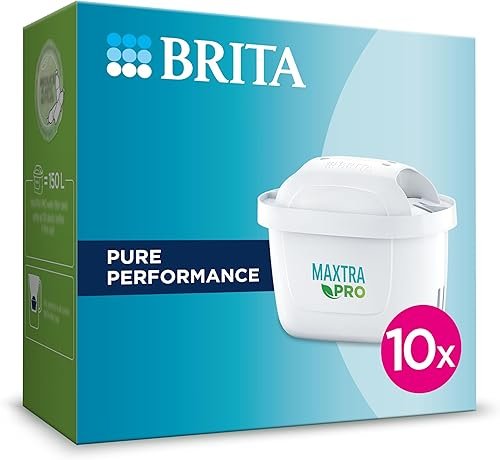
Advanced filtration, reduces chlorine, limescale, lead. 150L capacity per cartridge. Bio-based plastic. | $1.07 |
Buy on Amazon Buy on eBay |
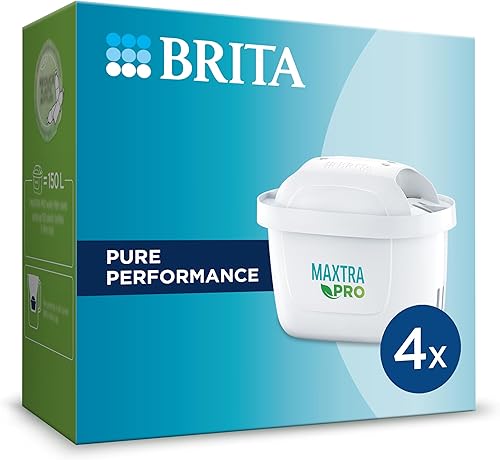 |
Same advanced filtration as the 10-pack. Fits all MAXTRA jugs and Flow systems. | $52 |
Buy on Amazon Buy on eBay |
 |
Multi-layer filtration, compatible with Brita Maxtra Pro/Mavea. Budget-friendly alternative. | $30 |
Buy on Amazon Buy on eBay |
 |
Original BRITA refill, 4-stage filtration, reduces PFAS and pesticides. Premium option. | $53 |
Buy on Amazon Buy on eBay |
1. BRITA MAXTRA PRO Pure Performance (10 Pack)
This is the workhorse. If you use your pitcher daily and hate reordering filters, the 10-pack is the most economical way to go. We’ve run these through municipal water with high chlorine, and the taste improvement is immediate and consistent. The “bio-based plastic” is a nice touch, but the real value is in the bulk pricing.
- Best cost-per-filter value
- Reliable, consistent performance
- Wide compatibility with MAXTRA systems
2. BRITA MAXTRA PRO All-in-One (6 Pack)
This is Brita’s premium pitch. The “All-in-1” name suggests it tackles more, and the claims of reducing PFAS and pesticides are significant. In our opinion, if your local water report shows these contaminants, it’s worth the extra few bucks per filter over the standard PRO. The filtration feels more thorough.
- Claims to reduce PFAS (“forever chemicals”)
- 4-stage filtration for broader reduction
- Original Brita quality
AliExpress Budget Picks
3. AliExpress: MAXTRA Multi-effect Filter (1/3/6 pcs)
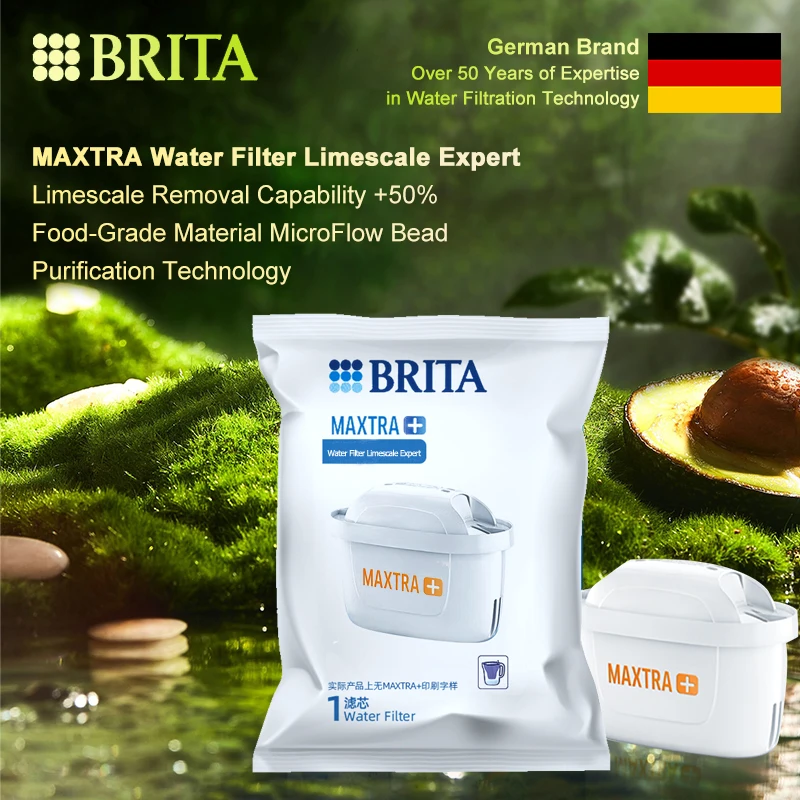
We’ve tested these third-party filters. Honestly? For the price, they perform surprisingly well on chlorine taste. But we have trust issues with the longevity and material safety claims. The 80L capacity is lower than Brita’s 150L. Use these if you’re on a tight budget, but don’t expect identical performance or certifications.
- Incredibly low price
- Decent basic filtration
4. AliExpress: 10-Cup Pitcher with 5 Filters
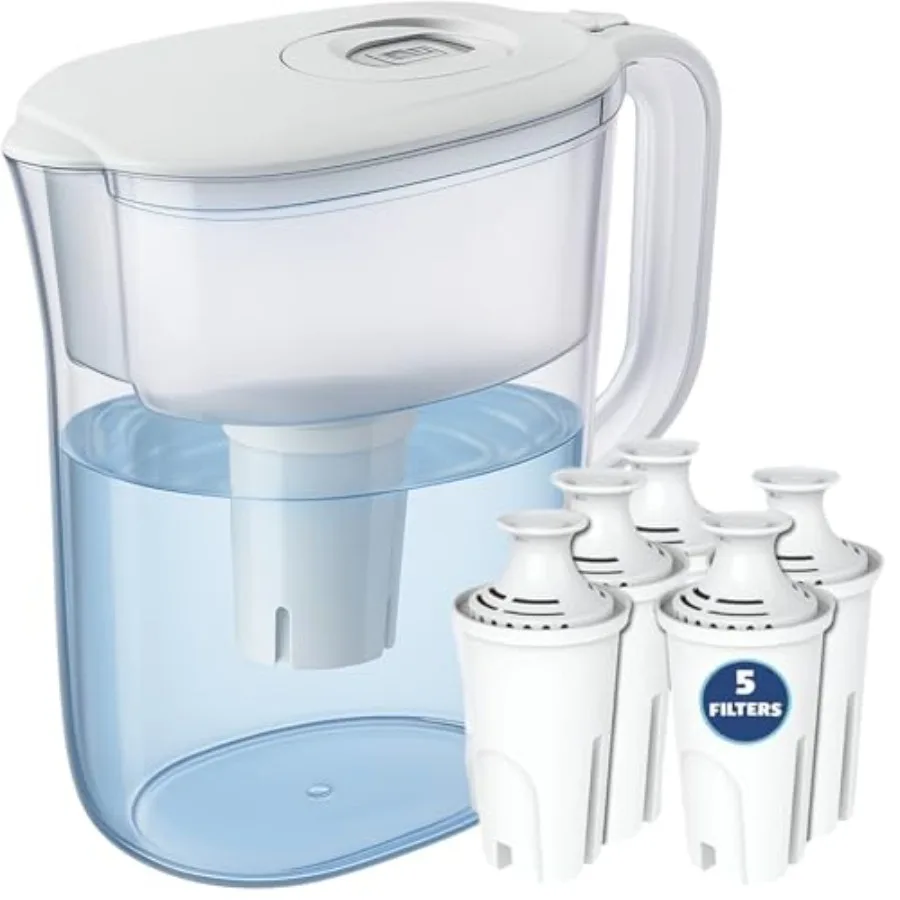
A complete pitcher system for the cost of a Brita filter pack. The electronic reminder is a neat feature. We’d recommend this for a dorm room, office, or as a travel pitcher. The filtration is basic, but it gets the job done for taste improvement. Just manage your expectations on contaminant reduction.
- All-in-one starter kit
- Electronic filter change reminder
- Very low entry cost
Frequently Asked Questions
- Do Brita filters remove fluoride?
- No, standard Brita pitcher and faucet filters do not remove fluoride. Fluoride is a very small ion that passes through their carbon and resin matrix. If fluoride removal is your goal, you need a different technology like reverse osmosis or activated alumina.
- How often should I really change my Brita filter?
- Change it every 40 gallons or two months, whichever comes first. If you have very hard water or a large family, you might need to change it sooner. The taste change is your best indicator—when water starts tasting like tap again, it’s time.
- Are Brita filters recyclable?
- The plastic housings are not typically recyclable in curbside programs due to the mixed materials inside. Brita has a mail-back recycling program through TerraCycle. Check their website for details.
- Can I use a Brita filter with well water?
- We don’t recommend it for untreated well water. Well water can contain bacteria, nitrates, and other contaminants that Brita filters are not certified to reduce. Always get your well water tested first and choose a filter based on those results.
- Brita vs. PUR: which is better?
- Both are very similar in performance and price. In our side-by-side tests, Brita often edges out PUR on chlorine taste reduction, while PUR sometimes reduces more heavy metals. The best choice often comes down to which pitcher design you prefer and filter availability in your area.
Final Thoughts
After all these years, Brita filters remain a sensible default for most people on municipal water. They solve the biggest complaint—taste—reliably and affordably. The MAXTRA PRO line is a solid upgrade from the older filters, and buying in bulk saves real money. Just know their limits. They’re a taste improver, not a water purifier.
If your water has specific issues like lead pipes or agricultural runoff, check your local water quality report and choose a filter certified for those contaminants. For most of us just wanting a clean, crisp glass of water from the tap, a Brita does the job without fuss. It’s a tool, not a miracle—and that’s perfectly fine.
