


.oi-article{font-family:system-ui,-apple-system,sans-serif;color:#1a1a1a;line-height:1.8;max-width:820px;margin:0 auto}
.oi-article h2{color:#0e4a6e;border-bottom:2px solid #0e4a6e;padding-bottom:8px;margin-top:35px;font-size:1.6em}
.oi-article h3{color:#1a6b8a;margin-top:25px;font-size:1.3em}
.oi-toc{background:#f0f7fb;border-left:4px solid #0e4a6e;padding:20px 25px;margin:25px 0;border-radius:6px}
.oi-toc ul{list-style:none;padding:0;margin:0}.oi-toc li{padding:5px 0}
.oi-toc a{color:#0e4a6e;text-decoration:none;font-weight:500}.oi-toc a:hover{text-decoration:underline}
.oi-tip{background:#e8f5e9;border-left:4px solid #2e7d32;padding:15px 20px;margin:20px 0;border-radius:6px}
.oi-warn{background:#fff3e0;border-left:4px solid #ef6c00;padding:15px 20px;margin:20px 0;border-radius:6px}
.oi-tldr{background:#e3f2fd;border-left:4px solid #1565c0;padding:15px 20px;margin:20px 0;border-radius:6px;font-size:1.05em}
.oi-cmp-table{width:100%;border-collapse:collapse;margin:25px 0;font-size:0.95em}
.oi-cmp-table th{background:#0e4a6e;color:#fff;padding:12px 10px;text-align:left}
.oi-cmp-table td{padding:10px;border-bottom:1px solid #e0e0e0;vertical-align:middle}
.oi-cmp-table tr:hover{background:#f5f5f5}
.oi-cmp-table img{max-width:80px;height:auto;border-radius:6px}
.oi-btn{display:inline-block;padding:8px 16px;border-radius:5px;color:#fff!important;text-decoration:none;font-size:0.85em;font-weight:600;margin:3px 4px 3px 0}
.oi-btn-amz{background:#f0960a}.oi-btn-amz:hover{background:#d4840a}
.oi-btn-ebay{background:#0654ba}.oi-btn-ebay:hover{background:#044a9e}
.oi-btn-ali{background:#e43225}.oi-btn-ali:hover{background:#c42a1f}
.oi-review{overflow:hidden;margin:25px 0;padding:20px;background:#fafafa;border-radius:8px;border:1px solid #e8e8e8}
.oi-review img{float:right;max-width:140px;margin:0 0 15px 20px;border-radius:8px}
.oi-pros-cons{display:flex;gap:20px;margin:10px 0}.oi-pros,.oi-cons{flex:1}
.oi-pros li{color:#2e7d32}.oi-cons li{color:#c62828}
.oi-faq dt{font-weight:700;color:#0e4a6e;margin-top:18px}.oi-faq dd{margin:5px 0 0 0}
.oi-disclosure{background:#f5f5f5;padding:15px 20px;margin-top:35px;border-radius:6px;font-size:0.9em;color:#555}
I’ve spent years testing filters and talking to water experts. The question I get more than any other is: is New York tap water safe to drink? The short answer is yes. But the full story is more interesting. We’ll look at where NYC water comes from, what’s actually in it, the real risks in your building, and whether you need a filter.
What Is New York City Tap Water?
New York City’s tap water is famously soft and comes from a massive, protected watershed. It’s sourced primarily from the Catskill, Delaware, and Croton watersheds—a system of 19 reservoirs and three controlled lakes spanning over 2,000 square miles upstate. This is surface water, not groundwater.
The city’s Department of Environmental Protection (DEP) delivers about one billion gallons of this water daily. It travels through aqueducts to treatment plants where it’s disinfected and monitored. The result is water that consistently meets or exceeds every safety standard set by the EPA and New York State.
How NYC Water Treatment Works
The treatment process is designed to be minimally invasive, thanks to the high quality of the source water. It’s a fascinating system that relies on nature first.
1. Filtration & Disinfection
Most of the water from the Catskill/Delaware system is so clean it only requires disinfection—primarily with chlorine and UV light—to kill pathogens. The newer Croton supply uses a state-of-the-art filtration plant. This multi-barrier approach is highly effective.
2. pH Adjustment & Corrosion Control
Here’s a critical step. The city adds chemicals like phosphoric acid to adjust the water’s pH and form a protective scale inside pipes. This is meant to prevent lead and copper from leaching out of older plumbing. It’s a key defense, but it’s not foolproof in every building.
3. Continuous Monitoring
The DEP conducts over 500,000 tests annually at sampling sites throughout the city. They check for over 100 contaminants. The data is public, and the compliance record is excellent. So, at the street main, your water is pristine.
Key Benefits of NYC Tap Water
Naturally Low in Contaminants: The protected watershed means less treatment with harsh chemicals. The water is naturally soft, which is better for your appliances and soap lather.
Excellent Mineral Balance: It has a healthy, low level of total dissolved solids (TDS). This gives it a clean, neutral taste that many people prefer over bottled water. You don’t need an alkaline water pitcher to “improve” it—the chemistry is already well-balanced.
Rigorous Oversight: The public utility model means accountability. The testing frequency and public reporting exceed what most bottled water companies provide. You’re drinking a highly monitored product.
Cost & Environmental Win: It costs about a penny per gallon. That’s a massive saving over bottled water and eliminates all that plastic waste.
Potential Drawbacks & Local Risks
Chlorine Taste & Odor: The disinfectant is necessary, but you can definitely taste and smell it. Some people find it off-putting. This is the #1 reason New Yorkers buy filters—for taste, not safety.
Seasonal Variations: After heavy rains, the water can pick up organic matter, leading to a temporary earthy or musty taste. It’s harmless, but noticeable. A good carbon filter handles this easily.
Building-Specific Issues: Old iron pipes can cause rust stains and a metallic taste. If you have this problem, you’ll want to look into the best iron filter options for your specific situation, as a standard carbon filter won’t solve it.
Types of Filters for NYC Water
You don’t need a complex whole-house system for most NYC apartments. Here’s what actually works.
Carbon Faucet & Pitcher Filters
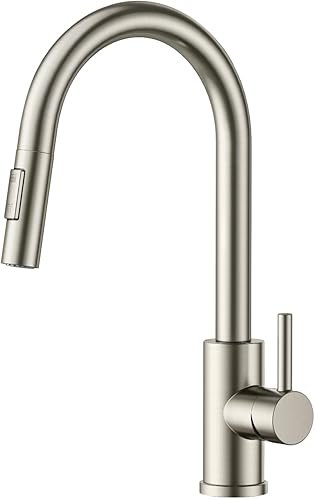
This is what 90% of New Yorkers need. A quality activated carbon filter (look for NSF/ANSI 42 & 53 certification) will remove chlorine taste, odors, and reduce lead, mercury, and some VOCs. They’re affordable and easy to maintain. For a more integrated solution, consider upgrading your tap itself with a model like the FORIOUS kitchen mixer, which has a dual-function sprayer for better control.
Reverse Osmosis (RO) Systems
Overkill for most NYC water. RO strips out everything, including healthy minerals. It wastes water and is slow. Only consider this if you have a specific, severe contamination concern confirmed by a lab test.
Under-Sink Multi-Stage Systems
A 3 stage water filter often combines sediment, carbon, and sometimes a specialized media. This is a great step-up from pitchers if you want dedicated filtered water at a separate faucet. Ensure the housing is durable—some prefer a stainless steel filter housing for longevity.
Buying Guide: What Actually Matters
Forget fancy marketing. Focus on these criteria.
1. Certification is Everything: Look for NSF/ANSI Standard 42 (aesthetic effects like chlorine) and Standard 53 (health effects like lead). No certification, no sale.
2. Micron Rating: For lead reduction, you need a filter rated at 1 micron or less. This catches the tiny particles.
3. Filter Life & Cost: Calculate the annual cost, not just the upfront price. A cheap pitcher with expensive, short-lived filters is a bad deal.
4. Your Specific Problem: Is it just taste? A carbon block pitcher is perfect. Is it lead? Get a certified lead-reduction filter. Is it hard water scale? You might need water conditioner systems, but that’s rare in NYC.
Top Picks & Related Products
While we focus on filters, a great kitchen setup enhances your water experience. Here are some products that complement a water-conscious home.
| Product | Key Feature | Price | Link |
|---|---|---|---|
 FORIOUS Kitchen Tap |
WELS 5-Star rated, 360° swivel, dual spray function. Upgrades your sink for better water flow control. | $89 |
Buy on Amazon Buy on eBay |
 Bluetooth 6.0 Headphones |
120H playtime, ANC noise cancelling. Perfect for listening to podcasts while installing a filter system. | $41 |
Buy on Amazon Buy on eBay |
 Boho Elastic Headband |
Soft, vintage cross-knot design. Keeps hair back during DIY projects or kitchen tasks. | $2.63 | Buy on AliExpress |
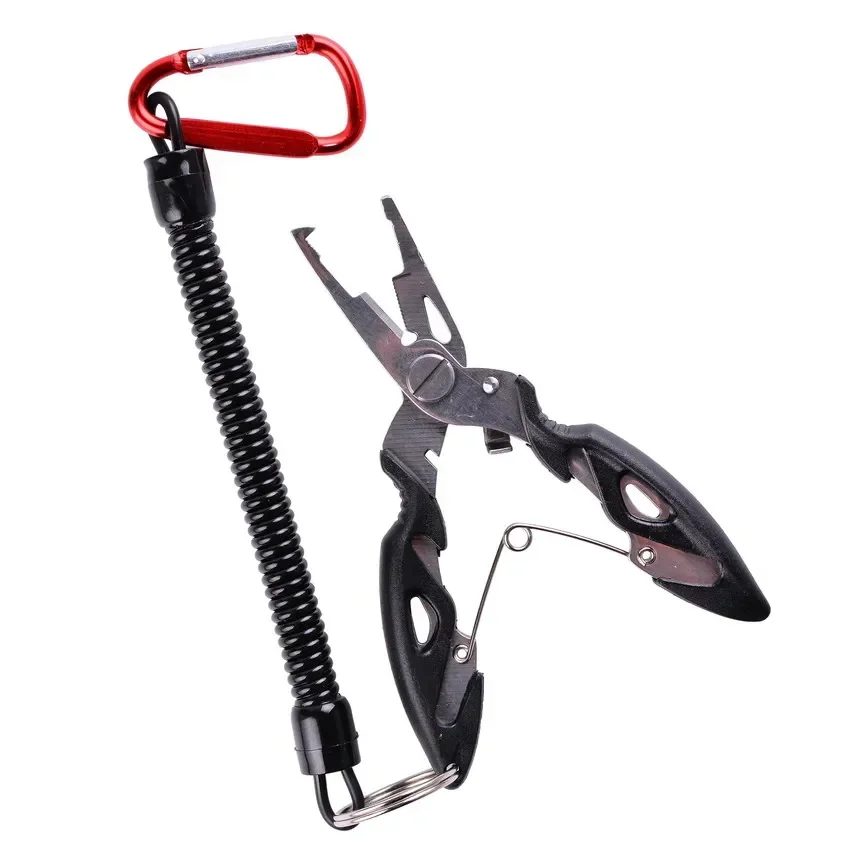 Multifunction Fishing Pliers |
Compact tool for various tasks. Handy for tightening filter housings or hose connections. | $1.72 | Buy on AliExpress |
FORIOUS WELS Kitchen Taps Mixer
This isn’t a filter, but it’s a smart upgrade for your kitchen. The high-arc swivel spout makes filling pots and cleaning easy. The dual spray function lets you switch between a gentle aerated flow for drinking and a powerful spray for rinsing. It’s well-built, WELS certified for water efficiency, and the single-handle design is intuitive. If you’re redoing your sink, this is a solid, affordable choice.
- Excellent water efficiency rating
- 360° swivel for full sink access
- Dual spray is genuinely useful
- Installation may require a plumber
- Not a water filtration device
Frequently Asked Questions
- Is New York City tap water safe to drink in 2026?
- Yes. NYC tap water meets all federal and state safety standards. The source water is pristine, and the treatment and monitoring are rigorous. The primary safety concern is lead leaching from old pipes in individual buildings, not the city’s supply.
- Why does my NYC tap water taste like chlorine?
- Chlorine is added as a disinfectant to ensure water safety all the way to your tap. The taste is harmless. A simple activated carbon filter, like those in a chlorine filtration system, will remove it completely.
- Do I need a water filter in NYC?
- It depends. You don’t need one for basic safety. But if you dislike the chlorine taste, live in an old building, or want extra peace of mind about lead, a certified pitcher or under-sink filter is a worthwhile investment.
- How do I know if there’s lead in my tap water?
- The only way is to test it. You can request a free test kit from the city or purchase a certified lab test. If lead is present, use a filter certified to NSF/ANSI 53 for lead reduction and always run cold water for 30 seconds before use.
- Is NYC water hard or soft?
- NYC water is naturally soft. It has a very low mineral content, which means less scale buildup in kettles and coffee makers compared to hard water areas. You do not need a water softener.
Final Thoughts
After all my years in this field, I’ll give you the straight answer: New York City tap water is safe to drink. It’s a public health success story. You can drink it with confidence from a safety standpoint.
But “safe” and “ideal for your taste” are different things. The chlorine taste is real. The risk from old pipes, while statistically low, is real. For the cost of a few coffees, a good filter gives you better-tasting water and removes that nagging doubt. It’s a simple upgrade for your daily life.
