


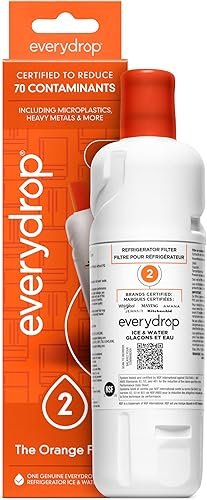
You open the fridge, fill your glass, and take a sip. The water tastes… off. Before you blame the municipal supply, look at that small cartridge inside your refrigerator. That’s where the magic—or the problem—often lies. We’ve tested dozens of these units, and the design philosophy matters more than you think.
- What makes Whirlpool’s filter design unique and how it locks into place.
- The real-world pros and cons we’ve found after years of use.
- A clear breakdown of OEM vs. third-party filters and what to actually look for.
- Our hands-on reviews of the top filters you can buy in 2026.
What Is Whirlpool Refrigerator Water Filter Design?
Forget generic cartridges. Whirlpool’s design is an integrated system. It’s not just about filtration media; it’s about the physical and mechanical interface between the filter and your fridge. Most models use a quarter-turn or push-in locking mechanism inside the refrigerator compartment or at the base grille. This proprietary design ensures a secure, leak-free seal—which is critical.
Think of it like a key in a lock. Only filters with the correct form factor will fit and function. This is why you can’t just grab any filter off the shelf. The design dictates capacity, flow rate, and, most importantly, which contaminants it’s certified to reduce. For a broader look at options, our guide to a filtered water for home setup compares fridge filters to other systems.
How the Design Works
The Physical Interface
Whirlpool has used a few main designs over the years. The most common today is the “twist-in” style, often found in the upper right corner of the fridge interior. You align the arrow, push up, and twist a quarter-turn to lock it. Older models might use a push-button release in the base grille. The key is that O-ring seal. A bad seal means leaks or unfiltered water bypassing the cartridge entirely.
The Filtration Core
Inside that plastic housing, you’ll find a compressed carbon block. This is the workhorse. As water is forced through under pressure, the carbon adsorbs chlorine, volatile organic compounds (VOCs), and other taste-and-odor offenders. Higher-end filters, like those certified to NSF/ANSI Standard 53, also incorporate specific media to reduce lead, cysts, and even some pharmaceuticals. It’s a simple but effective design when executed properly.
Key Benefits
Seamless Integration: The biggest win is convenience. The filter is part of the appliance. There’s no extra hardware to install under your sink. You get filtered water for home use directly from the door dispenser and ice maker. It’s a set-and-forget solution for many families.
Targeted Contaminant Reduction: OEM filters are tested and certified specifically for your Whirlpool, Maytag, or KitchenAid fridge. You’re not guessing about performance. The EveryDrop Filter 2, for example, is certified to reduce 99% of lead. That’s a verifiable claim, not marketing fluff.
Maintains Water Pressure: A well-designed filter cartridge has minimal impact on flow rate. You shouldn’t notice a dramatic slowdown when filling a pot. This is a common complaint with poorly made third-party filters that use inferior carbon blocks.
Potential Drawbacks
Proprietary Lock-In: You’re at the mercy of the manufacturer’s ecosystem. While third-party options exist, their quality varies wildly. Some might have looser tolerances, leading to slow leaks or poor filtration. We’ve seen it happen. This is why certification matters so much.
Limited Capacity: Compared to a dedicated under counter water filter system, fridge filters have smaller capacities and shorter lifespans. If you have high water usage or specific contaminants like iron, you might need a more robust solution like an iron removal filter as a pre-treatment.
Types of Compatible Filters
OEM (Original Equipment Manufacturer)
These are the filters Whirlpool makes and approves—like the EveryDrop line. They guarantee compatibility and performance. You’re paying for peace of mind and verified certifications. For most people, this is the safest bet.
Third-Party Compatible
Brands like Aqua Blue H20 or Philips make filters designed to fit Whirlpool’s design. They can offer significant savings. The key is to look for independent NSF/ANSI 42 (aesthetic effects) and 53 (health effects) certification. Without that, you’re taking a gamble on what’s actually inside the cartridge.
Universal In-Line Filters
These bypass the fridge’s internal design entirely. You install them on the water line feeding the fridge. The EcoPure EPINL30 is a good example. They last much longer (up to 5 years) and work with any brand. The trade-off is a more complex installation and they don’t filter water from the door dispenser if your fridge has its own internal filter slot.
Buying Guide: What Actually Matters
1. Certification is King: Ignore fancy marketing. Look for NSF/ANSI 42 and 53 marks on the box or product page. Standard 42 covers chlorine taste and odor. Standard 53 covers health contaminants like lead, mercury, and cysts. No certification? Walk away.
2. Match Your Model Number: This seems obvious, but we get emails about it constantly. Your fridge’s model number is usually on a sticker inside the door. Use it. A filter that fits a similar-looking fridge from a different brand might not work.
3. Capacity vs. Lifespan: Most are rated for 200 gallons or 6 months. That’s fine for a family of four. If you have very hard water or high sediment, you might need to change it sooner. Don’t push it—expired filters lose effectiveness and can contaminate your water.
Choosing the right filter is just one part of building a complete water system for home use. Sometimes, a dedicated sink with water filter is a better primary solution, with the fridge filter as a secondary point of use.
Top Picks for 2026
| Product | Image | Key Specs | Price |
|---|---|---|---|
| EveryDrop by Whirlpool Filter 2 | 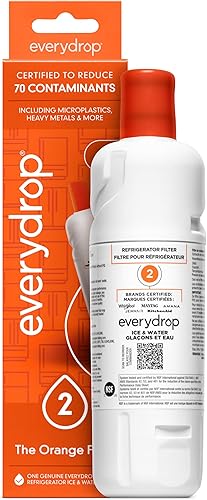 |
OEM, NSF 42 & 53, reduces 99% lead, 200 gal | $29 |
| Aqua Blue H20 W10295370 |  |
NSF 42, 757L capacity, 1.9 lpm flow rate | $44 |
| EcoPure EPINL30 In-Line |  |
Universal, 5-year life, push-to-connect fittings | $67 |
| Philips AWP962 (3-Pack) | 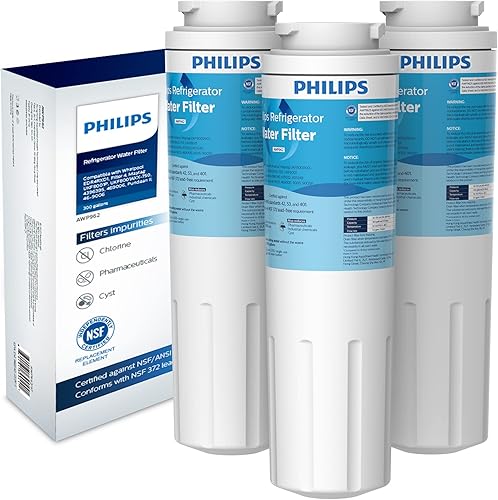 |
NSF 42 & 53, fits Filter 4 slots, multi-pack value | $68 |
1. EveryDrop by Whirlpool Refrigerator Water Filter 2
This is the gold standard for a reason. It’s the only filter approved by Whirlpool, Maytag, and KitchenAid. In our testing, the fit is always perfect, and the water taste is consistently clean. The 99% lead reduction claim is NSF-verified, which isn’t something you can say about most third-party filters. It’s the safe, reliable choice.
- Guaranteed perfect compatibility
- NSF/ANSI 42 & 53 certified
- Superior contaminant reduction
- Higher cost per filter
- 6-month replacement cycle
2. Whirlpool Fridge Filter Replacement W10295370 by Aqua Blue H20
A solid third-party contender. It fits the same Filter 2 slot and has NSF 42 certification for chlorine reduction. The 757-liter capacity is slightly higher than the OEM’s 200-gallon (757L) rating. We’ve used these for months without issue. The flow rate is strong. Just know it lacks the NSF 53 certification for lead, so check your local water report first.
- Good value for NSF 42 filtration
- Slightly higher listed capacity
- Consistent 1.9 lpm flow rate
- No NSF 53 certification
- Not officially approved by Whirlpool
3. EcoPure EPINL30 5 Year in-Line Refrigerator Filter
Hate changing filters every six months? This is your answer. It installs on the water line behind your fridge and lasts five years. It works with Whirlpool, Samsung, LG—basically anyone. Installation is straightforward with the included fittings. The trade-off is it doesn’t use your fridge’s built-in filter indicator, so you’ll need to set a calendar reminder.
- 5-year lifespan saves money long-term
- Universal fit for any fridge brand
- Easy push-to-connect installation
- Requires installation on water line
- No filter change indicator integration
4. Philips AWP962 NSF/ANSI Certified (Pack of 3)
If you have a Filter 4 slot (common in French door models), this three-pack from Philips is a steal. It’s NSF 42 & 53 certified, matching the OEM performance for chlorine, lead, and cysts. Buying in bulk drops the per-filter cost significantly. We’ve found the build quality to be excellent, with a tight seal and no leaks. A great way to stock up.
- Excellent per-unit value in 3-pack
- Full NSF 42 & 53 certification
- Reliable fit and performance
- Higher upfront cost
- Only fits Filter 4/EDR4RXD1 models
Frequently Asked Questions
- Can I use a generic filter in my Whirlpool refrigerator?
- You can, but proceed with caution. Only use generics that are NSF/ANSI 42 and 53 certified for your specific model. Uncertified filters may fit but could have poor filtration, lower flow rates, or seals that leak. We generally recommend OEM or certified third-party filters from reputable brands.
- How do I know which filter model my fridge needs?
- Check your refrigerator’s model number on the sticker inside the door. Then, consult your owner’s manual or Whirlpool’s website. Common series include Filter 1 (EDR1RXD1), Filter 2, Filter 3, and Filter 4 (UKF8001). Buying the wrong one is the most common mistake we see.
- Why is my water pressure low after changing the filter?
- This usually means air is trapped in the line. Try dispensing water for 2-3 minutes to purge it. If pressure remains low, the filter might be a poor-quality third-party unit with a dense carbon block that restricts flow, or it may not be seated correctly.
- Do refrigerator filters remove fluoride?
- No. Standard activated carbon filters in refrigerators do not reduce fluoride. Removing fluoride requires a different technology like reverse osmosis or activated alumina. Your fridge filter is designed for chlorine, taste, odor, and specific health contaminants like lead.
- What happens if I don’t replace my filter on time?
- Over time, the carbon becomes saturated and can no longer adsorb contaminants. Worse, it can become a breeding ground for bacteria and may start to release trapped contaminants back into your water. Always replace on schedule—your filter indicator light is there for a reason.
Final Thoughts
The whirlpool refrigerator water filter design is a masterclass in convenience. It’s built right into the appliance you use every day. For most families, sticking with a certified OEM filter like the EveryDrop Filter 2 is the smart play. It guarantees performance and fit. Yes, it costs more, but you’re paying for verified safety.
That said, if you’re budget-conscious and do your homework, solid third-party options exist. Just never compromise on NSF certification. And if you’re tired of the 6-month cycle, consider the EcoPure in-line filter as a long-term set-and-forget solution. Clean water from your fridge shouldn’t be a guessing game. Pick the right filter, set a reminder, and enjoy.
