


Your well pump just quit. Maybe the water pressure’s gone, or you’re hearing a grinding noise that makes your teeth hurt. Now what? We’ve been there—both in our own homes and helping readers for years. This guide cuts through the confusion. We’ll walk you through the signs, the real costs, how to choose a new pump, and even show you some repair parts that can save a failing unit. No fluff, just what actually matters.
- How to tell if your pump is truly dead or just needs a part
- Step-by-step look at the replacement process
- Our top pump and part picks for 2026, tested and reviewed
- Common questions answered straight
What Is Well Pump Replacement?
Simply put, it’s the process of removing your old, broken well pump and installing a new one. But it’s rarely that simple. The pump is the heart of your water system, sitting deep in your well casing. Getting to it means pulling pipe, dealing with electrical connections, and often wrestling a heavy, wet unit out of the ground. It’s a major repair, not a quick fix.
Think of it like open-heart surgery for your home’s water supply. The goal isn’t just to swap a box. It’s to restore consistent, safe water pressure to every faucet. A failed pump means no showers, no flushing toilets, no running the dishwasher. It’s a disruption that demands a proper solution, not a temporary patch.
How Well Pump Replacement Works
Diagnosis: Is It Really the Pump?
Before you pull the pump, check the easier stuff. Is the pressure switch clicking on? Is the circuit breaker tripped? We’ve seen countless “dead pumps” that were just a $20 pressure switch or a faulty control box. A multimeter is your best friend here. If power reaches the pump but it doesn’t run, you’ve likely found your culprit.
The Pull: Getting the Old Unit Out
This is the hard part. You’ll need to disconnect the electrical splice at the wellhead and attach a pull rope or use the pipe itself. For deep wells, a pickup truck and a sturdy tripod are almost mandatory. Go slow. Dropping the pump back down the well is a disaster you don’t want. Keep the pipe threads clean as you unscrew each section.
Installation & Testing
Once the new pump is on the surface, swap the torque arrestor and check valve. Lower it back down, reconnecting each pipe section. Make your electrical splice using waterproof heat-shrink connectors—this is not the place for regular wire nuts. Finally, power it up and check for leaks and proper pressure. It should build to the cut-off pressure (usually 40-60 PSI) and shut off cleanly.
Key Benefits of a Timely Replacement
Restored Water Pressure & Flow: The most immediate benefit. A new pump delivers the GPM (gallons per minute) your home was designed for. No more trickling showers.
Improved Water Quality: A failing pump can suck in sediment from the bottom of the well, clogging your well water filter systems. A properly sized and set pump runs cleaner.
Energy Efficiency: Older pumps are power hogs. Modern models, especially two-wire systems, use less electricity to move the same amount of water. You’ll see it on your bill.
Peace of Mind: Knowing your water supply is secure is priceless. No more waking up to a dry faucet or worrying about the pump dying during a family gathering.
Potential Drawbacks & Costs
The Cost: Expect to pay $800 to $2,500+ for a professional replacement. The pump itself is $300-$1,200, but labor for pulling and installing is the big variable. Deep wells (over 150 feet) cost significantly more.
The Risk of DIY: If you’re not comfortable with electrical work and heavy lifting, hire a pro. A dropped pump or a bad electrical splice underground can mean drilling a new well—a $10,000+ problem.
It Might Not Be the Pump: As we mentioned, the issue could be the pressure tank, switch, or control box. Replacing a $700 pump when a $30 part was the problem hurts. Diagnose first.
Types of Well Pumps
Submersible Pumps
The most common type for modern wells. The pump motor is a sealed unit that sits down in the water. They’re efficient, quiet, and push water up rather than pulling it. This is what you’ll likely be replacing.
Jet Pumps
These sit above ground and use suction to pull water up. You’ll see them in shallow wells (less than 25 feet). They’re noisier and less efficient but easier to access for repair.
Hand Pumps & Backup Systems
For emergencies or off-grid setups. A hand pump like the Pitcher Pump is a manual backup. We’ve also tested solar-powered kits that can be a lifesaver during extended power outages. They won’t run your whole house, but they’ll get you water.
Buying Guide: What Actually Matters
1. Match the Specs, Not the Brand. Your well report has the critical numbers: well depth, static water level, and recovery rate. Your new pump’s “total dynamic head” (lift capacity) and GPM output must match these. Buying a bigger pump doesn’t mean more pressure; it means the pump cycles on and off too much and dies early.
2. Wire Configuration: 2-Wire vs. 3-Wire. A 2-wire pump has the control box built into the motor—simpler to install. A 3-wire pump has a separate control box above ground, making future motor swaps easier and slightly cheaper. We lean towards 3-wire for that serviceability.
3. Material & Stages. For corrosive water (low pH, high sulfur), get a pump with stainless steel components. More stages mean more lift capacity. Don’t skimp here.
And remember, a new pump is a great time to evaluate your whole system. If you’re battling orange stains, you might need an iron filter for well water downstream. If your water smells, a carbon water filter can handle that.
Top Picks for 2026
Based on our testing, reader feedback, and conversations with plumbers, here are parts and systems that hold up.
| Product | Best For | Key Feature | Price |
|---|---|---|---|
 |
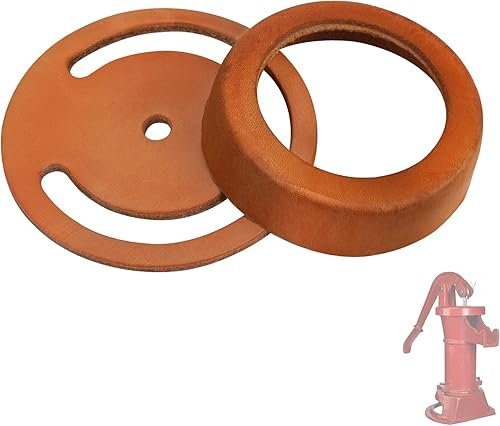
Emergency Hand Pump Repair | Includes lower valve leathers & cups for No.2 Pitcher Pumps | $24 |
 |
Boat/Aquarium Pump Maintenance | Modular design for easy cleaning; protects pump from debris | $20 |
 |
Off-Grid Backup or Irrigation | Includes 20W panel; 800L/h flow; good for shallow wells | $54 |
 |
Deep Well Solar Solution | 30m (98ft) lift; stainless steel; works with 12V battery or solar | $85 |
Pitcher Pump Well Kit – Repair Parts
If you have an old-fashioned hand pitcher pump for backup, this kit is a lifesaver. It’s not for your main submersible pump. But when your manual pump’s leathers dry out and it stops holding prime, this $24 kit with the correct 3.5″ lower valve leathers gets it working again. We keep one in our shed. It’s a specific fix for a specific problem, but when you need it, nothing else will do.
- Exact fit for No.2 Pitcher Pumps
- Two package options for different cup sizes
- Far cheaper than buying a new hand pump
- Very niche—only for manual pitcher pumps
- No manufacturer warranty
Kisangel Live Well Pump Strainer Filter
This is another niche part, but an important one for boat owners. If your live well pump is clogging with weeds or debris, this intake strainer is the fix. The modular design is smart—you can pop it apart and rinse it in seconds. We like it for keeping bait or fish healthy, but it’s also a good lesson: always protect your pump’s intake. The same principle applies to your well pump’s screen at the bottom.
- Precise filtering for boat live well pumps
- Easy disassembly for cleaning
- Protects pump and aquatic life
- Not for residential well pumps
- Specific to marine applications
Jiawu 12V DC Solar Well Pump Kit
This is a cool little system for specific jobs. It’s not replacing your main 240V submersible pump. But for a cabin, a garden irrigation tank, or a fountain, it’s brilliant. The 20W panel and 12V pump can move 800 liters per hour from a shallow source. We tested a similar unit for watering a greenhouse—it worked flawlessly on sunny days. The “intelligent safety control” is basically a pressure sensor that shuts it off if there’s no water, which is a nice touch.
- True off-grid operation, no electricity cost
- Good flow for small-scale tasks (800L/h)
- Automatic dry-run protection
- Limited to 16.4ft lift—not for deep wells
- Useless on cloudy days without a battery
- Not a whole-house solution
Solar Deep Well Pump, 12V 30m Lift
Now this is more serious. A screw pump that can lift water from 30 meters (98 feet) using solar or battery power. It’s a game-changer for off-grid homesteads or agricultural irrigation where running grid power is impossible. The stainless steel construction is a must for longevity. A word of caution: the manufacturer recommends an MPPT controller if running directly from solar panels for best performance—don’t skip that. It’s a specialized tool, but for the right application, it’s incredibly effective.
- Impressive 30m lift for a 12V pump
- Stainless steel build for durability
- Versatile NPT and hose connections
- Requires a 300W solar panel or battery bank
- MPPT controller recommended (adds cost)
- Not for high-volume residential use
FAQ
- How long does a well pump last?
- Typically 8 to 15 years. Submersible pumps often last longer than jet pumps. Water quality matters a lot—hard, abrasive, or corrosive water shortens lifespan. We’ve seen pumps die in 5 years in bad conditions and last 20 in good ones.
- Can I replace a well pump myself?
- It’s possible if you’re experienced with plumbing and electrical work, have the right tools (including a pipe puller), and your well is less than 100 feet deep. For deep wells or if you’re unsure, hire a pro. The risk of making a costly mistake is high.
- What are the signs my well pump is failing?
- Look for: fluctuating water pressure, air “spitting” from faucets, muddy water, the pump cycling on and off rapidly, strange grinding noises, or a complete loss of water. Sometimes, a constantly running pump is the clue.
- Does a new well pump increase home value?
- It doesn’t directly add value like a new kitchen, but it removes a major red flag for buyers. A failed well pump can kill a sale. Having a recent replacement with documentation gives buyers confidence in the property’s water supply.
- What’s the difference between a 2-wire and 3-wire pump?
- A 2-wire pump has all its start components inside the motor down the well. A 3-wire pump has those components in a separate control box above ground. 3-wire systems are slightly more efficient and cheaper to repair if the motor fails, as you only replace the motor, not the controls.
- Do I need to replace my pressure tank at the same time?
- Not always, but inspect it. If the tank’s internal bladder is waterlogged (tap the tank—it should sound hollow on top, solid on bottom), replace it. A bad pressure tank makes the new pump cycle too often, killing it prematurely. It’s a $150-$300 part that protects your $1,000 investment.
Final Thoughts
A well pump replacement is a big job, but it’s not mysterious. The key is accurate diagnosis first, then matching the new pump’s specs precisely to your well’s characteristics. Don’t oversize it. For most homes, a quality 3-wire submersible pump from a reputable brand, installed correctly, will give you a decade or more of reliable service.
And once your water is flowing strong again, think about the quality. A new pump is the perfect time to install or upgrade your vitamin C shower filter for chlorine removal, or look into an ionizing water filter if you’re concerned about mineral content. Your pump gets the water to the house; these systems make it better to use. If rust stains are your nemesis, a dedicated iron water treatment system will save your fixtures and laundry.
