



You’ve probably wondered what’s actually in your tap water. That slightly off taste, the white scale on your kettle, or a news report about local contaminants can make anyone nervous. The truth is, you can’t fix a problem you don’t understand. That’s where water quality analysis comes in—it’s the detective work that tells you exactly what you’re dealing with.
- What water quality analysis really means and why it matters.
- How home test kits work and what they can (and can’t) tell you.
- The key benefits and honest limitations of DIY testing.
- A clear breakdown of the different types of tests available.
- Our top product picks for 2026, from budget strips to more advanced options.
What Is Water Quality Analysis?
Think of water quality analysis as a health check-up for your water. It’s not some vague, mystical process. It’s simply measuring the physical, chemical, and biological characteristics of your water against established safety standards. We’re talking about things you can’t see: dissolved minerals, chlorine residuals, heavy metals like lead, or bacteria.
The goal isn’t to scare you. It’s to give you facts. Your municipal water supplier does this constantly at the treatment plant. But a lot can happen between their tests and your tap—old pipes, local construction, or your home’s own plumbing can introduce new issues. That’s why a home water quality analysis puts the control back in your hands. It answers the simple question: “Is my water safe, and what’s in it?”
How Water Quality Analysis Works
At its core, testing is about reaction and measurement. You introduce a sample of your water to a reagent or a sensor, and it gives you a result. How accurate that result is depends entirely on the method you choose.
The Science in Your Hand: Test Strips & Drops
Most home kits use colorimetric analysis. You dip a treated strip into your water or add a few drops of a reagent. Chemicals on the strip or in the drops react with specific contaminants—like chlorine, nitrate, or hardness minerals—and change color. You then compare that color to a chart. It’s fast, cheap, and surprisingly effective for a broad screening. For a more precise reading on a single parameter, like pH, liquid drop tests can be more reliable than strips.
Professional Lab Analysis
For the gold standard, you send a sample to a certified lab. They use advanced equipment like spectrophotometers and mass spectrometers. This is how you get exact numbers for contaminants like lead, PFAS, or volatile organic compounds (VOCs) down to parts per billion. It’s the method you need if you have serious health concerns or are dealing with well water. The process for installing a proper fix, like a whole house sediment filtration system, often starts with this kind of detailed lab report.
Key Benefits of Testing Your Water
Peace of Mind is Priceless. Honestly, the biggest benefit is simply knowing. That vague worry about “what’s in the water” disappears. You get a clear picture, which lets you make smart decisions instead of guessing.
Target Your Solution, Save Your Money. This is the single biggest mistake we see: people buying expensive filters without testing first. You might spend hundreds on a system to remove chlorine when your real problem is hard water. A $20 test kit can save you from a $500 wrong purchase. It tells you if you need a simple carbon filter, a softener, or a more specialized iron curtain water filter.
Monitor Your Filtration System’s Health. Filters don’t last forever. Testing periodically tells you when it’s time to change cartridges. It’s the only way to verify your advanced water purification system is still doing its job.
Potential Drawbacks & Limitations
The Accuracy Trade-off. You get what you pay for. A cheap strip might tell you “yes, there’s chlorine,” but it won’t distinguish between 0.5 mg/L and 2.0 mg/L very well. User error is also a factor—timing the dip wrong or reading the color in poor light can skew results.
They Don’t Test for Everything. Most home kits check for 10-20 common parameters. They won’t find pharmaceuticals, microplastics, or specific industrial chemicals. If you’re on well water near farms, you might need a specific test for pesticides that a standard kit won’t include. For some contaminants, a multi-stage system like a distillation system might be the only practical solution, but you need to know what you’re targeting first.
Types of Home Water Tests
Test Strips
The most common and affordable option. You dip a small paper strip with colored squares into your water for a second, wait 30 seconds, and compare. Great for a quick, broad check on pH, hardness, chlorine, nitrate, and alkalinity. Perfect for routine monitoring.
Liquid Reagent/Drop Tests
These involve adding drops of a chemical to a water sample until a color change occurs. They’re often more accurate than strips for a single parameter, like pH or chlorine. The classic pool test kit is a good example. They require a bit more care but give better readings.
Digital Meters
For a precise number, not a color comparison. A TDS (Total Dissolved Solids) meter gives you a conductivity reading, which is a proxy for overall mineral content. Specialty meters exist for pH, chlorine, or ammonia. They cost more but eliminate the guesswork of reading a color chart. If you’re collecting rainwater, a TDS meter is invaluable for checking purity.
Buying Guide: What to Look For
Don’t just buy the first kit you see. Here’s what actually matters.
Parameters Tested: Match the kit to your worry. Just concerned about scale? A hardness and pH test is enough. Worried about old pipes? Make sure it tests for lead and copper. The 18-in-1 strips are a good starting point for a general overview.
Certifications & Standards: Look for kits that reference EPA or equivalent standards. It doesn’t mean the EPA approved the kit, but it means the manufacturer designed it to detect contaminants at levels the EPA considers actionable. It’s a good sign of seriousness.
Clarity of Results: The color chart should be easy to read. Some kits use confusing gradients. Others have clear “safe/unsafe” zones. In our testing, the simpler, the better.
Shelf Life: Test strips degrade. Always check the expiration date. An old kit will give you false readings. Buy from a seller with good turnover.
Our Top Picks for 2026
We’ve tested dozens of kits over the years. Here’s a quick comparison of the ones worth your money right now.
| Product | Best For | Key Feature | Price |
|---|---|---|---|
 |
Comprehensive Home Screening | Tests 18 parameters including lead & hardness | $27 |
 |
Pool & Spa Owners | 100 tests for pH and chlorine, very simple | $18 |
 |
Budget Multi-Parameter | 125 strips for 18 tests, great value | $20 |
 |
Accurate pH Monitoring | 50ml bottle for numerous precise pH tests | $11 |
 |
Ultra-Budget Basic Check | Tests chlorine, pH, alkalinity, hardness | $2.97 |
18-in-1 Water Quality Test Strips
This is our go-to recommendation for anyone starting out. It casts a wide net. You’ll check for everything from free chlorine and hardness to lead, mercury, and copper in one dip. The results are clear, and the inclusion of a test tube is a nice touch. It’s not lab-accurate, but for a $27 screening, it’s incredibly revealing. We use these ourselves for quick checks on new filter installations.
- Tests an impressive 18 parameters
- Easy 3-step process with results in 30 seconds
- Includes 125 strips and a test tube
- Clear color chart with defined ranges
- Color comparison can be subjective in low light
- Not a substitute for a professional lab test for lead
Swimming Pool Water Quality Test Tablets
Forget pools for a second—these are fantastic for focused drinking water checks. You get 100 tests each for pH and chlorine (DPD1). The tablet method is more reliable than strips for these two critical parameters. The ideal ranges printed on the vial (pH 7.0-7.4, Cl 0.5-1.0 mg/L) are perfect for tap water. Simple, cheap, and effective.
- Very accurate for pH and chlorine levels
- 100 tests per parameter is excellent value
- Dead simple to use
- Ideal ranges clearly marked
- Only tests two parameters
- Requires a separate vial (not included)
pH Test Drop
If you’re serious about monitoring your water’s pH—especially if you have a reverse osmosis system or are adjusting water for an aquarium—this drop test is the way to go. It’s more precise than strips. The 50ml bottle lasts for ages. We found it gives a clearer, more definitive color change than most strips, making it easier to get a true reading.
- High accuracy for pH measurement
- Large 50ml supply for many tests
- Easy-to-read color reaction
- Great for verifying filter performance
- Only tests pH
- Slightly more involved process than strips
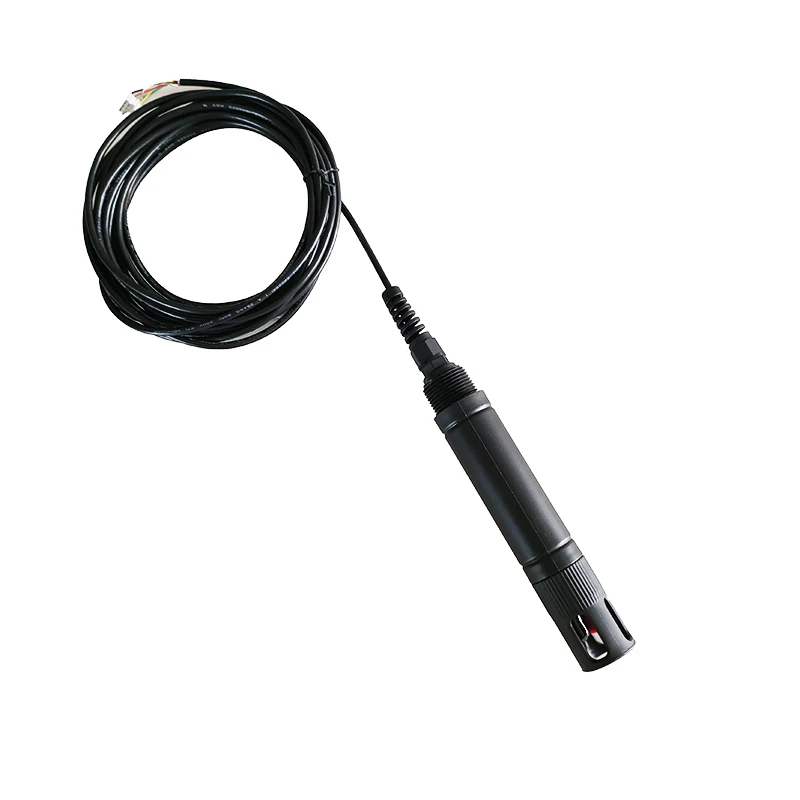
NH3/NH4 Ammonia Nitrogen Meter
This is a different beast. It’s a digital meter for a specific, serious parameter: ammonia nitrogen. If you have a well, a septic system nearby, or are testing aquarium or aquaculture water, this gives you a direct digital readout. It’s not for casual kitchen tap testing. But for its specific purpose, it’s a powerful tool that eliminates color-matching guesswork entirely.
- Digital readout for precise ammonia nitrogen levels
- Essential for well water and aquaculture monitoring
- No subjective color matching
- Very specific—only tests ammonia/ammonium
- Higher cost than basic kits
- Overkill for most municipal tap water users
Frequently Asked Questions
- How often should I test my home water quality?
- Test annually if you’re on a municipal supply. If you use well water, test every year for bacteria and nitrates, and every 3-5 years for a full panel. Also test anytime you notice a change in taste, odor, or color, or after any work on your plumbing or local water mains.
- Can home water test kits detect lead?
- Many multi-parameter strips include a test for lead, but they can only tell you if it’s above or below a certain threshold (like 15 ppb). They are a good screening tool. If you suspect lead from old pipes or solder, a positive result from a home kit means you should immediately get a professional lab test for confirmation.
- What’s the difference between a TDS meter and a water test kit?
- A TDS meter only measures total dissolved solids—basically, the overall mineral content. It won’t tell you what those minerals are. A test kit identifies specific contaminants like chlorine, lead, or nitrate. They serve different purposes. Use a TDS meter to monitor your filter’s general performance and a test kit to identify specific problems.
- My water tastes fine. Do I still need to test it?
- Yes. Many of the most concerning contaminants—like lead, arsenic, or nitrate—are tasteless, odorless, and colorless. Good taste is not a reliable indicator of safety. A basic test is a cheap form of insurance.
- Are more expensive test kits always better?
- Not always. A $20 multi-parameter strip kit is often a better investment than a $50 kit that tests for fewer things. Accuracy matters more than price. Look for kits that reference EPA methods and have clear, recent expiration dates. Sometimes you’re paying for fancy packaging, not better chemistry.
- What should I do if my test shows a problem?
- Don’t panic. First, re-test to confirm. Then, identify the contaminant. For aesthetic issues like hardness or chlorine, a point-of-use filter is the solution. For health-related contaminants like lead or bacteria, stop drinking the water, use bottled water, and contact your local water authority or a certified lab for a confirmatory test. They can guide you on next steps.
Final Thoughts
Water quality analysis isn’t about being paranoid. It’s about being practical. You test the oil in your car, you check the smoke detectors in your home—your drinking water deserves the same basic diligence. A simple test is the first, most important step in taking control of what comes out of your tap.
Don’t overthink it. Grab a reliable multi-parameter kit like our top pick, run the test, and look at the results. From there, you can make an informed decision—whether that’s doing nothing, installing a simple carbon filter, or exploring a more advanced stage filtration system. Knowledge is power, and in this case, it’s also the foundation for cleaner, better-tasting water for you and your family.
