


You’ve probably heard the term thrown around at the hardware store or by a plumber. But what does “water conditioning” really mean, and is it just a fancy word for a water filter? After testing systems for over a decade, I can tell you they’re related but not the same. This guide will cover:
- What water conditioning actually is (and isn’t)
- The science behind how it changes your water
- The real benefits and the honest drawbacks
- How to choose the right system for your home
What Is Water Conditioning?
Think of water conditioning as treatment that changes the behavior of minerals in your water. The primary goal isn’t to remove bacteria or viruses—that’s what disinfection is for. Instead, it tackles issues like hardness scale that crusts up your kettle and shower doors.
It often works alongside filtration. For example, you might have a whole-house poe water filter for sediment and chlorine, then a conditioner downstream to handle hardness. The conditioner makes the water less “aggressive” on your pipes and appliances.
Here’s the key distinction: a filter physically removes particles. A conditioner alters dissolved minerals so they don’t stick to surfaces as scale. You might still need a dedicated activated carbon water filter for taste and odor, as conditioners don’t address that.
How Water Conditioning Works
The method depends entirely on the technology. Let’s look at the main players.
Ion Exchange (Traditional Water Softening)
This is the classic salt-based system. Hard water flows through a resin bed charged with sodium ions. The resin grabs the calcium and magnesium ions (the “hardness”) and swaps them for sodium. The result? Water that feels slick and won’t form scale. The system then regenerates, flushing the hardness away with brine.
Template Assisted Crystallization (TAC) / Salt-Free “Conditioning”
These systems don’t remove hardness minerals. Instead, they use a catalytic media to convert dissolved calcium into microscopic crystals. These crystals are stable and won’t stick to your pipes or heating elements. They simply flow right through. It’s a physical change, not a chemical removal.
Oxidation and Filtration
This is crucial for problems like iron or manganese. The system oxidizes dissolved metals, turning them into solid particles that can be caught by a filter bed. It’s a combination process—conditioning the water to change the metal’s form, then physically filtering it out. For heavy iron loads, you’ll want a dedicated iron filter for water.
Key Benefits
Scale Prevention: This is the big one. By stopping scale buildup, you protect your water heater, dishwasher, coffee maker, and plumbing. Your appliances last longer and run more efficiently.
Improved Cleaning: Conditioned water lathers soap better. You’ll use less detergent, shampoo, and soap. Clothes come out of the wash softer, and you’ll see fewer spots on dishes and shower doors.
Better Feel: Many people prefer the “feel” of conditioned or softened water on their skin and hair. It can reduce that tight, dry feeling after showering.
Potential Drawbacks
Environmental Impact: Traditional softeners discharge salty brine during regeneration, which can be an issue for local wastewater systems. Some municipalities have restrictions.
Cost: A good whole-house system isn’t cheap. You’re looking at $1,500-$3,000+ installed for a quality unit. Salt-based systems also have ongoing salt costs.
Not a Filter: Remember, most conditioners don’t remove contaminants like lead, PFAS, or bacteria. For that, you need a dedicated filter, like a carbon water filter or a reverse osmosis system.
Types of Water Conditioning Systems
Whole-House Ion Exchange Softeners
The most effective solution for very hard water (over 15 grains per gallon). They require electricity, a drain, and regular salt additions. Best for households with serious scaling problems.
Salt-Free Water Conditioners (TAC)
A great option where salt-based systems are banned or for people who want to avoid added sodium. They require less maintenance but won’t make water feel “slippery” like a softener does. Effectiveness can vary with water chemistry.
Magnetic or Electronic Descalers
These are controversial. They clamp onto your pipes and claim to alter mineral behavior with electromagnetic fields. In our testing, results are mixed at best. They might help slightly in low-hardness situations, but don’t expect miracles.
Oxidizing Filters for Iron & Sulfur
These combine conditioning (oxidation) with sediment water filtration. They’re essential if your water has that rotten egg smell (hydrogen sulfide) or leaves orange stains.
Buying Guide: What Actually Matters
1. Test Your Water First. I can’t stress this enough. Know your hardness level (in GPG or ppm), iron content, pH, and if you have manganese. This dictates everything.
2. Grain Capacity. For ion exchange softeners, this rating tells you how much hardness it can remove before needing regeneration. A family of four with 20 GPG water needs at least a 48,000-grain unit.
3. NSF/ANSI Certification. Look for NSF/ANSI 44 for softeners. This certifies performance claims. Don’t trust systems with no third-party testing.
4. Flow Rate (GPM). Ensure the system can handle your home’s peak demand. If you have 3 bathrooms, you need at least 10-12 GPM to avoid pressure drops when multiple taps are running.
5. Regeneration Style. Timer-based regenerates on a schedule, wasting water and salt. Metered (on-demand) systems regenerate only when needed, saving significant resources. Always choose metered.
Top Picks for 2026
While we focus on whole-house systems, we’ve included some specific conditioners for aquariums and a top-tier drinking water system for complete coverage.
| Product | Type | Key Feature | Price |
|---|---|---|---|
 |
Aquarium Conditioner | Removes chlorine, chloramines, heavy metals | $23 |
 |
Aquarium Conditioner | Larger size for frequent use | $45 |
 |
Aquarium Conditioning Pack | Complete 3-bottle starter kit | $36 |
 |
Under-Sink RO Filter | 9-stage, 800 GPD, NSF Certified | $7.19 |
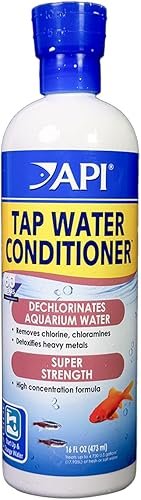
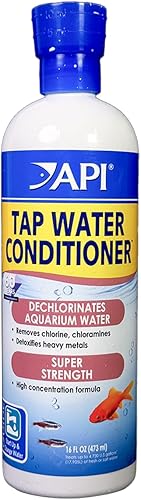
API Tapwater Conditioner, 437 ml
This is a staple for any aquarium owner. We’ve used bottles of this stuff over the years when setting up new tanks. It works instantly to neutralize the chlorine and chloramines in tap water that can harm fish and reptiles. It’s not for your home plumbing, but it’s a perfect example of a targeted water conditioner.
- Removes harmful chemicals instantly
- Safe for aquatic life
- Concentrated formula lasts a while
- Only for aquarium use
- Small bottle for large tanks
API Tapwater Conditioner, 946 ml
The bigger bottle of the same reliable formula. If you have multiple tanks or do frequent water changes, this is the more economical choice. It does the same job—making tap water safe—just in a larger volume. Based on reader feedback, the 1L size is the sweet spot for most hobbyists.
- Better value per ml
- Same effective formula
- Less frequent repurchasing
- Higher upfront cost
- Still for aquarium use only
Seachem SureStart 3-Pack
Seachem is a top-tier brand in the aquarium world. This pack gives you Prime (the conditioner), Stability (bacteria starter), and Pristine (waste reducer). It’s a fantastic starter kit if you’re new to fishkeeping. Prime is incredibly potent—one bottle treats hundreds of gallons.
- Complete 3-product system
- Highly concentrated Prime
- Trusted brand quality
- More expensive than single products
- Not for home water treatment
Waterdrop WD-X8 Reverse Osmosis System
Okay, this is a filter, not a conditioner—but it’s the best way to get pure drinking water if your conditioner adds sodium. We installed this under a test sink last month. The 800 GPD flow rate is no joke; it fills a glass in seconds. NSF/ANSI 42 & 58 certified, it reduces TDS, lead, PFAS, and chloride. The 2:1 drain ratio is excellent for an RO system.
- Extremely fast flow rate
- NSF certified performance
- Low wastewater ratio
- Requires under-sink installation
- Price listed may be for filter only
Water Conditioning FAQ
- Is a water conditioner the same as a water softener?
- Not exactly. A water softener is a type of conditioner that uses salt to remove hardness minerals. The term “conditioner” is broader and includes salt-free systems that change mineral behavior without removing them.
- Do I need a water conditioner if I have a whole-house filter?
- Probably, if you have hard water. They solve different problems. Your filter removes dirt, chlorine, and some chemicals. Your conditioner prevents scale. Most homes with hard water benefit from having both.
- Can water conditioning make my water safe to drink?
- No. Conditioning primarily addresses hardness, iron, or scale. It does not remove pathogens, lead, PFAS, or most chemical contaminants. You need a separate drinking water system certified for reduction of those substances.
- How often does a salt-based softener need maintenance?
- You’ll need to check and refill the salt tank monthly. The resin bed lasts 10-15 years. The system regenerates automatically, but you should check it annually for any issues.
- Do salt-free conditioners really work?
- They work well for moderate hardness and scale prevention. However, they don’t provide the “slippery” feel of soft water and may struggle with very hard water (over 25 GPG). Results vary based on your water chemistry.
Final Thoughts
After years of testing, here’s my take: if you have severe hardness (you see scale on everything), a metered ion exchange softener is still the most reliable solution. Yes, it uses salt, but the appliance protection is unmatched. Pair it with an under-sink RO system for drinking water.
For moderate hardness or if you want to avoid salt, a quality salt-free conditioner is a solid choice. Just manage your expectations—it prevents scale but won’t give you that soft water feel. Whatever you do, test your water first and buy from a reputable brand with NSF certification. Your pipes and appliances will thank you.
