


If you’ve been searching for a “kinetico water conditioner,” you might be mixing up two very different worlds. I’ve spent years testing everything from massive whole-house systems to tiny bottles of aquarium drops. Let’s clear up the confusion right away. This guide will cover:
- What people usually mean by “kinetico water conditioner”
- How aquarium water conditioners actually work to detoxify tap water
- Our hands-on reviews of the top-selling conditioner bottles
- Key buying criteria so you don’t waste money
What Is a Water Conditioner? (Aquarium vs. Whole-House)
This is where most of the confusion starts. When someone says “kinetico water conditioner,” they’re usually referring to Kinetico, a company that makes high-end, non-electric water softeners and whole-house filtration systems. These are large, plumbed-in appliances that treat all the water entering your home. They’re fantastic for dealing with hard water and specific contaminants like iron, and you can read more about the best iron filter for well water solutions in our dedicated guide.
But in the aquarium hobby, a “water conditioner” is something completely different. It’s a liquid or powder you add directly to tap water before putting it in your fish tank. Its primary job is to neutralize chlorine, chloramines, and heavy metals that are safe for us to drink but deadly to fish and other aquatic life. Think of it as a first-aid kit for your tap water. A good carbon water filter can remove chlorine at the tap, but conditioners are essential for chloramines and for detoxifying metals.
How Aquarium Water Conditioners Work
It’s not magic, but it’s clever chemistry. Here’s the breakdown.
Neutralizing Chlorine & Chloramines
Municipal water plants use chlorine or chloramines to kill bacteria. Conditioners contain chemicals like sodium thiosulfate that instantly break the chlorine-ammonia bond in chloramines and neutralize the free chlorine. The reaction happens in seconds. That’s why you can add conditioner to a bucket of tap water and use it immediately.
Detoxifying Heavy Metals
Tap water can contain trace amounts of copper, lead, or zinc from pipes. Conditioners use chelating agents—think of them as molecular “claws”—that bind to these metal ions, rendering them harmless to fish gills and membranes. This is a critical function that a simple activated carbon filter might not fully handle for all metal types.
Adding Beneficial Elements (Sometimes)
Some conditioners, like Tetra AquaSafe Plus, go a step further. They add colloids that coat fish with a protective slime, aiding in wound healing and reducing stress. Others claim to support the beneficial bacteria in your filter, though the science on that is a bit murkier.
Key Benefits of Using a Water Conditioner
Instantly Makes Tap Water Safe. This is the big one. Without it, you’re essentially poisoning your fish. Chlorine burns their gills; chloramines are even more persistent and damaging.
Protects Against Invisible Threats. You can’t see heavy metals or chloramines. A conditioner is your insurance policy against these silent killers that a basic distilled water benefits setup might not address practically or affordably for large tanks.
Reduces Stress During Water Changes. By neutralizing irritants and sometimes adding slime coat protectors, you help your fish handle the upheaval of a water change much better. Healthier fish mean fewer diseases.
It’s Incredibly Cost-Effective. A single $5 bottle can treat hundreds of liters of water. Compared to the cost of losing expensive fish or corals, it’s the cheapest insurance you’ll ever buy.
Potential Drawbacks & Common Mistakes
Another issue? Not all conditioners are equal. Some only handle chlorine, not chloramines. If your municipality uses chloramine (and many now do), you must check that your conditioner explicitly states it neutralizes it. Assuming it does is a fatal error.
There’s also the “do-everything” claim. Some brands promise to detoxify ammonia, nitrites, and nitrates *in addition to* chlorine and metals. In our testing, these all-in-one products are often weaker at their primary job. For serious ammonia issues, you need a dedicated product or better biological filtration. It’s like expecting your car’s windshield wipers to also fix the engine—it’s not their main function.
Types of Water Conditioners
Standard Dechlorinators
These are the workhorses. They handle chlorine, chloramines, and heavy metals. API Tapwater Conditioner is a classic example. Nothing fancy, just does the core job reliably.
Multi-Function Conditioners
Products like Tetra AquaSafe Plus or Seachem Prime. They dechlorinate but also claim to detoxify ammonia, nitrites, and nitrates for 24-48 hours, and add slime coat protectors. Seachem Prime is notably concentrated—a little goes a very long way.
Conditioners for Specific Uses
Some are formulated for saltwater tanks, planted aquariums, or shrimp. They might have adjusted mineral content or avoid certain additives. For most freshwater hobbyists, a standard or multi-function conditioner is perfect.
Buying Guide: What Actually Matters
1. Chlorine vs. Chloramine: This is non-negotiable. Know what your water utility uses and match your conditioner. Most modern products handle both, but always verify.
2. Concentration & Dosage: How many liters does one capful treat? Seachem Prime is famously concentrated (5 mL treats 200 liters). API is less so. Concentration often equals better long-term value.
3. Additives: Do you want or need slime coat enhancers? For delicate fish like discus or bettas, they can help. For hardy community tanks, it’s less critical.
4. Your Tank’s Needs: If you have a heavily stocked tank with ammonia spikes, a conditioner that detoxifies ammonia temporarily can be a lifesaver between water changes. But don’t rely on it as a permanent fix. Proper filtration and regular filter cartridge replacement are far more important.
Top Picks & Reviews
| Product | Key Feature | Price | Links |
|---|---|---|---|
 |
Workhorse formula, great value for large tanks | $23 |
Buy on Amazon Buy on eBay |
 |
Adds protective colloids, supports filter bacteria | $5 |
Buy on Amazon Buy on eBay |
 |
Extremely concentrated, detoxifies ammonia/nitrites | $26 |
Buy on Amazon Buy on eBay |
 |
Smaller bottle, same reliable formula for beginners | $16 |
Buy on Amazon Buy on eBay |
API Tapwater Conditioner, 437 ml
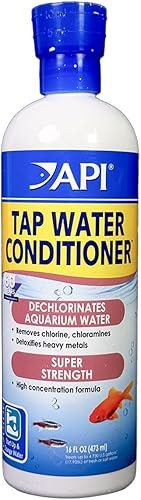
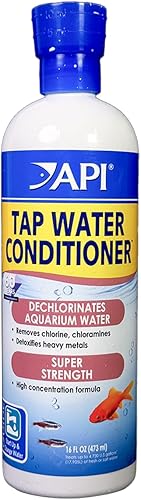
This is the vanilla ice cream of conditioners—reliable, affordable, and gets the job done. I’ve used this bottle for countless water changes on my 200-liter community tank. It neutralizes chlorine and chloramines instantly and handles heavy metals. The big 437ml bottle is fantastic value if you have multiple tanks or do large weekly changes. No frills, no fancy claims, just a solid, time-tested product.
- Excellent price per liter treated
- Proven, simple formula
- Safe for all aquatic life
- Does not detoxify ammonia/nitrites
- Dosage is less concentrated than competitors
Seachem 436 Prime Concentrated Conditioner
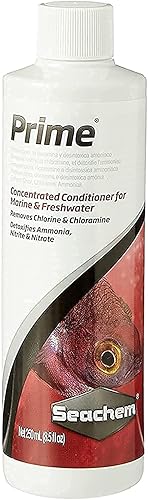
This is the conditioner I recommend to serious hobbyists. Yes, it’s more expensive upfront, but it’s absurdly concentrated. One capful treats over 150 liters. The killer feature is its ability to detoxify ammonia, nitrite, and nitrate for 24-48 hours. It’s a lifesaver during a cycle crash or when quarantining new fish. The smell is a bit like sulfur, but it dissipates quickly. For the control it offers, it’s worth it.
- Incredible concentration = long-term value
- Dual-action: dechlorinates & detoxifies nitrogen compounds
- Highly trusted brand in the hobby
- Higher initial cost
- Distinct smell some find off-putting
Tetra AquaSafe Plus, 100mL
Tetra’s formula is all about the extras. Beyond basic dechlorination, it adds colloids that create a visible “cloud” when first mixed—this is the slime coat protector. I’ve noticed my fish seem less skittish after water changes with this. It’s a great choice for beginners with small tanks or for anyone keeping delicate fish like bettas or guppies. The small bottle is cheap to try.
- Excellent for reducing fish stress
- Supports beneficial filter bacteria
- Affordable entry point
- Not as concentrated
- The “bacteria support” claim is hard to verify
API Tapwater Conditioner, 118 ml
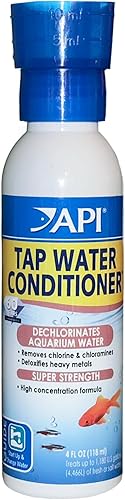
The smaller sibling to our top value pick. This 118ml bottle is perfect if you’re just starting out with a single small tank and want to see if the product works for you. The formula is identical—just a smaller volume. Honestly, once you’re hooked on the hobby, you’ll quickly graduate to the larger bottle for the savings. But as a no-risk starter, it’s perfect.
- Low upfront cost to try
- Same reliable formula as the big bottle
- Widely available
- Poor long-term value compared to larger sizes
- Basic functionality only
Frequently Asked Questions
- Is Kinetico a water conditioner?
- Kinetico manufactures whole-house water softening and filtration systems, which are a type of water conditioner for your home’s plumbing. However, in the aquarium hobby, “water conditioner” refers to liquid treatments for fish tanks. They are completely different products for different purposes.
- How often should I use water conditioner?
- Use it every single time you add new tap water to your aquarium. This includes during water changes and when topping off evaporated water (though top-offs should ideally be done with distilled or RO water to avoid mineral buildup).
- Can I put fish in the water right after adding conditioner?
- Yes. Modern conditioners work almost instantly. Once you’ve added the correct dose and stirred the water, it’s safe for fish. There’s no required waiting period, which is a huge advantage over aging water.
- Does water conditioner remove ammonia?
- Most standard conditioners do not. Only specific products like Seachem Prime or API Ammo-Lock claim to temporarily detoxify ammonia into a less harmful form. This is a temporary fix; the ammonia is still present and will be released again after 24-48 hours. Biological filtration is the only permanent solution.
- What happens if I forget to use water conditioner?
- Chlorine and chloramines can cause immediate gill damage, leading to gasping, erratic swimming, and death, especially in sensitive species. If you realize you’ve added untreated water, immediately add a double dose of conditioner to the tank. It may still neutralize the toxins in time, but act fast.
- Can I use too much water conditioner?
- Minor overdoses are usually harmless. However, massive overdoses (like 5-10x the recommended amount) can potentially bind to oxygen or cause other chemical imbalances in the water. Always measure carefully. When in doubt, a slight underdose is safer than a huge overdose.
Final Thoughts
So, to circle back to the original query: if you’re looking for a “kinetico water conditioner,” you’re likely in the market for a whole-house system, which is a different beast entirely. But for the vast majority of people searching that term who have an aquarium, the answer is a bottle of dedicated aquarium water conditioner.
For most hobbyists, our top recommendation is Seachem Prime. The concentration justifies the cost, and the ability to detoxify ammonia in a pinch is a genuine safety net. If you’re on a tight budget or have very large water volumes to treat, the API Tapwater Conditioner (437ml) is an unbeatable workhorse. Just remember: never, ever skip this step. Your fish’s life depends on it.
