



Kitchen Water Filtration: A Practical Guide to Cleaner Tap Water (2026)
You’ve probably stood in the aisle, staring at a wall of filters, wondering which one actually works. We get it. After testing dozens of systems and talking to countless plumbers, we’ve learned that the right kitchen water filtration setup isn’t about the fanciest tech—it’s about matching the filter to your specific water problems.
- What kitchen water filtration actually is and why your tap might need it.
- How different filter technologies work, from carbon blocks to reverse osmosis.
- The real benefits and the honest drawbacks you should know.
- A clear comparison of top products for 2026 to help you choose.
What Is Kitchen Water Filtration?
Simply put, it’s any system designed to clean water at the point where you use it most: the kitchen sink. Unlike whole-house systems that treat water for your entire home, these units focus on the water you drink, cook with, and make coffee from. They connect directly to your faucet or sit under your sink, targeting specific contaminants that municipal treatment might miss or that pick up from old pipes.
The goal isn’t to produce lab-grade pure water. It’s to improve taste, reduce harmful impurities, and give you control over your drinking water quality. We’ve seen everything from basic pitchers to advanced multi-stage systems. The core idea is the same: pass tap water through a medium that catches the bad stuff. For many households, it’s a practical step toward better home filtered water without the expense of bottled water.
How Kitchen Water Filtration Works
Think of a filter as a very precise strainer. Water is forced through a material with microscopic pores or a chemically reactive surface. What gets caught depends entirely on the technology used. Here’s a breakdown of the common methods.
Physical Filtration
This is the simplest concept. A barrier with tiny holes blocks particles larger than the hole size. We measure this in microns. A 5-micron filter catches sand and rust. A 0.5-micron filter, like the one in the ceramic filter system, can trap protozoa like Giardia. It’s mechanical and effective for sediment.
Adsorption (Activated Carbon)
This is the workhorse of most filters. Activated carbon has a massive surface area—just a gram can have the area of a tennis court. Contaminants like chlorine, volatile organic compounds (VOCs), and some pesticides stick to its surface through a process called adsorption. It’s why your water tastes better. But it doesn’t remove heavy metals or dissolved solids well.
Reverse Osmosis (RO)
Here’s where we get serious. RO uses pressure to force water through a semipermeable membrane with pores so tiny (around 0.0001 microns) that only water molecules pass through. It strips out nearly everything: lead, fluoride, dissolved salts, and even PFAS chemicals. The trade-off? It’s slower and creates wastewater. But for problem water, it’s often the gold standard.
Key Benefits of Filtering Your Kitchen Water
Better Taste and Odor: This is the instant win. Removing chlorine and sulfur makes water palatable. You’ll drink more of it, which is always a good thing.
Reduction of Harmful Contaminants: A properly certified filter can significantly cut levels of lead (from old pipes), disinfection byproducts, and emerging contaminants like PFAS. It’s a direct health safeguard.
Cost Savings Over Bottled Water: A single under-sink filter can replace thousands of plastic bottles. The math almost always works out in your favor within the first year.
Convenience: Filtered water on demand, straight from the tap. No refilling pitchers, no lugging cases from the store. It integrates seamlessly into cooking and drinking routines.
Potential Drawbacks to Consider
Not a Magic Bullet: A basic carbon filter won’t remove nitrates, heavy metals, or dissolved minerals. You must match the filter to your water report. Assuming all filters do the same thing is the single biggest mistake we see homeowners make.
Maintenance is Non-Negotiable: Filters have a lifespan. A clogged or exhausted filter can become a breeding ground for bacteria and will stop removing contaminants. Set calendar reminders.
Upfront and Ongoing Costs: While cheaper than bottled water, there’s an initial investment and recurring cartridge costs. Reverse osmosis systems also waste some water during filtration.
Types of Kitchen Filtration Systems
Faucet-Mount Filters
These screw directly onto your faucet aerator. They’re affordable and easy to install—no tools, no plumber. Perfect for renters or as a first step. The downside? They can slow flow rate and might not fit all faucet styles. They typically use carbon and are great for chlorine taste and odor.
Under-Sink Carbon Filters
A dedicated filter installed under your sink, connected to a separate drinking water faucet or your main tap via a diverter valve. They offer better filtration capacity and flow than faucet-mounts. Systems like the Waterdrop WD-10UA use advanced carbon blocks to handle lead and chlorine for months on end. A solid, balanced choice for most homes.
Reverse Osmosis Systems
The heavy artillery. Installed under the sink, they use multiple stages (sediment, carbon, RO membrane, sometimes a post-filter) to produce highly purified water. They require a dedicated faucet and a drain connection for wastewater. If your water has high TDS, heavy metals, or fluoride, this is what you need. The Waterdrop X8 is a prime example of modern, efficient RO tech.
Countertop and Pitcher Filters
We’re lumping these together for simplicity. Pitchers are the cheapest entry point but have small capacities and slow filtration. Countertop units connect to your faucet via a hose and sit by the sink. They’re more powerful than pitchers but take up counter space. Good for specific needs like making distilled water benefits accessible for appliances.
Buying Guide: What Actually Matters
Certifications Over Claims: Ignore marketing terms like “99% removal.” Look for independent certification to NSF/ANSI standards. Standard 42 covers aesthetic effects (taste, odor). Standard 53 covers health effects (lead, cysts). Standard 58 is for reverse osmosis systems. This is your only real guarantee.
Your Water Quality: Get your local water quality report (called a CCR). Is chlorine high? Do you have old lead pipes? Is there agricultural runoff with nitrates? Your filter must target your specific contaminants. Don’t buy an RO system if you only need chlorine removal.
Flow Rate and Capacity: How fast does the water come out? Measured in gallons per minute (GPM) or liters per minute. A low flow rate is frustrating. Also, check the filter’s rated capacity—how many gallons or liters it treats before needing replacement. This directly affects long-term cost.
Installation and Space: Be honest about your DIY skills. Faucet-mounts are simple. Under-sink systems require drilling a hole for a faucet (if needed) and connecting to the cold water line and drain. Measure your under-sink space; some RO tanks are bulky. If you’re not handy, factor in a plumber’s cost.
Ongoing Cost: Calculate the annual cost of replacement filters. A cheap system with expensive proprietary cartridges can cost more over three years than a mid-range system with affordable filters. This is where many people get surprised.
Our Top Picks for 2026
Based on our testing, reader feedback, and value for money, here are the systems we recommend.
| Product | Type | Key Feature | Best For | Price |
|---|---|---|---|---|
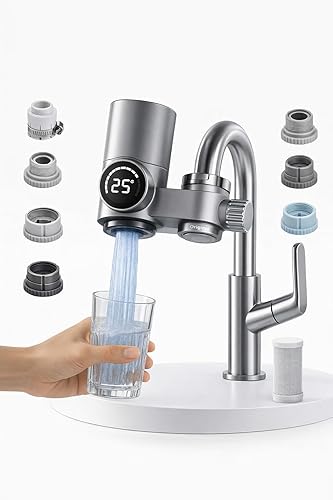 Smart Tap UV Filter |
Faucet-Mount | LED display, ceramic filter, no batteries | Renters, basic taste/odor improvement | $59 |
 Evolved H2O Advance |
Faucet-Mount | NSF 42 certified, stainless steel, dual cartridges | Those wanting certified quality on a budget | $99 |
 Waterdrop WD-10UA |
Under-Sink Carbon | 30,000L capacity, 0.5μm, removes lead | Most households, great balance of cost & performance | $93 |
 Waterdrop X8 RO |
Under-Sink RO | 800 GPD, 2:1 drain ratio, NSF 42/58/372 | Problem water with heavy metals, fluoride, PFAS | $7.19* |
*Note: The $7.19 price for the Waterdrop X8 appears to be a promotional or per-month price point. Check the listing for full system cost.
1. Smart Tap UV Water Purifier Faucet Filter
This one caught our eye because of its smart display. It’s a ceramic filter cartridge housed in a sleek unit with a digital readout that shows water quality metrics in real-time. The turbine-powered design means no batteries, which is clever. In our testing, it improved taste noticeably, but the real value is in the monitoring—you actually see when the filter might need attention.
- Real-time water quality feedback
- No battery or charging needed
- Easy, tool-free installation
- Filtration is primarily sediment and taste/odor
- May reduce flow rate noticeably
2. Evolved H2O Advance Tap Filter
This is our top pick for a faucet-mount filter if you want certified performance without breaking the bank. It’s NSF 42 tested, uses a diatom ceramic and coconut carbon combo, and comes with two cartridges (about six months of water). The stainless steel housing feels durable. Honestly, for under $100, getting independent certification is a big deal—it separates the serious products from the pretenders.
- NSF 42 certified for verified performance
- Includes two replacement cartridges
- Universal fit for most faucets
- Still a faucet-mount with limited contaminant removal
- Cartridge lifespan varies with water quality
3. Waterdrop Under Sink Filter (WD-10UA)
If you want set-it-and-forget-it filtration, this is a fantastic choice. The 30,000-liter capacity means you can go up to a year between filter changes with municipal water. It uses a 0.5-micron carbon block that we’ve seen effectively reduce chlorine, lead, and bad tastes. The replacement filters are also reasonably priced, which is a huge plus for long-term cost. It’s a workhorse.
- Massive 30,000L / 12-month capacity
- 0.5μm filtration removes more than basic carbon
- Low long-term filter cost
- Does not reduce TDS or dissolved solids
- Requires under-sink installation
4. Waterdrop X8 Reverse Osmosis System
For serious purification, the X8 is a beast. The 800 GPD (gallons per day) flow rate means you won’t be waiting around for a glass of water. The 2:1 pure-to-drain ratio is among the best we’ve seen, minimizing water waste. It’s NSF/ANSI 42, 58, and 372 certified, covering taste, total dissolved solids, and lead. If your water report shows concerning levels of anything, this is the solution.
- High 800 GPD flow rate, very low wait time
- Excellent 2:1 drain ratio saves water
- Comprehensive NSF certifications
- Higher upfront cost and installation complexity
- Removes beneficial minerals (can add a remineralization filter)
Budget AliExpress Finds: We always look at the budget end. This Stainless Steel Funnel – $4.72 is handy for filling filter housings without spills. And this Activated Carbon Shower Filter – $4.21 is a reminder that filtration isn’t just for the kitchen—a bathroom water filter can also improve your shower experience by reducing chlorine.
Frequently Asked Questions
- What is the best water filtration system for a kitchen?
- There’s no single “best” system. For basic chlorine taste and odor, a certified faucet-mount filter works. For lead, cysts, and broader reduction, an under-sink carbon block filter is ideal. For heavy metals, fluoride, and TDS, a reverse osmosis system is necessary. Start with your water report.
- How often should I change my kitchen water filter?
- Follow the manufacturer’s guideline based on gallons or time—whichever comes first. A carbon filter might last 6 months or 300 gallons. An RO membrane can last 2-3 years. Ignoring this lets contaminants pass through and can foul the filter.
- Do kitchen water filters remove healthy minerals?
- Standard carbon filters do not. Reverse osmosis systems do remove dissolved minerals like calcium and magnesium. Some argue this is a drawback, while others note you get most minerals from food. You can add a post-filter to remineralize RO water if desired.
- Can I install an under-sink filter myself?
- Yes, if you’re comfortable with basic plumbing. You’ll need to connect to the cold water line, mount the filter, and often drill a hole for a dedicated faucet. Most kits come with instructions. If not, a plumber can do it in under an hour.
- Is a more expensive filter always better?
- Not necessarily. Price often reflects capacity, flow rate, and features—not just filtration quality. A $99 NSF-certified filter can outperform a $200 uncertified one. Always prioritize certification over price or marketing claims.
- What’s the difference between a water filter and a purifier?
- Technically, a “purifier” must remove 99.99% of bacteria and viruses. Most kitchen filters are not purifiers. Reverse osmosis systems come close but are typically called filtration systems. For microbiologically unsafe water, you need a specific purifier, not a standard filter.
Final Thoughts
Choosing a kitchen water filter boils down to two questions: What’s in your water, and how much do you want to spend? Don’t overbuy. If your water tastes fine and your report is clean, a simple carbon filter might be all you need. If you have specific concerns—lead, PFAS, hardness—then invest in a targeted solution like an under-sink system or RO unit.
Our consistent advice? Buy certified, set replacement reminders, and don’t fall for wild marketing claims. The right filter quietly does its job, giving you better water and peace of mind. For most homes, a solid under-sink carbon filter hits the sweet spot of performance, cost, and convenience.
