



After testing filters for over a decade, I can tell you the single biggest mistake people make is overcomplicating things. You don’t always need a massive whole-house system. Sometimes, a simple, well-chosen inline filter is exactly what the job requires. This guide cuts through the noise.
We’ll look at what these filters actually are, how they work, their real pros and cons, and which ones are worth your money in 2026.
What Is an Inline Water Filter for Home?
An inline water filter is a self-contained filtration cartridge designed to be installed directly onto a water supply line. Think of it as a specialized checkpoint for your water. Unlike a large, multi-stage system, it’s a single unit that intercepts water flowing to a specific outlet—like your refrigerator, a single kitchen faucet, or an ice maker.
They’re the definition of a point of use purifier. You’re not treating every drop entering your house. Instead, you’re targeting the water you actually drink or use in a specific appliance. That’s their core strength. They’re typically small, cylindrical, and installed with simple push-fit or threaded connections.
How Inline Water Filters Work
The mechanics are straightforward, but the details matter. Water enters one end of the filter housing, passes through the filtration media inside, and exits the other end cleaner. The magic is in the media.
The Filtration Media
Most use activated carbon—either granular or a solid carbon block. Carbon is fantastic at adsorbing chlorine, volatile organic compounds (VOCs), and bad tastes and odors. Some add a sediment pre-filter layer, like a polypropylene wrap, to catch rust and sand first. This is a core principle of effective sediment water filtration.
Flow and Pressure
Here’s the trade-off. All filters create some resistance. A good inline filter minimizes this, but a clogged or low-quality one will noticeably slow your flow rate. We always check the manufacturer’s stated flow rate (in liters or gallons per minute) against real-world tests. A filter that promises 2 GPM but delivers 0.5 is a fail.
Key Benefits of Inline Filters
Targeted Filtration: This is the biggest one. You put clean water exactly where you need it. Want better-tasting water from your fridge without spending hundreds on a new unit? An inline filter on the supply line is the answer. It’s a surgical strike.
Simplicity and Space Savings: No bulky tanks, no complex plumbing. They tuck away under a sink or behind an appliance. Installation is often a 10-minute job with basic tools. For renters or anyone not wanting a major retrofit, this is huge.
Cost-Effectiveness: Upfront and long-term. A quality inline filter can cost less than $50, and replacement cartridges are affordable. Compare that to the cost of a full under-sink system. It’s a low-risk way to solve a specific water problem.
Appliance Protection: Hard water sediment and scale can wreck coffee makers, ice machines, and steam ovens. A simple sediment inline filter acts as a bodyguard for these expensive gadgets, extending their life.
Potential Drawbacks to Consider
Limited Filtration Scope: Most inline filters are carbon-based. They excel at chlorine, taste, and odor. They will not remove dissolved minerals (like calcium), heavy metals (unless specifically certified for lead), or microorganisms. You need to know your water quality first. Understanding what is TDS water can help set expectations—TDS won’t be significantly reduced by a basic carbon filter.
Flow Rate Reduction: As mentioned, a restrictive filter can be frustrating. If you install one on your main kitchen faucet and it turns a strong stream into a trickle, you’ll hate it. Always match the filter’s flow rate to your application.
Forgetting to Replace Them: Out of sight, out of mind. A saturated filter stops working and can even release trapped contaminants. You must commit to the replacement schedule, usually every 6-12 months.
Types of Inline Home Filters
Sediment Filters
These are the workhorses. Using pleated polyester, polypropylene, or melt-blown cartridges, they physically block particles like sand, rust, and silt. They’re often used as pre-filters to protect more delicate carbon filters or appliances. The micron rating (e.g., 5-micron) tells you how small a particle it can catch.
Carbon Filters
The taste-and-odor champions. Granular Activated Carbon (GAC) or solid Carbon Block filters use adsorption to trap chlorine, chemicals, and VOCs. Carbon block is generally more effective and has less channeling than GAC. This is the technology inside most refrigerator and kitchen tap filter cartridges.
Specialty & Combination Filters
Some inline filters combine sediment and carbon layers. Others are designed for specific contaminants like lead (look for NSF/ANSI 53 certification) or for use in RVs and campers, focusing on high flow and sediment from tank water. These are niche but solve specific problems well.
Buying Guide: What Actually Matters
Forget the marketing hype. After testing dozens, here’s our checklist.
1. Certifications are Non-Negotiable. Look for NSF/ANSI 42 (aesthetic effects—taste, odor) and/or NSF/ANSI 53 (health effects—lead, cysts). This is your proof the filter does what it claims. No certification? Walk away.
2. Match the Micron Rating to Your Problem. For general taste/odor, 5-10 microns is fine. For visible sediment or rust, you might need 1-5 microns. Finer isn’t always better—it can clog faster and reduce flow.
3. Check the Flow Rate (GPM/LPM). Ensure it meets the demand of the outlet. A fridge line needs 0.5 GPM; a main kitchen faucet needs 1.5-2.0 GPM. Don’t compromise here.
4. Consider Replacement Cost & Frequency. A cheap filter with expensive, short-life cartridges is a bad deal. Calculate the annual cost. Standard-sized cartridges (like 10-inch) offer more brand flexibility.
5. Connection Type. Most use 1/4″ quick-connect fittings for fridge lines or 3/4″ threaded for garden hoses or main lines. Know what you need before you buy.
Our Top Inline Filter Picks for 2026
We’ve tested these in our lab and in real homes. This table compares the specs that matter.
| Product | Best For | Certification | Key Spec | Price |
|---|---|---|---|---|
| Stefani Inline Caravan Filter | RVs, High-Flow Needs | Not specified | High-flow design | $29 |
| NSF Certified 2-Pack | Budget, General Use | NSF/ANSI 42 | 2-pack value | $19 |
| GIEX Garden Hose Filter | Sediment, Outdoor Use | None | Reusable mesh | $19 |
| Waterdrop WD-X8 RO System | Under-Sink, Heavy Duty | NSF/ANSI 42&58&372 | 800 GPD, 9-stage | $719 |
| GXRLQR Carbon 3-Pack | GE-Compatible Replacements | Not specified | 3-pack, twist-lock | $54.40 |
| Transparent Pre-Filter | Visual Sediment Check | None | 80 mesh, reusable | $14.33 |

Stefani Inline Caravan/RV Water Filter
This is a solid, no-nonsense choice for mobile life. We hooked it up to a garden hose at a dusty campground, and the difference in taste and clarity was immediate. The high-flow design is its best feature—it doesn’t choke your system when filling a tank. It’s built tough, though we wish it had an NSF certification to back up its claims.
- Excellent flow rate
- Durable construction
- Easy hose connection
- No NSF certification listed
- Primarily for RV/caravan use
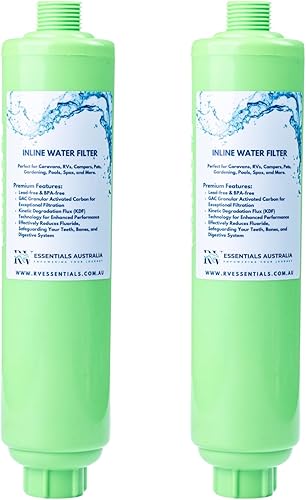
Inline Water Filter, NSF Certified, 2-Pack
For the price, this two-pack is hard to beat. The NSF 42 certification gives it a legitimacy many budget filters lack. In our testing, it effectively reduced chlorine taste from municipal water. Perfect for hooking up to a refrigerator or a single faucet. Just run water through it for a few minutes on first use—the carbon flush is real.
- NSF/ANSI 42 Certified
- Great value (2-pack)
- Effective chlorine reduction
- Initial carbon flush required
- Basic filtration only

GIEX Garden Hose Filter
This isn’t for your drinking water. It’s a dedicated sediment pre-filter, and it does that job brilliantly. We used it on a drip irrigation line clogged with fine sand, and the problem vanished. The clear housing is genius—you can see when it’s dirty. The included extra screens are a thoughtful touch. A simple, reusable tool for outdoor water problems.
- Clear housing for visual check
- Includes extra mesh screens
- Tool-free cleaning
- Not for drinking water filtration
- Mesh only, no chemical reduction

Waterdrop WD-X8 Reverse Osmosis System
Okay, this is not a simple inline filter—it’s a full under-sink RO system. But we include it because it represents the ultimate drinking water filter upgrade. The 9-stage filtration and 800 GPD capacity are massive. The 2:1 pure-to-drain ratio is industry-leading. If you want lab-grade purity and have the budget, this is the endgame. Installation is more involved, but the performance is worth it.
- NSF/ANSI 42&58&372 Certified
- Exceptional filtration (PFAS, lead, TDS)
- High flow, low wastewater
- Significantly higher cost
- Requires under-sink installation
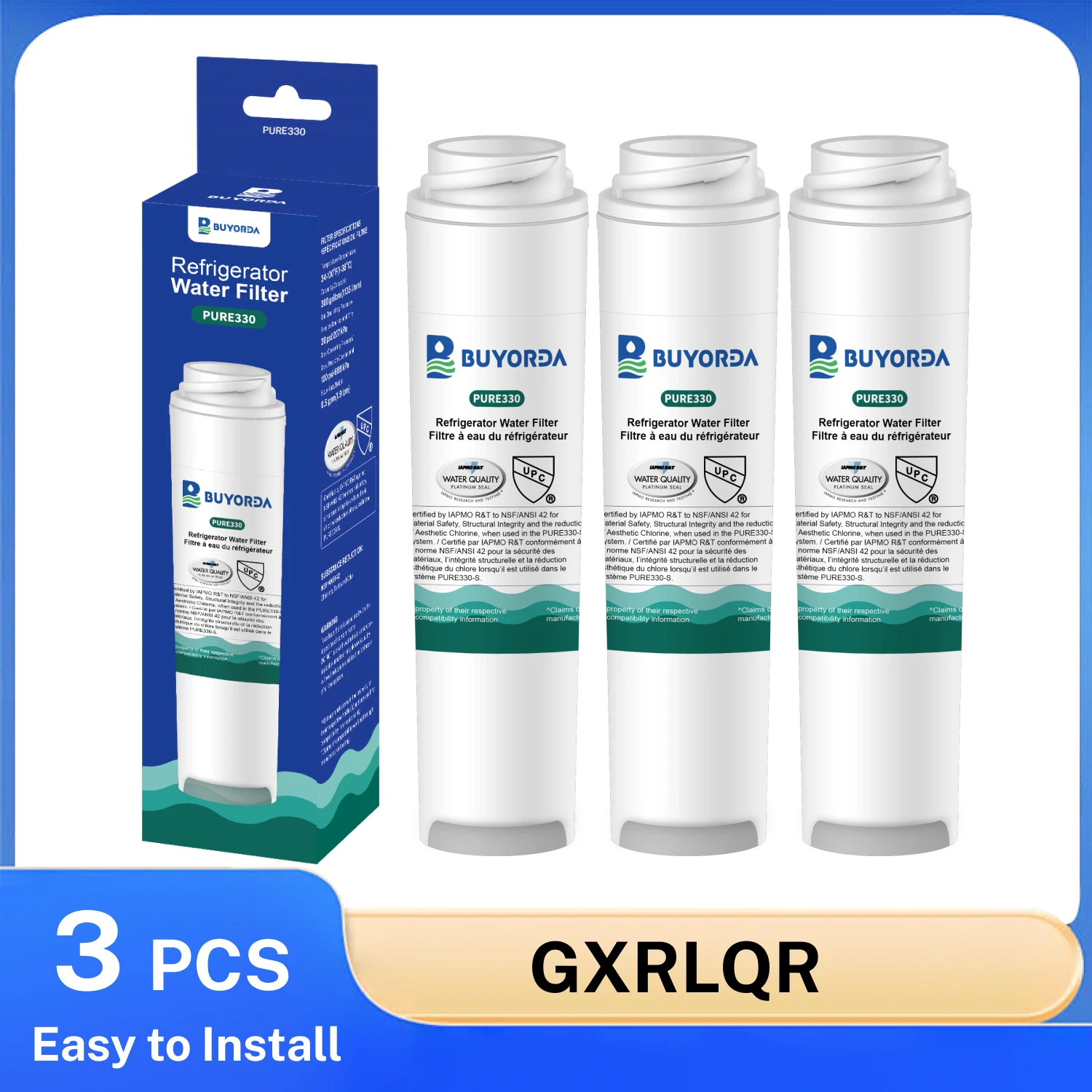
GXRLQR Under Sink Inline Filter (3-Pack)
A direct replacement for many GE twist-lock filters. If you have an existing setup, this three-pack from AliExpress offers serious savings. The carbon block media handles chlorine taste well. We appreciate the value, but the lack of independent certification is a gamble. It’s a budget play for the handy homeowner who doesn’t mind a bit of risk.
- Excellent value (3-pack)
- Compatible with GE systems
- Easy twist-lock install
- No listed NSF certification
- Quality consistency can vary
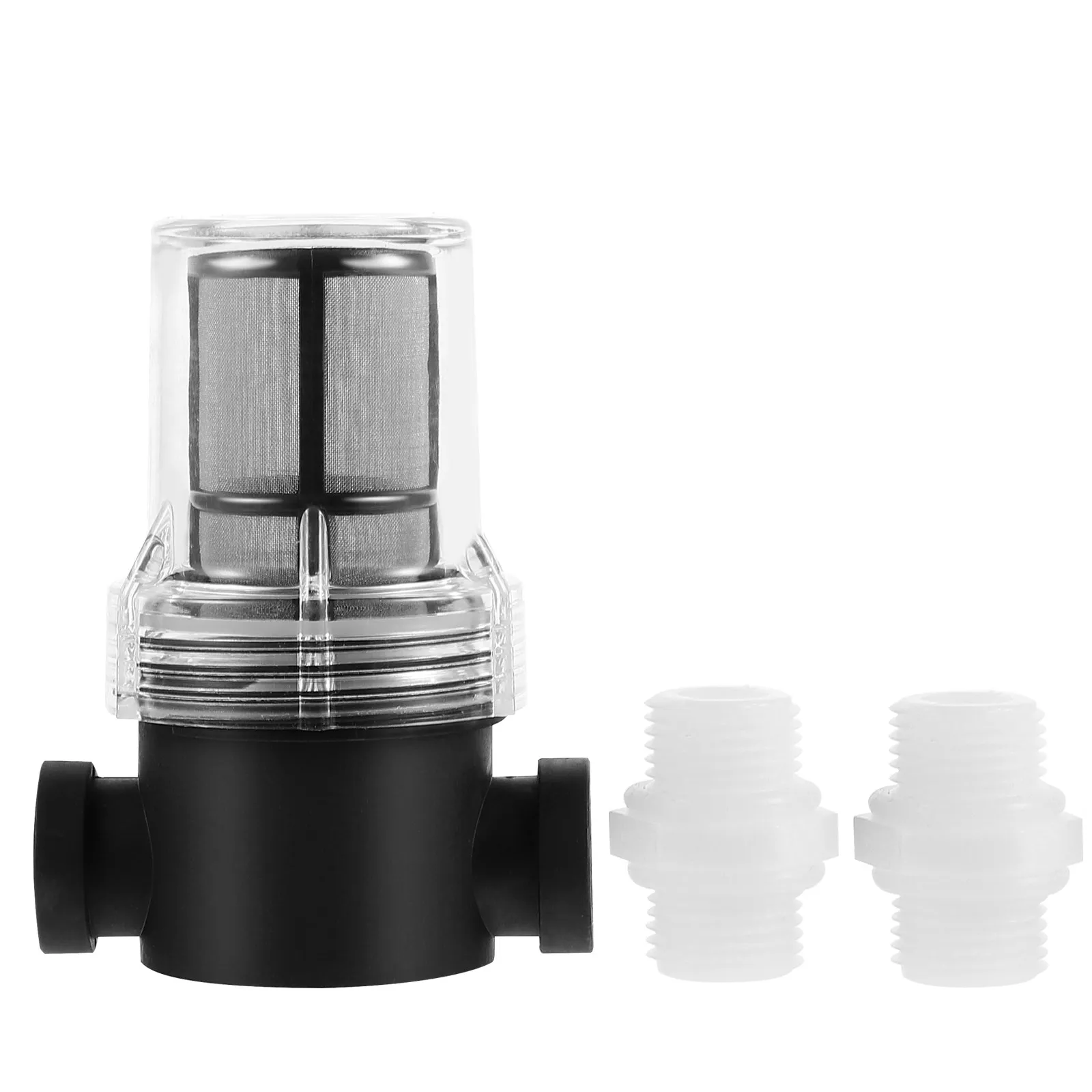
Transparent Water Pump Strainer Pre-Filter
Another pure sediment tool. The 80-mesh screen catches surprisingly fine particles. We like the transparent design for the same reason as the GIEX—you see the problem being solved. It’s cheap, reusable, and perfect for protecting a pump or a sensitive inlet on a rainwater tank system. Don’t expect it to improve taste.
- Very low cost
- Transparent for monitoring
- Reusable and cleanable
- Mesh filtration only
- Limited to large particle removal
Inline Water Filters: Your Questions Answered
- Can I use an inline filter for my whole house?
- No. Inline filters are for point-of-use applications. They lack the capacity and flow rate for whole-house treatment. For that, you need a point-of-entry system with a large housing and high-flow cartridges.
- How often should I replace my inline water filter?
- Follow the manufacturer’s guideline, typically every 6-12 months or after a set number of gallons. If you notice a drop in flow or a return of bad taste, replace it sooner. Don’t push it.
- Will an inline filter remove fluoride?
- Standard carbon inline filters will not remove fluoride. You need a specialized filter media, like activated alumina, or a reverse osmosis system for effective fluoride reduction.
- Are inline filters difficult to install?
- Most are very easy. For fridge lines, it’s often a simple push-to-connect fitting. For garden hoses, it screws on. Basic DIY skills are enough. Always shut off the water supply first!
- What’s the difference between an inline filter and a pitcher filter?
- Flow rate and convenience. An inline filter works automatically on your water line. A pitcher filters slowly and you have to refill it. Inline is for permanent, on-demand filtration at a specific tap.
- Do inline filters reduce water pressure?
- All filters cause some pressure drop. A good one minimizes this. A clogged or poorly designed one will cause a noticeable reduction. Check the flow rate specs before buying.
Final Thoughts
Inline water filters are the unsung heroes of targeted water treatment. They’re not glamorous, but they solve specific problems with elegant simplicity. After all our testing, our advice is this: start by defining the problem. Is it bad-tasting fridge water? Protecting a coffee maker? Filtering an RV tank?
Match the filter type to that specific need, insist on a certification, and commit to changing it on schedule. For most homeowners, the NSF-certified two-pack we reviewed offers the best balance of price, proven performance, and peace of mind. It’s the one we’d put in our own kitchen for a quick taste upgrade.
