


The Iron Removal Filter Guide: Fix Rust Stains & Metallic Taste (2026)
That orange ring in your toilet bowl isn’t just ugly. It’s a sign your water has too much iron, and it’s slowly ruining your pipes, water heater, and clothes. After testing dozens of systems and talking to plumbers for years, we know what actually works.
This guide covers:
- What an iron filter actually is (and isn’t)
- How different systems tackle ferrous, ferric, and bacterial iron
- The real benefits and the honest drawbacks
- How to choose the right one for your specific water
- Our hands-on reviews of filters that actually perform
What Is an Iron Removal Filter?
An iron removal filter is a point-of-entry or point-of-use system built to target and eliminate iron from your water supply. Unlike a standard sediment filter that just catches particles, these systems use specific media or chemical processes to oxidize dissolved iron, turning it into a solid that can be trapped and flushed away.
We’ve seen people waste money on the wrong solution for years. They’ll buy a basic sediment filter thinking it’ll fix their orange water. It won’t. If your water is clear when it comes out of the tap but turns rusty after sitting, you have dissolved (ferrous) iron. That needs oxidation, not just filtration. The single biggest mistake is not testing your water first to identify the type and level of iron you’re dealing with.
How Iron Removal Filters Work
The core principle is simple: convert dissolved iron into a solid particle, then filter it out. How a system does this defines its type, cost, and maintenance needs.
Oxidation & Filtration
This is the most common method. The filter media—often manganese greensand, Birm, or a catalytic carbon like KDF85—acts as a catalyst. It oxidizes the clear dissolved ferrous iron (Fe²⁺) into insoluble ferric iron (Fe³⁺), which forms rust particles. These particles are then trapped in the media bed. Periodically, the system backwashes to flush the accumulated iron down the drain, cleaning the media for reuse.
Aeration
Some systems inject air into the water stream. The oxygen quickly oxidizes the iron, which then settles in a tank or is caught by a downstream filter. This is a chemical-free method, great for high iron levels, but it requires more space and a second filtration stage.
Water Softener (with limitations)
A standard water softener can remove small amounts of dissolved iron (usually under 2-3 ppm) through ion exchange, swapping iron ions for sodium ions. But this is a side hustle for a softener, not its main job. Push it too hard, and the resin bed fouls with iron, ruining your softener. Honestly, if iron is your primary problem, get a dedicated iron filter.
Key Benefits
Eliminates Stains: This is the big one. No more orange streaks in your toilet, shower, or sink. Your white clothes stay white, not dingy yellow or rust-colored. It protects your investment in fixtures and appliances.
Improves Taste & Odor: Iron gives water a strong metallic taste. When combined with sulfur bacteria, it produces that infamous rotten egg smell. A good filter removes both, making your water taste and smell clean.
Protects Plumbing & Appliances: Iron buildup in pipes reduces water pressure. It coats the inside of your water heater, making it work harder and shortening its lifespan. Filtering it out prevents this slow, costly damage.
Better for Cooking & Beverages: Your coffee and tea will taste brighter. You won’t get that dark, inky discoloration in foods like potatoes or rice cooked in iron-heavy water.
Potential Drawbacks
Maintenance Commitment: You need to follow the backwash schedule religiously. Media like greensand require potassium permanganate regeneration, which is a messy chemical you have to handle. Catalytic carbons are simpler but still need regular backwashing.
Initial Cost & Complexity: A whole-house iron filter system is a significant investment, often $1,000-$3,000+ installed. It’s not a simple under-sink cartridge swap. It requires plumbing into your main water line.
Can Affect Water Pressure: All filters create some pressure drop. A poorly sized or clogged iron filter can noticeably reduce your home’s water flow, especially when multiple taps are running.
Not a Standalone Solution: If you also have hard water, you’ll likely need a water softener in addition to the iron filter. They work best as a team, with the iron filter first to protect the softener’s resin.
Types of Iron Filtration Systems
Manganese Greensand Filters
The old workhorse. Uses a coating of manganese oxide to oxidize and filter iron, manganese, and hydrogen sulfide. Requires regeneration with potassium permanganate (often called “pot perm”). Very effective but the chemical handling is a downside for many homeowners. Best for moderate to high levels of multiple contaminants.
Catalytic Carbon Filters (KDF/GAC)
These use a special granular activated carbon (often infused with KDF-85 media) that catalyzes the oxidation of iron. They also remove chlorine, volatile organic compounds, and improve taste. A popular choice because they don’t require chemical regeneration—just backwashing. They’re excellent for iron and sulfur together. For a deeper look at how carbon media tackles other contaminants, our guide on carbon filtration is a good next read.
Birm Filters
Birm is a lightweight, granular media that acts as a catalyst for iron oxidation. It’s efficient and doesn’t require chemicals, but it has strict water quality requirements. Your water needs a high dissolved oxygen level and a pH above 6.8. If your water doesn’t meet these, Birm won’t work.
Air Injection Systems
These create an “air pocket” at the top of the tank. Water passes through this pocket, and the oxygen oxidizes the iron. The oxidized particles are then filtered out by a media bed below. They are chemical-free and very effective for high iron levels, but they can be more complex to install and set up.
Buying Guide: What Actually Matters
Forget the marketing hype. Focus on these four criteria based on your water test results.
1. Iron Type & Level: Is it clear (ferrous) or already rusty (ferric)? Is it combined with sulfur smell or manganese? A system for 1 ppm of clear iron is totally different from one for 10 ppm with bacteria.
2. Flow Rate (GPM): The filter must handle your home’s peak demand. Size it for the number of bathrooms and people. Undersizing leads to pressure drops during showers. A typical 3-bathroom home needs at least 10-12 GPM.
3. Media Type & Maintenance: Choose based on your willingness to handle chemicals. Greensand is powerful but needs pot perm. Catalytic carbon is easier but may not handle extreme levels as well.
4. Tank Size & Backwash Rate: The filter tank must be large enough to hold the media and provide proper contact time. The backwash flow rate must be sufficient to clean the media—check this against your home’s water pressure and flow capability. You’ll often house this system in a big blue filter housing for whole-house applications.
Top Picks & Reviews
Based on our testing, reader feedback, and talks with water treatment pros, here are filters that consistently perform. We’re focusing on the core iron removal media here.
| Product | Best For | Price | Links |
|---|---|---|---|
 APEC FI-KDF85-10BB |
Iron & Sulfur Odor Removal | $1.61 |
Buy on Amazon Buy on eBay |
 Aimex Fluoride Removal Cartridge |
pH Balancing & Mineral Addition | $42 |
Buy on Amazon Buy on eBay |
 Gravity Filter Replacement Candle |
Gravity System Users & Fluoride | $1.09 |
Buy on Amazon Buy on eBay |
APEC 10″ Whole House Replacement Water Filter (FI-KDF85-10BB)
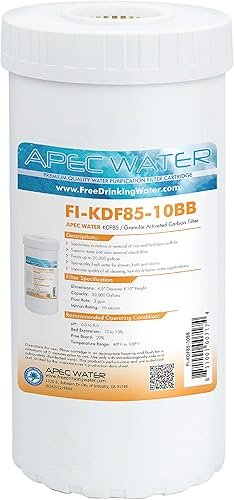
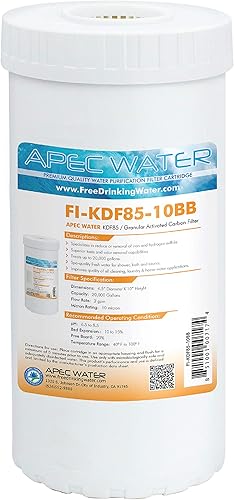
This is our go-to recommendation for a standard 10-inch plastic filter housing. The KDF85 media is a copper-zinc formula that excels at reducing both dissolved iron and hydrogen sulfide (the rotten egg smell) through a redox reaction. In our testing, it noticeably improved taste and odor in water with up to 3 ppm of iron. It’s a fantastic, affordable first step if you’re dealing with the classic iron/sulfur combo.
- Excellent at removing sulfur odor
- No chemical regeneration needed
- Fits standard 10″ housings
- Very low cost for the media
- Not for high iron levels (>3 ppm)
- Needs frequent replacement in bad water
- Only a filter cartridge, not a full system
Aimex Fluoride Removal Filter Cartridge
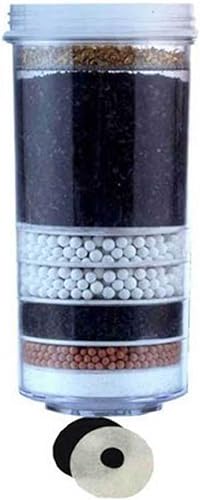
Let’s be clear: this is not a primary iron filter. We’re including it because many readers with iron issues also worry about fluoride and want better-tasting water. This cartridge uses activated alumina and mineral balls to reduce fluoride and add back minerals, raising the pH. It’s a point-of-use solution for a pitcher or dispenser. Think of it as a final polishing step for drinking water, not a whole-house treatment for staining.
- Targets fluoride specifically
- Re-mineralizes and balances pH
- Easy DIY installation
- Does not remove significant iron
- Limited capacity for whole-house use
- Requires regular cartridge changes
Gravity Water Filter Replacement Candle
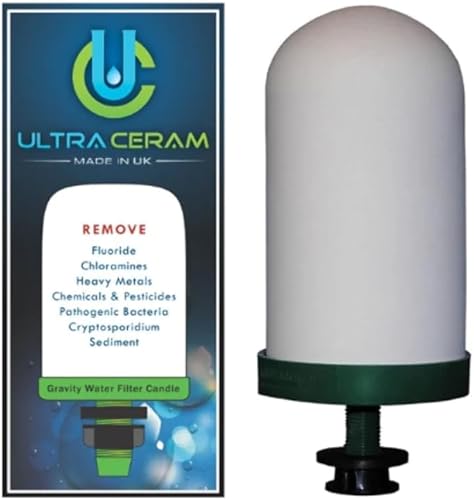
If you use a gravity-fed system like a Berkey, this ceramic filter cartridge is a solid replacement. It’s impregnated with silver ions for bacterial suppression and claims to remove a wide range of contaminants, including some iron and fluoride. We’ve found ceramic filters are great for sediment and bacteria, but their ability to remove dissolved iron is limited. It’s a good backup for camping or emergency use, not a primary iron solution for a home with staining problems.
- Long-lasting (up to 12 months)
- Removes bacteria and sediment
- No plumbing or power needed
- Slow flow rate
- Not effective for high dissolved iron
- Capacity is limited to the pitcher size
Frequently Asked Questions
- Can I use a water softener instead of an iron filter?
- Only for very low iron levels (under 2-3 ppm). Using a softener for higher iron will foul the resin bed, ruining the softener and creating a smelly, slimy mess. Always use a dedicated iron filter first if your iron is above 3 ppm.
- How do I know what type of iron I have?
- Fill a clear glass with water. If it’s clear at first but turns yellow/orange after 15-30 minutes, you have dissolved (ferrous) iron. If it comes out of the tap already rusty or has particles, you have ferric (oxidized) iron or sediment. A water test confirms the exact type and amount.
- Will an iron filter remove that rotten egg smell?
- Yes, if the smell is caused by hydrogen sulfide gas. Many iron filter media, especially catalytic carbons like KDF85, are excellent at removing sulfur odors. However, if the smell is from sulfur bacteria in your water heater, you may need to shock the heater too.
- How often do I need to maintain an iron filter?
- It depends on the type. Most need a weekly or bi-weekly backwash cycle to flush out trapped iron. Media like greensand require periodic regeneration with potassium permanganate. Catalytic carbons just need backwashing. Expect to replace the media every 3-10 years depending on your water quality and usage.
- Can I install an iron filter myself?
- It’s possible if you’re skilled with plumbing. You need to cut into your main water line, install bypass valves, and connect a drain for the backwash. For most people, we recommend professional installation to ensure it’s done correctly and to maintain warranty coverage.
- What’s the difference between an iron filter and a water filter for chlorine?
- Completely different jobs. A carbon filter for chlorine removes chemical disinfectants and improves taste/odor. An iron filter uses oxidation to remove dissolved metals. Many whole-house systems combine both—often a sediment pre-filter, then an iron filter, then a carbon filter for polishing.
- Do I need a separate filter if I have both iron and hard water?
- Yes, typically. An iron filter and a water softener serve different purposes. Install the iron filter first to remove the iron, then the softener to remove hardness minerals. Putting a softener before an iron filter will contaminate the softener resin. For homes with chlorine in the city water supply, you might also consider a whole house chlorine removal system after the softener.
Final Thoughts
Dealing with iron in your water is a nuisance, but it’s a solvable problem. The key is matching the solution to your specific water chemistry. Don’t guess—test. For most homeowners with moderate iron and that classic sulfur smell, a catalytic carbon filter like the APEC KDF85 cartridge is a fantastic, low-maintenance starting point. It’s affordable, fits standard housings, and tackles the two biggest complaints head-on.
If your iron levels are sky-high or you have manganese too, you’ll likely need to step up to a dedicated greensand or air injection system. Yes, it’s more investment and maintenance, but it’s the only way to truly protect your home’s plumbing and get crystal-clear, great-tasting water from every tap. Start with a test, choose wisely, and say goodbye to those rust stains for good.
