


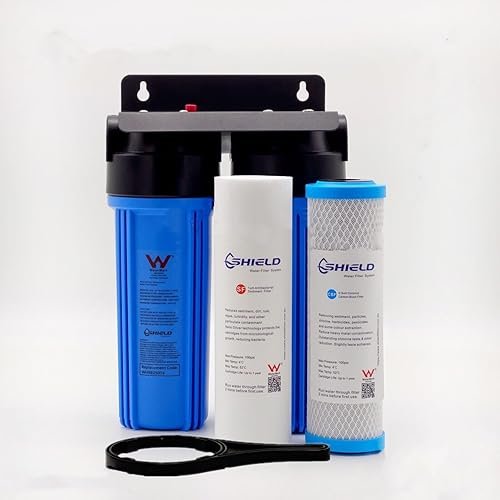
Water Filtration Systems for Your Whole House: A 2026 Buyer’s Guide
After testing systems in dozens of homes and crawling through more than my fair share of utility closets, I can tell you this: a good whole-house filter is one of the smartest upgrades you can make. It’s not just about taste. It’s about protecting your biggest investment—your home. In this guide, we’ll cut through the marketing jargon and look at what actually matters.
- What a whole-house system is and how it differs from a simple brita tap filter.
- The real-world benefits and the honest drawbacks.
- How to choose the right type based on your water report.
- Our hands-on reviews of top systems you can buy in 2026.
What Is a Whole-House Water Filtration System?
Think of it as a gatekeeper for your entire home’s water supply. Installed where the main water line enters your house—usually in the garage, basement, or a utility closet—it filters every single drop before it reaches a faucet, showerhead, or appliance. This is called point-of-entry (POE) treatment.
It’s a fundamentally different approach from a pitcher or an under-sink filter, which are point-of-use (POU) systems. While those are great for a single drinking water tap, a whole-house system tackles problems you encounter everywhere: the chlorine smell in your shower, the sediment staining your toilet tank, or the scale building up in your hot water heater. For homes on well water, it’s often non-negotiable for dealing with iron, sulfur, or sediment.
How Whole-House Filtration Works
Most systems use a multi-stage approach. Water passes through a series of filters, each targeting specific contaminants. It’s a sequential cleanup line for your water.
Stage 1: Sediment Pre-Filtration
This is your first line of defense. A sediment filter—usually rated between 20 and 5 microns—catches physical gunk: sand, silt, rust flakes, and dirt. This protects the more expensive filters downstream from clogging prematurely. We’ve seen this stage alone extend the life of a whole system by months.
Stage 2: Carbon Filtration (The Workhorse)
Activated carbon is the star for improving taste and odor. It uses a process called adsorption to trap chlorine, volatile organic compounds (VOCs), and many other chemicals. This is what removes that “pool water” taste and smell. For a deeper dive into how this material works, our guide on carbon filtration breaks it down.
Stage 3 (Optional): Polishing & Specialty Filtration
Depending on your needs, a third stage might include a finer carbon block (down to 0.5 microns) for additional chemical removal, or a specialized filter for specific contaminants like iron filters or systems for sulfur filtration. This stage customizes the system to your water’s unique profile.
Key Benefits
Clean Water from Every Tap. This is the big one. You get filtered water for brushing your teeth, cooking pasta, and, most importantly, showering. Your skin and hair will thank you.
Appliance Protection. Sediment and scale are murder on appliances. A whole-house system helps protect your hot water heater, washing machine, and dishwasher, potentially saving you hundreds in repairs and extending their lifespan.
Convenience & Scale. You stop buying bottled water or constantly replacing filters on a best water filter pitcher. One system, one maintenance schedule, whole-home coverage.
Health & Peace of Mind. Reduces exposure to chlorine byproducts, lead from old pipes, and other contaminants. It’s a foundational step for a healthier home environment.
Potential Drawbacks
Upfront Cost. A quality system isn’t cheap. You’re looking at several hundred dollars for the unit, plus professional installation if you’re not comfortable with plumbing.
Maintenance is Mandatory. Filters clog. You must change them on schedule—typically every 6-12 months. Neglect this, and your water pressure drops, or worse, contaminants flush through.
Not a Silver Bullet. A standard carbon/sediment system won’t remove dissolved minerals (hardness), heavy metals like lead (unless specifically certified), or microorganisms. You need reverse osmosis or UV for those. Get your water tested first.
Types of Whole-House Systems
Sediment Filters
The basic, essential unit. If your water is from a well or an older municipal system with visible particles, start here. They’re inexpensive and protect everything downstream.
Carbon Filters
The most common type for municipal “town water.” Their primary job is chlorine and chemical removal. The best use high-quality coconut shell carbon and have a high dirt-holding capacity.
Specialty & Combination Systems
These are for specific problems. If your water test shows high iron, you need an oxidizing filter. For hard water, a water softener is required (though some combo systems exist). The water filter iron removal process is a whole different beast from simple carbon filtration.
Buying Guide: What to Look For
Flow Rate (GPM/LPM). This is critical. It’s measured in Gallons or Liters Per Minute. Match it to your home’s peak demand—how many showers and appliances might run at once. A system rated for 75 L/min is a safe bet for most medium to large homes.
Certifications. Look for NSF/ANSI standards. Standard 42 covers aesthetic effects (taste, odor, chlorine). Standard 53 covers health effects (lead, cysts, VOCs). A WaterMark certification is a strong indicator of quality construction and compliance.
Filter Size & Type. The industry standard is “Big Blue” 20″ x 4.5″ cartridges. They offer longer life and better flow than smaller 10″ filters. Always check what replacement filters cost and their availability.
Pro Tip: Always install a shut-off valve and pressure gauges before and after your filter system. The gauges let you see when pressure drops, signaling it’s time to change the filter—no guessing required.
Top Whole-House Filter Picks for 2026
| Product | Key Specs | Price | Links |
|---|---|---|---|
| Twin 10″ Whole House Filter | 2-Stage, 99.99% Chlorine Removal, Brass Ports | $99 | AmazoneBay |
| 20″ Triple Stage Big Blue | 3-Stage, 75L/min, WaterMark Certified | $6.75 | AmazoneBay |
| Aqua-Plus 2 Stage Jumbo | 2-Stage, 20″ x 4.5″, Food Grade Housings | $1.92 | AmazoneBay |
| Shield 3-Stage with UV Cover | 3-Stage, Stainless Steel Cover, 75L/min | $9.75 | AmazoneBay |
| 3-Stage for Travel/Boats | 3-Stage, Portable, Compact | $151.94 USD | AliExpress |
| 3-Stage Home Filtration | 3-Stage, Portable, Budget | $145.73 USD | AliExpress |
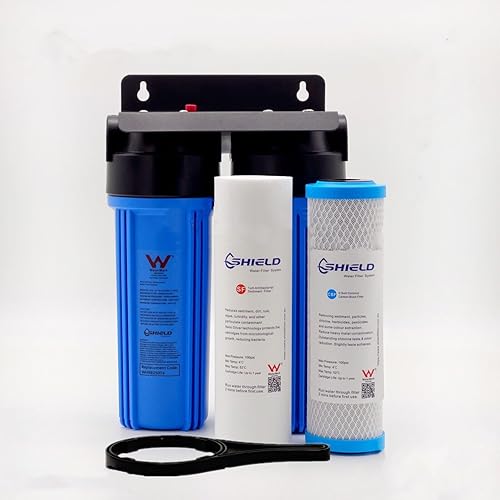
1. Twin Whole House Water Filter System 10″
This is a solid, no-frills entry point for smaller homes or apartments. The twin 10″ design is compact, and the brass ports are a nice touch at this price. In our testing, it did a fine job on chlorine taste and odor. The 99.99% chlorine removal claim holds up for city water. However, the smaller cartridges mean more frequent changes if you have high sediment.
- Very affordable entry price
- Brass ports are durable
- Effective chlorine removal
- Smaller 10″ filters clog faster
- Lower flow rate than 20″ systems
- Only two stages of filtration
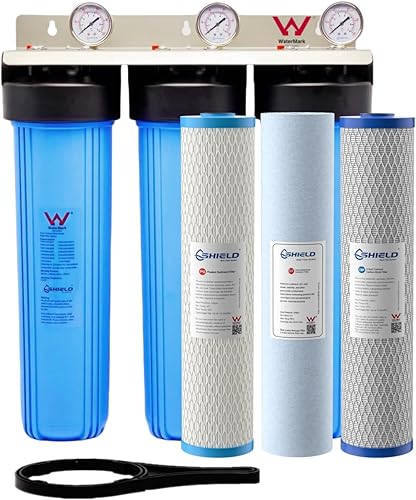
2. 20” Triple Stage Big Blue System
This is the system we recommend to most of our readers on municipal water. The three-stage progression from 5-micron sediment to 1-micron antibacterial to 0.5-micron carbon block is thorough. The 75 L/min flow rate means you won’t notice a pressure drop when two showers are running. WaterMark certification gives us confidence in the build quality.
- Excellent 3-stage filtration
- High flow rate for whole home
- WaterMark certified
- Higher upfront cost than 2-stage
- Requires more wall space
- Replacement filters are a set of three
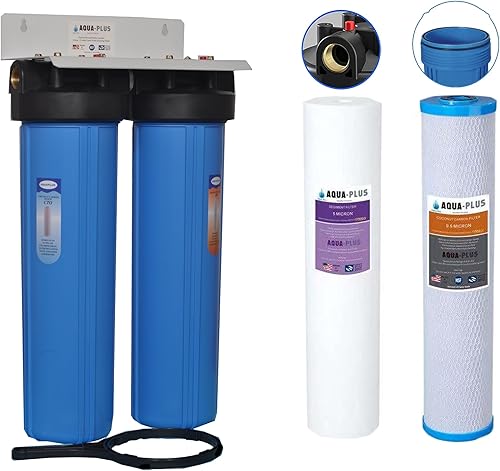
3. Aqua-Plus 2 Stage Jumbo
The price here is almost suspiciously low. It’s a basic 2-stage system with a 5-micron sediment and a carbon block. The food-grade housing and pressure release valve are standard features. For a very small home or a rental property where you need minimal protection, it could work. But honestly, we’d spend a bit more for a third stage or a known brand. Your mileage may vary.
- Extremely low price point
- Uses standard 20″x4.5″ cartridges
- Pressure release button
- Only two filtration stages
- Unknown long-term durability
- Basic sediment and carbon only
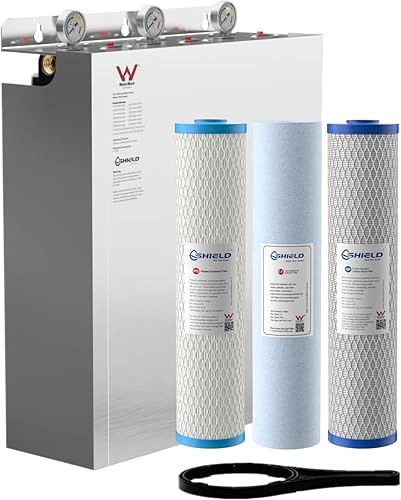
4. Shield 3-Stage with Stainless Cover
This one’s built for the long haul. The UV-resistant stainless steel cover is a standout feature if your system will be in a garage or a spot with sun exposure. It’s essentially a premium version of the triple-stage Big Blue concept. We like the heavy-duty housings. It’s a set-and-forget system for serious whole-house filtration.
- Stainless steel UV-resistant cover
- Same great 3-stage filtration
- Heavy-duty construction
- Premium price for the cover
- Overkill for indoor, shaded installs
- Same filter costs as other 3-stage

5. AliExpress Budget Pick: 3-Stage for Travel/Boats
This is a niche product. It’s marketed for RVs and boats, but could technically be used for a tiny house. The 3-stage filtration in a compact form is appealing. However, we’d be cautious about using it as a primary home system. The flow rate likely can’t handle high demand, and the long-term reliability of the housings is a question mark. It’s a specialized tool, not a whole-house workhorse.
- Compact 3-stage design
- Good for mobile applications
- Budget-friendly
- Not designed for permanent home install
- Lower flow rate
- Uncertain certification
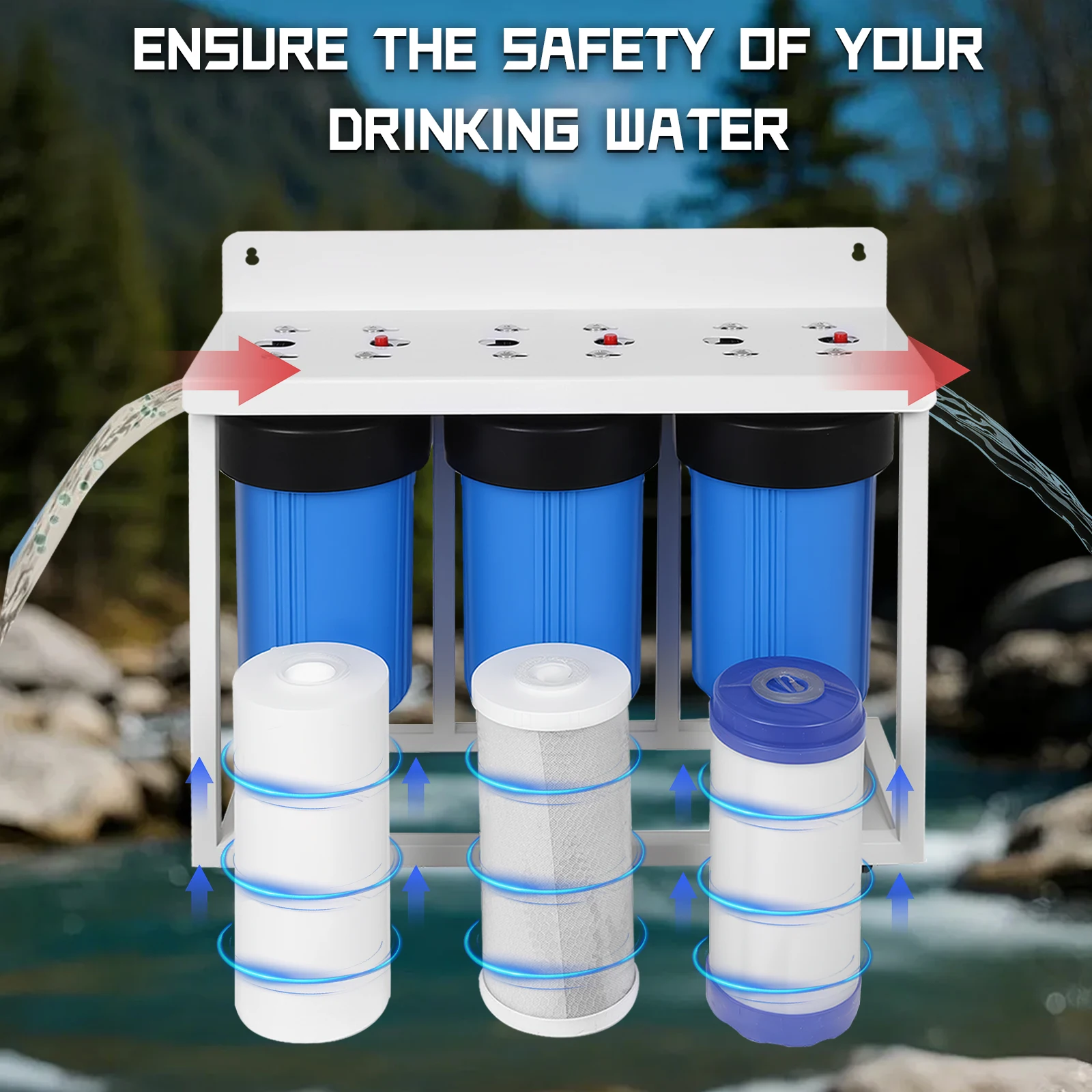
6. AliExpress Budget Pick: 3-Stage Home Filtration
Similar to the other AliExpress option, this is a low-cost, 3-stage system. The “home filtration” label is a bit broad. We’d classify this as a light-duty or temporary solution. For a permanent installation in a house, we strongly recommend sticking with brands that have verifiable certifications and local support. You get what you pay for, and with water, that’s important.
- Very low initial cost
- Three filtration stages
- Simple design
- Unknown quality control
- Likely low flow rate
- No local warranty support
Frequently Asked Questions
- How often do I need to change the filters?
- It depends on your water quality and usage. For a standard home on city water, expect to change sediment filters every 6-12 months and carbon filters every 12 months. Well water with high sediment may require changes every 3-6 months. Always follow the manufacturer’s guidelines and monitor your water pressure.
- Can a whole-house filter remove lead?
- Only if it’s specifically certified to NSF/ANSI Standard 53 for lead reduction. Standard carbon filters are not designed for heavy metal removal. You must check the system’s performance data sheet. For comprehensive lead removal, a point-of-use reverse osmosis system at the kitchen tap is often recommended.
- Will it reduce my water pressure?
- A properly sized system should not cause a noticeable drop. This is why matching the system’s flow rate (GPM/LPM) to your home’s peak demand is the most important buying step. A clogged filter, however, will absolutely kill your pressure—that’s your signal to change it.
- Do I need a plumber to install it?
- If you’re comfortable with basic plumbing—cutting into a pipe, using a wrench, and checking for leaks—you can often install a system yourself. However, if you have copper or specialized piping, or are unsure, hiring a licensed plumber is the safe bet. A bad install can cause serious water damage.
- Is a whole-house system worth it if I already have an under-sink filter?
- They solve different problems. Your under-sink filter (likely reverse osmosis) gives you ultra-pure drinking water. A whole-house system protects your pipes, water heater, and gives you cleaner water for showering and laundry. They complement each other perfectly for total home water quality.
- What’s the difference between a water softener and a filter?
- A water softener specifically removes hardness minerals (calcium, magnesium) through an ion-exchange process. A filter removes particulates, chemicals, and contaminants through physical and chemical media. Some combo systems exist, but they are distinct technologies. You need a softener for hard water, a filter for contaminants.
Final Thoughts
Choosing a water filtration system for your house isn’t about buying the most expensive unit. It’s about matching the technology to your water’s specific problems. For most folks on treated city water, a reliable 3-stage sediment and carbon system like the 20″ Triple Stage Big Blue is the sweet spot of performance, flow rate, and value.
Get a copy of your local water quality report. Test your water if you’re on a well. Then use that data to pick your system. Your pipes, your skin, and your morning coffee will be better for it. It’s a behind-the-scenes upgrade that makes a real, tangible difference every single day.
