


Tired of limescale on your shower head and that faint chlorine taste in your drinking water? You’re not alone. After testing systems for years, I’ve found that a dedicated whole house water filtration and softener system is often the most effective fix. This guide covers everything from the basic mechanics to our top product picks for 2026.
- What these combined systems actually are and how they function.
- The real-world benefits and the honest drawbacks you should know.
- A clear breakdown of the different types on the market.
- Actionable advice for choosing the best one for your home and water.
- What Is a Whole House Water Filtration and Softener System?
- How a Whole House Water Filtration and Softener System Works
- Key Benefits of a Combined System
- Potential Drawbacks to Consider
- Types of Whole House Filtration & Softener Combos
- Buying Guide: How to Choose the Right System
- Our Top Picks for 2026
- Frequently Asked Questions
- Final Thoughts
What Is a Whole House Water Filtration and Softener System?
Think of it as a bouncer and a diplomat for your home’s water supply, installed right where the water line enters your house. The “filtration” part acts as the bouncer, physically or chemically removing unwanted particles—things like dirt, rust, chlorine, and other contaminants. The “softener” part is the diplomat, using a process called ion exchange to deal with hard water minerals like calcium and magnesium.
Instead of buying a separate filter for your kitchen tap and a softener for your washing machine, this combo unit handles both jobs at the source. Every shower, every faucet, every appliance gets treated water. It’s a whole-home solution that simplifies maintenance and ensures consistent water quality throughout your property.
How a Whole House Water Filtration and Softener System Works
The process typically happens in stages. Water first passes through the filtration media, then through the softening resin. Let’s look at the two main components.
The Filtration Stage
This is your first line of defense. Most systems use a multi-stage approach. You’ll often see a sediment water filter as the initial stage—usually a 5-micron pleated or spun polypropylene cartridge that catches dirt, sand, and rust particles. After that, a carbon water filtration block or granular activated carbon (GAC) stage tackles chlorine, volatile organic compounds (VOCs), and bad tastes and odors. Some advanced systems include specialty media for specific contaminants.
The Softening Stage
Here’s where the magic happens for hard water. The system contains a tank filled with resin beads coated with sodium ions. As hard water flows over them, the calcium and magnesium ions—which cause scale—stick to the beads, and the sodium ions are released into the water. This “ion exchange” process makes the water “soft.” Eventually, the resin beads get saturated and need cleaning. The system’s control valve automatically triggers a “regeneration” cycle, flushing the beads with a brine solution (salt water) to recharge them.
Key Benefits of a Combined System
Protects Your Entire Plumbing Infrastructure. This is the big one. Soft water stops scale buildup inside your water heater, pipes, and appliances. Your water heater will run more efficiently (saving energy), and your dishwasher and washing machine will last longer. We’ve seen the insides of pipes in hard water areas—it’s not pretty.
Improves Water Quality at Every Tap. You get cleaner, better-tasting water for drinking, cooking, and bathing. Chlorine is removed, which is better for your skin and hair. No more buying bottled water for the whole house.
Single Point of Maintenance. You only have one system to monitor, one set of filters to replace, and one salt tank to fill. It’s simpler and often more cost-effective long-term than piecing together separate solutions.
Potential Drawbacks to Consider
Ongoing Salt & Maintenance. The softener needs salt. That’s a recurring cost and a chore (though some systems use potassium chloride as an alternative). Filters need regular replacement, usually every 6-12 months. Skip this, and performance drops fast.
Not a Silver Bullet for All Contaminants. A standard carbon/sediment filter won’t remove everything. If you have specific issues like iron, bacteria, or very high TDS, you may need additional specialized stages. For instance, if you’re on well water with iron, you’d need a dedicated iron filter for well water before or integrated into the system.
Types of Whole House Filtration & Softener Combos
Traditional Salt-Based Ion Exchange + Carbon/Sediment Filter
This is the most common and effective type for dealing with hard water and general city water contaminants. It’s the combo we’ve tested most and recommend for most homeowners with moderate to hard water.
Salt-Free Water Conditioner + Filtration
These don’t actually remove hardness minerals. Instead, they use a template-assisted crystallization (TAC) media to change the minerals’ structure so they don’t stick to surfaces as scale. They’re lower maintenance (no salt) but won’t give you that “slippery” soft water feel and are less effective in very hard water. They pair well with a good filtration stack.
Hybrid Systems with UV or Specialty Media
For well water or problem water, you can get systems that add a uv water filtration systems stage for bacteria/viruses, or specific media for iron, manganese, or tannins. These are custom-configured based on a water test.
Buying Guide: How to Choose the Right System
1. Test Your Water First. This is non-negotiable. You need to know your hardness level (in grains per gallon or GPG) and what contaminants are present. A simple test kit gives you hardness and basic chemistry. For well water, a full lab analysis is worth every penny.
2. Size it Correctly. The system’s capacity (measured in grains) must match your household’s water hardness and daily usage. A system that’s too small will regenerate constantly, wasting salt and water. A plumber or vendor can help calculate this based on your water test and number of people in your home.
3. Look for Certifications. NSF/ANSI 42 (aesthetic effects—taste, odor) and 53 (health effects—lead, cysts) are key for the filter side. For the softener, look for a Water Quality Association (WQA) Gold Seal or similar certification.
4. Consider the Valve & Controls. A metered, digital control valve is the gold standard. It regenerates based on actual water use, not a timer. It’s more efficient and ensures you always have soft water.
5. Plan for Installation. You need a main water line, a power outlet, and a drain nearby. Get quotes from licensed plumbers. The cost of installation can sometimes rival the cost of the unit itself.
Our Top Picks for 2026
After years of testing and reader feedback, here are the systems that deliver real value. We’ve focused on different needs and budgets.
| Product | Best For | Key Features | Price | Link |
|---|---|---|---|---|
 |
Heavy-Duty Contaminant Removal | Targets PFAS, heavy metals, arsenic, THMs. 20″ x 4.5″ big blue housings. | $1.99 |
Buy on Amazon Buy on eBay |
 |
Town Water / High Flow Homes | 3-stage sediment + carbon. 75L/min flow. WaterMark certified. | $6.75 |
Buy on Amazon Buy on eBay |
 |
Basic Sediment & Taste | Food-grade housing. 5-micron sediment + carbon block. Budget-friendly. | $1.92 |
Buy on Amazon Buy on eBay |
 |
Ultimate Drinking Water Purity | 9-stage RO, 800 GPD. NSF/ANSI 42&58 certified. Reduces PFAS, lead, TDS. | $7.19 |
Buy on Amazon Buy on eBay |
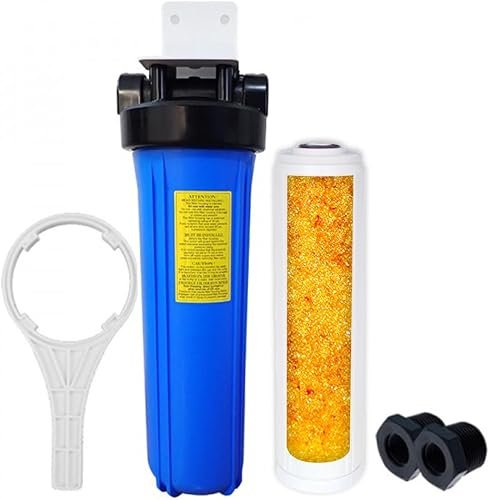
1. Whole House Water Softener Filtration System 20×4.5
This is a specialist unit. If your water test comes back with red flags for PFAS, arsenic, or heavy metals, this system is built to tackle them head-on. The 20″x4.5″ big blue housings allow for high flow and longer contact time with the media. It’s not a softener itself, but it’s the perfect heavy-duty filtration partner to pair with a separate softener tank. For serious contaminant removal, this is the core of a robust solution.
- Targets a wide range of dangerous contaminants
- Large housing for high capacity and flow
- Specifically reduces PFAS/PFOA and disinfection byproducts
- Does not soften water (needs a separate softener)
- Specific media type not detailed, verify for your needs
- Very low price point may indicate basic construction
2. 20” x 4.5” Triple Stage Big Blue Chlorine and Sediment Removal System
This is a solid, no-nonsense filtration workhorse for municipal water. The three-stage process—5μm pleated, 1μm antibacterial, and 0.5μm carbon block—does a fantastic job polishing town water. We like the 75L/min flow rate; you won’t notice a pressure drop in a medium-sized home. The brass ports and WaterMark certification show it’s built to last and meet plumbing standards. Pair this with a quality softener, and you’ve got a complete whole-house treatment setup.
- Excellent multi-stage filtration for chlorine and sediment
- High flow rate supports multiple bathrooms
- Quality construction with brass ports and certification
- Filtration only, does not soften water
- Replacement filters are a recurring cost
- May not address specific contaminants like heavy metals
3. Aqua-Plus 2 Stage Jumbo Big Blue Whole House Water Filter System
Honestly, most people on a tight budget just need to get the big chunks out and fix the taste. This system does exactly that. The 5-micron sediment filter catches the rust and dirt, and the carbon block handles chlorine. It’s a basic, effective starting point. The food-grade housing and pressure relief valve are nice touches at this price. Think of it as the foundation—you can always add a softener or more specialized filters later. For the price, it’s hard to argue.
- Extremely affordable entry point
- Handles basic sediment and chlorine issues
- Simple design, easy to maintain
- Only two stages, limited contaminant removal
- Not for problem water or heavy contamination
- You’ll need to add a softener separately
4. Waterdrop WD-X8 Reverse Osmosis System
Wait, an under-sink RO system in a whole-house guide? Here’s our take: a whole-house system handles the broad strokes—softening, sediment, chlorine. But for the absolute purest drinking and cooking water, a dedicated point-of-use RO system is the final, powerful step. The Waterdrop X8 is a beast—800 gallons per day means you’ll never wait for a glass, and the 2:1 drain ratio is incredibly efficient. The NSF/ANSI 42 & 58 certifications are the real deal. This is our top pick for that final polishing stage.
- Exceptional 9-stage purification for drinking water
- High capacity and very low wastewater ratio
- Strong NSF/ANSI certifications for performance
- Under-sink only, not a whole-house solution
- Requires installation and a dedicated faucet
- Higher upfront cost than basic filters
Frequently Asked Questions
- Do I really need a whole house system, or is an under-sink filter enough?
- It depends on your goals. An under-sink filter only treats one tap. A whole house system protects your plumbing, water heater, and provides filtered water for showers and laundry. If you have hard water or want comprehensive protection, whole-house is the way to go.
- How often do I need to add salt?
- This varies widely based on your water hardness and usage. For a family of four with moderately hard water, expect to add a 40lb bag of salt every 4-8 weeks. A metered system will be more efficient than a timer-based one.
- Can I install this myself?
- We don’t recommend it for most people. It involves cutting into your main water line, electrical work for the control valve, and plumbing for the drain. A bad install can cause leaks or damage. Hire a licensed plumber; it’s worth the peace of mind.
- Will a water softener make my water taste salty?
- No. The ion exchange process adds a very small amount of sodium—far less than you’d find in a slice of bread. If you’re on a strict low-sodium diet, you can use potassium chloride pellets instead. The taste change is imperceptible to most.
- What’s the difference between a filter and a softener?
- A filter removes physical particles, chemicals, and contaminants. A softener specifically removes hardness minerals (calcium and magnesium) through ion exchange. They solve different problems, which is why a combined system is so effective.
- Do salt-free conditioners actually work?
- They work to prevent scale, but they don’t “soften” the water. The minerals are still there; they’re just altered so they don’t stick to surfaces as scale. You won’t get the slippery feel or the soap lathering benefits of true soft water. Their effectiveness can also vary more with water chemistry.
Final Thoughts
After years in this industry, I’ll say this: a good whole house water filtration and softener system is one of the best investments you can make for your home. It solves multiple problems at once. The upfront cost stings, but the long-term savings on appliance repairs, energy, soap, and bottled water add up quickly. Don’t just buy the cheapest unit you find. Get your water tested, size it correctly, and invest in a quality system with a smart control valve.
For most homes on city water, we’d recommend pairing a solid filtered water solution like the triple-stage system above with a traditional salt-based softener. If you have specific contaminants, add the appropriate stage. And for that perfect glass of drinking water, an RO system like the Waterdrop X8 is the cherry on top. Take it step by step, and you’ll have fantastic water from every tap.
