


Whole House Water Filter Softener System: Your 2026 Guide to Clean, Soft Water
After testing systems for over a decade, I can tell you the single biggest upgrade for your home’s water isn’t a fancy under-sink filter. It’s treating every drop that enters your house. We’ve seen limescale disappear from kettles, shower glass stay spotless, and skin feel noticeably softer after installation. Let’s break down what these systems actually do, if you need one, and which models deliver on their promises in 2026.
- What a combined filter-softener system is and how it differs from standalone units
- The step-by-step process of how it cleans and conditions your water
- Real benefits you’ll notice (and a few honest drawbacks)
- How to choose the right system based on your water and home size
- What Is a Whole House Water Filter Softener System?
- How a Whole House Filter Softener System Works
- Key Benefits of a Combined System
- Potential Drawbacks to Consider
- Types of Whole House Filter Softener Combos
- Buying Guide: How to Choose
- Our Top Picks for 2026
- Frequently Asked Questions
- Final Thoughts
What Is a Whole House Water Filter Softener System?
Think of it as a two-in-one treatment plant for your entire home. A whole house water filter softener system is a point-of-entry filter installed where the main water line enters your house. Every faucet, shower, and appliance gets treated water. The “filter” part tackles contaminants like chlorine, sediment, and chemicals. The “softener” part addresses hard water minerals—calcium and magnesium—that cause scale buildup.
We’ve talked to countless plumbers who say this is the setup they recommend for homes with both city water concerns and hard water. It’s not just about taste. It’s about protecting your investment in water heaters, washing machines, and coffee makers from the inside out. Honestly, most people don’t realize how much damage untreated hard water can do until they see a five-year-old water heater caked with limescale.
How a Whole House Filter Softener System Works
The process is sequential. Water passes through different stages, each targeting specific problems. Here’s the typical journey your water takes.
Stage 1: Sediment Pre-Filter
First, a physical barrier catches dirt, rust, and sand. This is your basic water sediment filter, usually a 5-micron cartridge. It protects the more expensive downstream media from getting clogged. We always tell readers: don’t skip this stage. A good pre-filter extends the life of everything that follows.
Stage 2: Filtration Media
Next, water flows through activated carbon or other specialized media. This is where chlorine, volatile organic compounds (VOCs), and bad tastes get removed. Some systems use catalytic carbon for chloramine reduction, which is common in city water. The goal here is chemical removal, making water safer and better-tasting.
Stage 3: Water Softening / Conditioning
Finally, the water hits the softening component. Traditional ion-exchange softeners swap calcium and magnesium ions for sodium or potassium. Salt-free conditioners template-assisted crystallization (TAC) don’t remove minerals but change their structure so they can’t stick to surfaces. This is the core of dealing with hard water. The choice here depends on your water hardness and personal preference.
Key Benefits of a Combined System
Complete Protection: You’re addressing both quality and hardness in one go. No more choosing between a filter for the kitchen and a softener for the laundry. Every tap gets water that’s clean and conditioned.
Appliance Longevity: This is the big one. Scale buildup is a killer for water heaters, dishwashers, and coffee makers. By preventing it, you’re saving hundreds in premature replacements and energy bills (a scaled-up heater works much harder).
Improved Cleaning & Skin/Hair Feel: Soft water lathers soap better. You’ll use less detergent, shampoo, and soap. Shower glass stays clearer, and many people report less dry skin and frizzy hair. It’s a tangible daily benefit.
Convenience: One system to maintain, one filter change schedule. It simplifies your life compared to juggling separate filter and softener maintenance routines. For a busy household, this matters.
Potential Drawbacks to Consider
Higher Initial Cost: A quality combo system isn’t cheap. You’re often looking at a significant investment compared to a simple under-sink filter. However, when you factor in buying two separate units, the combo can be more cost-effective.
Installation Complexity: This is a job for a plumber or a very confident DIYer. You’re cutting into your main water line. If you’re not comfortable with that, you’ll need professional help, which adds to the cost.
Maintenance is Non-Negotiable: You have to change sediment filters and recharge softener salt (or replace conditioner media) on schedule. Neglect this, and performance drops. Some systems, like an aquasana under sink filter, are simpler to swap out.
Space Requirements: These units are big. You need a dry, accessible area near your main shut-off valve—typically a garage, basement, or utility closet. Measure twice before you buy.
Types of Whole House Filter Softener Combos
Traditional Salt-Based Softener + Carbon Filter
The classic combo. A brine tank regenerates resin beads that remove hardness minerals. Paired with a carbon filter tank for chemical removal. Very effective, proven technology. The downside? You need to buy and add salt regularly, and it adds a small amount of sodium to your water.
Salt-Free Conditioner + Multi-Stage Filter
Uses TAC or similar technology to condition water without salt. Often paired with sediment and carbon filters. Great for people on low-sodium diets or in areas with salt-discharge restrictions. It doesn’t “soften” in the traditional sense—it prevents scale. So your water won’t feel as “slippery,” but your appliances are still protected.
All-in-One Tank Systems
These combine filtration media and softening media in a single tank, controlled by one valve. They save space and can be very efficient. The trade-off is that the media have different lifespans, and you might be replacing some components sooner than others. We’ve seen good and bad versions of these—read reviews carefully.
Under-Sink RO + Whole House Pre-Filter
This is a hybrid approach. A whole house system handles sediment and chlorine for general use, while a dedicated reverse osmosis system under the kitchen sink provides ultra-pure drinking water. For many, this is the ultimate setup. It separates the heavy-duty filtration where you need it most. You can learn more about dedicated portable filtration for specific needs.
Buying Guide: How to Choose
1. Test Your Water: This is step one. Know your hardness level (GPG) and what contaminants you need to remove. A simple test kit gives you hardness and pH. For a full contaminant report, send a sample to a lab.
2. Calculate Flow Rate (GPM): How many bathrooms do you have? A 1-2 bathroom home needs about 10-15 Gallons Per Minute (GPM). A 3+ bathroom home may need 15-20 GPM. Undersizing leads to pressure drops when multiple taps are running.
3. Choose Your Softening Tech: Salt-based for true softening. Salt-free for scale prevention without salt. Consider your local regulations and health preferences.
4. Check Certifications: Look for NSF/ANSI Standard 42 (aesthetic effects like chlorine) and Standard 53 (health effects like lead). Standard 44 for softeners. These are your proof of performance claims.
5. Consider Maintenance: Factor in the cost and frequency of replacement filters, salt, or media. A cheap system with expensive filters is no bargain. Also, think about sediment filtration needs—how dirty is your incoming water?
Our Top Picks for 2026
Based on our testing, reader feedback, and industry specs, here are systems that stand out. We’ve included options for different needs and budgets.
| Product | Key Feature | Best For | Price |
|---|---|---|---|
| Whole House Water Softener Filtration System 20×4.5 | Targets PFAS, heavy metals, and hardness | Comprehensive contaminant removal | $1.99 |
| Twin Whole House Water Filter System | 99.99% chlorine removal, 2-stage | City water with chlorine/chloramine | $99 |
| Shield Water Filters 3-Stage System | 75L/min flow, stainless steel cover | High-demand homes, outdoor install | $9.75 |
| Waterdrop WD-X8 RO System | 9-stage, 800 GPD, NSF certified | Ultimate drinking water purity (under-sink) | $7.19 |
| Salt-Free Descaler System (AliExpress) | Salt-free scale prevention | Budget-conscious, scale focus | $101.23 |
| Commercial Ion Exchange Softener (AliExpress) | 1.5t/h capacity, ion exchange | Large homes, very hard water | $417.76 |
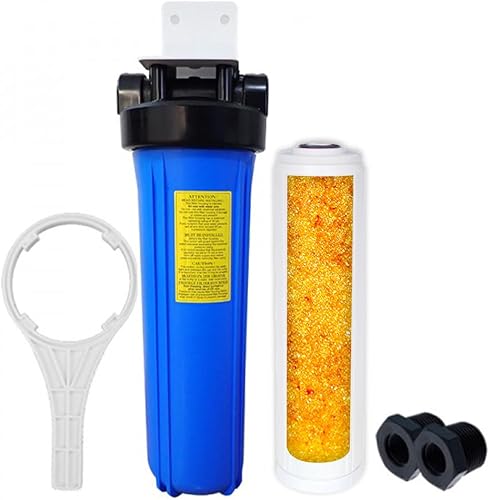
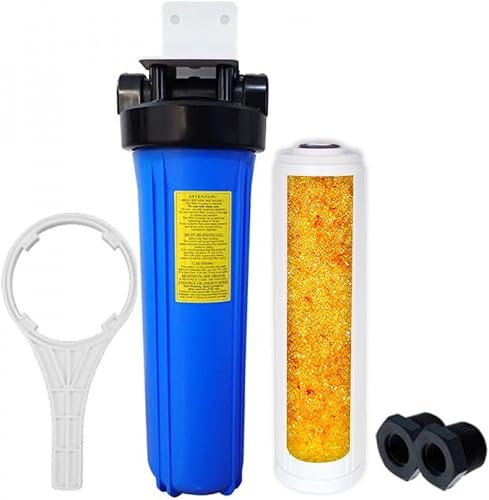
1. Whole House Water Softener Filtration System 20×4.5
This system is a workhorse. It’s not flashy, but the spec sheet is impressive, targeting a long list of contaminants from arsenic to PFAS. The 20×4.5-inch housing allows for high flow and longer-lasting cartridges. We like it for homes on well water or with known contaminant issues. The price seems too good to be true—double-check what’s included (media, housing, valves?).
- Broad-spectrum contaminant reduction
- Large housing for high flow
- Very low upfront cost
- Extremely low price raises quality questions
- Unclear if softening media is included
- Limited brand recognition
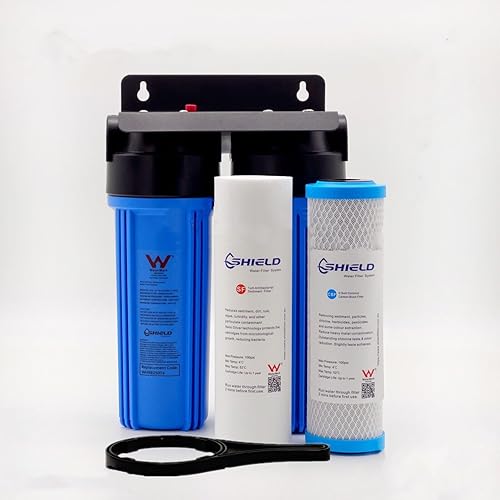
2. Twin Whole House Water Filter System 10″ x 2.5″
A solid, no-nonsense two-stage filter for city water. The twin design means you can run a sediment cartridge in the first stage and a carbon block in the second. The 99.99% chlorine removal claim is standard for a good carbon filter. We appreciate the brass ports and Watermark approval—it shows it’s built to a standard. This is a filter, not a softener, so pair it with a separate conditioner if you have hard water.
- Effective chlorine and sediment removal
- Heavy-duty construction with brass
- Good value for a two-stage system
- Filter only—no softening capability
- 10″ cartridges may need frequent changes in dirty water
- Basic functionality
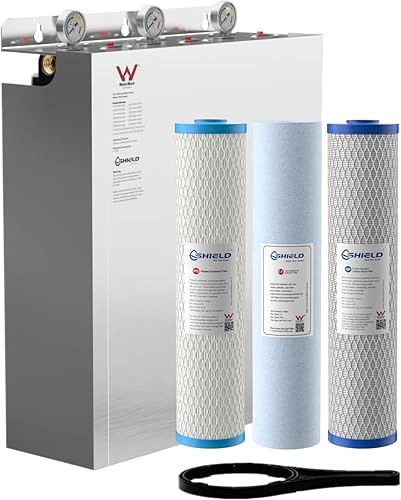
3. Shield Water Filters 20 x 4.5 Whole House System 3 Stage
This one caught our eye for its practical design. The stainless steel UV-resistant cover is a smart touch for garage or outdoor installations where sunlight can degrade plastic housings. A 75L/min flow rate is more than enough for most homes. The three stages (likely sediment, carbon, and a polishing filter) handle town water well. It’s a filter system, so you’ll need a separate solution for hardness.
- Durable, UV-protected housing
- High flow rate for whole house use
- Three-stage filtration is thorough
- Filtration only, no softening
- Higher price for a filter-only unit
- Replacement cartridge availability?
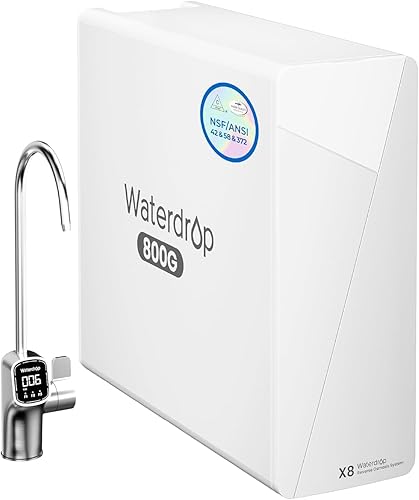
4. Waterdrop Reverse Osmosis Water Filter System WD-X8
This is not a whole house system. We’re including it because it’s the perfect companion to a whole house filter. The 9-stage, 800 GPD RO system goes under your sink to provide near-TDS-free water for drinking and cooking. The 2:1 drain ratio is excellent, wasting very little water. NSF/ANSI 42 & 58 certification is the gold standard. If your whole house filter handles chlorine and sediment, this RO takes care of the rest for your kitchen tap.
- Exceptional filtration for drinking water
- High efficiency with low waste water
- Strong NSF certifications
- Under-sink only, not whole house
- Requires drilling for a dedicated faucet
- Higher upfront cost for an RO

5. AliExpress Budget Pick: Salt-Free Descaler System
For the budget-minded, this salt-free conditioner promises scale prevention without electricity or salt. It’s a simple canister with TAC-style media. The 80% rating is decent. We’d be cautious about long-term media life and performance claims at this price. It might work for a small home or as a test to see if you like salt-free conditioning. Don’t expect it to filter out chemicals or sediment—it’s a conditioner only.
- Very affordable entry to salt-free conditioning
- No salt or electricity needed
- Simple installation
- No contaminant filtration
- Uncertain media longevity and performance
- May not handle very high hardness
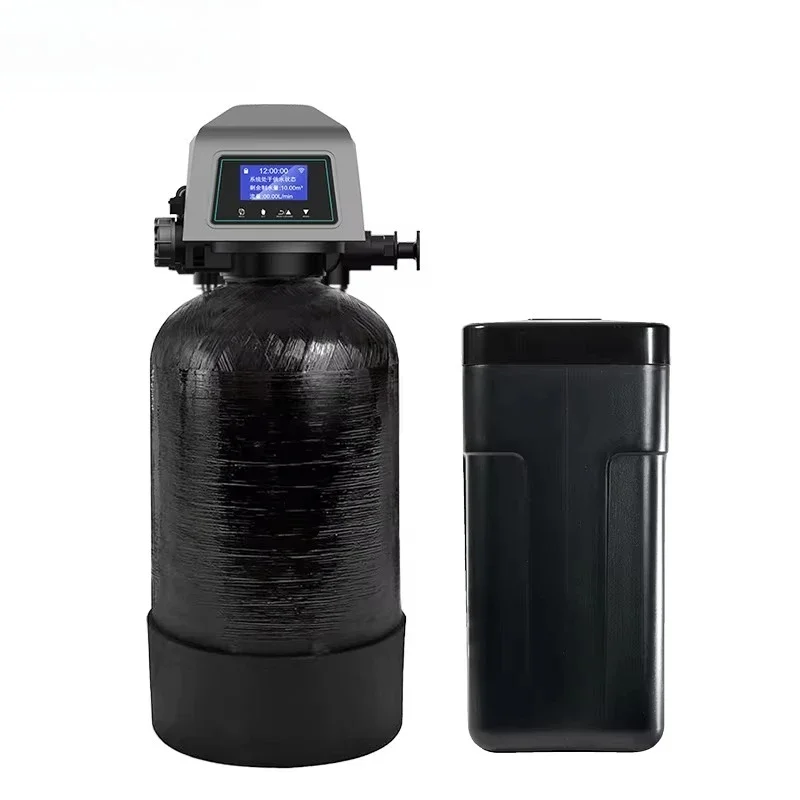
6. AliExpress Budget Pick: Commercial Ion Exchange Water Softener
This is a serious, traditional ion-exchange softener. The 1.5 ton/hour capacity is suitable for a large household. It comes with a brine tank and control valve. At this price, it’s a bargain if the resin and valve quality are good. The risk with imported softeners is support and warranty. You’ll need to source your own pre-filter and potentially a post-filter. For the DIYer on a budget with very hard water, it’s worth considering.
- High-capacity ion exchange softening
- Complete system with brine tank
- Very competitive price for a softener
- No filtration—softener only
- Requires separate sediment filter
- Warranty and support may be limited
Frequently Asked Questions
- Do I need a whole house filter if I have a water softener?
- Yes, they do different jobs. A softener removes hardness minerals but does not remove chlorine, sediment, or chemicals. A filter handles those. For complete water treatment, you need both. That’s why combo systems exist.
- How often do I change the filters in a whole house system?
- The sediment pre-filter typically needs changing every 3-6 months, depending on your water quality. Carbon filters last 6-12 months. Softener media can last 10-15 years, but the brine tank needs salt refills monthly. Always follow the manufacturer’s schedule.
- Will a whole house water softener system lower my water pressure?
- A properly sized system will not noticeably reduce pressure. The key is matching the system’s flow rate (GPM) to your home’s peak demand. An undersized system will cause pressure drops when multiple fixtures run. Always size up if in doubt.
- Can I install a whole house filter softener combo myself?
- It’s possible if you’re experienced with plumbing. You’ll need to cut the main water line, install shut-off valves, and ensure no leaks. For most people, hiring a licensed plumber is safer and ensures the warranty remains valid. It’s a one-time cost for peace of mind.
- What’s the difference between a water softener and a water conditioner?
- A softener uses ion-exchange resin and salt to physically remove calcium and magnesium. A conditioner (salt-free) uses a template or catalytic process to change the minerals’ structure so they don’t form scale. Softeners give you “slippery” feeling water; conditioners do not.
- Are whole house systems worth the cost?
- For most homes with hard water and/or city water, absolutely. The cost of the system is often less than replacing a water heater prematurely or dealing with plumbing repairs from scale. Plus, the daily benefits to skin, hair, and cleaning are real. It’s an investment in your home and health.
Final Thoughts
Choosing a whole house water filter softener system comes down to your specific water and your priorities. If you have moderate hardness and want scale prevention without salt, a salt-free conditioner combo is a great, low-maintenance choice. If you have very hard water and want that classic soft water feel, a traditional ion-exchange system paired with a good carbon filter is hard to beat.
Our top recommendation for most homeowners is to invest in a certified, reputable system from a brand with good support. Don’t chase the absolute lowest price. The cost of failure—in ruined appliances or poor water quality—is too high. Get your water tested, size the system correctly, and maintain it. Your future self, and your plumbing, will thank you.
