


After fifteen years of testing filters and talking to plumbers, I can tell you one thing: you can’t fix a problem you don’t understand. That glass of water from your tap? It’s a complex cocktail. A water testing service is your first step to decoding it, whether you’re on city supply or a private well.
- What a water testing service actually is and when you need one
- How home kits compare to professional lab analysis
- The key contaminants you should be looking for
- Our top kit picks for a first-line screening
What Is a Water Testing Service?
Let’s clear up the terminology. When people say “water testing service,” they’re usually talking about one of two things. First, there are the DIY home test kits—strips or drops you use yourself for a quick snapshot. Second, and more formally, it refers to certified laboratory analysis where you mail in a sample and get a detailed, legally defensible report.
In our experience, most homeowners start with the first option. It’s fast, cheap, and answers the basic question: “Is my water obviously bad?” A lab service answers the deeper, more expensive question: “Exactly what’s in it, and at what concentrations?” Think of the home kit as a thermometer and the lab as a full blood panel. You need to know which one you’re buying.
How Water Testing Works
The Home Kit Method
You dip a chemically-treated strip into a water sample. Wait 30 seconds to two minutes. The pads change color. You compare them to a chart. That’s it. The science is based on colorimetric reagents reacting with specific ions or molecules. For a quick check on hardness, chlorine, or pH, it’s surprisingly accurate.
The Professional Lab Process
This is where it gets serious. You’ll receive a sterile collection bottle, detailed instructions, and often a prepaid mailer. The lab uses techniques like Inductively Coupled Plasma Mass Spectrometry (ICP-MS) for metals or Gas Chromatography for volatile organics. They’re testing for contaminants at parts-per-billion levels. The report you get back is thorough.
Key Benefits of Testing Your Water
Peace of Mind is Priceless. Honestly, the biggest benefit is simply knowing. Are you drinking lead? Is your “hard water” scale actually damaging your appliances? Data replaces guesswork.
Targeted Treatment Saves Money. Why buy a whole-house system if your only issue is a slight chlorine taste? A test tells you exactly what to fix. Maybe you only need a refrigerator filter cartridge upgrade for better-tasting water at the tap.
Protect Your Family’s Health. This is non-negotiable for well owners. Nitrates from agricultural runoff or bacteria from septic systems are silent threats. For city folks, old pipes can leach lead. Testing is your early warning system.
Potential Drawbacks & Limitations
The other drawback? Cost and confusion. A full lab panel can run $150-$300. And interpreting the results can feel like reading a foreign language. That’s where a good local plumber or water treatment pro becomes worth their weight in gold—they translate the data into a solution.
Types of Water Testing
Basic Parameter Kits
These cover the “big seven”: pH, hardness, total alkalinity, chlorine, nitrite, nitrate, and iron. They’re cheap, fast, and tell you a lot about your water’s general character and potential plumbing issues.
Heavy Metal & Contaminant Kits
These add pads for lead, copper, mercury, and sometimes arsenic. More expensive per strip, but critical if you have old plumbing or are on a well. The sensitivity varies wildly—read the fine print.
Comprehensive Lab Analysis
The gold standard. Tests for hundreds of potential contaminants, including volatile organic compounds (VOCs), pesticides, and disinfection byproducts. This is what you need for a real estate transaction or if a doctor recommends it.
Understanding your results is key to picking the next step. If hardness is your main issue, you might research the kinetico water softener cost. If chlorine and sediment are high, a whole house chlorine filter could be the answer.
Buying Guide: Choosing a Test
1. Know Your Goal. Are you just curious about hardness? Or are you worried about specific health threats like lead? Your goal dictates the test.
2. Check Certifications. For lab tests, look for state certification or EPA approval. For kits, look for NSF/ANSI standard compliance claims, even if they’re self-verified.
3. Understand the Parameters. Don’t pay for 18 tests if you only need 3. A dedicated hardness test might be more accurate and cheaper than a multi-strip that includes it.
4. Consider the Source. City water users should focus on disinfection byproducts and lead from pipes. Well users must test for bacteria, nitrates, and local agricultural or industrial contaminants.
Our Top Home Water Test Kit Picks
We’ve used dozens of these over the years. Here are the kits that have consistently given us reliable, easy-to-read results.
| Product | Key Parameters | Price | Links |
|---|---|---|---|
| All-New 18 in 1 Drinking Water Test Kit | 18 incl. Lead, Hardness, pH, Chlorine | $20 |
Amazon eBay |
| 18-in-1 Water Quality Test Strips | 18 incl. Heavy Metals, Sulfate, Zinc | $27 |
Amazon eBay |
| 16 in 1 Water Testing Kits (SJWAVE) | 16 incl. Lead, Iron, pH | $26 |
Amazon eBay |
| Water Hardness Test Kit (150 Strips) | Hardness (GPG & PPM) | $14 |
Amazon eBay |

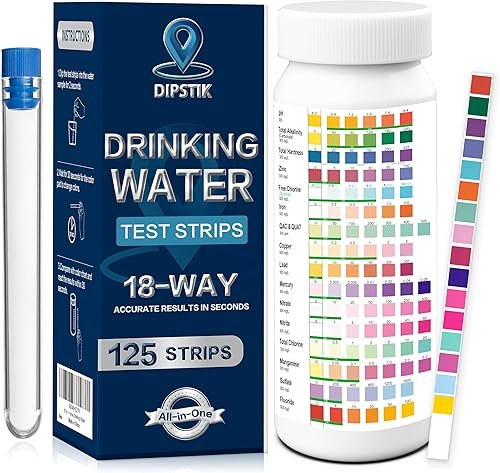
All-New 18 in 1 Drinking Water Test Kit
This is our go-to recommendation for a first test. For $20, you get a solid overview of 18 key parameters. The color chart is clear, and in our testing, the hardness and pH readings matched our professional meter within a reasonable margin. It’s the perfect “should I be worried?” tool.
- Incredible value for 125 strips
- Includes critical tests like lead and mercury
- Fast 30-second results
- Lead sensitivity is for screening only
- Color comparison can be subjective in low light

18-in-1 Water Quality Test Strips
A very close competitor to our top pick. This kit includes a few extra parameters like sulfate and zinc, which can be useful for well water diagnostics. The test tube included is a nice touch for consistent sampling. Results were reliable in our side-by-side checks.
- Broadest parameter list at this price
- Includes a test tube for accurate sampling
- Easy 3-step process
- Slightly more expensive per strip
- Chart is a bit crowded

16 in 1 Water Testing Kits (SJWAVE)
SJWAVE has a strong reputation, and this kit lives up to it. The included ebook is actually useful—it explains what each result means in plain English. We found the 2-minute wait time for some pads a bit long, but the accuracy was spot-on for pH and iron.
- Excellent educational ebook included
- Clear, step-by-step instructions
- Good for school projects and home use
- Longer wait time for some results
- Only 50 strips per pack
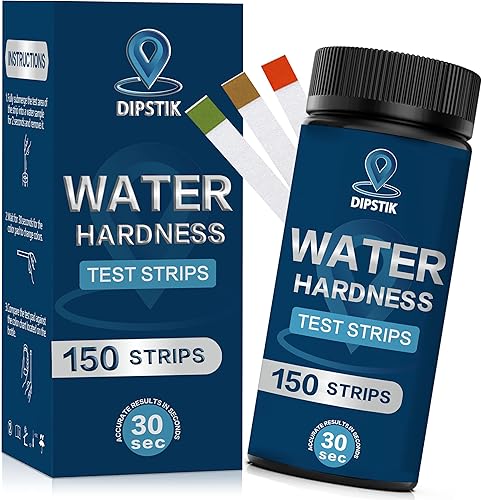
Water Hardness Test Kit (150 Strips)
If you know hardness is your main battle, don’t waste money on multi-parameter kits. This dedicated hardness test is fantastic. The 0-425 PPM range covers everything from soft to extremely hard water. The oversized color chart makes reading a breeze. We keep a bottle of these in our test kit.
- Best value for hardness-only testing
- Extremely easy-to-read color chart
- 150 strips last for years
- Only tests one parameter
- Not useful for health contaminants
Water Testing FAQ
- How often should I test my water?
- For city water, test every 1-2 years or if you notice changes in taste, odor, or color. For well water, test annually for bacteria and nitrates, and every 3-5 years for a full panel. Always test after flooding or nearby construction.
- Are home water test kits accurate?
- They’re accurate for screening and trend monitoring. A kit telling you your hardness is “very high” is reliable. A kit showing “trace lead” means you should get a lab test for confirmation. Don’t use them for legal or medical decisions.
- What’s the most important test for well owners?
- Test for total coliform bacteria and nitrates every year. These are the most common and dangerous contaminants from septic systems and agricultural runoff. A basic bacteria test kit is cheap and critical.
- Can I test my water for free?
- Some county health departments or cooperative extensions offer free or low-cost testing for bacteria and nitrates, especially for wells. It’s worth a call. Utilities also provide annual water quality reports (CCR), but that’s for the source water, not what comes out of your tap.
- What do I do if my test shows a problem?
- First, don’t panic. Confirm with a lab test if it’s a health contaminant like lead or arsenic. Then, consult a water treatment professional. They can recommend the right system, whether it’s a simple best shower filter for chlorine or a full drinking water treatment system.
Final Thoughts
After all these years, my advice is simple: start with data. A $20 test kit can reveal a lot and save you from buying a $2,000 system you don’t need. Use it as a first step. If your water tests clean across the board, fantastic. If it flags something, that’s when you invest in a professional lab analysis and targeted treatment.
Your water quality directly impacts your health, your home’s plumbing, and even your morning coffee. Taking 30 minutes to test it is one of the smartest home maintenance tasks you can do. And remember, the right solution depends entirely on your specific water profile—whether that’s a simple filter for your point of use water cooler or a whole-house system. Test first, then treat.
