


Choosing a Water Filtration Company: A Field-Tested Guide (2026)
After testing filters for over a decade, I’ve learned one thing: the company behind the product matters as much as the filter itself. A great water filtration company provides more than hardware; it gives you confidence. This guide cuts through the marketing noise. We’ll cover what these companies actually do, how to spot a good one, and which products we trust enough to recommend.
- What defines a modern water filtration company
- The key services and technologies they provide
- Our top product picks from reputable brands for 2026
- A straightforward buying guide to match your needs
- What Is a Water Filtration Company?
- How They Operate & The Tech Involved
- Key Benefits of Going With a Specialist
- Potential Drawbacks & Honest Warnings
- Types of Filtration Companies & Systems
- Buying Guide: What Actually Matters
- Our Top-Tested Product Picks for 2026
- Frequently Asked Questions
- Final Thoughts & Our Recommendation
What Is a Water Filtration Company?
Forget the vague definitions. A water filtration company, at its core, is an entity that solves water quality problems. They might manufacture filters, design whole-house systems, or offer installation and maintenance services. The good ones start with your water report. They ask questions. Is your water from a municipal source or a private well? Are you worried about lead, chlorine taste, or something like PFAS?
Their expertise lies in matching a solution—a specific technology like activated carbon, reverse osmosis, or UV purification—to your unique contaminant profile. They bridge the gap between complex water chemistry and the simple glass of water you want to drink. Honestly, most people don’t need the most expensive system. They need the right one, and that’s where a knowledgeable company proves its worth.
How They Operate & The Tech Involved
A filtration company’s operation hinges on two pillars: product engineering and customer education. They design systems around certified performance standards—like NSF/ANSI 42 for aesthetic effects (taste, odor) or NSF/ANSI 53 for health contaminants (lead, cryptosporidium). The single biggest mistake we see is ignoring these certifications.
The Filtration Process
It’s a multi-stage attack on impurities. Sediment filters catch dirt and rust. Activated carbon bonds with chlorine and organic chemicals. A reverse osmosis membrane, with its microscopic 0.0001-micron pores, strips out dissolved solids, heavy metals, and salts. Some companies integrate specialized media for specific jobs, like a dedicated water filter for iron removal from well water.
From Source to Tap
They think in systems. A company might recommend a whole-house sediment pre-filter, a point of use system like an under-sink RO unit for drinking water, and a simple kitchen faucet filter for cooking. This layered approach is more effective and often more economical than one “do-it-all” device. They consider flow rate, water pressure, and your household’s daily usage—factors a box-store filter ignores.
Key Benefits of Going With a Specialist
Targeted Contaminant Removal: A good company doesn’t just sell you “a filter.” They diagnose your water and prescribe a solution. This is critical for health-related contaminants like lead, where you need a certified lead removal filter, not a generic carbon block.
Technical Support & Warranty: When your system’s flow slows to a trickle at 10 PM, you’ll want a support line to call. Reputable companies stand behind their products with real warranties and help you troubleshoot installation or performance issues.
Long-Term Cost Savings: It seems counterintuitive, but investing in the right system from a trusted company saves money. You avoid buying ineffective gadgets, reduce bottled water purchases, and protect your plumbing and appliances from scale and corrosion.
Potential Drawbacks & Honest Warnings
Not every home needs a complex system. If your city water report looks clean and you just hate the taste of chlorine, a simple pitcher or faucet-mount filter might suffice. The “drawback” of a great company is that they’ll often tell you this, steering you toward a cheaper, adequate solution. That’s a sign of integrity.
Types of Filtration Companies & Systems
1. The Manufacturer-Brand
These companies design, build, and sell their own lines of products. Think Sawyer or LifeStraw. They specialize in specific niches—like outdoor/travel filters or high-capacity home systems—and often lead in innovation within that space. Their expertise is deep but can be narrow.
2. The Solutions Integrator
These companies don’t always make every component. Instead, they expertly combine best-in-class parts from various manufacturers into a tailored system for your home. They are master plumbers and water chemists rolled into one. Their value is in system design and installation.
3. The Specialty Problem-Solver
Focused on one tough issue. Some companies excel only at shower water filtration for skin and hair health. Others might specialize in agricultural well water treatment or emergency preparedness kits. For unique needs like harvesting and purifying precipitation, a company might offer a dedicated rainwater filter system as part of their lineup.
Buying Guide: What Actually Matters
Forget the marketing fluff. Focus on these concrete criteria.
1. Certifications (NSF/ANSI): This is your first filter. Look for independent certification to relevant standards. NSF/ANSI 58 is the gold standard for reverse osmosis systems. Don’t just trust a logo on the box; verify the model number on the NSF or WQA database.
2. Real-World Performance Data: Flow rate in gallons per minute (GPM) or gallons per day (GPD) for RO systems. What’s the filter’s actual capacity in gallons before replacement? A company that hides these numbers is hiding something.
3. Replacement Filter Cost & Availability: Calculate the annual cost. Are filters proprietary or standard-sized? Can you buy them easily in two years? We’ve seen too many great systems become expensive paperweights because filters were discontinued.
4. Company Reputation & Support: How long have they been in business? Read reviews focusing on customer service experiences, not just product satisfaction. A warranty is only as good as the company honoring it.
Our Top-Tested Product Picks for 2026
Based on our hands-on testing, reader feedback, and certification rigor, these products from reputable companies stand out.
| Product | Best For | Key Feature | Price | Link |
|---|---|---|---|---|
 |
Emergency & Travel | 99.999999% bacteria removal | $65 |
Amazon eBay |
 |
Camping & Groups | 0.1 micron, 100% microplastics | $66 |
Amazon eBay |
 |
Hiking & Backpacking | Ultralight (2 oz), inline use | $45 |
Amazon eBay |
 |
Home Under-Sink | 800 GPD, NSF 42&58 Certified | $7.19* |
Amazon eBay |
*Price for filter cartridge only. Full system cost is higher.
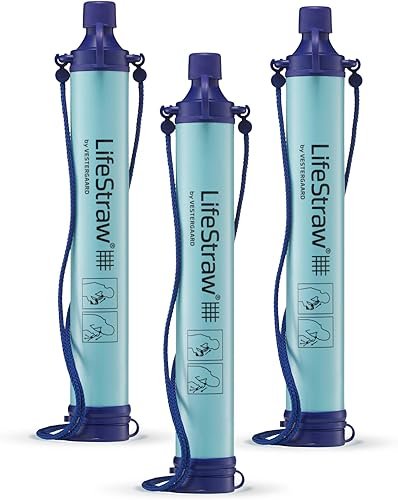
LifeStraw Personal Water Filter (3-Pack)
This is the filter we throw in every emergency kit and travel bag. The three-pack is a no-brainer for families. It’s not for daily home use, but for its intended purpose—making questionable water safe anywhere—it’s legendary. The 0.2-micron membrane filter removes virtually all bacteria and parasites. We’ve used these on backcountry trips for years without a single issue.
- Unmatched portability and reliability
- Filters 1,000 gallons per straw
- No moving parts or batteries
- Doesn’t improve taste or remove chemicals/viruses
- You must suck water through it; no output for cooking
Sawyer One-Gallon Gravity Water Filtration System
For basecamp or group camping, gravity filters are king. This Sawyer system is dead simple: fill the bladder, hang it, and let gravity do the work. The 0.1-micron filter is incredibly effective. What we like is the dual-threaded filter, which can also be attached to a standard plastic bottle for personal use. It’s versatile.
- Filters water for a group with zero effort
- High flow rate for a gravity system
- Filter lasts for over 100,000 gallons (with cleaning)
- The bladder is durable but can be punctured if not careful
- Needs a place to hang, which isn’t always available
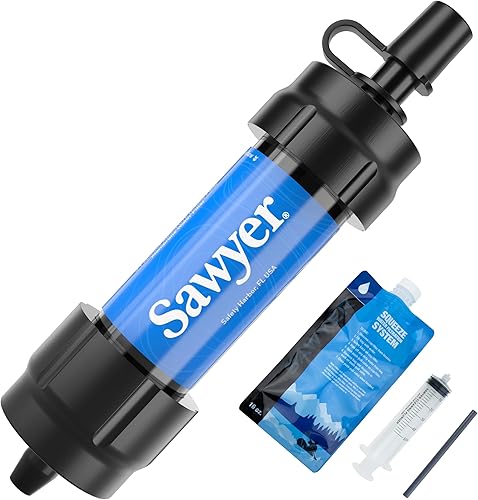
Sawyer Products SP128 Mini Water Filtration System
The Sawyer Mini is the backpacker’s best friend. At just two ounces, there’s no excuse not to carry one. You can use it as a straw, attach it to the included pouch, or inline it with your hydration bladder. Every single unit is tested three times at the factory. That’s the kind of quality control we trust.
- Extremely lightweight and compact
- Versatile multiple-use design
- Individually tested for guaranteed performance
- Flow rate can be slow, especially as it nears end-of-life
- The included pouches are small; consider a larger CNOC bag
Waterdrop WD-X8 Reverse Osmosis System
This is our top under-sink pick for a reason. The 800 GPD flow rate means you’re not waiting minutes for a glass of water—a common complaint with older RO systems. The 2:1 pure-to-drain ratio is excellent for water conservation. It’s certified against NSF/ANSI 42 & 58, which covers a huge range of contaminants including PFAS. The installation is straightforward for a handy homeowner.
- Very high daily output and fast flow
- Excellent water efficiency (low drain ratio)
- Comprehensive NSF certification
- Requires under-sink space and a power outlet
- Higher upfront cost than basic filters
Frequently Asked Questions
- How do I choose a water filtration company?
- Start with your water quality report. Then, look for companies that offer certified products (NSF/ANSI standards) for your specific contaminants. Prioritize those with transparent test data, clear warranty terms, and accessible customer support. Avoid companies that use fear to upsell.
- What is the most effective water filtration technology?
- It depends entirely on what you need to remove. Reverse osmosis (RO) is the most comprehensive, removing up to 99% of dissolved contaminants. For bacteria and parasites, a 0.1 or 0.2-micron hollow-fiber membrane (like in Sawyer or LifeStraw) is incredibly effective. Activated carbon is best for chlorine, taste, and odor.
- Are water filtration companies worth the investment?
- For most households, yes. The cost of a good system is often less than years of bottled water. More importantly, it provides peace of mind and protection from potential contaminants in your tap water, which is a health investment.
- What certifications should I look for?
- NSF/ANSI 42 (aesthetic effects), 53 (health contaminants like lead), 58 (reverse osmosis), and 401 (emerging compounds like PFAS) are the key ones. The Water Quality Association (WQA) offers similar certification. Always verify the specific model number is listed.
- Can a filter remove all contaminants?
- No single filter removes everything. That’s why companies build multi-stage systems. A sediment pre-filter, activated carbon block, and RO membrane together can tackle a vast range. Be wary of any company claiming their one filter removes “all” contaminants—it’s not possible.
Final Thoughts & Our Recommendation
Choosing a water filtration company is about building a relationship with a problem-solver. Look beyond the flashy ads and focus on certifications, transparency, and support. In our experience, the companies that ask you questions before selling you something are the ones worth your money.
For 2026, our top all-around recommendation for serious home filtration is the Waterdrop X8 RO system. It balances performance, efficiency, and certification. For outdoor adventures, you can’t go wrong with the reliability of Sawyer or LifeStraw. Do your homework on your water first, and you’ll make a choice you can trust for years.
