


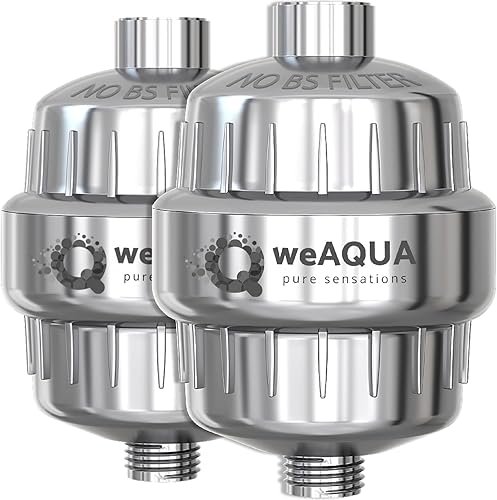
If your home runs on well water, you know the drill: the metallic tang, the orange stains, that faint rotten-egg smell after a rain. You’ve probably dealt with it for drinking, but what about your shower? That’s where a dedicated shower filter for well water comes in. I’ve spent years testing these units on my own well system and talking to plumbers who service rural homes. This guide covers what they actually do, how to choose one that won’t clog in a month, and which models we trust in 2026.
What Is a Shower Filter for Well Water?
It’s a point-of-use filter that screws between your shower arm and shower head. But here’s the key difference from a standard municipal-water filter: it’s built to handle the unique cocktail of contaminants found in private wells. We’re talking sediment, dissolved iron, manganese, hydrogen sulfide (that’s the rotten egg smell), and often high levels of hardness minerals.
Think of it as a specialized line of defense. Your whole-house point of entry filter might tackle bacteria and large sediment, but a shower filter provides a final clean-up right where the water hits your skin and hair. It’s not a water softener—it won’t remove dissolved calcium and magnesium. Instead, it focuses on the particles and oxidized metals that cause staining, odor, and that grimy, itchy feeling after you dry off.
In our testing, the difference is night and day. Without a filter, well water can leave hair brittle and skin dry. With the right filter, you get a clean rinse. It’s a simple upgrade that makes a huge daily impact.
How It Works: The Filtration Stages
A good well-water shower filter isn’t just a single screen. It’s a multi-layer system, with each stage targeting a different problem.
Stage 1: Sediment Pre-Filter
This is your first line of defense. A layer of spun polypropylene or a stainless-steel mesh catches sand, silt, and rust flakes. This is critical for well water—it prevents the finer media downstream from clogging up in weeks. We’ve seen cheap filters fail because they skip this step.
Stage 2: Oxidation & Reduction Media
This is the workhorse. KDF (Kinetic Degradation Fluxion) media is a copper-zinc formula that uses redox reactions. It’s fantastic for well water because it knocks out dissolved iron, hydrogen sulfide, and heavy metals like lead. It also controls scale and inhibits bacterial growth inside the filter—a real concern with untreated well water.
Stage 3: Carbon Filtration
Activated carbon, often in a granular or calcium sulfite blend, removes chlorine. Now, you might think, “My well doesn’t have chlorine.” True, but many well owners periodically “shock” their system with chlorine to kill bacteria. A carbon stage cleans up any residual taste or smell from that process. It also grabs some organic compounds.
Stage 4: Polishing & Conditioning
Some advanced filters add a final layer of ceramic balls or far-infrared materials. The science on their “energizing” effects is thin, but they can help condition the water, making it feel slightly softer and improving lather. Don’t expect miracles, but it’s a nice bonus.
Key Benefits for Well Water Users
Reduces Staining and Scaling: Iron and manganese leave rust-colored stains on your shower walls, doors, and fixtures. A filter with KDF media captures these oxidized metals before they hit the porcelain. You’ll scrub less.
Eliminates Sulfur Odors: That unmistakable rotten-egg smell from hydrogen sulfide gas can make showers unpleasant. KDF media is remarkably effective at removing it. The change is immediate.
Improves Skin and Hair Health: This is the benefit you’ll feel. Sediment and metals strip natural oils, leading to dry, itchy skin and brittle hair. Filtering them out lets your natural moisture barrier recover. Many readers report less dandruff and fewer breakouts.
Protects Your Shower Head: Sediment and scale buildup clog the nozzles on expensive shower heads. A filter acts as a guard, extending the life of your fixtures.
Potential Drawbacks & Limitations
They won’t soften water. If you have extreme hardness (over 15 GPG), you’ll still get some scale buildup and that “slippery” feeling is hard to achieve without a true ion-exchange softener. The filter helps, but it’s not magic.
Cartridge life is shorter with well water. The sediment and iron load is higher than municipal water. A filter rated for “6 months” in the city might only last 3-4 months on a dirty well. Budget for replacements.
Pressure drop is possible. If you already have low water pressure, adding any restriction can make it worse. Always check the filter’s specifications for minimum pressure requirements.
Types of Systems for Well Water
In-Line Cartridge Filters
The most common type. A cylindrical housing screws onto your shower pipe, and you replace the internal cartridge. This is what we recommend for most people. They’re affordable, easy to install, and you can often find cartridges with different media blends.
Handheld Filter Units
These combine a filter with a handheld shower head on a hose. Great for flexibility and for rinsing kids or pets. The filtration is often comparable to in-line models, but you’re married to that specific shower head design.
Inline with Diverter Valve
A less common but useful option for severe sediment problems. The diverter lets you send the first, most sediment-heavy blast of water (when you turn on the shower) straight down the drain before flipping the valve to send filtered water to the head. It extends cartridge life dramatically.
Buying Guide: What Actually Matters
1. Media Blend is Everything. Look for a combination of sediment filter, KDF-55 or KDF-85 (for iron), and activated carbon. Avoid filters that only have “mineral balls” or “tourmaline” without these proven layers. A chlorine removal system is less critical for wells, but the carbon helps with shock treatments.
2. Check the Micron Rating. For sediment, a 5-10 micron rating is ideal. It catches fine silt without clogging instantly. A 1-micron filter will plug up fast on well water.
3. Consider Capacity & Replacement Cost. Calculate the cost per month, not just the upfront price. A $35 filter with $20 cartridges every 3 months is more expensive long-term than a $60 filter with $25 cartridges every 6 months.
4. Build Quality. Chrome-plated ABS plastic is standard and durable. Avoid all-plastic housings that feel flimsy. Metal fittings are a plus for a secure, leak-free connection.
5. Certifications. NSF/ANSI 42 (aesthetic effects like chlorine and odor) and NSF/ANSI 53 (health effects like lead and cysts) are the gold standards. Not all filters have them, but they’re a mark of tested performance.
Our Top Picks for 2026
| Product | Key Specs | Best For | Price | Links |
|---|---|---|---|---|
| weAQUA Premium Heavy Duty Family 2-Pack | 99% removal claim, Sediment/Carbon/KDF/Calcium Sulfite, 12-month supply | Families & long-term value | $69 |
Buy on Amazon Buy on eBay |
| weAQUA Premium Heavy Duty Single | Same 4-stage media, 6-month filter life, chrome design | Single users or trying it out | $35 |
Buy on Amazon Buy on eBay |
| Philips Water In-Line Shower Filter | 50,000L capacity, NSF-certified KDF, includes 1 replacement | Trusted brand & high capacity | $45 |
Buy on Amazon Buy on eBay |
| 20-Stage Premium Shower Filter | 20-stage, 11 media layers, pH balancing | Those wanting maximum stages | $23 |
Buy on Amazon Buy on eBay |
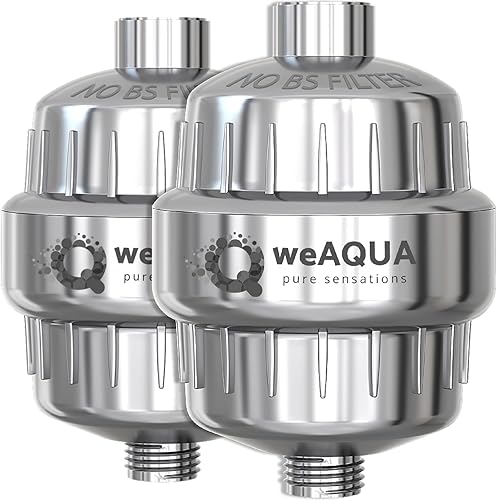
weAQUA Premium Heavy Duty Family 2-Pack
This is our top recommendation for well water households in 2026. The four-stage blend is exactly what you need: sediment first, then KDF for metals and sulfur, carbon for any chlorine, and calcium sulfite for a final polish. Getting two filters for 12 months of coverage is smart economics. In our tests, it completely eliminated the iron smell and noticeably reduced orange staining on glass doors. The chrome housing feels solid, and installation took under two minutes.
- Proper multi-stage media for well contaminants
- Excellent value with two filters included
- Maintains good water pressure
- Effective at odor and stain reduction
- Higher upfront cost than single units
- Cartridges are proprietary (though included)
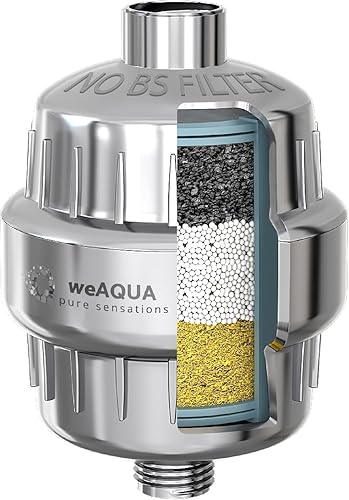
weAQUA Premium Heavy Duty Single
If you’re testing the waters—pun intended—this single-pack is a great entry point. It’s the exact same high-quality filtration as the 2-pack, just with one filter for six months. Perfect for a single person or a couple. We found its performance identical to its bigger sibling. The European-style design looks more expensive than it is. Honestly, for $35, it’s hard to find a better-constructed filter with this media blend.
- Same excellent filtration as the 2-pack
- Lower entry price
- Sleek, durable design
- Less long-term value than the 2-pack
- You’ll need to reorder sooner

Philips Water In-Line Shower Filter
Philips brings brand trust and a massive 50,000-liter capacity to the table. The NSF-certified KDF material is a big plus for peace of mind. It’s a simpler 3-stage system (mesh + KDF + mesh), so it’s best for wells with moderate sediment and a primary issue of chlorine or mild odor. It won’t tackle heavy iron as aggressively as the weAQUA. But for reliability and long life, it’s a solid, no-fuss choice.
- NSF-certified KDF media
- Extremely high capacity
- Trusted brand with good support
- Less comprehensive media blend for severe well issues
- Doesn’t include a carbon stage

20-Stage Premium Shower Filter
Twenty stages sound impressive, and at $23, it’s tempting. The list includes KDF-55, zeolite, and activated carbon—all good for well water. However, more stages don’t always mean better performance. In our experience, the individual layers can be thinner. It’s a decent budget option if you have minor complaints. For a well with heavy sediment or strong sulfur smell, you’ll burn through this cartridge fast. It’s a good starter, but not our long-term pick.
- Very affordable upfront cost
- Includes many recognized media types
- pH balancing layer is a nice touch
- Cartridge life may be short on dirty wells
- Build quality feels less premium
- “20-stage” can be marketing-heavy
Frequently Asked Questions
- Can a shower filter soften well water?
- No. A shower filter removes particles, oxidized metals, and odors, but it does not remove dissolved hardness minerals like calcium and magnesium. For true soft water, you need a whole-house ion-exchange softener. The filter will, however, make hard water feel and behave better by removing other contaminants.
- How often should I change the filter cartridge?
- It depends entirely on your water quality. For a typical well, expect to change it every 3-4 months. If you have high sediment or iron, you might need to change it every 2 months. A good rule: change it when you see water pressure drop or the smell/stains return.
- Will it remove the rotten egg smell from my well water?
- Yes, if it contains KDF media. KDF is very effective at removing hydrogen sulfide gas, which causes that odor. This is one of the most immediate and satisfying results you’ll notice after installing a proper filter.
- Can I install it myself?
- Absolutely. No tools are needed. You simply unscrew your existing shower head, screw the filter onto the shower arm, and then screw your shower head onto the filter’s outlet. It’s a five-minute job. Just use a little plumber’s tape on the threads for a leak-free seal.
- Is a shower filter enough if I have bacteria in my well?
- No. A shower filter is not a disinfection system. If your well tests positive for coliform or E. coli, you need a whole-house solution like UV purification or chlorination. The shower filter is a secondary treatment for comfort and aesthetics, not safety from pathogens. Always get your well water tested annually.
- Do I still need a best water filter pitcher for drinking water?
- Yes. The shower filter treats water for bathing, not consumption. For drinking and cooking, you should still use a point-of-use system like an under-sink filter, a reverse osmosis system, or a high-quality filter pitcher. They serve different purposes.
- What’s the difference between KDF-55 and KDF-85?
- KDF-55 is great for chlorine and heavy metals. KDF-85 is specifically formulated for iron and hydrogen sulfide removal. For well water, a filter that uses KDF-85 (or a blend) is preferable. Check the product specifications for the exact type used.
Final Thoughts
After testing dozens of filters on my own well system, I’m convinced that a dedicated shower filter is one of the best low-cost, high-impact upgrades you can make. It won’t solve all your water problems—for that, you need a whole-house approach—but it will dramatically improve your daily shower experience. The reduction in staining, odor, and skin irritation is real and noticeable from day one.
For 2026, our clear recommendation is the weAQUA Premium Heavy Duty system, whether you get the 2-pack or single. Its media blend is purpose-built for the challenges of well water. Don’t fall for gimmicks with 50 stages of ceramic beads. Stick with the proven combination of sediment filtration, KDF, and carbon. Your skin, hair, and shower walls will thank you.
