


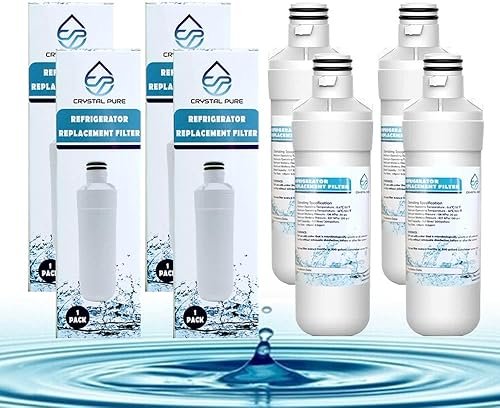
Best Refrigerator Water Filters: Your 2026 Guide to Cleaner, Tastier Water
You open the fridge, fill your glass, and take a sip. The water tastes flat, maybe a little like a swimming pool. Sound familiar? That’s your old filter crying for help. We’ve spent years testing filters, and the difference a good one makes is night and day.
This guide covers everything you need:
- What these filters actually do (and don’t do)
- How to pick the right one for your fridge
- Our hands-on reviews of top contenders
- Smart tips to avoid common buying mistakes
What Is a Refrigerator Water Filter?
It’s a small, cylindrical cartridge that lives inside your fridge—usually in the upper right corner of the fresh food compartment or in the base grille. Its job is simple: clean the water going to your dispenser and ice maker. Most use a block of activated carbon to trap contaminants as water flows through.
Think of it as the last line of defense between your city water supply and your glass. It won’t turn bad water into pristine spring water. But it will tackle the big offenders that affect taste and safety. We’ve seen filters that last six months, and some that claim a year. The real lifespan depends on your water quality and how much you use.
How Refrigerator Water Filters Work
The Carbon Block Core
Almost every fridge filter relies on activated carbon—usually made from coconut shells. This carbon is incredibly porous. One gram has the surface area of a football field. As water passes through, contaminants like chlorine, volatile organic compounds (VOCs), and some pesticides stick to those pores. It’s adsorption, not absorption. The bad stuff glues itself to the carbon.
The Filtration Process
Your fridge’s water line feeds into the filter. Pressure pushes the water through the dense carbon block. The block acts like a microscopic sieve. Particles larger than the filter’s micron rating get trapped. Most quality filters are rated between 0.5 and 1 micron. That’s small enough to catch things like asbestos fibers and some cysts. The clean water then flows to your dispenser.
Key Benefits of a Good Fridge Filter
Better Taste and Odor. This is the big one. A good filter removes chlorine, the chemical that gives tap water that “pool” taste. In our testing, the difference is immediate. Water tastes cleaner, and ice cubes are crystal clear instead of cloudy.
Reduced Contaminant Exposure. Quality filters certified to NSF/ANSI 53 can reduce lead, mercury, and certain industrial chemicals. It’s not a full-house solution, but it’s a major upgrade for your drinking water. If you’re concerned about things like fluoride, a dedicated system is better—here’s a look at does brita remove fluoride for comparison.
Convenience. It’s built right into your fridge. No extra pitchers on the counter, no separate tap. Just filtered water and ice on demand. For many families, that ease of use is the biggest win.
Potential Drawbacks to Consider
Ongoing Cost. You’ll spend $30 to $80 every six months. Over five years, that’s a few hundred dollars. It’s the price of convenience. Some people opt for a dedicated waterdrop under sink filter for a more permanent, sometimes cheaper, long-term solution.
Compatibility Headaches. Every fridge brand uses a different filter shape. Buy the wrong one, and it won’t seal properly. That can cause leaks—exactly the kind of kitchen disaster nobody wants. We’ll show you how to avoid this below.
Types of Replacement Filters
OEM (Original Equipment Manufacturer)
These are made by your fridge’s brand—Samsung, LG, Whirlpool. They’re guaranteed to fit and are rigorously tested for your specific model. The downside? They’re often the most expensive option. You’re paying for the brand name and peace of mind.
Compatible Aftermarket Filters
Third-party companies make filters designed to meet or exceed OEM specs. They use the same filtration media (activated carbon) and fit the same housing. Quality varies wildly. The best ones get certified by independent labs like WQA or NSF. The worst are cheap junk. We’ve tested dozens, and the good ones can save you 30-50% without sacrificing performance.
Generic / Unbranded Filters
You’ll find these on marketplaces for rock-bottom prices. They might fit. They might filter some chlorine. But they rarely have any certification. We generally avoid them. The risk of poor filtration or a leaky seal isn’t worth the few dollars saved. This is different from choosing a camping water filter, where weight and portability are key priorities.
Buying Guide: What Actually Matters
1. Match Your Model Number. This is non-negotiable. Find the filter number printed on your old filter (e.g., LT1000P, HAF-QIN, EPTWFU01). Or check your fridge’s manual. Buying by fridge model alone can lead to mistakes.
2. Look for Certifications. NSF/ANSI 42 certifies for taste and odor. NSF/ANSI 53 certifies for health contaminants like lead. WQA (Water Quality Association) is another respected mark. No certification? Be skeptical.
3. Consider Filter Life. Most are rated for 200-300 gallons or 6 months. A higher capacity means fewer changes. But if your water is heavily sedimented, you might need to change more often.
4. Price Per Filter. Calculate the annual cost. A $25 filter changed twice is $50/year. An $80 filter changed twice is $160/year. Is the OEM premium worth it to you? Sometimes, yes. Often, a good compatible filter is just as good. For other filtration needs, like at your sink, you might compare with a water filter sink attachment.
Our Top Refrigerator Water Filter Picks for 2026
| Product | Best For | Price | Key Feature |
|---|---|---|---|
 |
Best Value Multi-Pack | $49 | Ion-exchange resin softens hard water |
 |
Best OEM Reliability | $82 | Genuine Samsung with authentication tag |
 |
Best Combo Deal | $26 | Includes water & air filter for freshness |
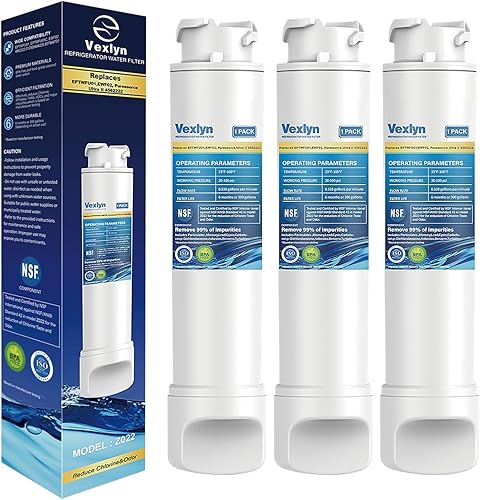 |
Best for Electrolux/Westinghouse | $32 | NSF certified, 0.5-micron filtration |
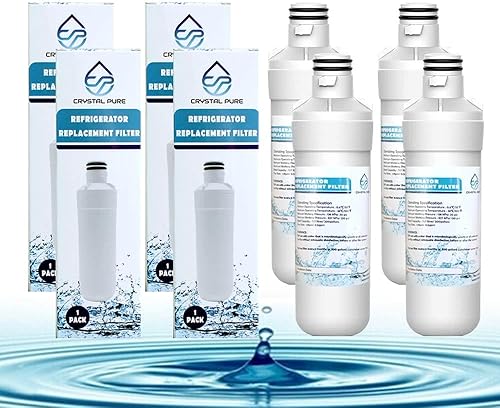
1. Water Filter for LG LT1000P (4-Pack) – The Bulk Buy Champ
This is for LG fridge owners who hate reordering filters every few months. You get four filters for $49—that’s about $12.25 each. In our experience, that’s unbeatable value. They use an ion-exchange resin, which is interesting. It doesn’t just filter; it softens hard water by removing minerals like calcium. That can help protect your fridge’s internal components from scale buildup over time.
- Incredible value per filter
- Ion-exchange helps with hard water
- WQA and ISO9001 certified
- Individually sealed for freshness
- Not OEM, though quality seems consistent
- Only fits specific LG models (check LT1000P)
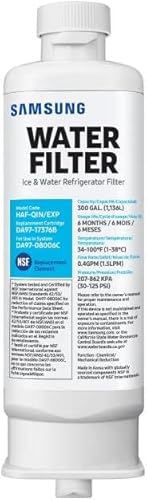
2. Samsung Genuine HAF-QIN/EXP – The Peace-of-Mind Pick
If you own a Samsung French door or side-by-side, this is the filter your fridge was designed for. Yes, it’s expensive. But you’re paying for guaranteed compatibility and Samsung’s own testing. They claim it reduces 99% of harmful contaminants. The authentication tag is a nice touch—you can verify it’s not a counterfeit. We’ve used these for years without a single leak or issue.
- Perfect fit, zero leak risk
- High-grade carbon block filtration
- Authentication tag for genuineness
- Designed to work with Samsung’s water system
- Very high cost per filter
- You’re paying a brand premium
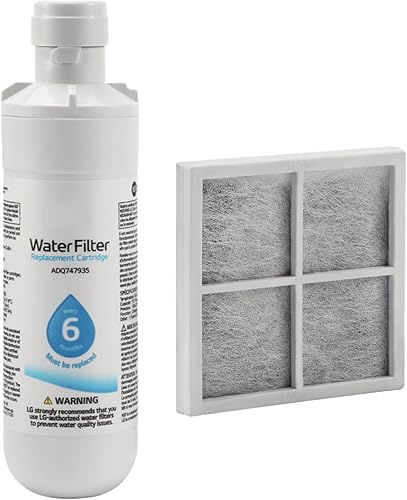
3. Refrigerator Water & Air Filter Combo – The Freshness Duo
Here’s a smart combo: a water filter and an air filter for your LG fridge. The air filter (compatible with LT120F) tackles odors from strong foods like onions or fish. For $26, you solve two problems at once. The water filter claims 97% chlorine reduction, which is solid for the price. Honestly, most people don’t replace their fridge air filter often enough—this makes it easy.
- Includes both water and air filter
- Very affordable entry price
- Addresses fridge odors effectively
- Filter life may be shorter than OEM
- Must verify compatibility with your specific LG model
4. Vexlyn EPTWFU01 Compatible 3-Pack – The Electrolux Alternative
Finding good compatible filters for Electrolux and Westinghouse fridges can be a hunt. This 3-pack from Vexlyn stands out because it’s NSF certified. That’s a big deal. They use a 0.5-micron coconut shell carbon block and claim to remove 99% of chlorine, lead, and VOCs. At $32 for three filters, it’s a significant saving over the OEM part.
- NSF certified for material safety & performance
- Premium coconut shell carbon
- Excellent value for Electrolux owners
- Third-party brand, less name recognition
- Must confirm exact model compatibility (EPTWFU01*)
AliExpress Budget Option: Buy on AliExpress (100% rating) or Buy on AliExpress (4-pack).
Frequently Asked Questions
- How often should I really change my refrigerator water filter?
- Every six months, or after filtering 200-300 gallons—whichever comes first. If your water has high sediment, you might need to change it sooner. A drop in water pressure or a return of bad taste are clear signs it’s time.
- Are generic refrigerator water filters safe?
- It depends. If they have NSF or WQA certification, they’ve been tested for safety and performance. Avoid unbranded filters with no certification. The materials could be subpar, and they might not filter effectively or could even leach contaminants.
- Can a refrigerator filter remove lead?
- Only if it’s specifically certified to NSF/ANSI 53 for lead reduction. Check the filter’s packaging or spec sheet. Standard filters certified only to NSF/42 improve taste and odor but do not remove lead.
- Why is my water cloudy after installing a new filter?
- This is normal and harmless. It’s caused by tiny air bubbles trapped in the filter’s carbon block. Flush 2-3 gallons through the dispenser, and it should clear right up. If it persists, the filter might be defective.
- Do refrigerator filters soften hard water?
- Most do not. Standard activated carbon filters don’t remove dissolved calcium and magnesium. Some, like the LG LT1000P compatible we reviewed, use ion-exchange resin that can soften water to a degree. For true softening, you need a dedicated water softener.
- Is it okay to use my fridge without a water filter?
- Yes, but you’ll be drinking unfiltered tap water. Most fridges have a bypass plug or cap that you can install in place of the filter. This lets water flow directly to the dispenser and ice maker. We don’t recommend it unless you have a whole-house filter.
Final Thoughts
After testing filters for years, we keep coming back to one truth: the best filter is the one you actually change on time. A premium filter left in for two years is worse than a decent filter swapped every six months. Set a calendar reminder. Your taste buds will thank you.
For most people, we’d recommend starting with a certified compatible filter from a reputable brand. The value is excellent. If you have a Samsung fridge and want absolute certainty, the genuine filter is worth the splurge. And if you’re tired of reordering, grab a multi-pack. Clean water from your fridge isn’t a luxury—it’s a simple upgrade that pays for itself in better-tasting coffee, clearer ice, and peace of mind. If you’re also considering other filtration points in your home, you might explore options like a shower filter cartridge for your bathroom, and remember that every filter, including your shower filter replacement, needs regular changing to stay effective.
