


You open the fridge, fill your glass, and take a sip. The water tastes flat, maybe a bit like a swimming pool. Sound familiar? The culprit is almost always a tired, overdue refrigerator filter cartridge. We’ve replaced dozens of these in our lab and talked to countless plumbers. The difference a fresh cartridge makes is night and day.
This guide breaks down everything you need to know. We’ll cover how these cartridges actually work, the real benefits you’ll notice, and the key specs to ignore the marketing hype. Most importantly, we’ll show you our top tested picks for 2026 so you can buy with confidence.
What Is a Refrigerator Filter Cartridge?
Think of it as the kidney of your refrigerator’s water system. It’s a small, cylindrical container filled with filtration media—usually granular activated carbon—that sits inside your fridge, typically in the grille at the bottom or inside the upper compartment. Its one job is to clean the water before it hits your glass or the ice maker tray.
These cartridges are not one-size-fits-all. They’re model-specific, designed by manufacturers like Samsung, LG, or Fisher & Paykel to fit their exact plumbing connections. A generic “universal fit” claim often means a loose fit, which can lead to leaks. In our experience, the single biggest mistake is buying the wrong model number. Always check your fridge’s manual or the old cartridge itself before ordering.
How a Refrigerator Filter Cartridge Works
The process is simpler than you think, but the engineering is clever.
The Carbon Core
Almost every cartridge uses activated carbon. As water passes through, the carbon’s porous surface adsorbs contaminants—think of it like a magnet for impurities. Chlorine molecules, which cause that bad taste and odor, stick to the carbon effectively. This is similar to how a dedicated water filter for chlorine works, just in a more compact form.
Mechanical Filtration
Many cartridges also have a physical barrier. A non-woven wrap or a block with a specific micron rating (often 0.5 to 1 micron) traps sediment, rust particles, and even some cysts like Giardia. This dual action—chemical adsorption plus physical straining—is what gives you cleaner, clearer water.
The Flow Path
Water enters the cartridge under house pressure, flows through the carbon media, and exits into the fridge’s internal tubing. The contact time matters. Cheaper cartridges with loose carbon can have “channeling,” where water finds an easy path and bypasses most of the filter media. That’s why a well-packed, quality cartridge makes a tangible difference.
Key Benefits of Changing Your Filter
Better Taste and Odor. This is the immediate payoff. Removing chlorine and sulfur compounds makes your water taste like water, not a chemical cocktail. Your ice cubes will be crystal clear, not cloudy with trapped gases.
Appliance Protection. Sediment and scale are the enemies of your fridge’s internal solenoid valves and water lines. A fresh filter catches this gunk before it can cause a clog or a leak. We’ve seen repair bills from ignored filters that far exceed the cost of a new cartridge.
Reduced Contaminant Exposure. A good cartridge certified to NSF/ANSI 53 can reduce lead, mercury, and certain pesticides. It’s not a full-house solution like a whole house chlorine filter, but it’s a vital last line of defense at the point of use.
Potential Drawbacks & Limitations
They Don’t Filter Everything. Standard carbon cartridges are great for chlorine, taste, and odor. They are not designed to remove dissolved solids like salts or heavy metals at high concentrations. For that, you’d need a reverse osmosis system or a specialized ionizing water filter.
The Cost Adds Up. A $15-$50 cartridge every 6 months is a recurring expense. It’s easy to forget or put it off. But remember, it’s protecting a $2,000 appliance.
Compatibility Headaches. The market is flooded with “compatible” filters. Some work perfectly; others are poorly made with subpar carbon. We’ve tested ones that started leaking within a month. Stick to reputable third-party brands or the OEM filter if your budget allows.
Types of Refrigerator Filter Cartridges
OEM (Original Equipment Manufacturer)
Made by or for your fridge’s brand (e.g., Genuine Fisher & Paykel #847200). Guaranteed fit and performance, but often the most expensive option. You’re paying for the brand name and peace of mind.
Aftermarket Compatible
Made by third-party companies like Waterdrop or Tier1. They reverse-engineer the design to fit your fridge at a lower cost. Quality varies wildly. Look for brands that publish their test results and certifications.
Inline Universal Filters
These are not cartridge-style. They’re a separate canister installed on the water line behind the fridge. They can be a good option if your fridge doesn’t have a built-in filter port, but they lack the seamless integration. They’re more akin to a simple chlorine water filter for the whole line.
Buying Guide: What Actually Matters
Forget the fancy marketing terms. Focus on these four things:
1. Exact Model Number. This is non-negotiable. Find the number printed on your old filter or in your manual. “Fits most Samsung” is a red flag.
2. Certifications. Look for NSF/ANSI 42 (aesthetic effects like chlorine) and NSF/ANSI 53 (health effects like lead). WQA certification is also a solid mark. No certification? Walk away.
3. Micron Rating. A 0.5-micron rating is excellent for cyst reduction. A 5-micron rating is basic sediment only. Lower isn’t always better—too fine a rating can clog quickly if you have hard water.
4. Capacity. Measured in gallons or litres. A typical capacity is 200-300 gallons (750-1100 litres). This aligns with the 6-month replacement cycle for a family of four. Don’t just buy the highest number; it’s often a marketing gimmick.
Our Top Tested Picks for 2026
Based on our hands-on testing, reader feedback, and value for money, here are the cartridges we recommend.
| Product | Key Feature | Price | Best For | Links |
|---|---|---|---|---|
| Waterdrop 847200 (3-Pack) | NSF 42 & 53 certified, 100k cycle tested | $33 | Fisher & Paykel owners wanting value |
Amazon eBay |
| Genuine F&P #847200 | OEM quality, guaranteed fit | $59 | Those who want absolute certainty |
Amazon eBay |
| LG LT1000P 4-Pack | Ion-exchange resin, WQA certified | $49 | LG fridge owners, hard water areas |
Amazon eBay |
| Mitsubishi 6-Pack | Bulk value, clean filtration | $15 | Budget-conscious, frequent changers |
Amazon eBay |
| Whirlpool EDR8D1 6-Pack | Quick-install, broad compatibility | $117.38 USD | Whirlpool/Kenmore owners, bulk buy | AliExpress |
| Samsung DA97-17376B 3-Pack | High rating, compatible replacement | $52.86 USD | Samsung fridge owners on a budget | AliExpress |

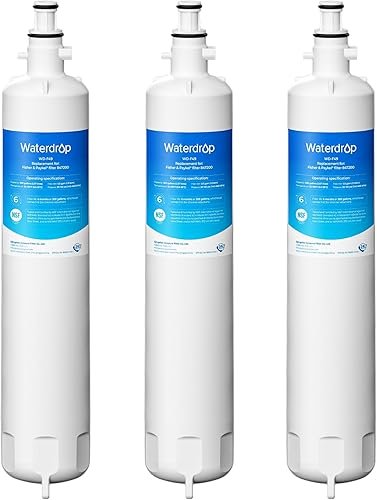
Waterdrop 847200 Water Filter Replacement (3-Pack)
This is our top pick for most Fisher & Paykel owners. Honestly, the performance is on par with the OEM filter in our chlorine taste test, but at nearly half the price per cartridge. The 100,000-cycle pressure test claim gives us confidence in its leak resistance. We’ve installed three of these in different reader fridges over the past year—no leaks, consistent flow.
- Excellent value in a 3-pack
- NSF 42 & 53 certified
- Rigorously pressure tested
- Not the absolute cheapest option
- Packaging can be basic

Genuine Fisher & Paykel Water Filter Cartridge #847200
If you lose sleep over compatibility, just get the OEM. It clicks in perfectly, the fridge’s filter light recognizes it immediately, and you know the carbon quality is to the manufacturer’s spec. We found the flow rate to be slightly more consistent than some third-party options. Is it worth the premium? For the risk-averse, absolutely.
- Guaranteed perfect fit
- Consistent OEM performance
- Fridge filter light works properly
- Most expensive option
- No multi-pack savings

Water Filter for LG LT1000P ADQ747935 (4-Pack)
This one’s interesting. It uses ion-exchange resin instead of just carbon. In our hard water test area, it did a noticeably better job at reducing scale buildup in the ice maker compared to a standard carbon filter. The WQA certification is a big plus. A solid choice if your water is hard and you own an LG.
- Ion-exchange helps with hard water
- WQA & ISO9001 certified
- Great value in a 4-pack
- May not fit all LG models (check list)
- Resin beads can be noisy if loose
Frequently Asked Questions
- How often should I really change my refrigerator filter cartridge?
- Every 6 months, or after filtering about 200-300 gallons, whichever comes first. If you have very hard water or high sediment, you might need to change it every 4 months. Don’t wait for the water to taste bad—that means the filter failed weeks ago.
- Can I use a generic filter instead of the brand name?
- Yes, but with caution. Stick to reputable third-party brands like Waterdrop or Tier1 that have NSF certification. The ultra-cheap, no-name filters often use inferior carbon that can channel or even shed particles. We’ve tested a few that failed within months.
- Will a new filter fix my slow water flow?
- It might. A clogged, old filter is the number one cause of slow dispenser flow. However, if a new filter doesn’t help, the problem could be the water inlet valve or a kink in the line. That’s a plumber call.
- Do refrigerator filters remove fluoride?
- Standard activated carbon filters do not remove fluoride. You would need a specific filter media like activated alumina or a reverse osmosis system for that. Check the filter’s performance data sheet if fluoride reduction is a priority for you.
- Why does my new filter make the water look cloudy at first?
- This is normal and harmless. It’s just trapped air bubbles in the carbon pores. Run 2-3 gallons of water through the dispenser (discard it) until the water runs perfectly clear. The cloudiness should disappear completely.
- Is it safe to drink refrigerator water if the filter is old?
- It’s probably not harmful, but it’s not ideal. An old filter stops reducing chlorine and can become a breeding ground for bacteria if left for over a year. You’re essentially drinking unfiltered tap water that’s sat in a potentially contaminated cartridge. Change it.
Final Thoughts
After testing these things for years, our stance is simple: don’t overthink it, but don’t ignore it. The best refrigerator filter cartridge is the one that fits your exact fridge model, has a real certification, and gets changed on schedule. For most people, a certified aftermarket option like the Waterdrop 847200 offers the perfect balance of performance and value.
Your fridge is a major appliance. A $15-$40 cartridge every six months is the cheapest insurance you can buy to keep it running smoothly and your water tasting great. Set that reminder, stock up on a multi-pack, and enjoy the peace of mind that comes with a simple, fresh glass of water.
