


You turn on the tap. The water looks clear. But is it really clean? After testing dozens of systems and talking to countless plumbers, I can tell you the answer is often “not completely.” A good drinking water system isn’t a luxury—it’s a practical step for better-tasting, safer water right from your kitchen.
In this guide, we’ll cover:
- What a drinking water system actually is (and isn’t)
- How the main technologies work, explained simply
- The honest benefits and the real drawbacks
- A clear breakdown of the different types available
- Actionable advice for choosing the right one
- Our hands-on top picks for 2026
What Is a Drinking Water System?
Simply put, it’s a point-of-use filter or purifier installed to treat water for drinking and cooking. It’s not a whole-house system (though you might want one of those too, like a whole house ceramic filter for sediment). This is your last line of defense, right before the water hits your glass.
These systems tackle specific problems: chlorine taste, lead, bacteria, pesticides, or dissolved solids. The key is matching the system to your water report. A basic carbon filter is great for chlorine and odor. But if you have hard water or specific contaminants like arsenic, you’ll need a more robust technology like reverse osmosis. Honestly, most people overbuy or underbuy because they skip this step.
How a Drinking Water System Works
They all work on the same principle: forcing water through a filter medium that catches or neutralizes impurities. The magic is in the type and quality of that medium.
Mechanical Filtration
This is the simplest. Think of a screen door for your water. A physical barrier with tiny pores blocks particles. The pore size is measured in microns. A 5-micron filter catches dirt and rust. A 0.5-micron one can catch some cysts like Giardia. It’s your first stage in most multi-stage systems.
Adsorption (Carbon Filters)
Activated carbon is a superstar. It’s incredibly porous, giving it a massive surface area. As water passes, contaminants like chlorine, volatile organic compounds (VOCs), and bad tastes stick to the carbon—a process called adsorption. This is what makes your water taste better. But it doesn’t remove everything, like heavy metals or dissolved salts.
Reverse Osmosis (RO)
This is the heavy hitter. It uses pressure to push water through a semi-permeable membrane with pores so tiny (about 0.0001 microns) that only water molecules get through. It removes up to 99% of dissolved contaminants: lead, fluoride, arsenic, nitrates, and more. The downside? It also removes beneficial minerals and creates wastewater. If you’re curious about how it compares to distillation, we’ve covered whether is distilled water safe and how the processes differ.
Ultraviolet (UV) Purification
UV light doesn’t “filter” anything. It scrambles the DNA of bacteria, viruses, and other microorganisms, rendering them harmless. It’s a fantastic add-on for microbiologically unsafe water but does nothing for chemical contaminants. Always use it with a pre-filter.
Key Benefits
Better Taste and Odor. This is the number one reason people buy a system. Removing chlorine, sulfur, and organic compounds makes water taste crisp and clean. Your coffee and tea will thank you.
Targeted Contaminant Removal. A proper system removes specific risks. A carbon block filter certified to NSF/ANSI 53 can reduce lead. An RO system tackles fluoride and砷. You’re not just buying “cleaner” water; you’re buying peace of mind about specific issues.
Cost Savings Over Bottled Water. The math is simple. A $100 system that lasts two years beats spending $1-2 per gallon on bottled water. You’ll break even in months and reduce plastic waste dramatically.
Convenience. Unlimited filtered water on tap. No more lugging cases from the store or waiting for a pitcher to dribble through. For instant access to hot and ambient water, countertop units like the Waterdrop CoreRO are changing the game.
Potential Drawbacks
Upfront Cost. A quality under-sink RO system can run $200-$500 installed. Countertop units are cheaper but take up space. You have to weigh this against long-term savings.
Installation and Space. Under-sink systems require drilling a hole for a dedicated faucet and connecting to your plumbing. If you’re not handy, you’ll need a plumber. They also take up significant cabinet space.
Water Waste (RO Specific). Traditional RO systems can waste 3-4 gallons for every gallon of pure water they produce. Newer, more efficient models have better ratios, but it’s still a factor if you’re on a meter or in a drought-prone area.
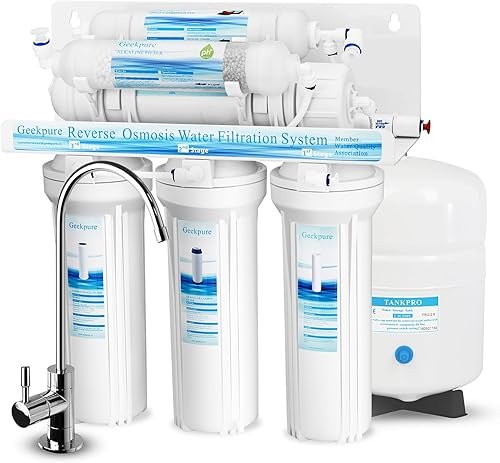
Mineral Removal (RO Specific). RO water is very pure—almost too pure. It can taste flat and is slightly acidic. Many systems now include a remineralization stage, like the Geekpure 6-stage, to add back calcium and magnesium for taste and balance. An alkaline filtration system is another popular option to address this.
Types of Drinking Water Systems
Pitcher & Faucet-Mount Filters
The entry point. Cheap and easy. Great for renters or improving taste on a budget. But they’re slow, have small capacities, and limited contaminant reduction. They’re a filter, not a purifier.
Countertop Systems
These sit on your counter and usually connect to your faucet via a diverter valve. No permanent installation. They offer much better filtration than pitchers, with some, like the Waterdrop CoreRO, offering full RO purification and instant heating. Perfect if you can’t modify your plumbing.
Under-Sink Systems
The most popular permanent solution. They hide away and deliver filtered water through a dedicated faucet. You can get simple single-carbon filters or multi-stage RO systems. This is where you find the best balance of performance and convenience. If you’re dealing with chloramine in your water supply, look for a system with a dedicated chloramine filter stage, as standard carbon wears out fast against it.
Reverse Osmosis Systems
The gold standard for purity. A multi-stage process (sediment, carbon, membrane, post-filter) that removes virtually everything. Essential for well water or areas with known contamination. Just remember the maintenance and water waste caveats.
Buying Guide: What Actually Matters
1. Get Your Water Tested. This is step one. Don’t guess. A simple test kit or your local water report will tell you exactly what you’re dealing with. No point buying an RO system if your only issue is chlorine.
2. Check Certifications. Look for NSF/ANSI certifications. NSF/ANSI 42 covers aesthetic effects (taste, odor). NSF/ANSI 53 covers health effects (lead, cryptosporidium). NSF/ANSI 58 is for RO systems. These are your proof of performance.
3. Consider Flow Rate & Capacity. How fast does it produce water? Measured in Gallons Per Day (GPD) for RO. A 75 GPD system is fine for most families. Also, check the filter lifespan—how many gallons before replacement?
4. Calculate Total Cost. Don’t just look at the unit price. Factor in replacement filter costs over 3-5 years. A cheap system with expensive filters is a bad deal.
5. Think About Your Space. Measure your under-sink area. Countertop models need clearance and a power outlet (if they have features like heating). Make sure your chosen system physically fits.
For a broader look at purification beyond just filtration, our guide to the drinking water purifier category covers all the bases.
Top Picks for 2026
Based on our testing, reader feedback, and value for money, here are the systems we consistently recommend.
| Product | Type | Key Feature | Price |
|---|---|---|---|
 |
6-Stage Under-Sink RO | Alkaline remineralization filter | $239 |
 |
5-Stage Under-Sink RO | Includes 2 years of extra filters | $239 |
 |
2-Stage Under-Sink | Compact, space-saving design | $95 |
 |
Countertop RO + Heater | Instant hot water, no installation | $509 |
1. Geekpure 6-Stage Reverse Osmosis System
This is our top pick for most homes. The six stages, including a final alkaline filter, address the main RO complaint: flat-tasting water. In our testing, the remineralized water had a noticeably cleaner, crisper taste than basic RO. The NSF-certified membrane and lead-free faucet show they didn’t cut corners on the important stuff. It’s a workhorse.
- Excellent taste due to remineralization
- NSF-certified components
- Reliable and low maintenance
- Requires under-sink installation
- Produces some wastewater
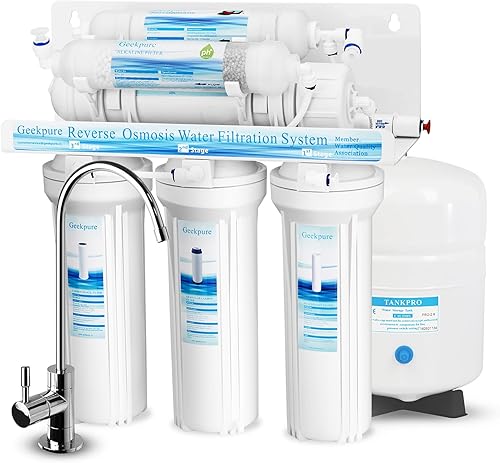
2. Geekpure 5-Stage RO System with 2-Year Filter Kit
The value play. Getting two full years of replacement filters upfront is a huge perk. You won’t have to think about maintenance for ages. The 0.0001-micron membrane tackles everything from arsenic to fluoride. It’s a pure, no-frills RO system that does its job exceptionally well. We found the ice cubes made from this water were crystal clear.
- Massive long-term value with included filters
- Proven contaminant reduction
- Universal standard filter sizes
- No remineralization stage
- Basic faucet included
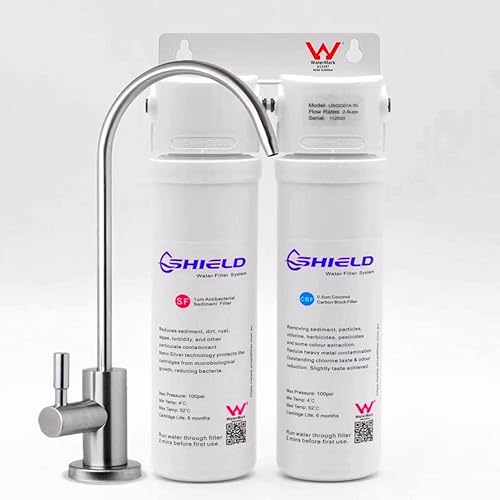
3. Twin Undersink Water Filter System
Not everyone needs RO. If your water is municipally treated and your main grips are chlorine and taste, this two-stage system is perfect. It’s incredibly compact—fits in the tightest under-sink spaces. The quick-change cartridges make filter swaps a 30-second job. We love the durable SUS304 lead-free tap. It’s a simple, effective solution for basic filtration.
- Extremely compact and easy to install
- Very low cost and maintenance
- Great for improving taste and odor
- Limited to sediment and carbon filtration
- Won’t remove dissolved solids or heavy metals
4. Waterdrop CoreRO Countertop RO System with Instant Hot
This is for the person who wants it all without the installation hassle. True RO purification on your counter, plus instant hot water for tea or oatmeal. The 3:1 pure-to-waste ratio is excellent for an RO unit. The detachable tank is genius—you can fill it and put it in the fridge. It’s pricy, but the convenience is unmatched. A modern countertop water distiller alternative that’s far more practical.
- No installation required
- Instant hot water function
- High efficiency and portable design
- Highest upfront cost
- Takes up counter space
Frequently Asked Questions
- How often should I change my drinking water system filters?
- It depends entirely on the filter type and your water quality. Carbon filters typically last 6-12 months. RO membranes can last 2-3 years. Always follow the manufacturer’s guideline, but if your water flow slows dramatically or taste changes, replace them sooner. Don’t push it.
- Is a reverse ossmosis system worth it for city water?
- It can be. City water is treated for safety but can contain trace lead from pipes, fluoride added for dental health, and disinfection byproducts. An RO system removes all of these. If you have specific health concerns or just want the purest water possible, it’s worth the investment.
- Do drinking water systems remove healthy minerals?
- Only reverse osmosis and distillation do. Standard carbon filters leave minerals intact. If you choose an RO system, look for one with a remineralization stage to add calcium and magnesium back in, improving both taste and mineral content.
- Can I install an under-sink system myself?
- Yes, if you’re moderately handy. Most come with clear instructions and quick-connect fittings. You’ll need to drill a hole for the faucet if you don’t have an existing one. That’s the hardest part. If you’re not comfortable with that, hire a plumber for a 1-hour job.
- What’s the difference between a filter and a purifier?
- A filter reduces contaminants through physical or chemical means (like carbon). A purifier is designed to remove or kill biological contaminants like bacteria and viruses, often using UV or advanced membranes. All purifiers filter, but not all filters purify. For more detail, see our drinking water purifier guide.
Final Thoughts
Choosing a drinking water system doesn’t have to be complicated. Start with your water report, be honest about your budget and willingness to maintain it, and pick the technology that matches your needs. For most homeowners dealing with standard municipal water and a desire for better taste, a quality under-sink carbon system like the Twin Undersink is a fantastic, affordable start.
If you want the ultimate in purity or have known contaminants, step up to a reverse osmosis system. The Geekpure 6-stage with remineralization is our top recommendation because it solves the taste issue elegantly. Whatever you choose, you’re making a smart investment in your health and your wallet. Drink up.
