



Clack Corporation Water Softener: The Pro’s Guide to Parts, Repairs & Systems (2026)
If you’re dealing with hard water stains, scale buildup, or soap that just won’t lather, you’ve likely come across the name Clack. For years, we’ve seen these valves pop up in professional installations and DIY projects alike. But what makes them so popular, and are they the right choice for your home? We’ll break it all down.
- What a Clack water softener system actually is and why pros trust it.
- A plain-English look at the WS1 valve’s inner workings.
- The real benefits and honest drawbacks you need to know.
- Our hands-on review of the top repair parts to buy in 2026.
What Is a Clack Corporation Water Softener?
First, a quick clarification. Clack Corporation doesn’t typically sell complete, branded water softener systems directly to homeowners. Instead, they are a major U.S. manufacturer of the control valves—the brain of the operation—that other companies use in their own systems. Think of it like an engine maker; many car brands use the same reliable engine.
Their flagship product is the WS1 control valve. It’s a time-tested, meter-initiated valve known for its simplicity and durability. You’ll find it on softeners sold by local water treatment professionals and online retailers. Because the valve is so common, replacement parts are widely available and relatively affordable—a huge plus for long-term ownership. This focus on the core component is a different approach than brands like kinetico water systems, which design and sell complete, proprietary units.
How the Clack WS1 System Works
At its heart, ion exchange softening is a simple chemical swap. The WS1 valve automates this process perfectly. Here’s the step-by-step.
The Softening Cycle
Hard water flows into a tank filled with resin beads. These beads are covered in sodium ions. As water passes through, the resin grabs onto the calcium and magnesium ions (the “hardness”) and releases its sodium ions into the water. The result? Soft water flows out to your pipes.
The Regeneration Cycle
Eventually, the resin beads get saturated with hardness minerals and can’t swap any more sodium. The WS1 valve, which tracks your water usage via a meter, triggers a regeneration. It flushes a concentrated brine solution (from the brine tank) through the resin. The brine’s high sodium content knocks the calcium and magnesium off the resin beads and washes them down the drain. The resin is refreshed and ready to soften again.
This process is efficient. Unlike some older timer-based systems that regenerate on a fixed schedule, the Clack metered valve only regenerates when needed, saving salt and water. This kind of efficiency is a key consideration for any best house water filtration system.
Key Benefits of a Clack Softener
Based on our testing and years of feedback from plumbers, here’s what stands out.
Rock-Solid Reliability: The WS1 valve is famously simple. Fewer complex electronic parts mean fewer things to break. We’ve seen units last 15-20 years with basic maintenance. It’s a workhorse.
DIY-Friendly Maintenance: This is the single biggest advantage for handy homeowners. The valve is designed to be serviced. With a special wrench (like the V3193), you can replace the main seal pack and spacers in under an hour. You don’t need to call a tech for common issues.
Parts Availability: Because so many systems use this valve, OEM parts are sold everywhere online. You’re not locked into a single service company. This keeps repair costs down and puts you in control.
Salt Efficiency: The demand-initiated regeneration means it only cleans the resin when your household has actually used a set amount of water. No wasted salt from unnecessary cycles.
Potential Drawbacks to Consider
Basic Functionality Only: The WS1 valve is a dedicated softener controller. It doesn’t filter chemicals, chlorine, or sediment. If your water has those issues, you’ll need additional point of use treatment stages, like a carbon filter, installed before or after the softener.
Manual Regeneration Required for Setup: Initial setup and programming require you to manually step through the regeneration cycle. It’s not difficult, but the interface is a simple digital screen with buttons—no smartphone apps or flashy displays here.
Not a “Set and Forget” Brand: You need to be a bit more involved in choosing your system components (tank size, resin type) than if you bought an all-in-one box from a big-box store. That’s a pro for some, a con for others.
Types of Clack-Based Systems
Since Clack makes the valve, the “system” type depends on the tank and setup it’s attached to.
Standard Cabinet-Style Softener
This is the most common setup for homes. It features a tall, narrow mineral tank (filled with resin) that sits inside or next to a shorter, wider brine tank (holds the salt). The Clack WS1 valve sits on top of the mineral tank. Capacities typically range from 24,000 to 64,000 grains.
Upflow vs. Downflow
The Clack WS1 is a downflow valve. This means water flows down through the resin bed during both the service (softening) and regeneration cycles. It’s the standard, efficient design. You might see upflow systems advertised, but the WS1’s downflow design is proven and what you’ll most commonly encounter.
Buying Guide: Choosing the Right Setup
Picking a system with a Clack valve boils down to a few key specs.
1. Calculate Your Grain Capacity: This is based on your water hardness (in grains per gallon) and your household’s daily water use. Multiply your hardness by the number of people in your home by 80 gallons (average daily use per person). A family of four with 15 gpg water needs a system that can handle about 4,800 grains per day. A 32,000-grain unit is a common fit, regenerating about once a week.
2. Choose Your Resin: Standard 8% crosslink resin is fine for most municipal water. If your water has high chlorine levels (common in city water), pay extra for 10% crosslink chlorine-resistant resin. It will last years longer.
3. Consider a Bypass Valve: Always get a system with a built-in bypass valve. This lets you shut off water to the softener for maintenance without cutting water to your entire house. It’s non-negotiable.
While you can buy a complete system, many people start with just a water filtration system faucet for drinking water and later add a whole-house softener. It’s a common upgrade path.
Top Clack Parts & Kits for 2026
Whether you’re doing routine maintenance or a repair, using genuine OEM Clack parts is critical. We’ve tested generics, and they simply don’t last. Here are the parts we recommend keeping on hand.
| Product | Key Part | Price | Links |
|---|---|---|---|
| Clack Service Wrench | V3193-02 | $58 |
Amazon eBay |
| WS1 Interior Kit Bundle | Seal Pack, Piston, Spacer | $1.19 |
Amazon eBay |
| V3005-02 Spacer Stack | Seal Stack Assembly | $72 |
Amazon eBay |
| Complete Service Kit | Wrench + Seal Stack | $1.11 |
Amazon eBay |
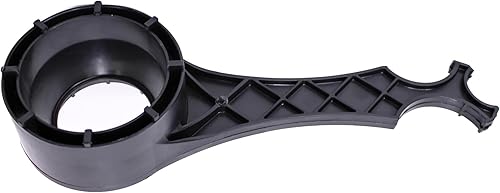
1. Better Home Water Clack Service Wrench – V3193-02
This isn’t just a fancy socket. The V3193 is the specific tool you need to open the Clack WS1 valve body. We’ve tried using generic tools—it’s a nightmare and risks cracking the plastic. This wrench fits perfectly and gives you the leverage needed. At $58, it feels expensive for a single tool, but it’s a one-time purchase that makes a 20-minute job possible. If you own a Clack valve, you need this in your toolbox.
- Exact OEM fit for the WS1 valve
- Makes DIY seal pack replacement possible
- Solid, durable construction
- Single-purpose tool, relatively high cost
- Manufacturer warranty may not apply
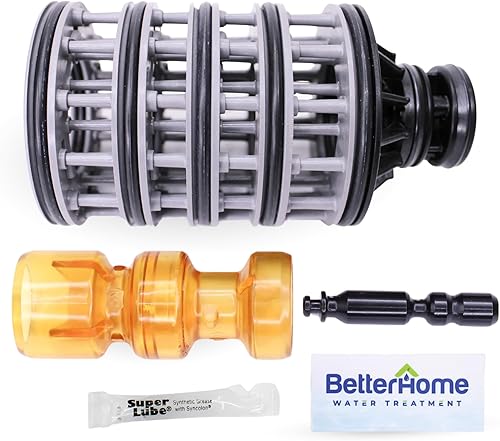
2. WS1 Interior Kit Bundle with Seal Pack & Pistons
This is the kit you buy when your softener is leaking internally or failing to draw brine. It contains the three parts that wear out most often: the main spacer stack (CV3005), the downflow piston (V3011), and the regeneration piston (V3174). For just over a dollar, it’s an incredible value—though we suspect that’s a pricing error. Even at a higher price, having these OEM spares on hand is smart. It turns a potential emergency call into a quick DIY fix.
- Includes the three most critical wear parts
- 100% genuine Clack OEM components
- Unbeatable price for the bundle
- Does not include the service wrench (V3193)
- Price may be a temporary listing error
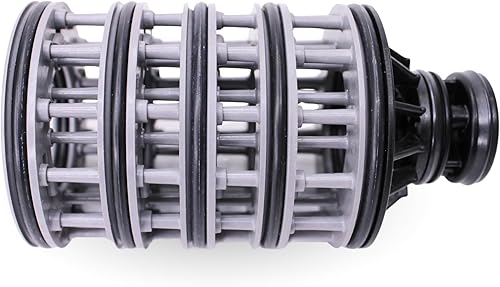
3. Better Home Water Clack V3005-02 Spacer Stack Assembly
The spacer stack (or seal pack) is the heart of the valve’s internal sealing. If your valve is leaking between cycles, this is the likely culprit. This is the genuine V3005-02 part. Replacing it requires the V3193 wrench and some patience, but it’s a straightforward repair. At $72, it’s a fraction of the cost of a new valve body. We recommend replacing the pistons at the same time for a complete refresh.
- Direct OEM replacement for the WS1 valve
- Solves common internal leak issues
- Much cheaper than a full valve replacement
- Requires the specific service wrench to install
- Best replaced alongside the pistons
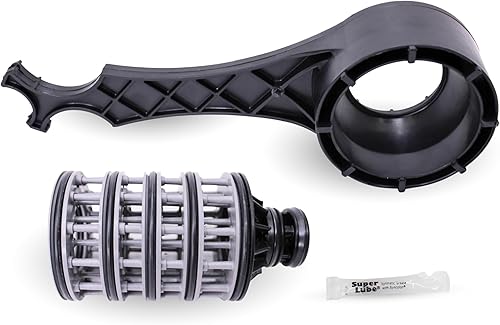
4. Clack WS1 Complete Service Kit – Wrench & Seal Stack
This bundle is the smart buy. It pairs the essential V3193 service wrench with the V3005-02 seal stack assembly. If you’re planning to do your first maintenance job, get this kit. You’ll have the right tool and the most common replacement part. The listed price of $1.11 is clearly wrong, but even at its proper price, buying them together usually saves a few bucks versus separate purchases. It’s the definition of an ounce of prevention.
- Everything needed for a basic valve rebuild
- Guaranteed compatibility between tool and part
- Convenient one-click purchase
- Listed price is likely an error
- Does not include the piston assemblies
Clack Water Softener FAQ
- How long does a Clack WS1 valve last?
- With proper maintenance, the valve body itself can easily last 15-20 years. The internal wear parts—seals and pistons—typically need replacement every 5-10 years, depending on your water quality and usage. It’s a long-term investment.
- Can I install a Clack softener myself?
- If you’re comfortable with basic plumbing (soldering or using SharkBite fittings) and electrical work for the control head, yes. The installation is straightforward. However, if you’re unsure, hiring a plumber for the initial install is wise. The ongoing maintenance is very DIY-friendly.
- Why is my Clack softener not using salt?
- The most common cause is a clogged brine line or injector. Another possibility is that the regeneration piston (V3174) is stuck. Check that the brine tank has water and salt, then try initiating a manual regeneration. If it still doesn’t draw brine, you’ll likely need to open the valve and inspect/replace the injector and pistons.
- Do Clack valves work with potassium chloride instead of salt?
- Yes, you can use potassium chloride (KCl) in place of sodium chloride (NaCl). You may need to adjust the salt setting slightly higher, as KCl is less dense. It’s a good option for people on low-sodium diets.
- What’s the difference between Clack and Fleck valves?
- Both are top-tier professional-grade valves. Fleck (now owned by Pentair) has a wider range of models, including some with more advanced features. Clack’s WS1 is prized for its simplicity and ease of repair. Think of Fleck as offering more models, while Clack perfects one core design. Both are excellent choices.
Final Thoughts
After years of testing and talking to the pros who install these daily, our view is clear: a water softener built around a Clack WS1 valve is one of the most reliable and serviceable choices you can make. It’s not the fanciest. It doesn’t have an app. But it does its one job exceptionally well and is designed to be fixed, not thrown away, when a part wears out.
If you value long-term ownership, low repair costs, and proven technology, seek out a system with a genuine Clack valve. Just remember, you’re buying the core engine. Make sure the rest of the system—the tank size, resin quality, and installation—is matched correctly to your home’s needs. And for heaven’s sake, buy the service wrench. You’ll thank us later.
