


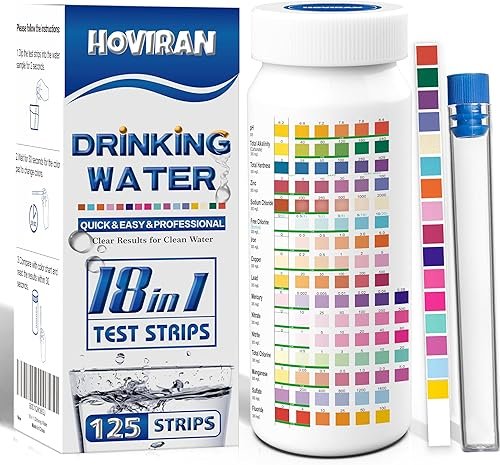
After testing water from hundreds of homes, one thing is clear: you can’t judge water by its look or taste alone. A good water quality kit is the detective work you need. This guide covers what these kits are, how they work, and which ones are actually worth your money in 2026.
- What a water quality kit actually tests for.
- The difference between strip tests and lab-grade kits.
- Our top kit picks after hands-on testing.
- How to use your results to choose the right filter.
What Is a Water Quality Kit?
A water quality kit is a set of tools that lets you test your drinking water for specific contaminants and properties. Think of it as a health check-up for your tap. These kits range from simple dip-and-read strips to more involved tests that you mail to a lab.
The goal isn’t to replicate a municipal water report. It’s to give you a snapshot of what’s coming out of your faucet on a given day. We’ve found that water quality can vary wildly, even on the same street. Your neighbor’s test results might not match yours.
Most home kits focus on common issues: hardness minerals that scale up your kettle, chlorine that affects taste, or nasty stuff like lead and nitrates. They answer the basic question: “Is my water safe, and what might I need to filter?”
How Water Quality Kits Work
The Science of the Strip
Most affordable kits use test strips. These are paper strips embedded with tiny pads containing chemical reagents. When you dip the strip in water, these reagents react with specific substances. Each pad changes color based on the concentration of the contaminant it’s designed to detect.
You then compare the color of the pad to a chart included in the kit. It’s a simple visual match. The accuracy depends on good lighting, timing, and the quality of the reagents. In our testing, we’ve found that cheaper strips can have less distinct color changes, making them harder to read.
From Color Chart to Concentration
The color chart translates the shade into a number, usually in parts per million (ppm) or milligrams per liter (mg/L). For pH, it’s a simple scale. For lead, it’s often a “positive/negative” result at a specific threshold, like 15 ppb. This tells you if you’re above or below a safety standard.
More advanced kits, like the Safe Home Ultimate, use reagents you mix with a water sample in a vial. The color change is often more dramatic and easier to interpret. These feel more precise, but they’re also a bit more work. It’s a trade-off between convenience and confidence.
Key Benefits of Testing Your Water
Peace of Mind is Priceless. Honestly, the biggest benefit is simply knowing. We’ve talked to homeowners who worried for years about their well water. A simple test that came back clear let them finally relax. That anxiety reduction is real.
It Guides Your Filtration Choices. This is the practical payoff. Why buy a generic carbon filter if your main problem is water hardness? A test kit tells you exactly what you need to target. It stops you from wasting money on the wrong system.
It Can Catch Problems Early. Water quality isn’t static. Seasonal changes, construction nearby, or old plumbing can introduce new issues. Testing annually, or if you notice a taste change, acts as an early warning system. It’s proactive, not reactive.
Potential Drawbacks & Limitations
They Test a Single Moment. Your water on Tuesday morning might be different from Saturday afternoon. A kit gives you a one-time snapshot. For a complete picture, especially with well water, you might need to test at different times of the year.
User Error is a Big Factor. Timing is everything. If you leave the strip in too long or don’t compare the colors in natural light, your results will be off. We’ve seen people get panicked false positives because they misread a slightly off-color pad. Follow the instructions to the letter.
Types of Water Test Kits
Multi-Parameter Test Strips
These are the most common and affordable. You get a bottle with 50-125 strips that test for 10-16 parameters in one dip. Perfect for a general overview of hardness, chlorine, pH, nitrate, and sometimes lead. They’re fast—results in under a minute.
Single-Parameter Drop Kits
These are more precise for one specific thing. You’ll often see them for chlorine or hardness. You add reagent drops to a water sample until a color changes. They’re more accurate than strips for that one measurement but more tedious if you need multiple tests.
Comprehensive Mail-In Lab Kits
This is the gold standard for serious concerns. You collect samples and mail them to a certified lab. They test for hundreds of contaminants, including volatile organic compounds and bacteria. It’s expensive ($100-$300) but necessary if you have a specific worry or are dealing with well water for the first time.
Buying Guide: What Actually Matters
1. Know What You’re Testing For. Don’t just buy the kit with the biggest number. If you’re on city water, focus on lead, chlorine byproducts, and hardness. If you’re on a well, you need to test for bacteria, nitrates, and manganese. A manganese removal system is useless if you don’t know you have manganese first.
2. Check for NSF/ANSI Certification. Look for kits that say they’re certified to NSF/ANSI standards (like 42 for aesthetic effects or 53 for health effects). This means an independent lab has verified their accuracy. It’s a huge mark of trust.
3. Consider Usability. Do you want results in 30 seconds or are you okay with a 10-minute process? Are the color charts clear? Some kits now have smartphone apps to help with color matching—that can be a game-changer for accuracy.
4. Don’t Overbuy. Honestly, most people don’t need a 30-parameter kit. A solid 10-16 parameter strip kit covers the major bases. Save the money for the actual filter you’ll need, like a good water filter sink attachment.
Our Top Water Quality Kit Picks for 2026
| Product | Key Specs | Best For | Links |
|---|---|---|---|
| 18-in-1 Test Strips (B0D1QW36GJ) | 125 strips, 18 parameters, 30-sec results | Best overall value for most homeowners | Buy on Amazon Buy on eBay |
| All-New 18-in-1 Strips (B0D3TG4MLJ) | 125 strips, 18 parameters, includes hardness focus | Budget pick, great for hard water areas | Buy on Amazon Buy on eBay |
| 16-in-1 SJWAVE Kit (B07WNJJVKN) | High sensitivity, 2-min results, includes ebook | Good balance of speed and detail | Buy on Amazon Buy on eBay |
| Safe Home Ultimate DIY Kit (B0CQJJRMTF) | 302 tests, 14 parameters, lab-grade reagents | Most comprehensive DIY kit, best for wells | Buy on Amazon Buy on eBay |
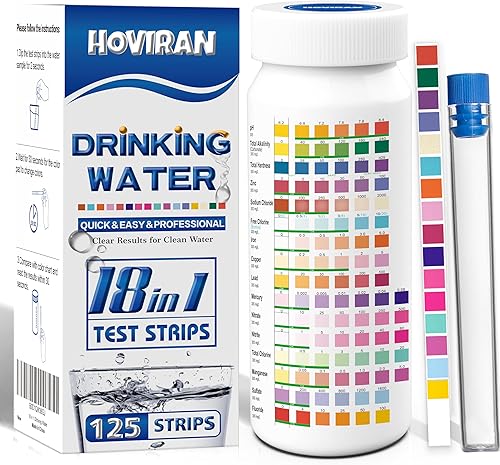
1. 18-in-1 Water Quality Test Strips (B0D1QW36GJ)
This is the kit we hand to friends and family who ask, “What should I start with?” It covers all the big ones: lead, hardness, chlorine, nitrates, and pH. The color chart is one of the clearest we’ve used, and the 125-strip count means you can test multiple times without stressing about cost. It’s not lab-precise, but for a $27 overview? It’s fantastic.
- Incredible value per test
- Easy-to-read results
- Tests for critical contaminants like lead
- Not as sensitive as drop tests
- Results can be subjective based on lighting
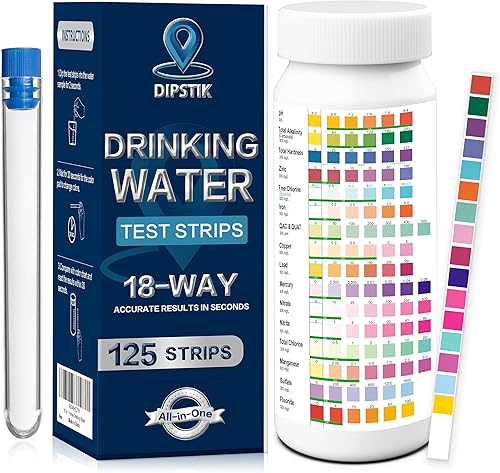
2. All-New 18-in-1 Drinking Water Test Kit (B0D3TG4MLJ)
At $20, this is the budget king. It performs nearly identically to our top pick in our side-by-side tests. The main difference? This one seems to put a slightly stronger emphasis on the hardness test pad, which is useful if you’re battling scale. If you’re on a tight budget, you won’t feel like you’re sacrificing much here.
- Lowest cost per strip
- Reliable for basic screening
- Great for school projects or frequent testing
- Color chart can be slightly harder to match
- Packaging feels a bit flimsy
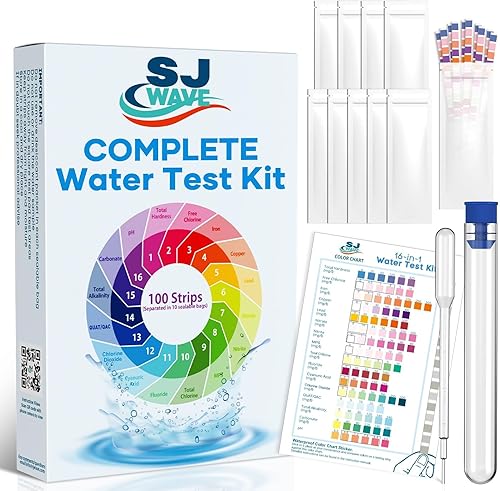
3. 16-in-1 SJWAVE Water Testing Kit (B07WNJJVKN)
The SJWAVE kit wins on user experience. The included ebook is actually useful, not just fluff, and the instructions are crystal clear. We found the 2-minute wait time gave more stable color development than the 30-second strips. It’s a good middle ground if you’re willing to spend an extra minute for what feels like a more deliberate test.
- Excellent instructions and support material
- Slightly more stable results
- Good for testing aquariums and pools too
- Tests for 16 parameters vs. 18
- Slightly more expensive per strip
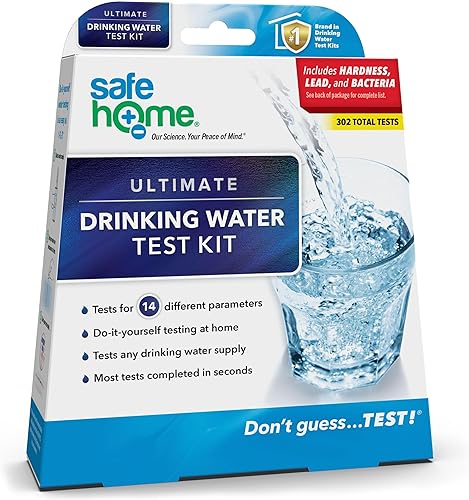
4. Safe Home Ultimate DIY Drinking Water Test Kit (B0CQJJRMTF)
This is the serious kit. It’s what you buy when “good enough” isn’t good enough. The lead and bacteria tests are patented and feel like real lab procedures. It’s overkill for a quick city water check, but for a new well or if you have health concerns, it provides a level of confidence the strips just can’t match. Worth the $62 if you need that certainty.
- Lab-grade accuracy for key contaminants
- Includes bacteria test (critical for wells)
- 302 tests provide long-term monitoring
- Much more expensive upfront
- More complex procedure
Water Quality Kit FAQ
- How often should I test my home water?
- For city water, test once a year or if you notice a change in taste, odor, or color. For well water, the minimum is once a year, but testing every season for the first year is smart to understand any fluctuations.
- Can a water test kit detect all contaminants?
- No. Home kits are screening tools for common issues. They cannot detect many industrial chemicals, pharmaceuticals, or microplastics. For a full analysis, you need to send a sample to a certified laboratory.
- What should I do if my test shows high lead levels?
- Stop drinking the water immediately and get a certified lab test to confirm. High lead is a serious health risk. In the interim, use bottled water for drinking and cooking. You’ll likely need a point-of-use filter certified for lead reduction, often an under-sink filter cartridge with specific NSF/ANSI 53 certification.
- Are more expensive kits always more accurate?
- Not always, but there’s a correlation. A $20 strip kit and a $60 reagent kit might both detect hardness accurately. But for a tricky contaminant like lead, the more expensive kit with a chemical reaction is far more reliable than a simple color-change pad.
- My water tested hard. What’s next?
- Hardness is about minerals, not safety. It causes scale buildup. You have two main paths: a whole-house softener (which uses salt) or a conditioner. For drinking water, a whole-house ceramic filter won’t soften, but a reverse osmosis system at your kitchen tap will remove hardness minerals for that water.
- I’m going camping. Is a kit useful?
- A strip kit can give you a quick idea of source water quality, but for safety in the wild, you need a true personal water filter or purifier designed to remove bacteria and protozoa. A test kit is for your home, not for making wilderness water safe.
Final Thoughts
After years of doing this, we’ve boiled it down to one rule: test first, filter second. The single biggest mistake we see is people buying expensive filtration systems blind. A $25 water quality kit can save you hundreds by telling you exactly what you need—and what you don’t.
For most of you on city water, start with the 18-in-1 Test Strips (B0D1QW36GJ). It’s the perfect first step. If you’re on a well or have specific worries, spring for the Safe Home Ultimate Kit (B0CQJJRMTF). Knowledge is power, and in this case, it’s the power to drink cleaner, safer water with total confidence.
