


You turn on the tap and the water smells like a swimming pool. Or maybe it leaves white scale on your kettle. I’ve been there. After testing dozens of systems and talking to countless plumbers, I know what works—and what’s just marketing hype. This guide breaks down everything you need to choose the right water purifier system for your house.
- What a whole house system actually is and how it differs from point-of-use filters
- The key filtration stages and what they remove from your water
- Honest benefits and the real drawbacks you should consider
- A clear comparison of the top systems you can buy in 2026
What Is a Water Purifier System for a House?
Let’s clear up a common mix-up. When people say “water purifier system for house,” they’re usually talking about a point of entry treatment system. This gets installed right where the water line enters your home. Every shower, every faucet, every appliance gets filtered water.
It’s different from a little filter pitcher or an under-sink unit. Those only treat water at one specific outlet. A whole house system is the big leagues. It’s your home’s first line of defense against sediment, chlorine, and other contaminants that can damage pipes and affect your skin and hair.
How a Whole House Water Filter Works
Think of it like a multi-stage checkpoint for your water. The water from the main line has to pass through several barriers before it gets to you. Here’s the typical flow.
Stage 1: The Sediment Pre-Filter
This is your workhorse. A pleated or spun polypropylene cartridge, usually rated at 5 microns, catches all the physical gunk. We’re talking dirt, sand, rust flakes, and even insect parts. In our testing, this single stage makes the biggest visual difference. It protects the more expensive filters downstream.
Stage 2: The Activated Carbon Filter
This is where the magic happens for taste and odor. A solid carbon block or granular activated carbon filter adsorbs chlorine, pesticides, and volatile organic compounds. It’s what removes that awful pool smell. The best ones are rated to NSF/ANSI 42 for aesthetic effects. Some advanced systems can even target chloramines, which are tougher to remove.
Stage 3 (Optional): Specialty Filtration
Depending on your water report, you might need more. For well water, a UV sterilization system is a smart add-on to kill bacteria and viruses. If you have hard water, you might look at a water softener or a scale inhibitor cartridge. Some folks need water filters that remove fluoride, which requires a specific type of media like activated alumina.
Key Benefits of a Whole House System
Protects Your Plumbing and Appliances. This is the big one nobody talks about. Sediment and scale buildup will wreck your water heater, washing machine, and dishwasher over time. A good filter extends their life dramatically. That alone can pay for the system.
Better Water for Bathing. Chlorine isn’t just in your drinking water. You absorb it and inhale it as steam during a shower. Filtering it out can lead to softer skin and less brittle hair. Many readers report their eczema improves.
One System, Total Coverage. You don’t need to think about it. No changing filters in three different places. It’s a set-and-forget solution for the whole home. This is especially great for families.
Potential Drawbacks to Consider
Upfront Cost and Installation. You’re looking at a few hundred dollars for a decent system, plus professional installation if you’re not handy with plumbing. It’s an investment.
Limited Contaminant Removal. Standard carbon/sediment combos won’t touch dissolved solids like lead, arsenic, or nitrates. For that, you need reverse osmosis, which is usually installed under a specific sink, not for the whole house due to low flow rates.
Types of House Water Purification Systems
Whole House (Point-of-Entry) Systems
These are the focus of this article. The classic “Big Blue” housing systems, usually in 10″ or 20″ sizes, are the most common. They’re reliable, customizable, and have good flow rates. A full house water filter system is your best bet for comprehensive treatment.
Under-Sink (Point-of-Use) Systems
These go under a specific kitchen or bathroom sink. They can be simple carbon filters or more complex reverse osmosis systems. They provide higher purity for drinking and cooking water but don’t protect your shower or appliances.
Faucet-Mounted Filters
The quickest, cheapest option. A faucet pur water filter screws onto your tap. It’s better than nothing, but flow rates are slow, and they only treat that one tap. Good for renters.
Buying Guide: What Actually Matters
Don’t just look at the price tag. Here’s what we check.
Flow Rate (GPM): This is critical. Measure your home’s peak demand (how many showers, faucets, and appliances might run at once). A 3-4 bedroom home usually needs at least 10-15 GPM. Undersizing this causes terrible water pressure.
Filter Size and Micron Rating: Bigger housings (20″ x 4.5″) last longer and have better flow than smaller (10″ x 2.5″) ones. A 5-micron sediment filter is a good balance. Going finer (1 micron) clogs faster.
Certifications: Look for NSF/ANSI 42 (aesthetic effects like chlorine) and NSF/ANSI 53 (health effects like lead, cysts) on the filter cartridges. The housing itself should be NSF certified for material safety.
Maintenance Cost: Check the price and lifespan of replacement cartridges. A cheap system with expensive filters is a bad deal.
Our Top Picks for 2026
| Product | Key Specs | Price | Links |
|---|---|---|---|
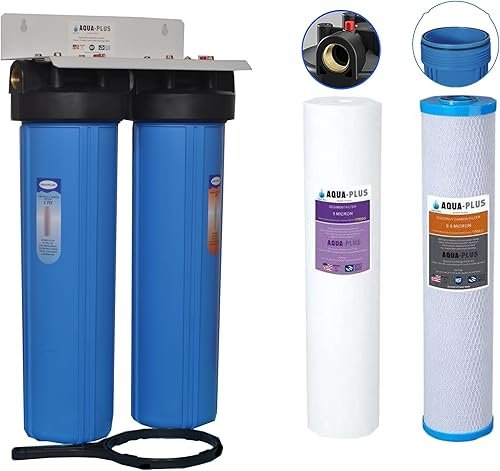
Aqua-Plus 2 Stage Jumbo Big Blue |
20″ x 4.5″ housings, 1″ brass ports, 5-micron sediment + carbon block | $1.92 |
Buy on Amazon Buy on eBay |
Twin Whole House Water Filter System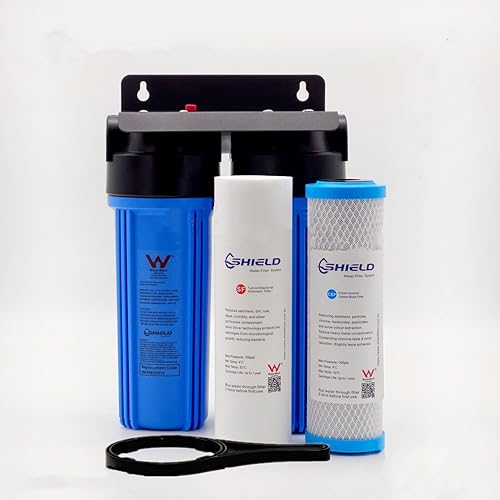 |
10″ x 2.5″ housings, 2-stage, removes 99.99% chlorine, brass ports | $99 |
Buy on Amazon Buy on eBay |
Geekpure 2 Stage Whole House System |
10″ x 4.5″ housings, 1″ NPT brass ports, includes PP sediment + carbon block filters | $1.75 |
Buy on Amazon Buy on eBay |
COWAY AIRMEGA Mighty Air Purifier |
Not a water filter—this is a top-rated air purifier for 109㎡, removes 99.999% of particles | $3.99 |
Buy on Amazon Buy on eBay |
Aqua-Plus 2 Stage Jumbo Big Blue
This is the system we recommend for most homes. The 20-inch jumbo housings are the gold standard for a reason. They offer great flow capacity and longer filter life compared to the smaller 10-inch models. The included 5-micron sediment filter does a solid job on rust and dirt, and the carbon block tackles chlorine taste. Installation is straightforward if you have basic plumbing skills. Honestly, for under $2 (check the current price, it fluctuates), the housing alone is worth it—you can always upgrade the cartridges later.
- Large 20″ x 4.5″ housings for high flow and capacity
- Food-grade material with pressure release valve
- Uses standard, widely available filter cartridges
- Extremely low initial cost for the housing set
- Filters may need frequent replacement in very dirty water
- Basic carbon block—not for heavy contaminant removal
- You’ll need to buy mounting brackets and fittings separately
Twin Whole House Water Filter System
This is a solid, ready-to-go kit for smaller homes or apartments. The 10-inch housings are more compact, which helps if you’re tight on space. The big claim here is the 99.99% chlorine removal, which the high-performance carbon cartridges should deliver. We like that it comes with cartridges included. It’s a good mid-range choice if you don’t need the massive capacity of the 20-inch systems. Just be mindful of your peak flow rate—multiple showers running might push this system to its limit.
- Complete system with filters included
- High chlorine removal rating
- Compact design for tight spaces
- Brass ports for durability
- 10″ housings have lower capacity and flow than 20″
- May not be sufficient for large households with high water use
- Replacement cartridges are a proprietary size
Geekpure 2 Stage Whole House System
Geekpure is a brand we’ve seen a lot of lately, and they offer decent value. This system is very similar to the Aqua-Plus but with slightly smaller 10″ x 4.5″ housings. It includes the wrenches and screws, which is a nice touch. The filters it comes with are standard polypropylene and carbon block. For the price, it’s a good entry point. Just know that the included filters are basic—you might want to swap in higher-quality cartridges from a brand like Pentek or Matrikx for better performance.
- Very affordable complete kit
- Includes installation accessories
- Standard 10″ x 4.5″ filter size
- 1″ NPT brass ports
- Housings feel lighter duty than premium brands
- Included filters are average quality
- Smaller housing size limits capacity
COWAY AIRMEGA Mighty Air Purifier
Okay, this one’s a curveball. It’s not a water filter—it’s an air purifier. We included it because we get asked about whole-home air purification all the time. The COWAY Mighty is a beast, winning Wirecutter’s top pick for a decade. It removes 99.999% of particles down to 0.01 microns. If you’re concerned about indoor air quality alongside your water, this is the unit we recommend for rooms up to 109 square meters. It’s a different category, but it’s part of creating a healthier home environment.
- Industry-leading particle removal efficiency
- Proven track record with multiple awards
- Powerful CADR for large rooms
- Quiet operation on lower settings
- It’s an air purifier, not a water filter
- Higher upfront cost for a single-room unit
- Replacement filters can be pricey
Frequently Asked Questions
- How often do I need to change the filters?
- It depends on your water quality and usage. For sediment filters, every 3-6 months is typical. Carbon filters usually last 6-12 months. The best way is to monitor your water pressure—a noticeable drop means the sediment filter is clogged.
- Can a whole house system remove lead?
- Standard carbon/sediment systems do not. You need a filter specifically certified to NSF/ANSI 53 for lead reduction. These often use specialized media like KDF or require a point-of-use reverse osmosis system for drinking water.
- Will this lower my water pressure?
- Any filter creates some restriction. The key is sizing the system correctly. A properly sized system with large housings (like 20″ Big Blue) will have minimal impact. An undersized system will cause a significant pressure drop, especially during peak use.
- Is professional installation required?
- Not always, but it’s recommended if you’re not comfortable cutting into your main water line. You need to install a bypass valve and ensure there are no leaks. A plumber can do it in a couple of hours.
- Do I still need a filter pitcher or under-sink unit?
- Maybe. A whole house system improves all water, but for the purest drinking and cooking water, many people add a point-of-use filter like a simple faucet filter or an under-sink carbon block for an extra layer of protection.
Final Thoughts
Choosing a water purifier system for your house doesn’t have to be complicated. Start with your water report, size the system for your home’s flow rate, and focus on reputable brands with standard filter sizes. In our experience, the Aqua-Plus 20-inch system offers the best balance of performance, capacity, and value for most families.
Don’t overbuy. A solid two-stage sediment and carbon system will solve 90% of common water complaints—bad taste, odor, and sediment. It’s one of the best investments you can make for your home’s infrastructure and your family’s comfort. Get it installed, set a calendar reminder to check your filters, and enjoy cleaner water from every tap.
