


The Best Arsenic Filter for Your Home: A Practical Guide (2026)
If you’ve tested your well water and found arsenic, or you’re just being proactive, you’re in the right place. We’ve spent years testing filters, and arsenic is one contaminant you don’t want to mess around with. This guide will break down exactly how to remove it, what to look for, and which systems actually deliver.
- What arsenic is and why it’s in your water
- How different filter technologies tackle it
- The pros, cons, and real-world limitations
- Our top product picks for every budget
What Is an Arsenic Filter?
An arsenic filter is any water treatment system certified to reduce arsenic concentrations to safe levels. It’s not a specific gadget you buy off a shelf. Instead, it’s a system—often a multi-stage process—that uses one or more technologies to capture or transform arsenic in your water.
Arsenic occurs naturally in rock and soil, leaching into groundwater. It’s tasteless and odorless. The only way to know if you have it is to test. The EPA sets the maximum contaminant level at 10 parts per billion (ppb). If your test comes back above that, you need a filter. Honestly, we recommend acting if you’re even close to that limit.
How Arsenic Filters Work
Removing arsenic isn’t like filtering out chlorine taste. It requires specific media or membranes. Here’s a look at the main methods.
Adsorption Media
This is the most common method in point-of-use (POU) filters. Water passes through a tank or cartridge filled with a specialized media that arsenic sticks to (adsorbs). Think of it like a super-powered magnet for arsenic molecules. Popular media include:
- Activated Alumina: Highly effective for Arsenic V. Requires the water’s pH to be lowered first for best performance.
- Iron-Based Media: Often used in whole-house systems. These media, like iron oxide, bind strongly with arsenic.
- Specialized Resins: Some ion-exchange resins are designed to swap harmless ions for arsenic.
The performance of these media can be impacted by competing ions like silica, phosphate, and sulfate. This is why a simple carbon water filter won’t cut it—standard carbon doesn’t have the affinity for arsenic.
Reverse Osmosis (RO)
RO forces water through a semipermeable membrane with pores so small (around 0.0001 microns) that arsenic molecules can’t pass through. It’s incredibly effective, removing 90-99% of arsenic, along with a host of other contaminants like lead, fluoride, and nitrates.
The catch? It wastes some water (the reject stream) and strips out beneficial minerals. You might need a remineralization stage. For a deeper dive on how this technology compares to others, you can look at our guide on what a water distiller does, as both are high-purity methods.
Coagulation/Filtration
This is a more complex, whole-house method. A chemical like ferric chloride is added to the water, causing arsenic to clump together into larger particles that can then be filtered out by sediment filters. It’s effective but requires more maintenance and expertise to set up properly.
Key Benefits
Health Risk Reduction: This is the big one. Chronic arsenic exposure is linked to cancer, cardiovascular disease, and diabetes. A certified filter directly addresses this.
Peace of Mind: Once installed, a good system works silently in the background. You don’t have to think about it every time you fill a glass.
Multi-Contaminant Protection: The best arsenic filters—especially RO systems—also remove dozens of other potential contaminants. You’re not just buying an arsenic filter; you’re buying comprehensive water purification.
Potential Drawbacks
Ongoing Costs: Media beds saturate. RO membranes wear out. You have to replace filters on schedule, or the system stops working. This is the single biggest mistake we see—people install a filter and forget about it for five years.
Maintenance Complexity: Some systems, particularly whole-house adsorption tanks, may require professional servicing for media replacement and backwashing.
Water Waste (RO): Traditional RO systems can send 3-4 gallons of water down the drain for every gallon of purified water produced. Newer, more efficient models exist, but it’s a factor to consider.
Types of Arsenic Removal Systems
Point-of-Use (POU) Systems
These treat water at a single tap, usually the kitchen sink. They’re the most common and cost-effective solution for drinking and cooking water.
- Under-Sink RO: Our top recommendation for most people. Installs neatly under the counter with a dedicated faucet.
- Countertop RO: Like the AquaTru models. No installation needed. Good for renters.
- Specialized Gravity Filters: Systems like Berkey with add-on PF-2 filters. These use adsorption media in a gravity-fed setup.
Point-of-Entry (POE) / Whole-House Systems
Treats all water entering your home. More expensive and complex. Usually only necessary if arsenic levels are extremely high or you want to protect showers and appliances. This often involves large tanks of adsorption media.
For whole-house sediment and heavy metal reduction, you might look at multi-stage systems. Some advanced setups even combine sediment filters with a carbon removal filter for chlorine, followed by an arsenic-specific stage.
Buying Guide: What Actually Matters
Forget the marketing hype. Focus on these four things.
1. Certification is Non-Negotiable: Look for NSF/ANSI 53 certification for arsenic reduction. This is your only guarantee of performance. Don’t trust claims without it.
2. Know Your Arsenic Type: As we said, Arsenic III vs. V matters. If your report shows mostly Arsenic III, you may need a pre-oxidation step (like a chlorine injection) to convert it to Arsenic V before it hits your filter media.
3. Match the System to Your Water: Get a comprehensive water test. High levels of silica, fluoride, or other contaminants can interfere with some arsenic media. An RO system is often the safest bet for complex water chemistry.
4. Calculate Total Cost: Factor in the system price, replacement filter costs, and frequency. A cheap system with expensive, short-lived filters is no bargain. Also, consider if you need a system that also handles other issues, like using ceramic water filtration for sediment alongside your arsenic media.
Top Arsenic Filter Picks for 2026
Based on our testing, reader feedback, and certification data, here are systems that actually work.
| Product | Type | Key Feature | Price | Links |
|---|---|---|---|---|
 Berkey PF-2 + Phoenix Elements |
Gravity / Adsorption | Combo pack for broad contaminant reduction | $3.81 |
Amazon eBay |
 NSF/ANSI 42 Certified PF-2 Replacement |
Gravity / Adsorption | NSF 42 certified, high-efficiency media | $94 |
Amazon eBay |
 AquaTru Carafe AT100 RO Filter |
Countertop RO | Certified to NSF standards, filters to 1/10000 micron | $1.41 |
Amazon eBay |
 Berkey PF-2 Fluoride Filter (Set of 2) |
Gravity / Adsorption | Direct replacement for Black Berkey systems | $1.67 |
Amazon eBay |
 WF3-01 3-Stage Whole House System |
Whole House / Multi-Stage | Reduces heavy metals, sediment, chloramine | $353.16 | AliExpress |
 Ceramic Dome Water Filter 2-Pack |
Gravity / Ceramic | 0.2-0.5 micron, removes lead, arsenic, sediment | $20.50 | AliExpress |
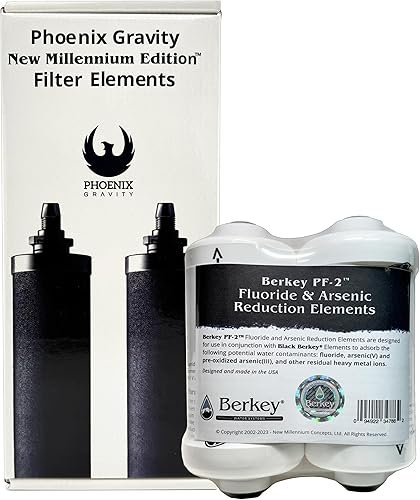
Set of Authentic Berkey PF-2 + Phoenix Elements Combo
This combo pack is interesting. You get the PF-2 filters, which are the go-to for arsenic and fluoride reduction in Berkey systems, paired with Phoenix’s “New Millennium” elements that claim to tackle 200+ contaminants. The included PrimeEasy primer is a nice touch for setup. The price is shockingly low, which makes us cautious—verify the seller’s authenticity.
- Extremely low price point
- Combo offers broad-spectrum reduction
- Priming tool included
- Very low price raises authenticity questions
- Manufacturer warranty may not apply
- Relies on gravity filtration, slower flow
Fluoride and Arsenic Filter NSF/ANSI 42 Certified
This is a serious third-party replacement. The NSF/ANSI 42 certification (for material safety and structural integrity) is a good sign, though we’d love to see NSF/ANSI 53 for contaminant reduction claims. It uses Carbonate Apatite media, which is effective. At $94 for a two-pack, it’s a premium option for those who want certified peace of mind over the original brand.
- NSF/ANSI 42 Certified
- Claims 99% chlorine and fluoride reduction
- Compatible with major Berkey models
- Higher cost than generic alternatives
- Certification is for material safety, not performance
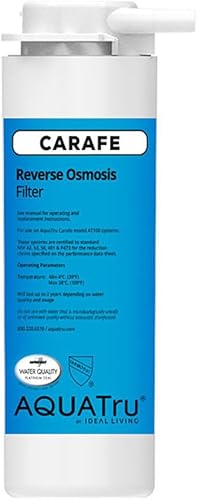
AquaTru Carafe AT100 Reverse Osmosis Filter
This is a replacement filter for the AquaTru Carafe countertop RO system. The key selling point is its certification—it’s designed to NSF standards to reduce arsenic, lead, and other inorganic contaminants down to 1/10000 of a micron. That’s the power of RO. If you already own the AquaTru Carafe, this is the genuine filter you need. It’s not a standalone system.
- Certified to NSF standards for contaminant reduction
- Extreme filtration precision (0.0001 microns)
- Genuine OEM replacement part
- Only works with AquaTru Carafe model
- RO membranes have a finite lifespan
Berkey PF-2 Fluoride Filter (Set of 2)
The original. These are the filters Berkey designed to pair with their Black Berkey elements for fluoride and arsenic reduction. They use activated alumina media. You must prime them correctly—a step many people skip, leading to poor performance. If you have a Berkey system and need arsenic reduction, this is the straightforward, official choice. Just follow the setup instructions to the letter.
- Official Berkey accessory
- Specifically designed for arsenic/fluoride
- Direct fit for Black Berkey purifiers
- Requires careful, time-consuming priming
- Only for use with ceramic Black Berkey filters
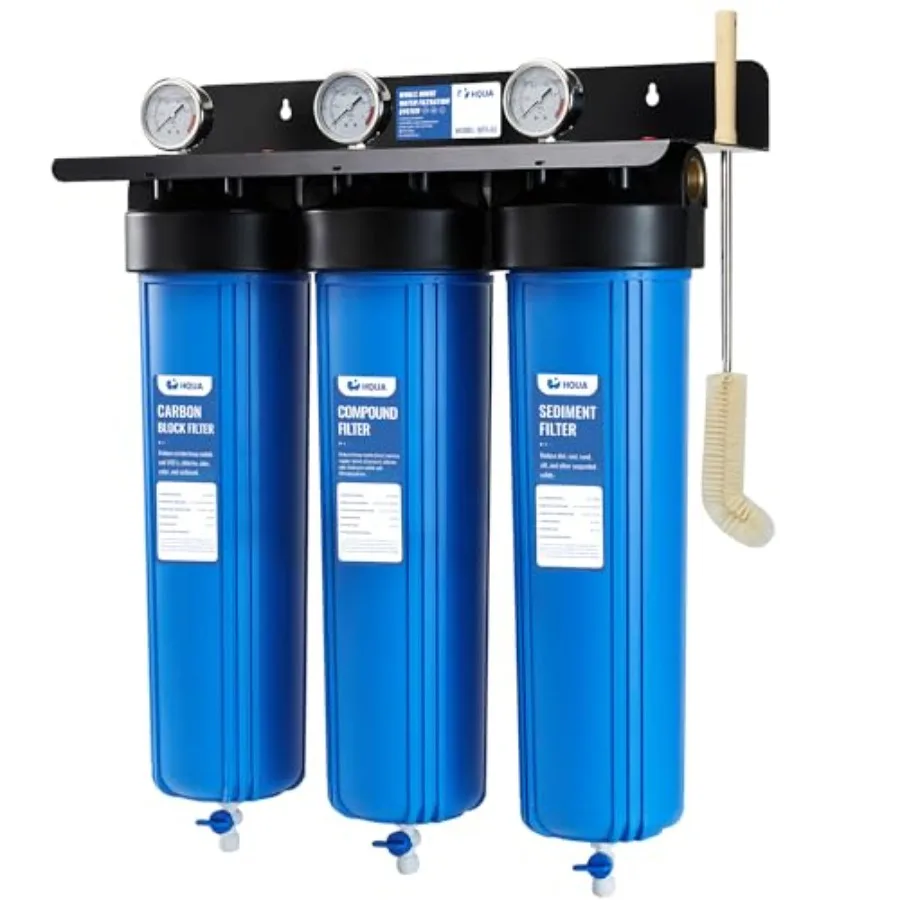
WF3-01 3-Stage Whole House Water Filtration System
This is a budget-oriented whole-house system from AliExpress. It claims to reduce a wide range of heavy metals, including lead, mercury, and chromium. For arsenic, we’d want to see independent lab reports. At this price, it’s an entry point for whole-house treatment, but manage your expectations. It’s likely using sediment and carbon blocks with a specialized heavy-metal reduction stage. Installation will likely require a plumber.
- Whole-house coverage
- Targets multiple heavy metals
- Aggressive price point for a POE system
- Independent certification data not provided
- May require professional installation
- Long-term filter costs and availability unknown
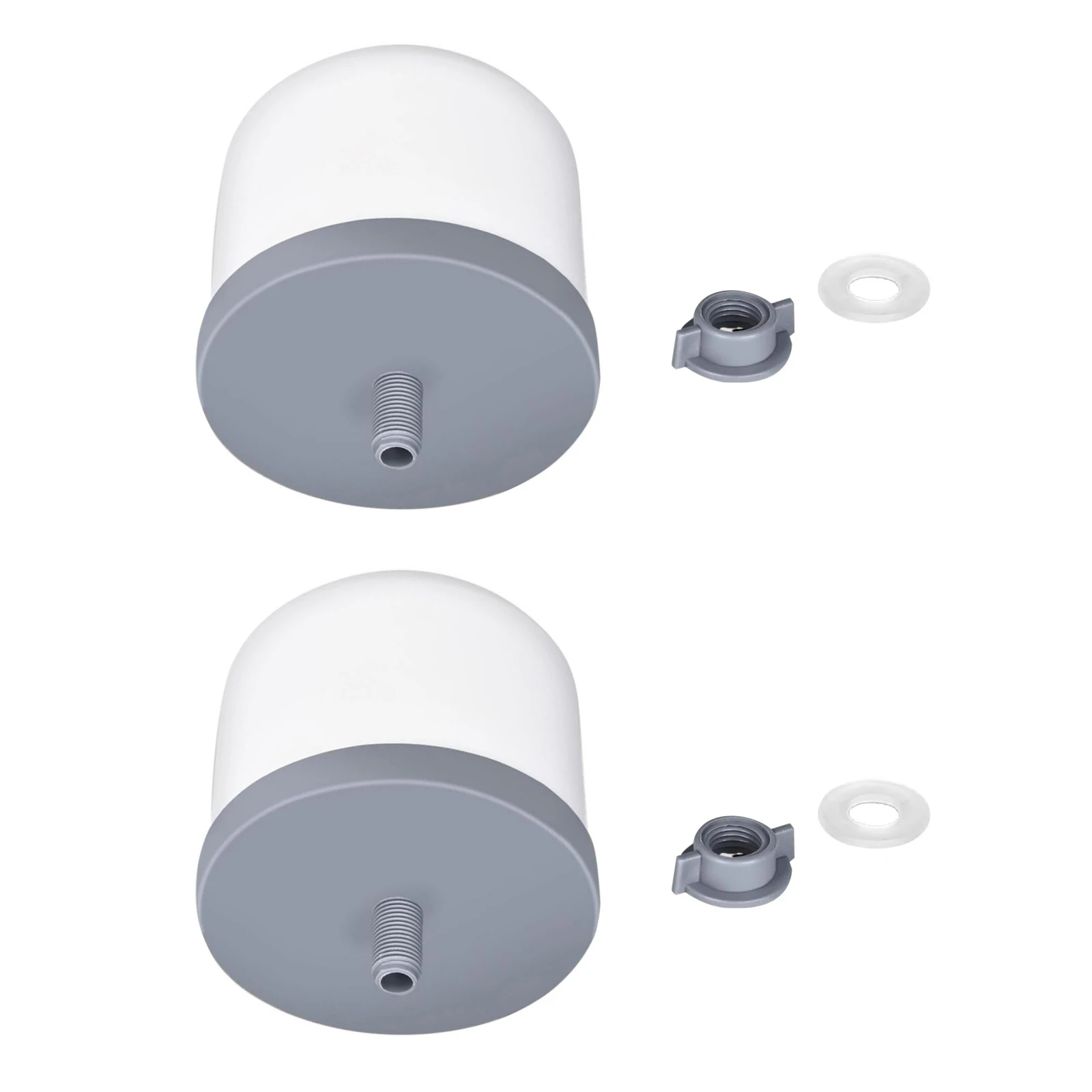
Ceramic Dome Water Filter 2 Pack
These are replacement ceramic filters for gravity-fed systems. The 0.2-0.5 micron rating is good for sediment, bacteria, and cysts. The claim of removing lead and arsenic suggests impregnation with specialized media. At $20.50 for two, it’s a gamble. Without certification, you’re trusting the seller’s claims. It could be a decent backup or secondary filter, but we wouldn’t rely on it as a primary arsenic solution.
- Very low cost
- Effective for sediment and microbial cysts
- Compatible with many gravity filter housings
- No certification for arsenic reduction
- Performance claims are unverified
- Flow rate can be very slow
Arsenic Filter FAQ
- Do refrigerator filters remove arsenic?
- Almost never. Standard refrigerator filters are carbon filters designed to improve taste and odor by reducing chlorine. They do not have the media or membrane technology to reduce arsenic. You need a dedicated system.
- How often do I need to replace an arsenic filter?
- It depends entirely on the system and your water quality. Adsorption media filters might last 6 months to 2 years. RO membranes typically last 2-4 years. Always follow the manufacturer’s schedule and consider more frequent changes if your incoming arsenic level is high.
- Can I boil water to remove arsenic?
- No. Boiling water actually concentrates arsenic because the water evaporates but the arsenic does not. Do not rely on boiling. Filtration is required.
- Is a whole-house arsenic filter necessary?
- For most people, no. A point-of-use filter at your kitchen tap protects your drinking and cooking water, which is the primary exposure route. A whole-house system is a major investment needed only in severe cases or if you want to protect bathing water (though skin absorption risk is lower).
- What’s the difference between NSF/ANSI 53 and 42 for arsenic?
- NSF/ANSI 42 certifies material safety and structural integrity—it means the filter won’t add anything harmful to your water. NSF/ANSI 53 certifies health effects reduction—it means the filter is proven to reduce a specific contaminant like arsenic to below the MCL. For arsenic, you want 53.
- Can I install an arsenic filter myself?
- Many under-sink and countertop systems are designed for DIY installation. Whole-house systems often require a plumber. Always read the instructions. If you’re not comfortable cutting into your plumbing, hire a professional. It’s not worth a leak.
Final Thoughts
Arsenic isn’t something to take a chance on. After testing countless systems, our clear recommendation for most homeowners is a certified under-sink reverse osmososis system. It provides the most reliable, broad-spectrum protection with manageable maintenance. The AquaTru Carafe is a fantastic no-install option if you’re renting or want portability.
If you’re set on a gravity-fed system like a Berkey, use the official PF-2 filters or a certified third-party alternative and prime them meticulously. And please, whatever you choose, get your water tested first and verify the filter’s certification. Your health is worth that extra step.
