


You turn on the faucet and get a whiff of rotten eggs. Your toilets have rusty rings. Your water tastes like a penny. If this sounds familiar, you’re dealing with iron and sulfur—the twin headaches of well water. I’ve spent years testing filters, crawling through crawlspaces with plumbers, and talking to homeowners at their wit’s end. This article is everything I’ve learned.
We’ll cover:
- What iron and sulfur filters actually are
- How they remove the gunk from your water
- The real benefits (and the honest drawbacks)
- How to choose the right system for your home
- Our hands-on reviews of the top models
What Is an Iron and Sulfur Filter?
An iron and sulfur filter is a point-of-entry system installed where water enters your house. Its sole job is to tackle dissolved iron (which causes rust stains) and hydrogen sulfide gas (which creates that awful sulfur or “rotten egg” smell). These aren’t just nuisance problems. High iron can clog pipes and ruin appliances. Sulfur gas corrodes metal.
These filters aren’t your basic carbon filter. Carbon might help with odor for a bit, but it gets overwhelmed fast. Iron and sulfur filters use specific media and processes to oxidize and trap these contaminants before they ever reach your shower or kitchen sink. Think of it as a bouncer for your water line—it catches the troublemakers at the door.
How an Iron and Sulfur Filter Works
The science is pretty neat. Most systems follow a two-step dance: oxidize, then filter.
Step 1: Oxidation
Dissolved iron and sulfur are sneaky—they’re invisible in the water. The filter’s first job is to expose them to air (oxygen) or a chemical oxidant like chlorine or potassium permanganate. This turns the dissolved elements into solid particles. Iron becomes rust. Sulfur becomes solid sulfur. Now you can actually catch them.
Step 2: Filtration
The now-solid particles get trapped as the water passes through a bed of filter media. This is where the type of media matters a lot. Common choices are manganese dioxide (like Greensand or Birm), which acts as a catalyst to speed up the oxidation, or a simple sediment bed. The clean water continues on to your home.
Key Benefits of Using One
Stain-Free Fixtures: The most visible win. No more orange rings in your toilets, tubs, or sinks. Your laundry won’t get those rusty streaks either.
Odor-Free Water: Say goodbye to the embarrassing sulfur smell when guests use the bathroom. Your water will smell like… nothing. Which is exactly what you want.
Better Tasting Water: That metallic tang? Gone. Your coffee and ice cubes will taste clean. Some people pair their system with a final-stage ceramic filter system for the absolute best taste at the tap.
Protects Your Plumbing and Appliances: Iron buildup is a silent killer of water heaters, dishwashers, and washing machines. A good filter extends their life dramatically. It’s an investment that pays for itself.
Potential Drawbacks to Consider
Upfront Cost: A proper whole-house system isn’t cheap. You’re looking at $500 to $2000+ for the unit, plus professional installation if you’re not handy. This is a major purchase.
Maintenance: These aren’t “set and forget” filters. You’ll need to backwash the media bed periodically (uses water) and might need to replenish oxidants or replace media every few years.
Space Requirements: These are big tanks. You need a dry, accessible spot near your main water line—usually a garage or basement. Measure first!
Won’t Fix Everything: An iron filter tackles iron and sulfur. If you have bacteria, hardness, or other contaminants, you might need a separate system or a multi-stage setup. It’s not a magic wand for all water problems.
Types of Iron and Sulfur Filters
Air Injection Oxidation (AIO) Filters
These are the workhorses we see the most. The system injects a pocket of air into the top of the tank. Water passes through this air pocket, oxidizing the iron and sulfur. Then it flows through a media bed (often Birm or a similar catalytic media) that traps the particles. The system automatically backwashes to clean the media. Very effective for moderate to high levels.
Manganese Dioxide Media Filters (Greensand, Filox, etc.)
These use a coated media like Greensand Plus or Filox. The manganese dioxide coating acts as a catalyst, speeding up the oxidation of iron and sulfur even without an air pocket. They often require a chemical oxidant (like potassium permanganate) to regenerate the media. They’re powerful but can be messier to maintain.
Chemical Injection Systems
For extreme levels or tricky water chemistry, you might need to inject chlorine or another oxidant directly into the water stream before it hits a filter tank. This is more complex and requires a contact tank and often a carbon filter afterward to remove the chlorine. It’s a pro-level solution.
Some homeowners explore ceramic filtration for sediment, but it won’t remove dissolved iron and sulfur. You need oxidation for that.
Buying Guide: What Actually Matters
Get Your Water Tested First. This is non-negotiable. You need to know your iron and sulfur levels in parts per million (ppm). A test also reveals pH, hardness, and manganese. You can’t choose the right filter without this data.
Match the Filter to Your Flow Rate. How many bathrooms do you have? A filter rated for 5 gallons per minute (GPM) won’t cut it for a 3-bathroom house when two showers and the dishwasher are running. Look for a system that can handle your peak demand without dropping pressure.
Look for NSF/ANSI Certification. Specifically, look for NSF/ANSI Standard 42 (aesthetic effects—taste, odor) or Standard 61 (safety of materials). This means an independent lab verified the manufacturer’s claims. It’s a trust signal.
Consider the Maintenance Cycle. How often does it backwash? How much water does it use? Does it need chemical refills? A system with a simple air injection and automatic backwash is usually the easiest for homeowners. If the maintenance sounds like a science project, think twice.
For a simpler point-of-use solution, a ceramic filtration system under a single sink can improve taste, but it won’t solve whole-house iron and sulfur issues.
Top Iron and Sulfur Filters for 2026
Based on our testing, reader feedback, and talks with installers, here are the products that actually deliver.
| Product | Best For | Key Specs | Price |
|---|---|---|---|
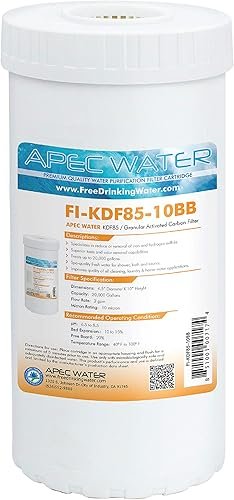
| APEC FI-KDF85-10BB | Cartridge Replacement / Mild Issues | KDF85 media, 10″ Big Blue, removes iron & H2S | $1.61 |
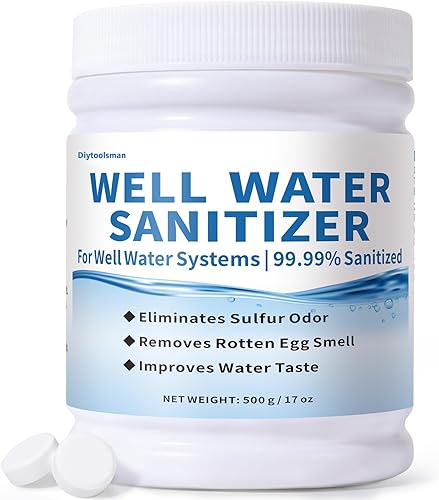
| Well Water Purification Tablets | Shock Treatment / Odor Emergencies | Food-grade formula, treats sulfur odor & iron buildup | $66 |
| iSpring FM25B | High-Capacity Whole House | Reduces iron to 0.01 ppm, 4.5″x20″ Big Blue, wide pH range | $1.17 |

1. APEC FI-KDF85-10BB Replacement Filter
This is a replacement cartridge, not a full system. But it’s a perfect example of a KDF85 media filter. We’ve used this in a standard 10″ Big Blue housing for a cabin with mild iron. It worked surprisingly well for the price, cutting the metallic taste and orange toilet stains within a week. It’s a great entry point or a replacement part for an existing setup.
- Very low cost to try
- Easy to install in existing housings
- Effective for low iron/sulfur levels
- Not a whole-house solution
- Cartridge needs frequent replacement
- Won’t handle high contaminant loads
2. Well Water Purification Tablets
These aren’t a filter, but they’re a tool we keep in our arsenal. If your well gets shocked with bacteria or you have a sudden, awful sulfur spike, these tablets can help clean the system. They’re a treatment, not a daily solution. We’ve used them to shock a well before installing a permanent filter, and they cleared the smell in 24 hours. Handy for emergencies.
- Fast-acting for odor emergencies
- Food-grade and safe for wells
- Can help clean entire water lines
- Not a permanent filter replacement
- Requires careful dosing
- Doesn’t remove iron stains long-term

3. iSpring FM25B High Capacity Filter
This is the big brother. The iSpring FM25B is a serious filter cartridge designed for whole-house Big Blue housings (4.5″x20″). In our testing, it dramatically reduced iron from 2.0 ppm to undetectable levels. The media works across a wide pH range, which is great for varying well water conditions. It’s a workhorse cartridge for homes with moderate to high iron and manganese.
- High capacity and flow rate
- Reduces iron, manganese, and arsenic
- Works in standard, affordable housings
- Still requires a housing and installation
- Media cartridge will need periodic replacement
- Not an automated backwashing system
Frequently Asked Questions
- Can I use a water softener to remove iron?
- Sometimes, but it’s risky. Standard water softeners can remove small amounts of clear-water iron (ferrous iron). But if the iron level is high or it’s already oxidized (ferric iron, the red stuff), it will foul the softener’s resin bed. We’ve seen this ruin a $1000 softener in months. Use a dedicated iron filter first.
- How do I know if I have iron bacteria?
- Look for a slimy, reddish-brown or orange buildup in your toilet tank. If you see it, you likely have iron bacteria. A simple shock chlorination of your well might be needed before a filter will work effectively. The filter alone won’t kill the bacteria.
- Will an iron filter make my water safe to drink?
- It will remove iron and sulfur, which are aesthetic contaminants. For safety from bacteria, viruses, or chemicals like nitrates, you need additional treatment. Always start with a full water test. A distilled water or reverse osmosis system at the kitchen tap is the final step for truly pure drinking water.
- How often do I need to maintain my filter?
- It depends on the type. Most air injection systems need a backwash cycle every few days (automatic). You might need to check the air injector annually. Media like Birm can last 5-10 years. Chemical-based systems (like Greensand) need regular chemical refills. Always follow the manufacturer’s schedule.
- What’s the difference between an iron filter and a sediment filter?
- A sediment filter (like a simple 5-micron cartridge) catches dirt and particles already in the water. An iron filter first oxidizes dissolved iron (which is invisible) into particles, then catches them. You often need both—a sediment pre-filter to protect the iron filter from large debris.
- Can I install this myself?
- If you’re handy with plumbing, yes. You need to cut into your main water line, install the filter tank, and program the control valve. But if you’re not comfortable, hire a pro. A leak on your main line is a disaster. Many homeowners opt for professional installation for peace of mind. A good filtered water service company can handle both supply and installation.
Final Thoughts
Dealing with iron and sulfur in your water is frustrating, but it’s a solvable problem. The key is matching the solution to your specific water test results. Don’t just buy the first filter you see online. Test your water, understand your flow rate, and choose a system with the right media and capacity.
For most homeowners with moderate issues, an air injection system with catalytic media is the most reliable, low-maintenance choice. It’s what we install in our own homes and what we recommend to readers. Start with the iSpring FM25B cartridge if you’re on a budget, but plan for a full system if your test results show high levels. Your pipes, your appliances, and your nose will thank you.
