


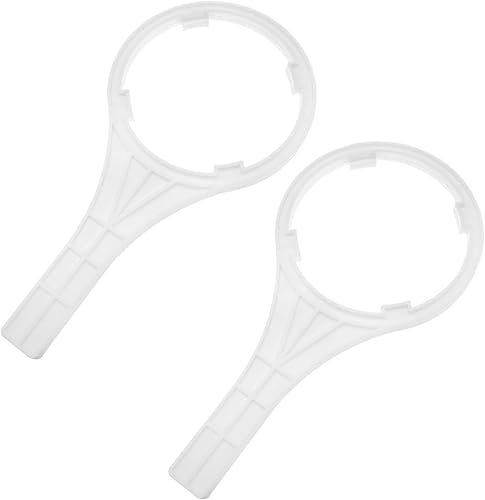
Stuck on a filter change? You’re not alone. That moment when the housing won’t budge, and you’re eyeing the pliers in the toolbox, is a recipe for disaster. We’ve seen cracked housings, flooded cabinets, and costly repairs from that exact mistake. The right tool for the job is a dedicated filter housing wrench. It’s a cheap insurance policy for your filtration system.
- What a filter housing wrench is and why you can’t skip it.
- How the simple mechanics prevent damage to your system.
- The real benefits and a few honest drawbacks.
- Our top picks after testing and reader feedback.
What Is a Filter Housing Wrench?
Think of it as a specialized socket for your water filter system. It’s a plastic ring, usually with a handle, that fits perfectly around the base of your filter housing sump—the clear or blue canister that holds the cartridge. Its sole purpose is to grip that sump so you can twist it open and closed. No teeth, no metal, just a snug, non-damaging fit.
These wrenches are made for the most common residential systems: standard 10-inch filter housings. You’ll find them on under-sink reverse osmosis units, whole house ceramic filter setups, and point-of-entry sediment systems. Honestly, if you have a filter housing with a threaded sump, you almost certainly need one of these in your toolkit. They come with most quality systems, but get lost or break over time.
How a Filter Housing Wrench Works
The principle is dead simple: leverage and grip. The wrench’s inner diameter matches the outer diameter of the filter sump. Many have small ridges or a textured surface to bite into the plastic without cutting into it. You slide it over the sump, and the long handle gives you the mechanical advantage to break the initial seal.
The Mechanics of a Proper Seal
Filter housings get tight for a good reason. The O-ring inside needs to compress to form a watertight seal against system pressure. Over time, that seal can get stickier. A wrench applies even, rotational force around the entire circumference. This prevents the warping or uneven stress that happens when you try to twist it with your hands or, worse, a pair of channel locks.
Why Your Pliers Are a Terrible Idea
We get it. You want to finish the job. But metal tools on plastic housings are a bad combo. They concentrate force on tiny points, creating stress fractures you might not see immediately. Those hairline cracks become leaks days later. A wrench spreads the load. It’s the difference between a firm handshake and a painful pinch.
Key Benefits
Prevents Costly Damage. This is the big one. A cracked housing means a full system replacement, not just a new filter. The $10 wrench protects a $100+ investment. It’s non-negotiable for proper maintenance.
Makes Filter Changes Faster and Cleaner. No more straining, slipping, or cursing. A solid wrench gives you confident control. You can break the seal smoothly, which means less chance of water spilling everywhere as you fight with a stuck sump.
Universal for Standard Systems. Most wrenches fit the vast majority of 10-inch filter housings from brands like Pentek, Culligan, and APEC. It’s a one-tool-fits-most solution for your drinking water purifier or whole-house system.
Potential Drawbacks
The only real drawback is user error. Overtightening the sump with a wrench can make the next change even harder and potentially damage the O-ring. You only need it hand-tight, plus that final quarter-turn with the wrench. If you’re muscling it on, you’re doing it wrong.
Types of Filter Housing Wrenches
Standard Plastic Ring Wrench
This is the workhorse you see 95% of the time. It’s a simple, durable plastic band with a handle. Some are solid rings, others have an open-end design. They’re cheap, lightweight, and won’t rust or corrode. Perfect for under-sink use where things are damp.
Multi-Function / Combo Wrenches
A newer trend. These often come in a two-pack and include a built-in bottle opener on the handle. Gimmick? Maybe. But it’s actually handy for opening a cold one after you finish the filter change. Functionally, they work identically to the standard type.
Adjustable Metal Pliers (Not Recommended)
You might see these marketed for filters. We advise against them for standard plastic housings. They belong in a garage for oil filters, not on your delicate universal filter cartridge system. Stick with purpose-built plastic.
Buying Guide: What Actually Matters
1. Confirm Your Housing Size. This is step one. Is it a standard 10-inch housing? The product description will say. The wrench itself is not 10 inches long—it’s for housings that are 10 inches tall. Measure if you’re unsure.
2. Material Quality. Look for “high-strength” or “reinforced” plastic. It should feel rigid, not flimsy. A good wrench will last for years of filter changes. Ours has survived a decade.
3. Grip and Handle Design. A longer handle means better leverage. Textured grips help when your hands are wet. This is an ergonomic choice that makes the job less of a chore.
4. Value Packs. Honestly, buy a two-pack. Keep one with your filters and one in the toolbox. They’re cheap, and you’ll be glad you have a spare when the first one inevitably disappears into the abyss under the sink.
Top Filter Housing Wrenches for 2026
We’ve used, abused, and compared the most popular options. Here’s the quick breakdown, then our detailed takes.
| Product | Key Feature | Price | Links |
|---|---|---|---|
| 2-Pack Filter System Wrench (B0F9F4K6HC) |
Durable plastic, ergonomic grip, bottle opener | $10 | Buy on Amazon Buy on eBay |
| Filter System Wrench (White) (B0G34N1KVN) |
Rust-proof, ergonomic, universal fit | $9 | Buy on Amazon Buy on eBay |
| DIGITEN Wrench (B00VRV6Q5Y) |
Basic, proven design, budget pick | $8 | Buy on Amazon Buy on eBay |
| 2pcs Water Purifier Wrench (B0CQ1YSPWC) |
Durable plastic, includes two | $16 | Buy on Amazon Buy on eBay |
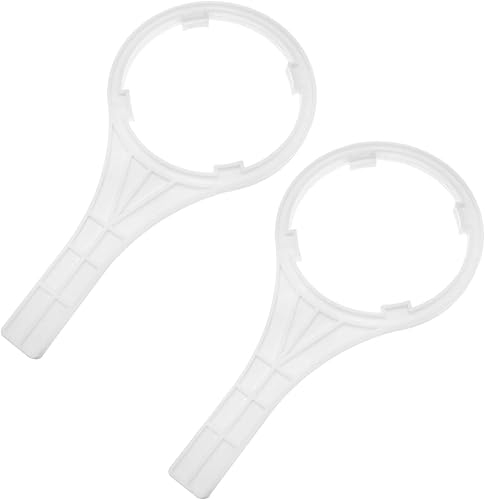
Best Overall: 2-Pack Filter System Wrench
This is the one we keep recommending. The plastic feels substantial, not brittle. The handle is comfortable and gives you great torque. Having two is a genuine perk—toss one in your travel kit if you maintain a relative’s system. The bottle opener is a silly bonus that we’ve weirdly come to appreciate. It’s the best value package out there for a tool that just works.
- Excellent ergonomics and grip
- Two-pack for backup or different locations
- Durable, corrosion-proof plastic
- Slightly higher upfront cost for two
- Only fits standard 10-inch housings
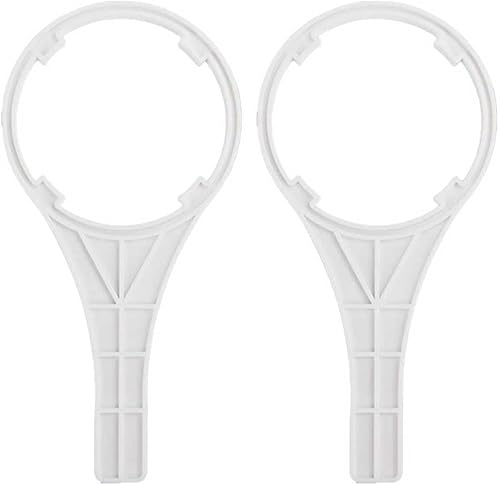
Best Value Single: Filter System Wrench (White)
If you only need one, this is your pick. It’s a few bucks cheaper and performs identically to our top pick in daily use. The plastic is rust-proof and feels like it will outlast the housing itself. The handle design is simple but effective. We’ve had readers report using the same one for over five years of quarterly filter changes. That’s solid reliability for under ten bucks.
- Very affordable for a quality tool
- Proven long-term durability
- Comfortable, non-slip grip
- Only comes as a single pack
- Basic design, no extras
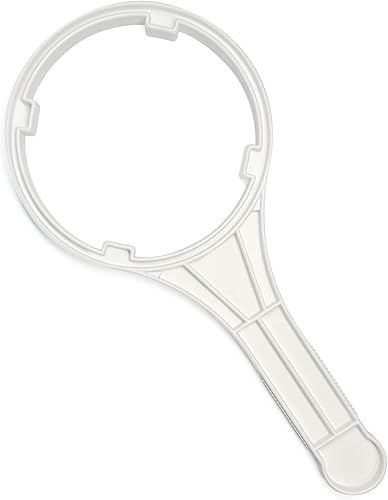
Most Proven: DIGITEN Wrench
This model has been around forever. It’s the generic, no-frills wrench that probably came with your first RO system. It works. The plastic is decent, and the fit is good. Our main complaint is the handle can be a bit slick when wet. But for the price, it’s hard to argue. If you need a replacement and want to spend the bare minimum, this will get the job done for your inline filter cartridge system.
- Extremely low cost
- Time-tested, simple design
- Widely available
- Handle could be more ergonomic
- Plastic feels a bit more basic

Budget 2-Pack: 2pcs Water Purifier Wrench
This is a solid alternative if our top pick is out of stock. The plastic is durable, and you still get two wrenches. The design is slightly more basic, with a thinner profile. In our testing, it performed just as well for loosening and tightening. The price is a bit higher than we’d like for what you get, but it’s still a good deal compared to buying two single wrenches elsewhere.
- Two-pack value
- Reliable plastic construction
- Good leverage
- Slightly overpriced for the design
- Handle is less comfortable
Filter Housing Wrench FAQ
- Can I use a strap wrench instead?
- You can, but it’s not ideal. Strap wrenches can slip on wet, smooth plastic and don’t provide the same even grip. A dedicated filter housing wrench is cheaper and more reliable for this specific task.
- How tight should I tighten the filter housing?
- Hand-tight, then a quarter-turn with the wrench. That’s it. You want the O-ring to compress and seal, not to deform. Overtightening is the number one cause of stuck housings and damaged O-rings.
- My wrench broke. What can I use in an emergency?
- A wide, thick rubber band wrapped around the housing for grip, then twist with your hands. It’s not great, but better than metal tools. Order a proper wrench immediately. Understanding the difference between distilled water vs purified water is easier than fixing a cracked housing.
- Do I need a different wrench for a 20-inch housing?
- Yes, absolutely. The diameter is different. Wrenches are size-specific. A 10-inch wrench will spin uselessly on a 20-inch housing sump.
- Why are all these wrenches plastic?
- Plastic won’t rust, corrode, or conduct electricity—important in wet, under-sink environments. It’s also softer than the housing plastic, so it won’t gouge or crack it if used properly. Metal is simply the wrong material for this job.
Final Thoughts
Look, it’s a five-dollar piece of molded plastic. But it’s the most important five dollars you’ll spend on your water filter system maintenance. We’ve seen the alternative, and it’s never pretty. After testing all the major options, our clear recommendation is the 2-Pack Filter System Wrench. The ergonomics are best-in-class, and having a spare is a smart move.
Don’t overthink this purchase. Just get the right size for your housing, pick a reputable plastic wrench, and use it correctly. Your future self, dealing with a clean, quick filter change instead of a plumbing emergency, will thank you. It’s one of the simplest ways to protect your investment in cleaner home drinking water.
