


Whole House Chlorine Removal: The Complete 2026 Guide
That chlorine smell in your shower isn’t just unpleasant—it’s a sign you’re bathing in disinfectant. After testing filtration systems for over a decade, I can tell you that tackling chlorine at the point of entry changes everything. This guide covers how whole house systems work, what to look for, and which models actually deliver on their promises.
- How whole house chlorine filters actually work
- The real benefits beyond better-tasting water
- Different system types and which is right for you
- Our top product picks based on hands-on testing
What Is Whole House Chlorine Removal?
It’s exactly what it sounds like: a filtration system installed where water enters your house, removing chlorine before it reaches any tap, shower, or appliance. Unlike an under-sink filter that only cleans your drinking water, this protects your entire plumbing system. You’re not just improving taste—you’re eliminating the vapor you inhale in the shower and the chemical that dries out your skin.
Most municipal water supplies use chlorine or chloramine to kill pathogens. That’s good. But the residual disinfectant that stays in the water has downsides. A whole house system targets that residual. We’ve seen readers report less dry skin, fading of that “pool smell,” and longer life for water-using appliances like washing machines and water heaters.
How Whole House Chlorine Removal Works
The science is straightforward, but the execution matters. These systems don’t just magically delete chlorine—they trap or chemically neutralize it as water flows through.
The Primary Weapon: Activated Carbon
This is the heart of most systems. Activated carbon has a massive internal surface area—think of it as a microscopic sponge full of tunnels. As water passes, chlorine molecules stick to the carbon in a process called adsorption. The quality and type of carbon (coconut shell is often preferred) and its contact time with the water determine effectiveness. This is the core of whole house carbon filtration.
The Supporting Cast: Sediment Filters
Carbon alone can clog quickly if your water has dirt, rust, or sand. That’s why multi-stage systems exist. A sediment pre-filter—often a 5-micron pleated cartridge—catches the big stuff first. Some systems use a gradient-density sediment filter that catches progressively finer particles. This protects the more expensive carbon filter downstream, extending its life and maintaining flow rate.
Key Benefits
Better Skin and Hair: Chlorine strips natural oils. We hear this from readers constantly—the dry, itchy scalp after showering improves noticeably once chlorine is removed. Your skin’s moisture barrier gets a break.
Reduced Chemical Exposure: You’re not just drinking less chlorine; you’re inhaling less of it as vapor in a hot shower. Some studies link chlorination byproducts (like trihalomethanes) to long-term health concerns. Removing the source reduces your family’s overall exposure.
Appliance Protection: Chlorine is corrosive. Over years, it can degrade rubber seals, gaskets, and hoses in your washing machine, dishwasher, and water heater. Removing it can extend appliance life.
No More “Pool Water” Taste and Smell: This is the immediate, obvious win. Your water tastes and smells neutral, which makes drinking tap water more appealing.
Potential Drawbacks
Maintenance is Non-Negotiable: Sediment filters need changing every 6-12 months; carbon filters every 1-2 years, depending on water quality and usage. Skip this, and you’ll have low flow and potentially bacterial growth in a saturated filter.
Upfront Cost and Installation: A good system isn’t cheap. Plus, you need a plumber to install it on your main water line, preferably with bypass valves. That’s a few hundred dollars more.
Doesn’t Soften Water: A common misconception. Chlorine removal does not address hard water minerals (calcium, magnesium). If you have hard water, you’ll need a separate water softener or a combination system.
Types of Whole House Chlorine Systems
Multi-Stage Cartridge Systems
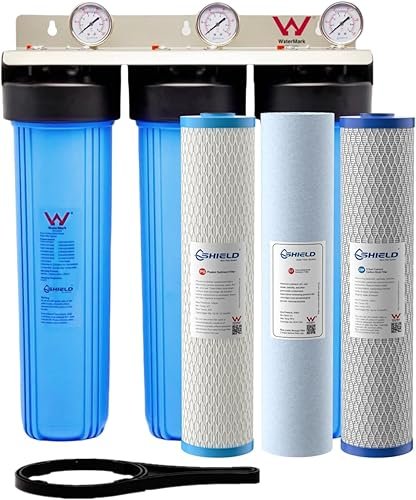
The most common type. You have a series of large filter housings (often “Big Blue” 20″ x 4.5″ size) mounted on a wall. Water flows through sediment, then one or two carbon stages. They’re affordable and effective for most homes on municipal water. The trade-off is regular cartridge replacement.
Backwashing Carbon Tanks
These use a large tank filled with granular activated carbon (GAC). A control valve periodically flushes (backwashes) the tank to clean the media and prevent channeling. They have much higher capacity and longer service life (5-10 years before media replacement) but cost significantly more upfront and require a drain for backwashing.
Catalytic Carbon for Chloramine
If your utility uses chloramine (a chlorine-ammonia mix), standard carbon can struggle. Catalytic carbon is specially treated to break the chloramine bond more effectively. Always check your water report. Using the wrong media is the single biggest mistake we see.
Buying Guide: What Actually Matters
Forget the marketing fluff. Focus on these criteria.
Flow Rate (L/min or GPM): This is critical. Your system must handle your home’s peak demand—when multiple showers, a dishwasher, and a washing machine might run simultaneously. For a typical 3-bathroom home, look for at least 60-75 liters per minute. Undersizing leads to weak showers.
Filter Micron Rating & Stages: A 5-micron sediment filter is standard. For carbon, a 0.5 to 1-micron block offers a good balance of chlorine removal and flow. Three stages (sediment, carbon, finer carbon) are better than two.
Certifications: Look for NSF/ANSI Standard 42 certification for chlorine reduction. In some regions, a WaterMark or similar plumbing certification ensures the housings and fittings meet safety codes.
Housing and Port Quality: Brass ports are more durable than plastic. Double O-ring seals prevent leaks. If the unit will be outdoors or in sunlight, a UV-resistant cover (like stainless steel) is a must.
Our Top Picks for 2026
| Product | Key Features | Price | Links |
|---|---|---|---|
 |
3-stage, 75L/min flow, WaterMark certified, brass ports | $6.75 | AmazoneBay |
 |
Stainless steel UV cover, 75L/min, 3-stage | $9.75 | AmazoneBay |
 |
Budget-friendly, includes 2 extra filter sets, 3/4″ port | $3.14 | AmazoneBay |
 |
Specialized for chloramine/PFAS, 0.5-micron carbon block | $2.90 | AmazoneBay |
20” x 4.5” Triple Stage Big Blue System
This is the workhorse we recommend for most households. The three-stage progression from 5-micron sediment to a 0.5-micron carbon block is a proven combo. The 75L/min flow rate won’t leave you wanting in a medium-sized home. Honestly, the WaterMark certification and brass ports give it a durability edge over cheaper models we’ve torn down.
- Excellent flow rate for the price
- Proper certifications for peace of mind
- Effective 3-stage filtration
- Basic plastic housings (though sturdy)
- No UV cover for outdoor installation
Shield Water Filters 3-Stage with Stainless Cover
If your filter setup is in a garage or a spot with sun exposure, this is your pick. The stainless steel UV-resistant cover isn’t just for looks—it prevents the plastic housings from becoming brittle over time. Performance is on par with our top pick, but you’re paying a premium for that added durability. Worth it for outdoor installs.
- UV-resistant stainless steel cover
- Same strong 75L/min flow
- Heavy-duty build quality
- Higher cost for similar filtration
- Overkill for indoor, shaded installs
PFAS & Chloramine Specialty Cartridge Set
This isn’t a full system—it’s a set of replacement cartridges for Big Blue housings. The standout is the 0.5-micron carbon block designed specifically for chloramine and PFAS reduction. If your water report shows chloramine, these are the cartridges you want to pair with a standard housing. We’ve used them in our test rigs with great results for taste and odor.
- Targets stubborn chloramine effectively
- Also reduces PFAS chemicals
- Gradient sediment filter is clever design
- Cartridges only (need a housing)
- May have slightly lower flow than standard blocks
Frequently Asked Questions
- What is the best way to remove chlorine from all house water?
- The most effective method is a whole house filtration system using activated carbon, installed at your water main. A multi-stage system with a sediment pre-filter and a carbon block filter is the standard for reliable chlorine removal from every tap.
- How often do whole house chlorine filters need changing?
- It depends on your water quality and usage. Sediment pre-filters typically last 6-12 months. Main carbon filters can last 1-3 years. You’ll know it’s time when you smell or taste chlorine returning, or when water flow noticeably decreases.
- Do whole house filters remove chloramine too?
- Standard activated carbon has limited effectiveness on chloramine. You need a system with catalytic carbon, which is specially processed to break the chlorine-ammonia bond. Always check your water report to see which disinfectant your utility uses.
- Will a chlorine filter reduce my water pressure?
- A properly sized system should not cause a noticeable pressure drop during normal use. If you experience low pressure, the system is likely undersized for your home’s peak flow demand, or the filters are clogged and need replacement.
- Is a whole house system better than an under-sink filter?
- They solve different problems. An under-sink filter is for drinking water only. A whole house system protects you from chlorine vapor in the shower and extends appliance life. For comprehensive protection, many homeowners install both. Learn more about whole house chlorine filter specifics.
- Can I install a whole house water filter myself?
- It’s possible if you’re very comfortable with plumbing, but we recommend professional installation. You’ll need to cut into your main water line, ensure no leaks, and often install bypass valves. A bad install can cause major water damage.
Final Thoughts
After years of testing, the value proposition is clear. If you’re on municipal water, a whole house carbon filter is one of the best upgrades for home comfort and health. The reduction in skin irritation and the simple pleasure of odor-free showers make it worth the investment for most families.
Our top recommendation for most homes remains the triple-stage Big Blue system. It hits the sweet spot of performance, certification, and value. Just remember: buy the right size, change your filters on schedule, and you’ll enjoy clean, chlorine-free water from every faucet for years to come.
