


Finding Reliable Well Drillers Near Me: A 2026 Homeowner’s Guide
That moment when your faucet sputters and the water test comes back iffy. You need a well. But searching “well drillers near me” pulls up a dozen names, all claiming to be the best. How do you choose? After two decades covering water systems, I’ve seen projects go perfectly—and I’ve seen costly disasters. This guide cuts through the noise.
- What a professional well driller actually does
- The step-by-step drilling process, explained simply
- How to vet and hire the right company
- A look at the equipment they might use
What Is a Well Driller?
A well driller is a licensed contractor specializing in excavating the earth to access groundwater. They’re not just people with big trucks. They’re hydrogeologists of sorts, reading the land to find water. They handle everything from the initial site survey and permit filing to the actual drilling, casing installation, and initial pump setup. A good one is your partner for decades.
In our experience, the best drillers are obsessed with local conditions. They know the bedrock maps, the common aquifer depths, and which neighborhoods have tricky clay layers. This local knowledge is worth its weight in gold. It’s the difference between a 100-foot well and a 400-foot money pit.
How Well Drilling Works
The process is more involved than most people think. It’s not just pointing at a spot and drilling.
1. Site Assessment & Permitting
First, the driller will visit your property. They’ll look at topography, nearby septic systems, and property lines. Many will use old-fashioned dowsing rods alongside modern geological survey maps. Then comes the paperwork. They’ll pull permits from your local health department or water authority. This step alone can take weeks.
2. Mobilization & Drilling
On drill day, a massive truck-mounted rig arrives. The setup is quick if they have a hydraulic rotary rig with a rapid-fold mast. The drill bit, often a roller cone or drag bit, chews through soil and rock. Drilling fluid (a bentonite clay slurry) is pumped down to cool the bit and lift rock cuttings out of the hole.
3. Casing & Grouting
Once they hit water-bearing rock (the aquifer), they insert steel or PVC casing into the hole. This prevents the well from collapsing. The space between the casing and the borehole wall is then sealed with a grout—usually cement or bentonite. This is a critical step to prevent surface contaminants from seeping down.
4. Well Development & Pump Test
The driller then “develops” the well, often by surging water in and out to clear fine sediments from around the screen. Finally, they run a pump test, measuring flow rate (gallons per minute) and water level drawdown over several hours. This tells you the well’s sustainable yield.
Key Benefits of Hiring a Professional
Access to Deep Aquifers: Professionals have the equipment to reach water hundreds of feet down, accessing cleaner, more stable water sources you simply can’t get with a shovel.
Code Compliance & Safety: They know the local setback rules, casing depth requirements, and grouting standards. This protects your investment and your health. A properly constructed well should last 20-50 years.
Problem Solving: They’ve seen it all—cave-ins, unexpected boulders, dry holes. Their experience gets you out of jams. Once you have a well, you’ll need to treat the water. We often recommend starting with a simple tds gauge to get a baseline of your water’s mineral content.
Potential Drawbacks & Costs
Other drawbacks include the heavy equipment tearing up your yard, the noise (it’s very loud), and the ongoing responsibility for water testing and treatment. You might need a whole-house filter, a saltless water conditioner for hard water, or even a system to address specific contaminants like iron or sulfur.
Types of Drilling Methods
Air Rotary Drilling
Best for hard, fractured bedrock. Uses compressed air instead of drilling fluid to blast cuttings out. Fast and effective in the right geology, but can’t be used in unconsolidated sand or gravel.
Mud Rotary Drilling
The most common method for sediment and softer rock. Uses the bentonite slurry we mentioned. The mud stabilizes the borehole walls. It’s versatile but creates a messy drill site.
Cable Tool (Percussion) Drilling
The old-school method. A heavy bit is repeatedly lifted and dropped to chip away rock. It’s slow, but some drillers swear by it for certain formations because it gives a very clear picture of the rock layers being punched through.
How to Hire: A Checklist
Don’t just hire the first name that pops up. Do your homework.
- License & Insurance: Ask for their state driller’s license number and proof of liability insurance. Call the state licensing board to verify.
- Local Experience: “How many wells have you drilled in this county in the last two years?” Get references and call them.
- Detailed Contract: It should specify cost per foot, estimated depth, casing material and thickness, grout type, and what happens if they hit a dry hole.
- Water Quality Guarantee: Some drillers offer a basic water quality test upon completion. Understand what’s included.
- Post-Installation Support: Will they help if the pump fails in six months? Do they offer maintenance contracts?
It’s also smart to get your water tested independently after the well is built. If you’re on a municipal system like hoboken water, you’re used to reports. With a well, you are the water company.
Drilling Equipment Examples
While you’re hiring a service, not buying a rig, understanding their equipment helps you ask smart questions. Here are two examples of the kind of professional-grade tools a well-equipped driller might use.
| Product | Key Feature | Best For | Price | Link |
|---|---|---|---|---|
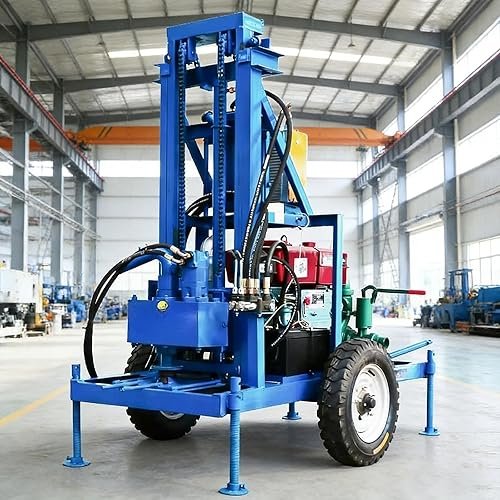
 Industrial-Strength Portable Water Well Driller |
Heavy-lift hydraulic rotary rig with rapid-fold transport design | Rural developers & geothermal consultants needing serious power | $50.13 |
Buy on Amazon Buy on eBay |
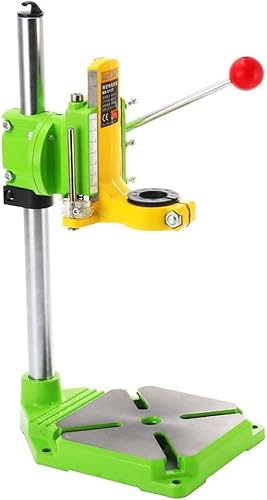 AOOK Floor Drill Press/Workstation |
90° rotating fixed frame for precision angled drilling | Workshop use for precise, small-scale drilling projects | $1.02 |
Buy on Amazon Buy on eBay |
Industrial-Strength Portable Water Well Driller
This is a beast. We’ve seen similar rigs on professional sites, and the quick-fold mast is a game-changer for moving between rural properties. The hydraulic system means setup is fast. It’s overkill for a homeowner, but if you’re a developer breaking new ground, this is the kind of power you need. The price is surprisingly low, which makes us question the long-term durability of some components.
- Extremely powerful hydraulic system
- Rapid deployment with foldable mast
- Designed for serious off-grid work
- Not for DIY or casual use
- Long-term reliability unknown at this price
- Requires skilled operator
AOOK Floor Drill Press/Workstation
This is a completely different tool. It’s a stationary drill press for your workshop, perfect for precise holes in wood or metal. The 90-degree rotation is handy. We mention it because some well drilling involves creating custom parts for pump systems or filtration setups. If your driller is fabricating a custom adapter, they might use a tool like this in their shop. It’s a niche item, not for drilling wells.
- Very affordable for a drill press
- Adjustable clamping range
- Good for small, precise projects
- Not for field work or well drilling
- Light-duty construction
- Limited to workshop use
FAQ
- How do I find reputable well drillers near me?
- Start with your state’s Department of Natural Resources or Environmental Quality website; they often have a licensed driller directory. Ask neighbors with wells for referrals. Interview at least three companies, check their license, and demand local references.
- What’s the average cost per foot for drilling a well?
- Costs vary wildly by region and geology, typically from $15 to $50 per foot. Drilling through solid granite costs more than through clay. Always get a contract that specifies the cost per foot and what’s included (casing, grout, etc.).
- How long does it take to drill a residential well?
- The actual drilling might take 2-5 days. But the entire process—from survey and permits to pump installation and water testing—can take 4 to 8 weeks. Permitting delays are common.
- Can I drill my own well?
- In most places, it’s illegal without a license. Even where it’s allowed, it’s incredibly dangerous. You risk cave-ins, hitting gas lines, or contaminating the aquifer. This is one job where hiring a pro isn’t just recommended; it’s required by law.
- What happens if the driller hits a dry hole?
- Your contract must address this. Most reputable drillers charge a reduced “footage rate” for dry holes. You still pay for labor and mobilization, but not the full per-foot price. Some may offer to drill a second hole at a discount.
- Do I need a water softener with well water?
- Many wells have hard water. After testing, you might need a softener or a saltless water conditioner. The hardness level will determine the right system. Don’t buy one until you have your water report.
- How often should I test my well water?
- Test annually for bacteria and nitrates. Test every 3-5 years for a full panel of minerals and metals. Also test anytime you notice a change in taste, odor, or color, or after any nearby land disturbance or a boil notice in your area.
Final Thoughts
Finding “well drillers near me” is the first step toward water independence. It’s a big investment, but with the right driller, it’s a one-time cost that pays for itself over decades. Do your homework, hire local expertise, and don’t cut corners on the casing or grout. Your future self will thank you every time you turn on the tap.
Once the well is in, your water treatment journey begins. Start with a basic test, see what’s in your water, and build your system from there. Sometimes it’s a simple ceramic filter cartridge for sediment. Other times, you might need to look at water softener rental near me options to try before you buy. The key is to start with a great well.
