


Hard water is a silent nuisance. It dries out your skin, makes hair brittle, and leaves those ugly white spots on everything. You’ve probably searched for “water softener best” hoping for a magic fix. After testing dozens of systems and talking to the pros, here’s the truth: the best solution is often simpler than you think. This guide cuts through the hype. We’ll cover what actually works, the real benefits, and show you our top picks for 2026.
What Is a Water Softener?
Forget the technical jargon. A water softener is any device that reduces the “hardness” minerals—primarily calcium and magnesium—in your water. These minerals cause scale buildup in pipes, spots on dishes, and that stiff, scratchy feeling on your skin after a shower. The term is broad. It can mean a massive whole-house ion-exchange system plumbed into your main line, or a simple, compact filter that screws onto your showerhead.
For most homeowners and renters, the conversation has shifted. The old-school, salt-based softeners are still out there. But the best water softener for daily comfort, especially for your skin and hair, is often a point-of-use filter. These target the chlorine and impurities that exacerbate the feeling of hardness, delivering a noticeable improvement without complex plumbing or ongoing salt costs.
How Water Softeners Work
Ion Exchange (Traditional Method)
This is the classic whole-house approach. Water flows through a tank filled with resin beads coated with sodium ions. The hardness minerals (calcium and magnesium) have a stronger charge, so they swap places with the sodium, getting stuck on the beads. The system then periodically flushes the beads with a brine solution to reset them—a process called regeneration. It’s effective but requires salt, a drain, and regular maintenance.
Filtration & Conditioning (Modern Shower Filters)
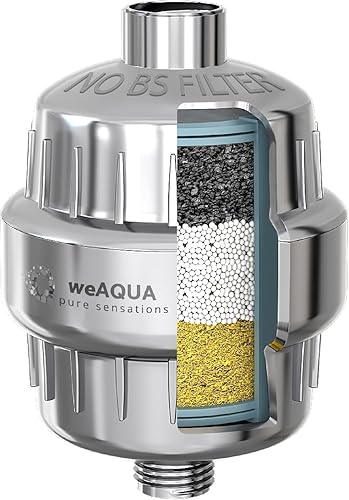
This is where the game has changed. The best shower water softeners don’t technically “soften” by ion exchange. Instead, they use a blend of filtration media to condition the water and remove the elements that make hard water feel harsh. A typical high-quality filter uses layers like sediment screens, carbon water filtration (to grab chlorine), and KDF (Kinetic Degradation Fluxion) media, which uses a redox reaction to reduce heavy metals and inhibit scale. Some, like the weAQUA model, even include calcium sulfite for superior chlorine removal in hot water.
Key Benefits of Using One
Softer Skin & Hair, Immediately. This is the number one reason people buy. By stripping out chlorine and reducing mineral deposits, you stop the natural oils from being stripped from your skin and hair. The difference is often felt within days—less dryness, less itchiness, and hair that’s more manageable.
Protects Your Bathroom. Less scale means fewer hard water stains on your glass shower doors, faucets, and tiles. Cleaning becomes easier. That chalky white buildup slows to a crawl.
It’s an Affordable Upgrade. Compared to a whole-house system costing thousands, a shower filter is a sub-$100 investment. Installation takes two minutes. No plumber, no tools, no permanent modification to your home. Perfect for renters.
Targets the Worst Exposure Point. You absorb and inhale contaminants through your skin and lungs during a hot shower. A filter right at the source cleans the water where it matters most for your health and comfort.
Potential Drawbacks to Consider
They have a limited lifespan. The media inside gets used up. You’ll need to replace the filter cartridge every 4 to 6 months, depending on your water quality and usage. It’s a recurring, though small, cost.
Water pressure can be affected. A poorly designed filter can restrict flow. The best models are engineered to maintain strong pressure, but it’s a key spec to check before you buy.
Types of Water Softening Systems
Showerhead Filters
The most popular category for immediate results. They attach between your shower arm and your existing showerhead. Look for multi-stage filters with KDF and carbon. They’re all about improving the sensory quality of your water for bathing.
Whole-House Ion-Exchange Softeners
The heavy-duty solution. Installed on the main water line, they treat every drop of water entering your home. Essential if you have severe hardness causing appliance damage. They’re expensive, require maintenance, and add sodium to your water.
Salt-Free Conditioners
These use Template Assisted Crystallization (TAC) or similar tech to change the structure of hardness minerals so they don’t stick to surfaces as scale. They don’t remove minerals, but they prevent buildup. No salt, no wastewater. A good middle-ground for appliance protection without the downsides of ion exchange.
Magnetic & Electronic Descalers
Devices that clamp onto your pipes and claim to alter mineral properties with electromagnetic fields. The science is shaky. In our experience, results are inconsistent at best. We’d steer clear unless you enjoy experimenting.
Buying Guide: What Actually Matters
1. Filtration Media Blend. This is the heart of the filter. Avoid single-stage ceramic or simple sediment filters. Look for a combination: a sediment pre-filter, granular activated carbon filter (GAC) for chlorine and organics, and KDF 55 or KDF 85 for heavy metals and scale inhibition. Calcium sulfite is a premium add-on for hot water chlorine removal.
2. Certifications. NSF/ANSI 42 (aesthetic effects—chlorine, taste, odor) and NSF/ANSI 53 (health effects—lead, cysts) are the gold standards. An NSF 177 certification specifically for shower filters is a strong plus. The Philips model we like uses NSF-certified KDF.
3. Capacity & Lifespan. Measured in gallons or liters. A 50,000-liter capacity (like the Philips) is excellent, translating to about 6 months for a family of four. Don’t believe “12-month” claims unless your water is pristine.
4. Flow Rate & Pressure. Check the GPM (gallons per minute) rating. You want a filter that maintains at least 2.0 GPM. Low-pressure showers are a deal-breaker.
5. Build Quality & Fit. Look for solid brass or reinforced plastic connections. Ensure it fits your standard ½-inch shower arm. Handheld shower sets often require a specific filter design.
Our Top Picks for 2026
| Product | Key Feature | Price | Links |
|---|---|---|---|
| Philips Shower Filter 3-Stage | NSF Certified KDF, 50,000L capacity | $59 |
Amazon eBay |
| 20 Stage Shower Head Filter | Fan Technology, 99% chlorine removal | $22 |
Amazon eBay |
| weAQUA Premium Heavy Duty | Sediment, Carbon, KDF, Calcium Sulfite | $35 |
Amazon eBay |
| Philips Shower Filter (Black) | NSF 177 Certified, for Handheld Showers | $45 |
Amazon eBay |
| AliExpress Magnetic Softener (Agriculture) | Whole-pipe magnetic conditioner | $254 | AliExpress |
| AliExpress Magnetic Softener (Y3/4) | Heavy-duty magnetic conditioner | $330 | AliExpress |

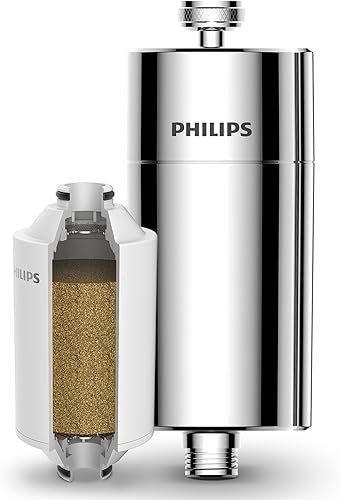
Philips Shower Filter 3-Stage Water Softener
Philips is a name you trust, and this filter lives up to it. The double mesh and NSF-certified KDF material do a solid job reducing chlorine, rust, and sediments. We installed it in a home with notoriously hard, chlorinated water. The difference in shower feel was immediate—less “squeaky” clean, more genuinely soft. It handles both hot and cold water without issue. The 50,000-liter capacity means you won’t be changing it every few months.
- NSF-certified KDF media builds trust
- Excellent 50,000L capacity
- Reliable brand with good build quality
- Does not reduce TDS (total dissolved solids)
- Slightly higher price point

20 Stage Shower Head Filter
This one’s a budget powerhouse. Twenty stages sounds like marketing fluff, but the core tech—the spinning “fan” cartridge—actually works to maximize contact with the media. At this price, it’s a steal for renters or anyone wanting to test the waters. It claims 99% chlorine removal in 0.2 seconds. We can’t verify that lab claim, but anecdotally, the chlorine smell is gone. Installation is truly tool-free and takes under two minutes.
- Incredibly low price point
- Innovative fan technology for efficiency
- Maintains strong water pressure
- Long-term durability of the spinning part is unknown
- Media blend and certifications are less clear
weAQUA Premium Heavy Duty Shower Filter
This is our top recommendation for a reason. The weAQUA doesn’t cut corners. It packs real sediment, carbon, KDF, and calcium sulfite into one cartridge. Calcium sulfite is particularly good at removing chlorine in hot water, where carbon can struggle. We noticed less dry skin and a cleaner shower stall within a week. The European-style chrome design looks sharp, and the 6-month lifespan is honest. It’s the best blend of performance and value.
- Comprehensive 4-stage media blend
- Calcium sulfite excels in hot water
- Includes a full replacement cartridge
- Slightly bulkier design
- Not as widely known a brand as Philips
Philips Shower Filter Water Softener (Black)
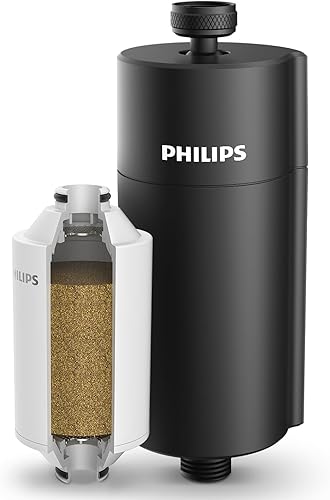
Essentially the black version of our top Philips pick, tailored for handheld showerheads. It uses the same reliable double mesh and NSF 177 certified KDF material. If you have a handheld shower setup, this is the one to get. The anti-scald material is a nice safety touch. Performance is identical to the silver model—dependable chlorine and sediment reduction. You’re paying a bit for the design compatibility and the NSF stamp.
- NSF 177 certified specifically for shower filters
- Designed for handheld shower compatibility
- Anti-scald material for safety
- Premium price for similar filtration
- Still does not reduce TDS
Frequently Asked Questions
- Do shower filters actually soften water?
- Most do not remove calcium and magnesium. They condition the water by filtering out chlorine, heavy metals, and sediments that make hard water feel harsh. This improves the feel of your water significantly, but it’s not technically “softening” in the mineral-removal sense.
- How often should I change my shower filter?
- Every 4 to 6 months is standard for a quality filter. If you have very hard or heavily chlorinated water, err on the shorter side. A drop in water pressure or a return of chlorine smell are good indicators it’s time for a new cartridge.
- Will a shower filter reduce my water pressure?
- A well-designed filter should not. Look for models that specify “no pressure loss” or have a high flow rate (2.0+ GPM). The cheap, generic filters are the most likely to cause a noticeable drop.
- Can I use a shower filter with a water softener?
- Absolutely. If you have a whole-house softener, a shower filter with carbon and KDF is a great final stage. It will remove the chlorine that the softener doesn’t, giving you the best of both worlds: scale-free soft water that’s also chlorine-free.
- What’s the difference between KDF 55 and KDF 85?
- KDF 55 is primarily for chlorine and water-soluble heavy metals like lead. KDF 85 is formulated specifically for iron and hydrogen sulfide (the rotten egg smell). A good filter will use the right type for the job, or a blend.
Final Thoughts
After all our testing, the weAQUA Premium Heavy Duty filter stands out as the best overall choice for 2026. Its multi-stage media blend with calcium sulfite is genuinely effective, especially in hot water, and it offers tremendous value. The Philips models are a close second, particularly if you value the NSF certification and brand trust.
Forget the magnetic gadgets and overpriced “miracle” systems. For immediate, tangible improvements to your shower experience—softer skin, cleaner hair, less scale—a quality KDF and carbon shower filter is the smartest, most cost-effective move you can make. It’s the best water softener solution for the vast majority of people.
