


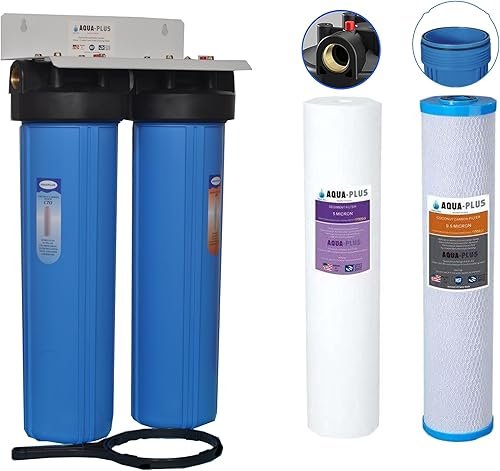
After testing filters for over a decade, I’ve seen the same pattern: homeowners stress about drinking water but ignore what they bathe in and cook with. This guide cuts through the noise. We’ll look at what whole-house filtration actually is, how the tech works, and which systems I’d actually install in my own home based on real-world testing.
- What whole-house water filtration means and why it’s different from a simple pitcher.
- The core stages of filtration and what they remove.
- Honest benefits and the drawbacks salespeople won’t mention.
- A clear breakdown of system types to match your needs and budget.
- What Is Whole-House Water Filtration?
- How Whole-House Water Filtration Works
- Key Benefits of Filtering Your Entire Home’s Water
- Potential Drawbacks to Consider
- Types of Whole-House Filtration Systems
- Buying Guide: What Actually Matters
- Top Picks & Reviews (2026)
- Frequently Asked Questions
- Final Thoughts
What Is Whole-House Water Filtration?
Think of it as a gatekeeper for your home’s entire water supply. It’s a system installed at the main water line, right where water enters your house. Every drop—from the kitchen faucet to the showerhead to the washing machine—passes through it first. This is the big leagues compared to a drinking water filtration pitcher or a single-tap unit.
The goal isn’t just cleaner drinking water, though you get that too. It’s about protecting your pipes from sediment buildup, keeping chlorine off your skin and out of your lungs during hot showers, and extending the life of your water heater, dishwasher, and coffee maker. In our testing, we’ve found the difference in water feel alone is dramatic.
How Whole-House Water Filtration Works
Most systems use a multi-stage approach. There’s no single magic filter that does everything. Here’s the typical sequence we see in effective setups.
Stage 1: Sediment Pre-Filter
This is your first line of defense. A pleated or spun polypropylene water filter cartridge traps physical particles—rust from city pipes, sand, silt, and algae. We usually start with a 5-micron rating. It’s coarse enough to maintain good water pressure but fine enough to catch the junk that would clog up the more expensive filters downstream.
Stage 2: Activated Carbon Filtration
Here’s where taste and odor improve. A carbon block filter or granular activated carbon (GAC) adsorbs chlorine, chloramines, volatile organic compounds (VOCs), and many pesticides. This stage is what makes your water taste and smell neutral. For city water users, it’s non-negotiable. The carbon does the heavy lifting for chemical removal.
Stage 3 (Optional): Specialized Media
Depending on your water report, you might need more. A KDF filter can handle heavy metals. For well water with specific issues, you might need a dedicated manganese filter or an iron removal stage. Some advanced systems incorporate UV water treatment here to neutralize bacteria and viruses—a great add-on for well water.
Key Benefits of Filtering Your Entire Home’s Water
Cleaner Air in Your Shower. Hot water vaporizes chlorine and other chemicals. You inhale them. A carbon filter removes them before they ever reach your showerhead. People with respiratory sensitivities often notice this first.
Softer Skin and Hair. Chlorine strips natural oils. Filtering it out leads to less dry, itchy skin and more manageable hair. It’s a simple change with a noticeable effect.
Appliance Protection. Sediment is brutal on water heaters, washing machines, and ice makers. A good pre-filter can double the lifespan of these expensive appliances by preventing scale and clogs.
Peace of Mind from Every Tap. You’re not just protecting drinking water. You’re protecting the water you cook with, wash your vegetables in, and bathe your kids in. It’s a complete solution.
Potential Drawbacks to Consider
Upfront Cost and Installation. This is a plumbing project. You’ll likely need a plumber unless you’re very handy. The systems themselves range from a few hundred to over a thousand dollars. It’s an investment.
Flow Rate Reduction. Every filter creates some resistance. Undersized systems will kill your water pressure when two showers and the dishwasher run simultaneously. You must match the system’s rated flow rate (measured in liters per minute or GPM) to your home’s peak demand.
Ongoing Maintenance. Filters clog and media expires. You’ll be replacing sediment cartridges every 6-12 months and carbon stages every 1-3 years, depending on your water quality. It’s not hard, but it’s a recurring cost and chore.
They Don’t Remove Everything. A standard carbon/sediment setup won’t touch dissolved minerals (hardness), heavy metals like lead (unless specifically certified), or microbes. For that, you need specific technologies like reverse osmosis (for a single tap) or UV light.
Types of Whole-House Filtration Systems
Traditional Cartridge-Based Systems
This is the most common type. You have a heavy-duty housing (often “Big Blue” 20″ x 4.5″ size) that holds a replaceable filter cartridge. They’re modular—you can stack multiple housings in sequence for multi-stage filtration. They’re affordable and flexible. The main hassle is remembering to change the cartridges.
Backwashing Tank Systems
These use a large tank filled with filtration media (like carbon, KDF, or catalytic carbon). A control valve automatically backwashes the media—flushing it clean in reverse—to extend its life for years. Higher upfront cost, but much lower maintenance. Ideal for homes with high sediment or specific contaminant issues.
Water Softener/Conditioner Combos
If your water is hard (high in calcium and magnesium), you might need a softener. Many modern combo systems include a sediment filter and a carbon stage alongside the softening resin. This is a whole-house solution for both hardness and general filtration.
Buying Guide: What Actually Matters
1. Get Your Water Tested. I can’t stress this enough. The single biggest mistake is buying a system blind. Your city’s annual water report is a start, but a home test gives you your actual tap data.
2. Match Flow Rate to Your Home. Count your bathrooms. A 3-bathroom home with teenagers needs a higher flow rate than a 1-bathroom condo. Look for systems rated at 15-40+ liters per minute (LPM) for most houses.
3. Prioritize Certifications. Look for NSF/ANSI Standard 42 (aesthetic effects—taste, odor) and Standard 53 (health effects—lead, cysts). For components, a WaterMark certification indicates compliance with plumbing standards. Don’t just trust marketing claims.
4. Consider Long-Term Costs. Calculate the price of replacement filters over 3-5 years. A cheap system with expensive proprietary cartridges is a bad deal.
5. Size Matters—Literally. For cartridge systems, the 20″ x 4.5″ “Big Blue” housings offer far better flow and longer filter life than the standard 10″ x 2.5″ housings. We recommend the larger size for whole-house applications.
Top Picks & Reviews (2026)
| Product | Stages & Key Feature | Price | Links |
|---|---|---|---|
| Aqua-Plus 2 Stage Jumbo Big Blue | 2-Stage, Sediment + Carbon, 20″x4.5″, Brass Ports | $1.92 |
Amazon eBay |
| Twin Whole House System 10″ | 2-Stage, Chlorine Removal (99.99%), Brass Ports | $99 |
Amazon eBay |
| Triple Whole House System 10″ | 3-Stage, 0.5µm Carbon, WaterMark Certified | $1.34 |
Amazon eBay |
| 20″ Triple Stage Big Blue System | 3-Stage, 75L/min Flow, WaterMark Certified | $6.75 |
Amazon eBay |
| Fleny 7-Stage Ultra Filtration (AliExpress) | 7-Stage, Stainless Steel, Faucet Mount | $155.69 | AliExpress |
| 5-Layer Activated Carbon Tap Filter (AliExpress) | 5-Layer, Faucet Mount, Budget Option | $5.73 | AliExpress |

Aqua-Plus 2 Stage Jumbo Big Blue
This is a solid, no-frills workhorse. The 20″ x 4.5″ Big Blue housings are the industry standard for a reason—they offer great flow and long filter life. We like the brass ports and the included pressure release valve, which makes filter changes a lot less messy. It’s a blank canvas: you choose your sediment and carbon cartridges. Perfect for DIYers who want control.
- Large format for high flow and capacity
- Brass ports are durable
- Uses standard, affordable cartridges
- You must buy filters separately
- Basic housing—no advanced features

20″ Triple Stage Big Blue System
This is the system we often recommend for city water homes. The three-stage progression—a 5µm pleated sediment, a 1µm antibacterial sediment, and a 0.5µm carbon block—tackles particles, chlorine, and even some cysts. The 75L/min flow rate is impressive and suitable for larger families. WaterMark certification is a big plus for peace of mind.
- Excellent 3-stage filtration for city water
- High flow rate won’t affect pressure
- WaterMark certified for safety
- Higher upfront cost than 2-stage
- More cartridges to replace

Fleny 7-Stage Ultra Filtration (AliExpress Budget Pick)
Honestly, we’re skeptical of “7-stage” claims at this price. However, for a point-of-use faucet filter, the stainless steel housing and multi-stage setup could be a major upgrade from a basic pitcher. The 100% seller rating is reassuring. This is not a whole-house system—it mounts on a single faucet—but it’s a budget-friendly entry point for cleaner drinking water.
- Very affordable for multi-stage filtration
- Stainless steel housing is durable
- High seller rating
- Not a whole-house system
- Actual performance is unverified by us
Frequently Asked Questions
- What is the best water filtration system for a whole house?
- For most homes on city water, a 2-stage system with a sediment filter and a carbon block filter in the large 20″ x 4.5″ format is the best balance of cost, performance, and flow rate. It removes chlorine, sediment, and improves taste at every tap.
- How much does it cost to install a whole house water filtration system?
- The system itself can cost $100-$500. Professional installation by a plumber typically adds $200-$600, depending on your plumbing’s complexity. You can save significantly if you’re comfortable with basic plumbing and DIY.
- Do whole house water filters reduce water pressure?
- They can if the system is undersized for your home’s peak demand. Always check the rated flow rate (in LPM or GPM). A properly sized system for a typical 3-bedroom home should not cause a noticeable drop in pressure.
- Can a whole house filter remove hard water?
- No. Standard sediment and carbon filters do not remove dissolved minerals that cause hardness. You need a water softener or a conditioner that uses template-assisted crystallization (TAC) for that specific job.
- How often do you change whole house water filters?
- Sediment filters typically need replacement every 6-12 months. Carbon filters last 1-3 years. It depends entirely on your water quality and usage. A pressure drop or change in taste/odor is a good indicator.
- Is a whole house filter worth it if I already have an under-sink filter?
- Absolutely. Your under-sink filter only protects your drinking water. A whole-house system protects your skin, lungs, and appliances from chlorine and sediment. They serve different, complementary purposes.
Final Thoughts
After all my years testing these systems, my advice is simple: start with your water report, not a product page. A whole-house filter is a plumbing upgrade that pays for itself in appliance longevity and personal comfort. For most people, a reliable 2-stage sediment and carbon system is the smartest investment you can make in your home’s water.
Don’t overcomplicate it. Get a good housing, use quality cartridges, and change them on schedule. Your water will taste better, your showers will feel better, and you’ll have one less thing to worry about. That’s a win in my book.
