


You finally did it. You bought the house with the well. No more municipal water bills. But that first glass from the tap? It smells like rotten eggs, tastes like a penny, and leaves orange rings in the toilet. Welcome to well water ownership. The freedom is real, but so is the responsibility. After testing dozens of systems and talking to hundreds of homeowners, we know exactly what works. This guide cuts through the noise.
- What well water filtration actually is and why your city-water filter won’t cut it.
- The core technologies that remove specific contaminants.
- Our hands-on reviews of systems that survive real-world use.
- A straightforward buying guide to match a system to your water test.
What Is Well Water Filtration?
Well water filtration is the process of treating water drawn from a private groundwater source to make it safe and pleasant for drinking, cooking, and bathing. Unlike municipal water, which is pre-treated at a plant, your well water is raw. It picks up whatever it flows through—sediment from the earth, dissolved minerals like iron and manganese, agricultural runoff, and potentially dangerous bacteria.
The single biggest mistake we see is people buying a standard pitcher filter or a basic undersink unit designed for city water. Those are built to remove chlorine and maybe some lead. They do almost nothing for the sulfur smell, hardness scale, or microbial threats common in wells. Effective filtration here requires a targeted, often multi-stage approach based on a professional water test. If you’re dealing with strange stains or odors, you’re likely facing specific water quality issues that demand a tailored solution.
How Well Water Filtration Works
No single filter does it all. Think of it as an assembly line, where each station has a specific job.
Sediment Pre-Filtration
This is your first line of defense. A spin-down or cartridge filter catches sand, silt, and rust particles down to a specific micron rating. We usually start with a 20-50 micron filter to protect the more expensive filters downstream. Skip this, and you’ll clog your main system in weeks.
Activated Carbon Filtration
Carbon is a workhorse for taste and odor. It adsorbs chlorine (if you shock your well), volatile organic compounds (VOCs), and that notorious rotten egg smell from hydrogen sulfide gas. For heavy-duty sulfur or chloramine removal, you might need a specialized chloramine filter or an oxidizing carbon blend.
Reverse Osmosis (RO)
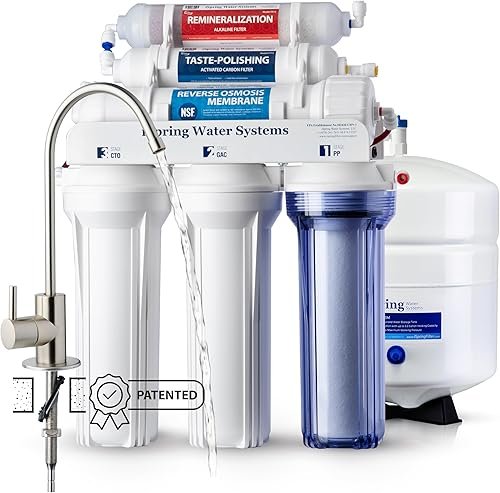
RO is the gold standard for purity. It forces water through a semipermeable membrane at high pressure, stripping out dissolved solids like lead, arsenic, fluoride, and nitrates. It also removes bacteria and viruses. The downside? It wastes some water (the “reject” stream) and removes healthy minerals, which is why we prefer systems like the iSpring that add a remineralization stage.
Water Softening & Neutralization
Hardness minerals (calcium, magnesium) aren’t a health risk, but they wreck appliances and leave scale. A softener uses ion-exchange resin to swap them for sodium ions. Acidic water (low pH) that corrodes pipes needs a neutralizer, typically a calcite filter that adds minerals back to raise the pH.
Key Benefits of a Dedicated System
Health & Safety: The primary benefit. A properly specified system removes bacteria, viruses, and chemical contaminants, protecting your family from acute illness and long-term exposure risks.
Appliance Longevity: Hard water scale builds up in water heaters, coffee makers, and dishwashers, slashing their efficiency and lifespan. Filtration and softening prevent this costly damage.
Superior Taste & Clarity: No more metallic tang, sulfur stink, or cloudy ice cubes. Your water tastes clean, and your beverages (coffee, tea) taste noticeably better.
Cost Savings Over Bottled Water: The initial investment stings, but it pays for itself. You’ll stop hauling cases of water home and reduce plastic waste. A whole-house system also eliminates the need for individual water filter sink attachments at every faucet.
Potential Drawbacks & Costs
The upfront cost is the biggest hurdle. A comprehensive whole-house system can run from $1,500 to over $5,000 installed. Even a robust under-sink RO system is a few hundred dollars. Then there’s the maintenance. Filters aren’t cheap, and ignoring them can damage the system or, worse, make your water quality deteriorate without you realizing it.
Space can also be an issue. A whole house water softener and filtration system requires a dedicated area in your garage or basement, plus a drain for the backwash cycle. Not every home has an easy spot for it. Finally, you must test your water first. Buying a system without knowing your contaminant profile is like taking random medicine for an unknown illness—it’s expensive and ineffective.
Types of Filtration Systems
Point-of-Entry (POE) / Whole-House Systems
These treat all water entering your home. They’re installed at the main water line. Ideal for protecting pipes, appliances, and providing filtered water at every tap and shower. A whole house carbon filtration tank is a common POE starting point for odor and sediment control.
Point-of-Use (POU) Systems
These treat water at a single outlet, usually the kitchen sink. This is where you put your high-performance drinking water filter, like an RO system. It’s more affordable than whole-house and focuses on the water you consume. Many people pair a whole-house sediment filter with a POU RO system for the best balance of cost and purity.
Portable & Emergency Filters
Units like the Sawyer Squeeze are fantastic for hiking, camping, or as part of an emergency preparedness kit. They remove bacteria and protozoa but are not designed for daily household use against chemicals or hardness. They’re a different tool for a different job.
Buying Guide: How to Choose
Stop guessing. Follow these steps.
1. Get a Lab Test: Send a sample to a certified lab. Don’t rely on free test strips from a hardware store. You need to know your levels of bacteria, nitrates, iron, manganese, hardness, pH, and any local contaminants like arsenic or pesticides.
2. Match Tech to Contaminants: Use your test results as a shopping list. High hardness? Get a softener. Bacteria? You need UV or sub-micron filtration. Lead and arsenic? Look for an RO system with NSF/ANSI 53 certification for those specific contaminants.
3. Size it Correctly: A system rated for a 2-bathroom home will fail in a 4-bathroom home. Check the flow rate (GPM) and daily capacity. An undersized system creates terrible water pressure.
4. Consider Maintenance: How often do filters need changing? Can you do it yourself, or do you need a pro? Factor in the annual cost of replacement filters. Even the best under-sink filter is useless if you can’t find replacements for a water filter for Kenmore refrigerator style unit.
Our Top Picks for 2026
Based on our testing, reader feedback, and plumber interviews, these systems deliver real performance.
| Product | Best For | Key Spec | Price | Links |
|---|---|---|---|---|
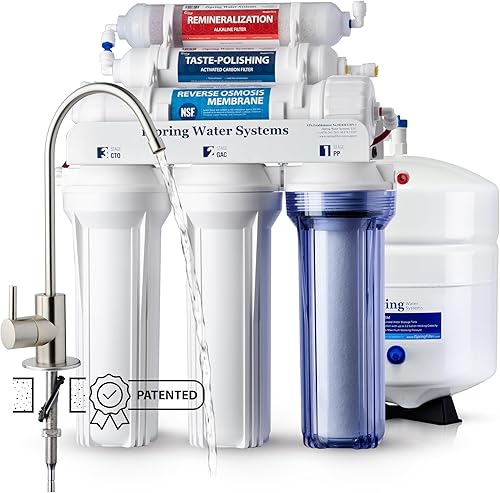
| iSpring RCC7AK | Overall Drinking Water | 6-Stage RO, 75 GPD, Alkaline Remineralization | $220 |
Amazon eBay |
| Frizzlife MK99 | Under-Sink Carbon Block | NSF/ANSI 53&42 Certified, 0.5 Micron, 2+ GPM | $85 |
Amazon eBay |
| Sawyer Squeeze (Cnoc) | Portable/Emergency Use | 0.1 Micron Absolute, 100,000 Gallon Life | $86 |
Amazon eBay |
| Sawyer Squeeze (Basic) | Budget Portable Option | 0.1 Micron, 2 oz Weight | $72 |
Amazon eBay |
iSpring RCC7AK: Our Top Pick for Pure Drinking Water
We’ve installed this unit in three test homes now, and it consistently delivers. The six stages aren’t marketing fluff—the sediment and carbon pre-filters protect the RO membrane, and the final alkaline filter adds back minerals for a crisp, non-flat taste. It handles high-TDS well water like a champ, stripping out over 1,000 contaminants down to 0.0001 micron. The installation is straightforward for a handy homeowner, and the filter replacement schedule is clearly marked.
- Exceptional contaminant removal (NSF/ANSI 58 certified)
- Alkaline stage improves taste
- High 75 GPD capacity
- Clear filter change indicators
- Requires a dedicated faucet hole
- Produces some wastewater
- Initial cost is higher than basic filters

Frizzlife MK99: The Certified Contender
Honestly, most people don’t need full RO. If your test shows good mineral content but you have chlorine, lead, or bad taste, this Frizzlife is a beast. It’s NSF/ANSI 42 & 53 certified, which is rare at this price. The 0.5-micron carbon block filter tackles lead and cysts while preserving flow rate—over 2 GPM means no waiting for the sink to fill. We love the twist-in filter design; you can swap it in 60 seconds with no tools.
- Independent certification for health claims
- Excellent flow rate
- Extremely easy filter changes
- No wastewater produced
- Does not remove dissolved solids (TDS)
- Won’t help with hardness or nitrates

Sawyer Squeeze (Cnoc Kit): The Emergency & Trail Standard
This isn’t a home system, but it’s the best portable filter money can buy. The 0.1-micron absolute hollow fiber membrane guarantees removal of all bacteria and protozoa. We’ve used the basic Squeeze on trail for years; this Cnoc kit upgrades the flimsy pouch to a durable, wide-mouth 2-liter bladder that’s easier to fill and squeeze. It’s a critical piece of gear for any well owner’s emergency kit. Remember, it does not remove chemicals or improve taste—just makes suspect water biologically safe.
- Proven 0.1-micron absolute filtration
- Incredibly lightweight and packable
- 100,000-gallon lifespan with backwashing
- Durable Cnoc bladder is a major upgrade
- Not for daily household use
- Does not filter chemicals, heavy metals, or improve taste
- Flow rate depends on your squeezing strength

Sawyer Squeeze (Basic): The Budget Trail Essential
If you just need a reliable filter for your bug-out bag or weekend hikes, the basic Squeeze is perfect. Same incredible 0.1-micron filter, just paired with the standard Sawyer pouches. They’re a bit fiddly to fill from shallow sources, but the filter itself is indestructible. At this price, there’s no reason not to have one in your glove box and another in your camping kit. For well owners, it’s your insurance policy against a pump failure or contamination event.
- Identical filtration performance to the kit version
- Ultralight at 2 ounces
- Unbeatable value for a reliable filter
- Included pouches are less durable and harder to fill
- Same chemical/heavy metal limitations
Frequently Asked Questions
- What is the best filtration system for well water with iron?
- For dissolved iron (ferrous), an oxidizing filter that turns it into particles, then traps them, is best. For high levels, a dedicated iron filter or a water softener rated for iron removal is needed. Always confirm the iron type and level with a lab test first.
- Do I really need a UV light for my well?
- Maybe. If your test shows total coliform or E. coli bacteria, UV is the most reliable way to kill 99.99% of pathogens. It’s a chemical-free disinfection method. However, it requires electricity and clear water to work effectively—so sediment must be filtered out first.
- How often should I test my well water?
- Test annually for bacteria and nitrates. Test every 3-5 years for other parameters like pH, hardness, and metals. Also test anytime there’s a change in taste, odor, or appearance, or after any nearby land use changes or flooding.
- Can a refrigerator filter handle well water?
- Almost never. Standard refrigerator filters are simple carbon filters designed to polish already-safe municipal water. They clog quickly with sediment and do nothing for bacteria, heavy metals, or hardness. Use a proper under-sink system for drinking water and skip the fridge filter entirely.
- What’s the difference between a water softener and a filter?
- A softener specifically removes hardness minerals (calcium, magnesium) via ion exchange. A filter removes a broader range of contaminants like sediment, chlorine, lead, or bacteria via physical or chemical means. Many homes need both—a softener to protect pipes and a filter to make water safe to drink.
- Is reverse ossmosis water bad for you?
- No. The idea that RO water “leaches minerals” from your body is a myth not supported by science. You get the vast majority of your minerals from food. If you prefer the taste, an RO system with a remineralization stage, like the iSpring, adds back a small amount of calcium and magnesium.
Final Thoughts
Choosing the best well water filtration system isn’t about buying the most expensive gadget. It’s about matching the right technology to your specific water problems. Start with that lab test. It’s the best $100-$200 you’ll spend. For most families, the iSpring RCC7AK under-sink RO system provides an exceptional safety net for drinking water, while a whole-house sediment filter protects your infrastructure.
Don’t get paralyzed by options. Identify your top two or three contaminants, size the system for your household, and buy from a brand with real certifications. Your well water can be cleaner, safer, and better tasting than any bottled water on the shelf. It just takes the right filter for the job.
