



Think you know your water? That clear glass from the tap might look perfect, but looks can be deceiving. After testing water from hundreds of homes, I can tell you that what you can’t see—lead, nitrates, bacteria—matters most. A solid water quality assessment is your roadmap. It cuts through guesswork. This guide covers how to test, what to look for, and which tools actually work.
- What a real water quality assessment involves (it’s more than a lab report).
- The simple, at-home tests that give you answers in minutes.
- How to interpret your results and match them to a filtration solution.
- Our hands-on reviews of test kits that deliver real value.
What Is Water Quality Assessment?
Forget the jargon. A water quality assessment is simply figuring out what’s dissolved or floating in your water. It’s a health check for your H2O. This isn’t just for people with wells. City water can pick up lead from old pipes, and treatment chemicals can create byproducts. You’re looking for a list of contaminants and their concentrations.
The goal is twofold. First, safety: is anything in there at a level that could make you sick over time? Second, aesthetics: does your water taste like a swimming pool, stain your sinks, or scale up your kettle? A good assessment answers both. It turns an unknown into a known, which is powerful. Honestly, it’s the step most people skip, and it’s why they end up with the wrong filter.
How Water Quality Assessment Works
The process has layers. You can do a quick screen at home or send a sample to a certified lab. Think of it like a doctor’s visit: the at-home test is the initial check-up, and the lab work is the detailed blood panel.
The At-Home Snapshot
This uses color-change test strips or simple digital meters. You dip the strip, wait 30-60 seconds, and compare the colors to a chart. It’s fast and cheap. These strips are great for measuring pH, hardness, chlorine, iron, and nitrates. In our testing, they’re surprisingly accurate for a first look. They tell you if a problem exists and roughly how big it might be.
The Lab-Grade Deep Dive
For serious contaminants like lead, bacteria, or volatile organic compounds, you need a lab. You’ll either buy a kit with a prepaid mailer or contact a local certified lab. They use precision equipment like mass spectrometers. This is the gold standard. It’s what you need if you have a private well, live near agriculture or industry, or have old plumbing. The results come with a detailed report and specific numbers.
Continuous Monitoring
Some digital devices, like a TDS (Total Dissolved Solids) meter, give you a real-time reading. But here’s the catch—a TDS meter doesn’t tell you what the solids are. It’s a general alarm bell. It’s useful for checking if your reverse osmosis system is working, but it’s not a standalone assessment tool. For a broader picture of suspended particles, a turbidity sensor can offer more specific insight into cloudiness.
Key Benefits of Testing Your Water
Peace of Mind is Priceless. Knowing your water is safe removes a background worry you might not even realize you have. It’s a simple step for your family’s health.
Saves You Money. This is the big one. Why buy a $800 reverse osmosis system if your only issue is chlorine taste? A $20 test kit might show you that a basic granular activated carbon filter is all you need. The assessment prevents overspending.
Targets the Real Problem. Hard water scaling up your appliances? A test confirms the hardness level, so you can size a water softener correctly. Dealing with rust stains? It’ll show high iron, pointing you toward the right iron water treatment solution.
Tracks Changes Over Time. Your water isn’t static. Seasonal changes, nearby construction, or a change in municipal treatment can alter its profile. Regular testing lets you catch new issues early.
Potential Drawbacks & Limitations
Not all tests are created equal. The biggest limitation is accuracy. Cheap test strips can be misread. If the colors are ambiguous, you might think your lead is “safe” when it’s borderline. They are screening tools, not legal documents.
Another issue: they don’t test for everything. Most home kits check for 10-20 common parameters. They won’t find pharmaceuticals, certain pesticides, or radioactive elements. For those, you must go to a lab. And even labs have limits—they test for what you ask them to. If you don’t specify a contaminant, they probably won’t look for it.
Finally, data without action is useless. Getting a result of “high nitrates” is scary, but what do you do next? The assessment is step one. You need to pair the results with a filtration solution, like a specific type of carbon filtration or a reverse osmosis system, to actually solve the problem.
Types of Water Assessment Tools
Test Strips (The Quick Screen)
These are the most popular for homeowners. Dip, wait, compare. They’re perfect for routine checks on hardness, pH, chlorine, and a handful of metals. The 16-in-1 or 18-in-1 kits cover a lot of ground for under $30. The downside is subjective color matching. In low light, it’s easy to be off by a shade.
Digital Meters (The Specialist)
A portable EC/TDS meter gives you a precise number for conductivity or dissolved solids. It’s objective—no color charts. But as I said, it’s a single data point. It’s fantastic for monitoring a filtration system’s performance but weak for initial diagnosis.
Lab Test Kits (The Definitive Answer)
You collect a sample and mail it in. The lab sends back a detailed report with exact concentrations, often measured in parts per billion (ppb). This is the only way to get legally defensible data for things like lead and bacteria. It’s the most expensive option, typically $100-$300, but it’s the real deal.
Buying Guide: What Actually Matters
Don’t just grab the first kit you see. Here’s what we look for after years of testing:
Parameter List: Match it to your concerns. On city water? Prioritize lead, chlorine byproducts, and hardness. On a well? You need bacteria, nitrates, and iron at a minimum. More parameters isn’t always better if they’re not relevant.
Clarity of Results: The color chart should be printed clearly on a sturdy card, not a flimsy paper insert. Some kits now include an ebook or app to help interpret results—that’s a huge plus.
Number of Tests: A 125-strip kit lets you test multiple times, track changes, and even check different taps in your house. It’s far more economical than a 10-strip pack.
Certifications: For lab kits, look for labs certified by a national accreditation body. For strips, there’s no universal certification, but brands with a long history tend to have more consistent quality control.
Top Picks: Test Kits We Trust
We’ve used dozens of these in the field and in our own homes. These are the kits that offer the best balance of accuracy, value, and ease of use.
| Product | Key Features | Price | Links |
|---|---|---|---|
 |
16 parameters, 2-minute results, includes ebook guide | $26 |
Amazon eBay |
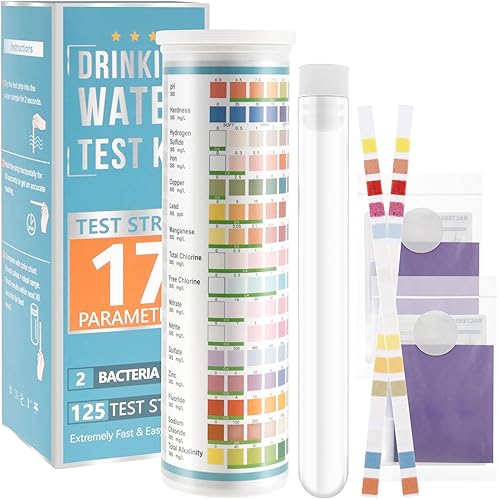 |
17 parameters, 125 strips, includes test tube | $29 |
Amazon eBay |
 |
18 parameters, 125 strips, test tube included | $27 |
Amazon eBay |
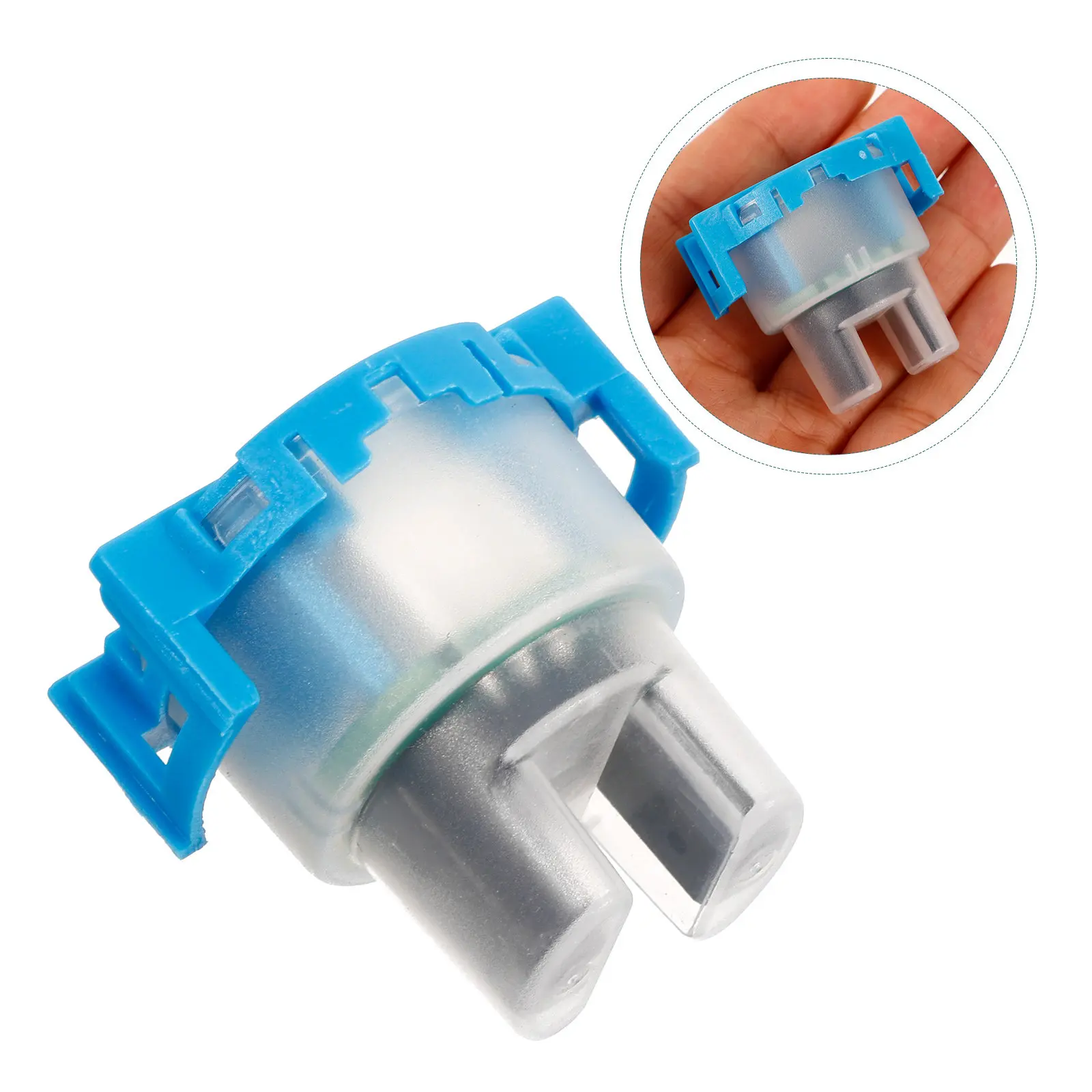 |
Measures suspended particles, real-time assessment | $14.73 | AliExpress |
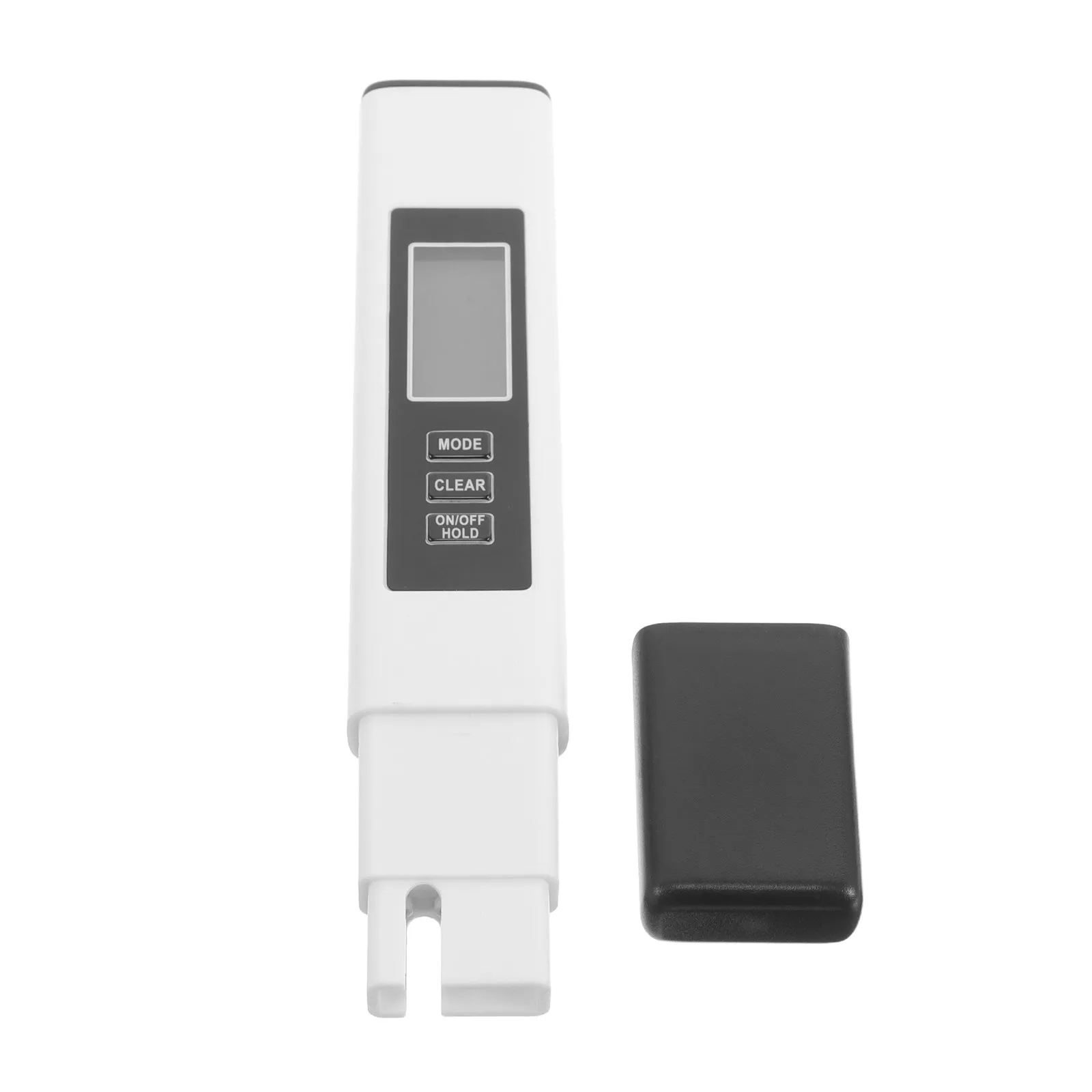 |
Dual backlit display, tests EC and temperature | $16.62 | AliExpress |
1. 16 in 1 Water Testing Kits For Drinking Water
This is our go-to recommendation for most homeowners starting out. It covers all the big ones: pH, hardness, lead, iron, and chlorine. The 2-minute wait time is accurate, and the color chart is one of the clearer ones we’ve used. The included ebook is a nice touch—it actually explains what the results mean for your health and home. For the price, it’s a fantastic first step.
- Wide range of 16 parameters
- Fast, reliable results
- Excellent educational ebook
- Color matching can be subjective
- Does not test for bacteria
2. 17 in 1 Drinking Water Testing Kits with Tube
If you want to test multiple taps or track your water over a few months, this kit’s 125-strip count is a winner. The extra test tube is a small but thoughtful inclusion for cleaner dipping. We found its readings for hardness and iron to be consistent with more expensive kits. It’s a workhorse kit for the budget-conscious.
- Excellent value with 125 strips
- Includes a dedicated test tube
- Simple 3-step process
- Instruction manual could be more detailed
- Some color pads are close in hue
3. 18-in-1 Water Quality Test Strips, 125ct
This kit throws in a few extra parameters like sulfate and zinc. The step-by-step instructions are crystal clear, and the 30-second wait before reading is spot-on. We like that it comes with a test tube with a cap—great for taking a sample to a different room with good light. It’s very comparable to the 17-in-1 kit, so pick whichever is cheaper or has faster shipping.
- Tests 18 parameters including manganese
- Clear, simple instructions
- Portable test tube included
- Strips can be fragile
- Some parameters are less critical for most users
4. Turbidity Sensor Water Quality Monitoring Module
This is a niche tool. It’s not for testing drinking water contaminants. Instead, it measures cloudiness (turbidity) caused by suspended particles. We’ve used similar sensors to check if a sediment filter is working or to monitor water clarity in aquariums and ponds. If you have a specific particle problem, this is a cheap, real-time way to assess it. For general drinking water, skip it.
- Provides real-time data
- Very affordable for a sensor
- Useful for specific applications
- Measures only one parameter (turbidity)
- Requires some technical setup
- Not a general drinking water test
5. Portable Water Analysis Device EC/TDS Tester
A TDS/EC meter is a must-have if you own a reverse osmosis system or a distiller. It gives you a quick, numerical read on total dissolved solids. This model’s dual backlit screen is easy to read. Use it to verify your RO membrane is still kicking out pure water (should be under 50 ppm). But remember, a low TDS number doesn’t mean your water is safe from lead or bacteria.
- Fast, objective digital reading
- Dual backlit display
- Essential for monitoring RO systems
- Only measures TDS/EC, not specific contaminants
- Does not identify what the solids are
Water Quality Assessment FAQ
- How often should I test my home’s water?
- For city water, test annually or if you notice a change in taste, odor, or color. For well water, test every year for bacteria and nitrates, and every 3-5 years for a full panel. Always test after any nearby construction or flooding.
- Can test strips really detect lead accurately?
- They can tell you if lead is present above a certain threshold (usually 15 ppb). They are a good screening tool. If a strip shows any positive result for lead, you should immediately get a lab test to confirm the exact level.
- What’s the difference between a TDS meter and a test strip?
- A TDS meter gives you one number for all dissolved solids combined. Test strips use chemical reactions to show levels for specific contaminants like hardness, chlorine, and iron. They answer different questions. A TDS meter tells you “how much,” strips tell you “what.”
- Do I need to test if I already have a water filter?
- Absolutely. You need to test before installing a filter to choose the right one, and after to make sure it’s working. A filter of refrigerator might reduce chlorine taste but do nothing for lead. Only testing confirms performance.
- What should I do if my test shows a contaminant is high?
- First, don’t panic. Identify the specific contaminant and research its health effects. Then, look for a filtration system certified to remove it. For example, high chlorine byproducts point to an effective carbon water filter. High lead requires a system certified to NSF/ANSI 53.
- Are lab tests worth the extra cost?
- For initial well water testing, or if you have specific health concerns, old pipes, or live near potential pollution sources—yes, 100%. The detailed data is worth the investment. For routine annual checks on treated city water, a good test strip kit is often sufficient.
- Can I use these tests for my aquarium or pool?
- Yes, many test strips are designed for multiple uses. Parameters like pH, hardness, chlorine, and alkalinity are relevant for pools, spas, and aquariums. Just ensure the range on the strip matches what you need to measure for your specific application.
Final Thoughts
After all these years, the single biggest mistake I see is people buying filtration blind. They grab a clearly filtered water filter pitcher because it looks good, without knowing if it addresses their actual water issues. A simple assessment flips the script. It puts you in control.
Start with a comprehensive test strip kit like the ones we reviewed. Use it. Understand the results. That knowledge is the foundation for every smart water decision you’ll make, from choosing a shower filter to installing a whole-house system. Your water is unique. Your solution should be too.
