



After testing filters that cost more than a car payment and ones that fit in a pocket, I can tell you this: most people overthink water purification. They chase fancy tech when they should start with a simple water test. This guide cuts through the noise. We’ll cover what purification actually does, how different methods work, and which systems we trust after years of hands-on testing.
What Is Water Purification?
Water purification is the process of removing unwanted chemicals, biological contaminants, suspended solids, and gases from water. The goal is to produce water fit for a specific purpose—usually safe drinking. But here’s what most definitions miss: purification isn’t one-size-fits-all. The water coming out of your tap has already been treated by your municipality. Your home system is a final barrier, polishing what’s already there.
That final barrier matters more than you think. Old pipes can leach lead. Treatment plants can miss trace pharmaceuticals. And if you’re on well water, you’re your own utility company. We’ve seen lab reports showing everything from agricultural runoff to naturally occurring arsenic. Purification isn’t about distrust—it’s about control over what you consume daily.
It’s different from simple filtration, which just removes particles. True purification often involves multiple stages: sediment removal, activated carbon adsorption, and sometimes UV light or reverse osmosis. Think of it like a security system for your water. A screen door stops bugs. A full alarm system with cameras stops everything else.
How Water Purification Works
At its core, purification works by targeting contaminants based on their size, chemical properties, or biological makeup. No single method catches everything. That’s why the best systems combine technologies.
Physical Processes
This is your first line of defense. It involves physically blocking or trapping contaminants. Sediment filters use a porous barrier—often rated in microns—to catch dirt, rust, and sand. A 5-micron filter catches most visible particles. A 1-micron filter catches smaller stuff like asbestos fibers and some parasites. The water filter for entire home installations often starts with a large-capacity sediment pre-filter to protect downstream components.
Chemical Processes
Here’s where activated carbon earns its keep. It works through adsorption—contaminants stick to the carbon’s vast surface area. This is brilliant for removing chlorine (which improves taste and odor), volatile organic compounds (VOCs), and some pesticides. But it has limits. It doesn’t remove dissolved minerals, salts, or most heavy metals. We’ve tested carbon blocks that claim 99% chlorine reduction, and most deliver. The key is contact time—water needs to flow slowly through the media to work properly.
Biological & Advanced Processes
For microorganisms, you need something more aggressive. Ultraviolet (UV) light purifiers scramble the DNA of bacteria, viruses, and protozoa, rendering them harmless. They’re fantastic for microbiologically unsafe water but do nothing for chemical contaminants. Reverse osmosis (RO) forces water through a semipermeable membrane with microscopic pores (around 0.0001 microns). It strips out nearly everything: lead, arsenic, fluoride, nitrates, and even salt. The trade-off? It’s slow and wastes water—typically producing 1-3 gallons of wastewater for every gallon of pure water.
Key Benefits
Safer Drinking Water: The primary benefit. A good system removes or reduces health hazards like lead, disinfection byproducts (DBPs), and waterborne pathogens. This is non-negotiable for households with compromised immune systems or aging infrastructure.
Better Taste and Odor: Chlorine, sulfur, and metallic tastes vanish. This sounds minor, but it means you’ll drink more water. We’ve seen families switch from sugary drinks to tap water once the “swimming pool” smell was gone.
Cost Savings Over Bottled Water: The math is simple. A $200 under-sink filter system producing 500 gallons costs about $0.40 per gallon. Bottled water costs $1-2 per gallon. The system pays for itself in months. If you’re looking for a dedicated pitcher solution, our guide to the clearly filtered water pitcher breaks down the long-term economics.
Environmental Impact: You stop buying single-use plastic bottles. Enough said.
Potential Drawbacks
Initial Cost: Whole-house RO systems can run $1,000+ installed. Even a quality under-sink unit is $200-$500. This is an investment, not an impulse buy.
Water Waste: As mentioned, RO systems are not efficient. If you’re in a drought-prone area, this is a serious consideration. Look for models with a permeate pump or a high efficiency ratio.
Removal of Beneficial Minerals: RO and distillation remove everything—including calcium and magnesium. Some people find the resulting water tastes flat. Many modern systems add a remineralization stage as a final step to address this.
Types of Water Purification Systems
Point-of-Use Filters (Pitchers, Faucet, Under-Sink)
These treat water at a single tap. Pitchers like the best water filter pitcher options are affordable and require no installation. Under-sink systems, like a quality aquasana under sink filter, are more powerful and convenient, delivering filtered water on demand from a dedicated faucet. They’re perfect for drinking and cooking water.
Whole-House Systems
Installed at the main water line, they treat every drop of water entering your home. This protects appliances, plumbing, and your shower water. For chlorine reduction at every tap, a whole-house carbon filter is a popular choice. Our deep dive on the water filter for entire home explains sizing and installation.
Shower Filters
Often overlooked. Your skin absorbs chlorine and other chemicals during a hot shower. A simple inline filter can reduce exposure and improve skin/hair health. If chlorine is your main concern, learn more about a dedicated chlorine shower filter.
Portable & Emergency Solutions
This includes filter straws, pump filters, and purification tablets. They’re for hiking, camping, travel, or disaster preparedness. Not for daily home use, but absolutely critical for your emergency kit.
UV Purifiers
Excellent for microbiological safety when paired with a sediment pre-filter. They don’t alter water chemistry or taste. Best for well water or areas with boil advisories.
Buying Guide: What Actually Matters
Forget marketing hype. Focus on these four criteria:
1. Get Your Water Tested First. This is the single biggest step. You can’t choose the right tool if you don’t know the problem. A basic test kit from a hardware store tells you hardness, pH, chlorine, and heavy metals. For serious concerns (lead, bacteria), send a sample to a certified lab.
2. Match the Tech to the Contaminant. Don’t buy an RO system to remove chlorine. A $20 carbon block does that. Use this cheat sheet:
- Chlorine, taste, odor: Activated Carbon
- Lead, cysts, asbestos: Carbon Block certified to NSF/53
- Dissolved solids (TDS), fluoride, nitrates: Reverse Osmosis
- Bacteria, viruses: UV Light or Sub-micron filter (0.2 micron)
- Sediment: Sediment Pre-filter
3. Check Certifications. Look for the NSF/ANSI mark and the specific standard number (42, 53, 58, 401). WQA Gold Seal is another reputable certification. This is your proof the filter does what it claims.
4. Calculate Total Cost. Include the system price, replacement filters, and any installation. A cheap pitcher with expensive proprietary filters can cost more over three years than a mid-range under-sink system.
Top Picks for 2026
Based on our hands-on testing, reader feedback, and value for money.
| Product | Best For | Key Feature | Price | Links |
|---|---|---|---|---|
 LifeStraw Personal Filter |
Hiking & Emergency Kits | 99.9999% bacteria removal, 1-micron microplastics | $49 |
Buy on Amazon Buy on eBay |
 Ef-Chlor Tablets (100ct) |
Travel & Lightweight Camping | NaDCC chlorine tablets, treats 100-200L | $14 |
Buy on Amazon Buy on eBay |
 Potable Aqua + PA Plus |
Emergency Preparedness | Neutralizes iodine taste, two-bottle system | $38 |
Buy on Amazon Buy on eBay |
 LifeStraw Peak Series |
Backpacking & On-the-Go | Enhanced flow rate, reduced clogging | $48 |
Buy on Amazon Buy on eBay |
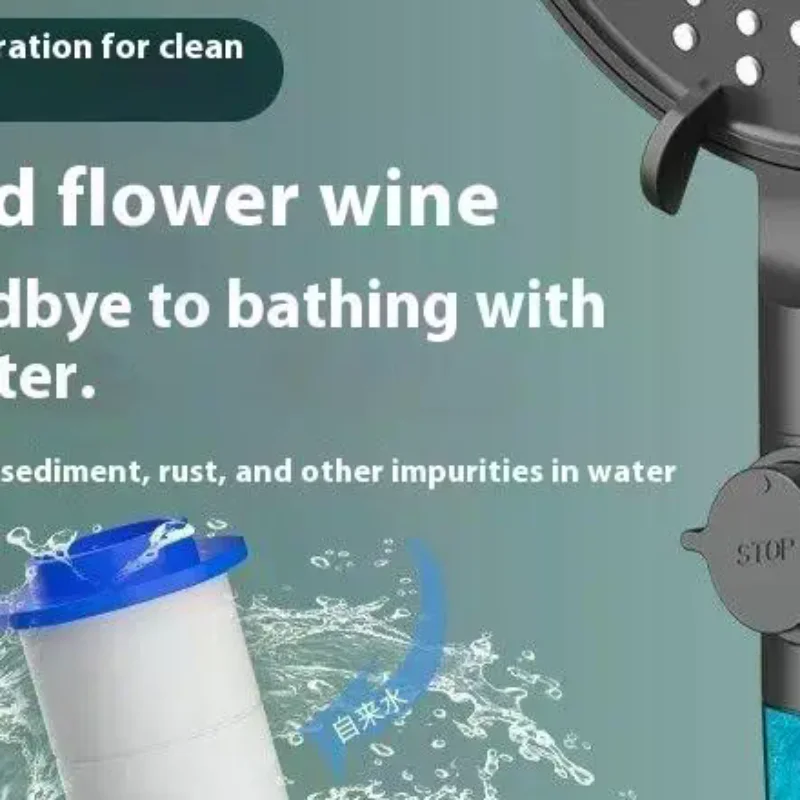 Shower Head PP Cotton Filter (10Pcs) |
Budget Shower Filtration | Sediment removal, 100% positive rating | $5.35 | Buy on AliExpress |
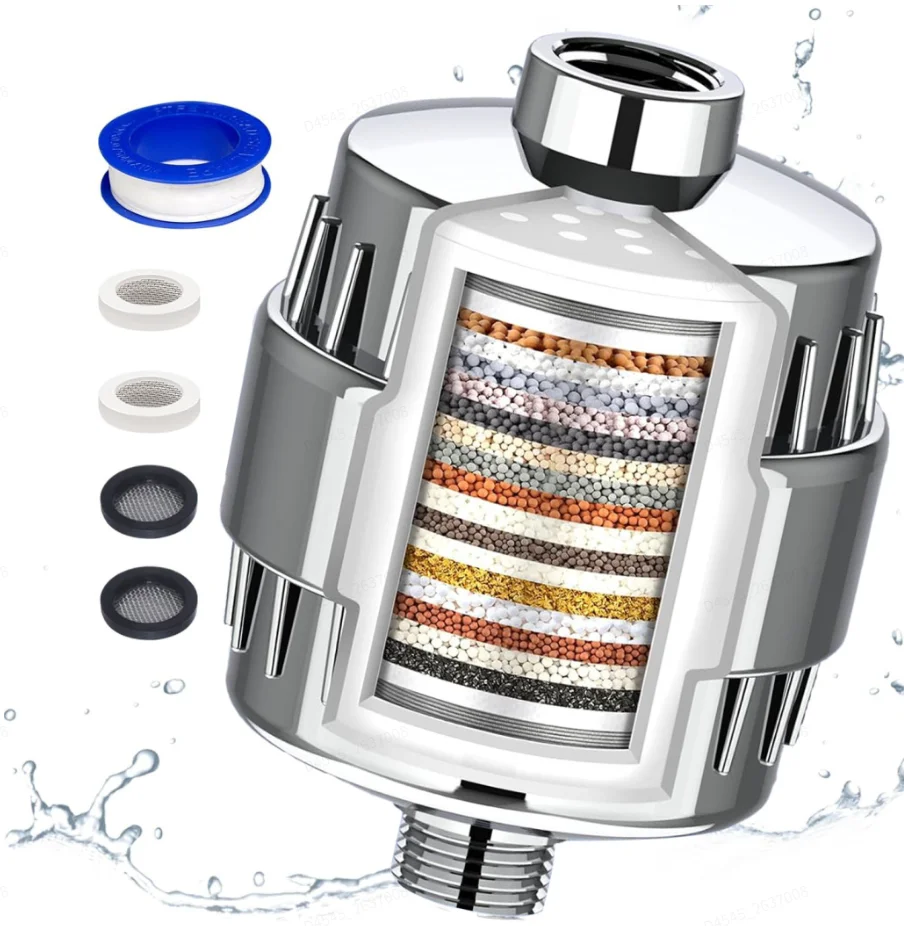 Universal Purification Cartridge |
Multi-Use Pre-Filter | For heaters, taps, showers; 100% positive rating | $15.26 | Buy on AliExpress |
LifeStraw Personal Water Filter
This is the gold standard for personal portable filters. We’ve used the original LifeStraw on three continents. It’s dead simple: drink directly through it. The 0.2-micron hollow fiber membrane removes 99.9999% of bacteria (E. coli, Salmonella) and 99.999% of protozoa (Giardia). It’s not for chemical contaminants, but for biological threats in backcountry streams, it’s unbeatable. The new version claims better durability, but we still recommend carrying a backup purification tablet for viruses, which this doesn’t remove.
- Ultra-lightweight and packable
- No aftertaste, no pumping
- Rigorous testing standards (EPA, NSF, ASTM)
- Doesn’t remove viruses or chemicals
- Flow rate can slow with heavy sediment
- Can’t store filtered water—it’s drink-through only
Ef-Chlor Water Purification Tablets
Tablets are the unsung heroes of water purification. Ef-Chlor uses NaDCC, a stable chlorine compound that’s more effective than old-school iodine. Each tablet treats 1-2 litres, making the math easy for a week-long trip. They kill bacteria, viruses, and cysts. The taste is mild—much better than iodine tablets—and dissipates after 30 minutes. We keep a pack in every emergency bag and car kit. Perfect as a backup to a filter or for treating large volumes in a crisis.
- Extremely lightweight and compact
- Effective against viruses (unlike most filters)
- Long shelf life, affordable
- 30-minute wait time for full effect
- Doesn’t remove sediment or chemicals
- Chlorine taste, though mild
Potable Aqua Tablets with PA Plus
This is the classic two-step system trusted by militaries and aid organizations worldwide. The first bottle contains iodine-based purification tablets. The second bottle, PA Plus, is a neutralizer that removes the iodine taste and color. It’s a brilliant combo. Without the neutralizer, iodine-treated water has a distinct medicinal tang. With it, the water tastes clean. The tablets are effective against bacteria, viruses, and Giardia. A solid choice for international travel to areas with questionable water infrastructure.
- Proven, reliable technology
- PA Plus eliminates iodine taste effectively
- Compact two-bottle system
- Iodine not suitable for pregnant people or those with thyroid issues
- Still a 30-minute wait time
- Doesn’t improve clarity or remove chemicals
LifeStraw Peak Series Straw
The Peak Series is the upgraded, more versatile sibling of the original. The main improvement is the enhanced microfilter that resists clogging from sand and silt—a real issue with the classic model in murky water. The flow rate is noticeably better. It’s still a straw-style filter, so you drink directly from the source or squeeze water from a bottle through it into a container. For backpackers who want reliability without the weight of a pump system, this is our top pick.
- Improved flow rate and clog resistance
- Durable, packable design
- Same high-level bacteria/parasite removal
- Still no virus removal
- Straw format can be awkward for filling pots
- Higher price than the original
Shower Head PP Cotton Filter (10-Pack)
At just over five bucks for ten filters, this is a no-brainer experiment. These are simple polypropylene sediment filters. They won’t remove chlorine or chemicals, but they will catch rust, sand, and scale particles coming from old pipes. We installed one in a guest bath with hard water and noticed less grit. Don’t expect miracles—this is a pre-filter, not a purifier. But for the price, it’s an easy way to see if sediment is an issue in your shower water before investing in a proper chlorine shower filter.
- Incredibly cheap way to test sediment levels
- Easy to install, universal fit
- 100% positive seller rating
- Zero chemical filtration
- Filter life is short (1-2 months)
- Basic construction, don’t expect durability
Universal Purification Cartridge
This is a versatile inline cartridge for point-of-entry or point-of-use applications. It’s marketed for water heaters, taps, and showerheads. The listing is vague on the exact media, but the high rating suggests it performs as a decent sediment and possibly carbon filter for the price. We’d use it as a secondary pre-filter on a tankless water heater to protect the unit from scale and debris, not as a primary drinking water solution. Manage your expectations—it’s a budget component, not a full system.
- Extremely versatile for various fittings
- Very low cost for experimentation
- High seller rating indicates customer satisfaction
- Unclear filtration specifications
- Not certified to NSF standards
- Should be part of a larger system, not standalone
Frequently Asked Questions
- What is the best method for water purification at home?
- For municipally supplied water, a combination of a sediment filter and an activated carbon block filter (like in a quality pitcher or under-sink system) handles 90% of concerns—taste, odor, and chlorine byproducts. For well water or specific contaminants like lead or nitrates, reverse osmosis is often the best choice. Always test your water first.
- Do water purification pitchers really work?
- Yes, but within their limits. A good pitcher with a carbon block filter certified to NSF/ANSI 42 and 53 will significantly improve taste and reduce lead, mercury, and some organic chemicals. They won’t remove dissolved minerals or all microbes. For a deeper look, see our guide to the clearly filtered water filter pitcher options.
- How often should I replace my water filter?
- Follow the manufacturer’s schedule based on gallons or time—whichever comes first. A carbon filter might last 6 months or 400 gallons. An RO membrane lasts 2-4 years. Using a filter past its life can release trapped contaminants back into your water. Set a calendar reminder.
- Is purified water the same as distilled water?
- No. Distillation is a specific purification method that boils water and condenses the steam, leaving nearly all contaminants behind. Purified water can come from distillation, reverse osmosis, deionization, or other methods. Distilled water is extremely pure but also flat-tasting and energy-intensive to produce.
- Can water purification remove PFAS (forever chemicals)?
- Yes, but you need the right technology. Granular activated carbon (GAC) can reduce some PFAS, but its effectiveness varies. Reverse osmosis and ion exchange resins are more reliable, removing 90-99% of PFAS compounds. Look for systems specifically tested for PFAS reduction.
- What’s the difference between a water filter and a water purifier?
- Generally, a filter removes particles and some chemicals/contaminants down to a specific micron rating (e.g., 0.2 microns). A purifier is designed to remove or inactivate microorganisms (bacteria, viruses, protozoa) to make water microbiologically safe. Many systems combine both functions. The terms are often used interchangeably in marketing, so check the certifications.
Final Thoughts
Water purification isn’t about buying the most expensive system. It’s about buying the right system for your water. Start with a test. Identify your top 2-3 contaminants. Then choose the technology that targets them specifically. For most people on city water, a high-quality carbon filter under the sink or in a pitcher is all you need. It’s affordable, effective, and simple to maintain.
For adventurers and preppers, a layered approach is smart. Carry a filter like the LifeStraw Peak for daily use and a backup supply of Ef-Chlor tablets for viruses or filter failure. That redundancy costs little and weighs nothing. Clean water is foundational to health. Get this right, and you’ve solved a fundamental problem.
