


You’ve got a well. Maybe you’ve noticed a water smells like rotten eggs situation, or perhaps you’re just being proactive. Either way, you’re looking at UV light for well water, and it’s a smart move. But there’s a lot of noise out there. We’ve installed, tested, and lived with these systems for years. This guide cuts through the hype.
- What UV disinfection actually does (and what it doesn’t)
- Why pre-filtration isn’t optional—it’s critical
- How to size a system for your home’s flow rate
- Our top picks after testing dozens of units
What Is UV Light for Well Water?
At its core, a UV system for your well is a disinfection chamber. It uses a special lamp to produce ultraviolet-C (UV-C) light at a wavelength of 254 nanometers. This specific light energy scrambles the DNA of microorganisms—bacteria, viruses, protozoa—making them unable to reproduce and cause infection. Think of it as a targeted, non-chemical sunburn for germs.
Unlike chlorination, it adds no taste or odor. It’s a physical process, not a chemical one. For homeowners on private wells, which aren’t treated by municipal utilities, it’s become a go-to solution for peace of mind. It’s a key component of modern residential water filtration, acting as the final, microbiological safety net after other filters have done their job.
How UV Disinfection Works
The Science, Simplified
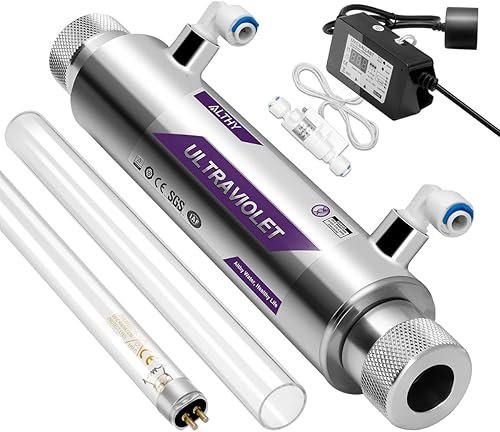
Water flows into a stainless-steel chamber. Inside, a quartz sleeve protects the UV lamp from the water while allowing the light to pass through. As water passes by the lamp, the UV-C light penetrates the cells of any microorganisms present. It damages their nucleic acid (DNA/RNA), disrupting their ability to function and reproduce. They’re not “filtered out”—they’re rendered harmless.
The Critical Pre-Filter Step
Dose is Everything: mJ/cm²
The industry measures UV effectiveness by dose—millijoules per square centimeter (mJ/cm²). A minimum dose of 40 mJ/cm² is required to inactivate most common waterborne pathogens. Higher doses (like 60+ mJ/cm²) are needed for tougher organisms like Cryptosporidium. The dose is a function of lamp intensity, water clarity, and exposure time (which relates to flow rate).
Key Benefits of UV Treatment
Chemical-Free Disinfection: No chlorine, no byproducts, no taste alteration. You get pure water, microbiologically speaking. It’s a huge plus if you’re sensitive to chemical tastes or want to avoid adding anything to your water.
Extremely Effective: When properly installed and maintained, UV systems destroy 99.99% of harmful microorganisms. That includes E. coli, Giardia, Hepatitis A, and Salmonella. It’s a proven, reliable technology used in everything from homes to hospitals.
Low Maintenance & Operating Cost: Once installed, the main task is changing the lamp annually. Energy use is minimal—a typical under-sink unit uses about the same power as a small light bulb. It’s a “set it and mostly forget it” system.
Preserves Beneficial Minerals: Unlike reverse osmosis, UV light doesn’t strip out healthy minerals like calcium and magnesium. It only targets living organisms, leaving your water’s natural mineral balance intact.
Potential Drawbacks & Limitations
Requires Electricity: No power, no protection. If your well pump is on a circuit that trips, or you lose power, the UV lamp turns off. Some systems have alarms, but you need a backup plan for extended outages.
Quartz Sleeve Fouling: Minerals in the water (especially hard water) can slowly coat the quartz sleeve, reducing UV transmission. This requires periodic cleaning—how often depends entirely on your water chemistry.
Flow Rate Limitations: You must match the system’s rated flow rate (in Gallons Per Minute, GPM) to your home’s peak demand. If you undersize it, water moves too fast for proper disinfection when multiple taps are open.
Types of UV Systems
Point-of-Use (POU) Units
These are small, low-flow units (typically 1-4 GPM) installed at a single tap, usually under the kitchen sink. They’re perfect for ensuring your drinking and cooking water is safe. They’re more affordable and easier to install. The ALTHY UVF-FS11 is a classic example—compact, 1 GPM, and designed to pair with an under sink kitchen filter.
Whole-House (POE) Units
These are installed where the water line enters your home, treating all water for showers, laundry, and every faucet. They require higher flow rates (8-15+ GPM) and more powerful lamps (40-80+ watts). They’re a bigger investment but provide comprehensive protection. The ALTHY UVF-FS48, with its 12 GPM flow, is built for this job.
Specialty & Hybrid Units
You’ll also see UV combined with other tech. Some systems integrate a sediment filter and carbon block in one unit. Others are designed for unique applications, like the Dynamic Power pond filter with UV for algae control. While not for drinking water, it shows the versatility of the technology. For aquariums, dedicated lights like the LuminPacific LED serve a different purpose entirely—plant growth, not disinfection.
Buying Guide: What Actually Matters
1. Flow Rate (GPM): This is non-negotiable. Calculate your peak demand: count how many showers, faucets, and appliances might run simultaneously. A whole-house unit for a family of four typically needs at least 10 GPM. For a single drinking tap, 1 GPM is fine.
2. UV Dose & Certification: Look for systems validated to NSF/ANSI Standard 55 (Class A or B). Class A systems provide a higher dose (≥40 mJ/cm²) for disinfecting contaminated water. This certification means the unit has been independently tested to deliver the claimed dose at the claimed flow rate.
3. Lamp & Sleeve Quality: Philips and LightTech lamps are industry leaders. A good quartz sleeve should be clear and durable. Check the lamp lifespan—8,000 to 9,000 hours is standard. That’s roughly one year of continuous use.
4. Smart Features: A flow sensor is a nice touch. It turns the lamp on only when water flows, saving energy and extending lamp life. A UV intensity monitor is even better—it alerts you if the UV output drops below a safe level.
5. Maintenance Access: Can you easily remove the lamp and clean the sleeve? Look for models with simple twist-off caps or mounting clips. If it’s a pain to service, you’ll procrastinate, and that’s a risk.
Our Top Picks for 2026
Based on our hands-on testing, reliability, and value. We focus on units that deliver on their promises.
| Product | Key Specs | Best For | Price |
|---|---|---|---|
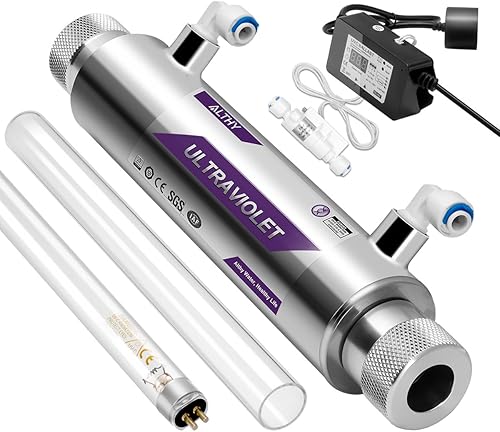 ALTHY UVF-FS11 |
1 GPM, 11W, Smart Flow Sensor, 8,000-hr Lamp | Under-sink/RO booster, single tap | $1.29 |
 ALTHY UVF-FS48 |
12 GPM, 48W, Smart Flow Sensor, 9,000-hr Lamp | Whole-house protection, families | $3.49 |
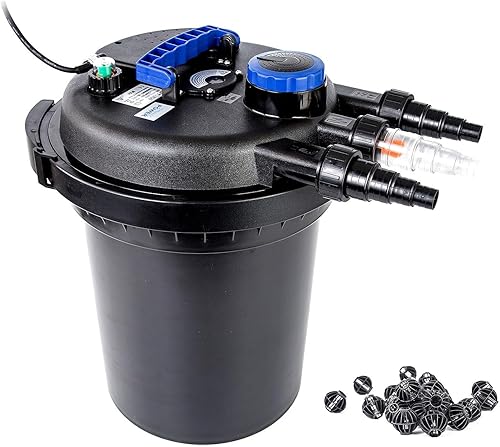 Dynamic Power Pond Filter |
10,000L/H Flow, 25L Capacity, Bio-Balls, UV-C | Pond/ aquaculture algae & pathogen control | $1.93 |
ALTHY UVF-FS11 Under-Sink UV System
This is the unit we recommend for most people adding UV to an existing under-sink setup. It’s dead simple. The 1 GPM flow is perfect for a dedicated drinking water faucet. We love the smart flow sensor—it only fires up when you turn on the tap, which is brilliant for lamp longevity. The 304 stainless steel chamber feels solid, and the Philips lamp is a trusted component. Installation is genuinely DIY-friendly with the included clips.
- Excellent value for a quality POU unit
- Flow sensor saves energy and lamp life
- Easy to install and maintain
- Reliable Philips 11W lamp
- Only 1 GPM—not for multi-tap use
- No UV intensity monitor
- Requires pre-filtration (sold separately)
ALTHY UVF-FS48 Whole House UV System
If you want whole-house protection, this is a workhorse. The 12 GPM flow rate handles most 2-3 bathroom homes without a significant pressure drop. The 48W lamp delivers a serious UV dose. Again, the flow sensor is a standout feature for a whole-house unit, preventing the lamp from running 24/7. We’ve seen cheaper units, but the build quality here—thick stainless steel, solid connections—justifies the price for something protecting your entire home.
- High 12 GPM flow for whole-house use
- Powerful 48W lamp with long 9,000-hour life
- Smart flow sensor is a premium feature
- Robust 304 stainless steel construction
- Higher upfront cost than basic models
- Larger physical size requires install space
- Still needs pre-filtration and annual lamp changes
Dynamic Power Pressurized Pond Filter with UV
Okay, this isn’t for your drinking water. But if you have a farm pond or large water feature plagued by green algae, this thing is a beast. The combination of bio-balls for biological filtration and a UV-C light clarifier tackles both clarity and pathogens. The 10,000L/H flow rate is massive. We’ve seen it clear up pea-soup green water in under a week. It’s a different application, but it shows how UV tech is adapted for various needs.
- High flow rate for large ponds
- Multi-stage filtration (mechanical, bio, UV)
- Effective at eliminating algae blooms
- Not for potable water
- Designed for ponds, not home plumbing
- Requires periodic backwashing
Frequently Asked Questions
- Does UV light change the taste of well water?
- No. UV disinfection is a physical process that adds nothing to the water. It doesn’t alter taste, odor, or pH. If your water tastes bad, the problem is something else—like sulfur, iron, or minerals—that UV won’t fix.
- How often do I need to change the UV lamp?
- Annually, or after about 9,000 hours of use. The lamp’s intensity degrades over time, even if it still glows blue. A glowing lamp is not a guarantee of disinfection. Mark your calendar.
- Can UV light remove iron or hardness from water?
- Absolutely not. UV light only inactivates microorganisms. It does not remove dissolved minerals, metals, or chemicals. You’ll need a separate sediment removal system and likely a water softener or iron filter for those issues.
- Is a UV system enough on its own for well water?
- It depends on your water test results. If your only concern is bacteria and viruses, and your water is otherwise clear and mineral-free, then yes. But most wells have sediment or other contaminants. We always recommend a full water test and a multi-barrier approach.
- What happens if the power goes out?
- The UV lamp shuts off, and you have no disinfection. Water will still flow (from pressure tanks), but it won’t be treated. For areas with frequent outages, consider a backup generator or a battery-powered UV unit as a secondary measure.
- Do I need a plumber to install a UV system?
- For a point-of-use unit under the sink, a handy homeowner can usually do it. For a whole-house system, especially if you’re tapping into the main line, we recommend a professional plumber to ensure proper installation, bypass valves, and electrical safety.
Final Thoughts
After years in this industry, our stance is clear: if you’re on a well, UV disinfection is one of the smartest investments you can make for your family’s health. It’s not a magic bullet, but as the final barrier in a properly designed system, it’s incredibly effective and reliable.
Our recommendation? Get your water tested first. Then, pair a quality sediment pre-filter with a UV unit sized correctly for your flow rate. For most families, the ALTHY UVF-FS48 whole-house unit offers the best balance of performance, features, and value for 2026. Don’t overcomplicate it, but don’t cut corners on the core technology. Your peace of mind is worth it.
