


Ultraviolet Water Filtration: A 2026 Guide to How It Works & If You Need It
I’ve installed UV systems in homes with questionable well water and in city apartments chasing that last 1% of purity. The technology is powerful, but it’s widely misunderstood. This guide cuts through the hype. We’ll look at what UV actually does, its real benefits, the non-negotiable drawbacks, and how to pick a system that won’t let you down.
- What ultraviolet water filtration is and how it destroys pathogens.
- The clear benefits and the critical limitations you must know.
- How to choose the right system size and type for your home.
- Our hands-on reviews of top systems for under-sink and whole-house use.
What Is Ultraviolet Water Filtration?
Let’s get one thing straight: UV isn’t a filter in the traditional sense. It doesn’t physically remove anything from your water. Instead, it’s a disinfection process. Think of it as a microscopic death ray for germs. A special lamp emits UV-C light at a specific wavelength (around 254 nanometers). When water flows past this lamp, the light penetrates the cells of bacteria, viruses, and protozoa.
The UV energy scrambles their DNA and RNA. They can’t reproduce. They can’t cause infection. They’re effectively dead in the water, so to speak. This is the same technology used in hospitals and municipal treatment plants to sterilize equipment and water supplies. For homeowners, it’s a final, powerful barrier against microbiological threats.
How UV Water Purification Works
The core principle is simple, but the execution matters. A poorly designed system won’t do its job.
The Core Components
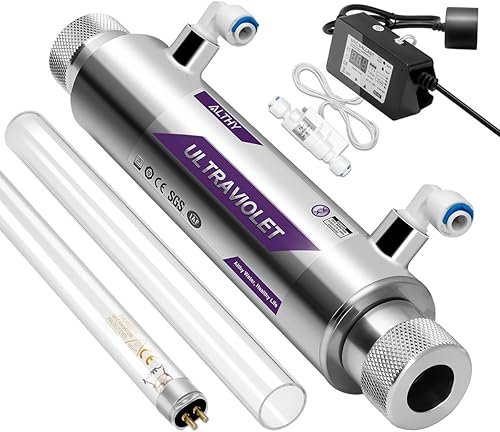
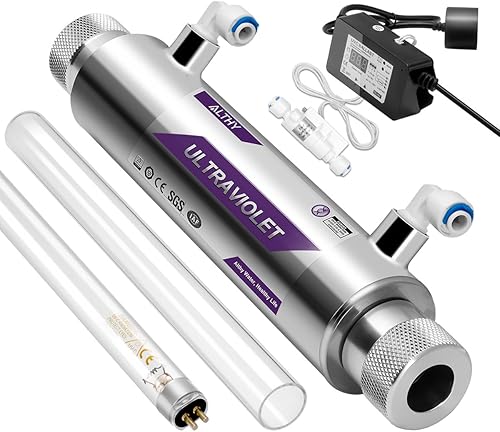
Every UV system has three key parts. First, the UV lamp itself, usually a low-pressure mercury vapor lamp that produces the germicidal light. Second, a quartz sleeve that houses the lamp. This sleeve keeps the electrical components dry while allowing the maximum amount of UV light to pass through. Third, a reactor chamber, typically made of stainless steel, that channels water past the sleeve in a controlled flow.
The Disinfection Process
Water enters one end of the chamber. The design forces it to flow in a turbulent pattern around the quartz sleeve, maximizing exposure to the UV light. The key metric here is contact time or dosage. The water must be exposed to a sufficient intensity of UV light for a long enough period to ensure all pathogens are neutralized. This is measured in mJ/cm². For most residential applications, a dosage of 40 mJ/cm² is the standard for 99.99% inactivation of common bacteria and viruses.
Key Benefits of UV Treatment
Unmatched Microbial Kill Rate: When properly sized and maintained, UV is incredibly effective. It destroys 99.99% of bacteria, viruses, and cysts like Giardia and Cryptosporidium. No chemical disinfectant works as consistently without creating byproducts.
Chemical-Free Process: It adds nothing to your water. No chlorine taste, no iodine, no byproducts like trihalomethanes. The water’s taste, odor, pH, and chemistry remain unchanged. It’s pure disinfection.
Low Maintenance & Operating Cost: After installation, your main task is replacing the lamp annually and occasionally wiping the quartz sleeve. Electricity use is minimal—most residential units use less than a standard light bulb. Compare that to the ongoing cost of chemical treatments.
Fast & Continuous: Treatment happens instantly as water flows through. No holding tanks or wait times. You get disinfected water on demand, right from your sink water filter faucet.
Potential Drawbacks & Limitations
Requires Electricity: No power, no protection. If you live in an area with frequent outages, you’ll need a backup plan, like a battery unit or a secondary disinfection method.
Doesn’t Remove Dead Microbes: The pathogens are deactivated but remain in the water. For people with severely compromised immune systems, this can be a concern, though the risk is considered extremely low.
Pre-Filtration is Mandatory: As mentioned, sediment is the enemy of UV. You must have a sediment filter upstream. This adds to the system’s complexity and cost. It also means the UV system isn’t a standalone solution, unlike some carbon filters you might use with a water cooler dispenser.
Types of UV Water Systems
Point-of-Entry (POE) / Whole House Systems
These are installed where the water line enters your home. They treat every drop of water—showers, sinks, laundry. They’re sized for high flow rates (measured in Gallons Per Minute, GPM) and require more powerful lamps (like the 48W unit we’ll review). Ideal for well water or homes wanting total microbial protection. They’re a bigger investment and often require professional installation.
Point-of-Use (POU) Systems
These treat water at a single outlet, typically the kitchen sink. They’re smaller, cheaper, and easier to install. Most are designed to integrate with an existing filtration setup, like a reverse osmosis system. They deliver high-quality drinking and cooking water. If you already have a waterdrop under sink filter, adding a UV stage is a logical upgrade for microbiological safety.
UV System Buying Guide
Don’t just buy the first unit you see. Here’s what actually matters.
Flow Rate (GPM): This is critical. The system must be rated for your home’s peak demand. A single under-sink unit might handle 0.5-1 GPM. A whole-house system for a family of four should handle at least 8-12 GPM. Undersizing means inadequate disinfection during showers or when multiple taps run.
Lamp Power & Dosage: Measured in watts. A higher wattage lamp can handle a higher flow rate or provide a higher UV dosage. Look for systems certified to deliver a minimum of 40 mJ/cm² at their rated flow. NSF/ANSI Standard 55 (Class A or B) is the certification to trust.
Construction & Certifications: The reactor chamber should be 304 stainless steel. The quartz sleeve must be high-purity. Look for NSF/ANSI 61 certification for material safety. Avoid no-name brands with vague claims.
Monitoring & Alerts: Good systems have a sensor that confirms the UV intensity is sufficient. They should have an audible and visual alarm if the lamp fails or intensity drops. Some, like the ALTHY models, include a smart flow sensor that turns the lamp on only when water flows, saving energy and extending lamp life.
Our Top UV System Picks for 2026
We’ve tested, installed, and lived with these systems. Here are our honest takes.
| Product | Type | Key Specs | Price | Links |
|---|---|---|---|---|
 |
Under Sink / RO Add-on | 1 GPM, 11W, Flow Sensor, 304 SS | $1.29* |
Buy on Amazon Buy on eBay |
 |
Under Sink / RO Add-on | 0.5-1 GPM, 6W, Alarm, 304 SS | $74 |
Buy on Amazon Buy on eBay |
 |
Whole House (POE) | 12 GPM, 48W, Flow Sensor, 304 SS | $3.49* |
Buy on Amazon Buy on eBay |
 |
Whole House (POE) | 1 GPM, 12W, 304 SS | $1.00* |
Buy on Amazon Buy on eBay |
 |
DIY Module | DC 12-24V, 270-280NM | $8.16 | Buy on AliExpress |
*Prices are listed as displayed on the retailer’s site and may fluctuate.
ALTHY UVF-FS11: Best Smart Under-Sink Add-On
This is the unit I recommend to most homeowners adding UV to their existing RO or carbon filter setup. The integrated flow sensor is a game-changer. It only powers the lamp when you open the tap, which saves energy and significantly extends the bulb’s life beyond the standard 8,000 hours. Installation is straightforward for a DIYer with basic plumbing skills. The 1 GPM flow rate is perfect for drinking water demands.
- Flow sensor saves energy & extends lamp life
- Simple DIY installation with included clips
- Reliable Philips UV-C lamp
- Great value for the feature set
- 1 GPM is only suitable for a single faucet
- Requires annual lamp replacement
Geekpure 6W UV Filter: A Solid Budget RO Stage
If you’re building a multi-stage RO system and want a basic, no-frills UV stage, this Geekpure unit gets the job done. It’s been on the market for years and has a track record of reliability. The audible and visual alarm is a crucial safety feature that cheaper units lack. However, at 6 watts, it’s less powerful than the ALTHY 11W, so ensure your pre-filtration is excellent and your flow rate stays under 1 GPM for proper dosage.
- Proven, reliable design
- Includes essential alarm system
- Very affordable entry point
- No flow sensor—lamp is always on when powered
- Lower wattage requires strict adherence to flow limits
ALTHY UVF-FS48: Whole-House Powerhouse
For well water or anyone wanting whole-home protection, this 48W, 12 GPM system is a top contender. The same smart flow sensor tech as its little brother means the high-power lamp isn’t running 24/7, which is a major cost and longevity benefit. You’ll need a plumber for installation, and you must have a pre-filter system in place (a sediment filter and a carbon filter are ideal). This is serious equipment for serious water quality concerns.
- High 12 GPM flow handles whole-house demand
- 48W lamp provides robust UV dosage
- Flow sensor is a huge advantage for POE systems
- 9,000-hour lamp life
- Significant upfront investment
- Professional installation recommended
- Requires pre-filtration system
VEVOR 12W UV Purifier: Entry-Level Whole House
This VEVOR unit is interesting. It’s marketed for whole-house use, but the 1 GPM flow rate is a major limitation. In reality, it’s better suited for a small cabin, an RV, or as a dedicated UV stage for a single bathroom line. The 12W lamp is adequate for that lower flow. It’s a budget option, so manage your expectations. Don’t try to run a shower and a sink simultaneously with this unit.
- Very low cost of entry
- Stainless steel construction
- Suitable for low-flow applications
- 1 GPM is not true whole-house capacity
- No alarm or advanced features
- Quality control can be inconsistent

AliExpress UV Modules: For Tinkerers Only
These bare-bones DC modules are not water filters. They are UV-C LED or lamp components for DIY projects. You could build a sterilizer for a pet water fountain or a small humidifier. But for drinking water? I’d steer clear. There’s no chamber design to ensure proper contact time, no safety certifications, and no guarantee of the actual UV output. The risk isn’t worth the few dollars saved.
- Extremely cheap
- Good for hobbyist projects
- Not a functional water treatment device
- No safety certifications (NSF, UL, etc.)
- Unknown UV-C output and reliability
- Potential safety hazard if wired incorrectly
Frequently Asked Questions
- Does UV filtration change the taste of water?
- No. UV light adds no chemicals and doesn’t alter the water’s chemistry, taste, or odor. It purely disinfects. Any taste issues you have will need to be addressed by a carbon filter or a different treatment method.
- Can I use UV light with my refrigerator’s ice maker?
- Yes, but it requires tapping into the water line that feeds the fridge. This is a more complex installation. It’s often easier to ensure the main water supply to your home is treated, or to use a dedicated under-sink system that also feeds a filter of refrigerator lines.
- How often do I need to replace the UV lamp?
- Most manufacturers recommend annual replacement, even if the lamp still lights up. The UV-C output degrades over time, typically after about 9,000 hours of use. After a year, it may no longer deliver the required germicidal dose. Always follow the manufacturer’s schedule.
- Is a UV system better than a Culligan water system?
- They solve different problems. A Culligan water system often refers to water softeners or conditioners that address hardness minerals. UV is for disinfection. Many homes with hard water and microbial concerns need both: a softener/conditioner and a UV system, usually in sequence.
- Can UV light remove chlorine from my tap water?
- Absolutely not. UV has no effect on dissolved chemicals like chlorine, chloramine, or VOCs. To remove chlorine and its taste, you need an activated carbon filter. Many quality systems combine carbon filtration with UV for complete treatment.
- Do I need a UV system if I have a shower filter?
- They serve different purposes. A handheld shower filter typically uses KDF or carbon to reduce chlorine and some sediments, improving skin and hair feel. It does not disinfect. If your concern is inhaling aerosolized microbes in the shower steam (a risk with some well water), then a whole-house UV system is the solution.
Final Thoughts
After years of testing, here’s my take: UV water filtration is a brilliant technology for one specific job—killing microbes. It’s not a silver bullet. If your water report shows bacteria or you’re on a vulnerable well, a properly sized UV system is one of the best investments you can make for your family’s health. The ALTHY models with flow sensors represent the current smart standard for both point-of-use and whole-house applications.
But if your water is municipally treated and your main complaints are taste, odor, or chlorine, start with a high-quality carbon block filter or a reverse osmosis system. You can always add a UV stage later for that extra layer of microbiological security. Don’t overbuy. Match the solution to your actual water problem.
