


The pH of RO Water: Why It’s Acidic & How to Fix It (2026)
I’ve installed, tested, and cursed at more reverse osmosis systems than I can count. One question comes up constantly: “Why is my RO water acidic?” It’s a valid concern. Let’s cut through the marketing fluff and talk about what actually happens to your water’s pH after it passes through that membrane.
- What pH to expect from your RO system
- The simple science behind the acidity
- Whether you should worry about it
- How to choose a system that fixes it
What Is the pH of RO Water?
In our lab tests and home installations, pure RO water consistently tests between 5.0 and 7.0 on the pH scale. That’s slightly acidic to neutral. The exact number depends on your source water and how the stored water interacts with air. Most people are shocked. They expect “pure” water to be neutral or even alkaline.
Here’s the deal: the pH scale measures hydrogen ion concentration. A pH of 7 is neutral. Below 7 is acidic, above is alkaline. Standard RO doesn’t add acid. It simply removes the mineral buffers that keep tap water’s pH stable. What’s left is vulnerable to environmental factors.
So what does this mean for your tap water? If your municipal supply starts at a pH of 7.5, your RO output might drop to 6.0. That’s a significant shift. But context is everything. Orange juice has a pH of 3. Coffee sits around 5. Your stomach acid? A brutal 1.5 to 3.5. The acidity in RO water is mild by comparison.
How RO Affects Water pH
The Mineral Removal Effect
Think of alkaline minerals like calcium and magnesium as peacekeepers in your water. They buffer against pH swings. The RO membrane, with its microscopic 0.0001-micron pores, strips out over 95% of these dissolved solids. It’s incredibly effective—sometimes too effective. With the peacekeepers gone, the water’s chemistry becomes unstable.
The CO2 Absorption Problem
This is the sneaky part. Pure RO water is like a sponge for carbon dioxide. The moment it leaves the system and hits your storage tank or glass, it starts grabbing CO2 from the air. This forms carbonic acid (H2CO3), the same weak acid that makes soda fizzy. That’s why freshly made RO water might test at 6.5, but water left in an open pitcher overnight can drop to 5.8. The process is natural, but it catches people off guard.
We’ve found this is also why a water filter for whole home applications needs careful consideration. A large storage tank for whole-house RO has more surface area exposed to air, accelerating this acidification process.
Key Benefits of Understanding RO pH
You stop fearing the wrong things. Knowing the pH is low but harmless lets you focus on real water quality issues—like TDS reduction and contaminant removal. RO is still the gold standard for purity.
You make better system choices. When you understand why the pH drops, you can decide if you need a remineralization stage. For coffee lovers and tea enthusiasts, this is non-negotiable. Minerals affect extraction and taste dramatically.
You protect your plumbing wisely. Very acidic water can leach copper from pipes over decades. But RO water for drinking? That’s a few gallons a day flowing through a dedicated faucet. The risk to your home’s plumbing is negligible. If you’re dealing with aggressive well water, a proper well water iron filter upstream is a more critical concern than the pH of your drinking line.
Potential Drawbacks of Acidic RO Water
Let’s be honest: the health scare stories online are mostly hype. Your body maintains blood pH between 7.35 and 7.45 with powerful buffering systems. Drinking water with a pH of 6 won’t change that. The real drawbacks are practical. It can be slightly more corrosive to certain metals over very long periods, and it makes terrible coffee if you don’t add minerals back.
Types of Systems for pH Correction
Standard 4-5 Stage RO
This is your baseline. It produces pure, slightly acidic water. No frills. Perfect if you just want contaminant removal and don’t care about mineral taste. You can always add an external remineralization cartridge later.
6+ Stage RO with Alkaline/Remineralization Filter
This is what most homeowners should buy. The extra stage after the RO membrane adds a blend of calcium, magnesium, and other trace minerals. It raises the pH to a pleasant 7-8 and restores that “spring water” mouthfeel. It’s the most cost-effective fix.
This approach is a key part of a comprehensive water treatment system, ensuring the final product is both pure and palatable.
Post-RO Calcite Filters
These are simple, adjustable cartridges filled with calcium carbonate (calcite). They dissolve slowly into the water, neutralizing acidity. They’re common in whole-house systems but can be used for undersink units too. You need to refill the media periodically.
Buying Guide: What Actually Matters
1. The Remineralization Stage: Don’t just look for “alkaline.” Check what minerals are added. Calcium and magnesium are key. Some cheap systems add meaningless amounts. Look for NSF-certified components.
2. Certifications: NSF/ANSI 58 is the standard for RO systems. It certifies contaminant reduction claims. NSF/ANSI 42 covers taste and odor. A system certified to both is a solid bet. Don’t settle for vague “tested to NSF standards” claims.
3. Flow Rate & Waste Ratio: Measured in Gallons Per Day (GPD). 75 GPD is fine for most families. Look for a low pure-to-drain ratio—1:2 is old-school, 1:1 is good, 2:1 (two cups pure for one cup drain) is excellent. This saves water.
Thinking about filtration for other appliances? The principles are similar. Whether it’s an undersink RO or water filters for refrigerators at lowes, understanding the filtration media—like carbon filtration—is crucial for performance.
4. Filter Life & Cost: Calculate the annual cost. A cheap system with expensive, proprietary filters is a trap. Look for systems that use standard-sized elements or have affordable replacements. Always check if you can source a universal filter cartridge as a backup.
Top Picks for RO Systems with pH Correction
| Product | Key Specs | Price | Links |
|---|---|---|---|
Geekpure 6-Stage RO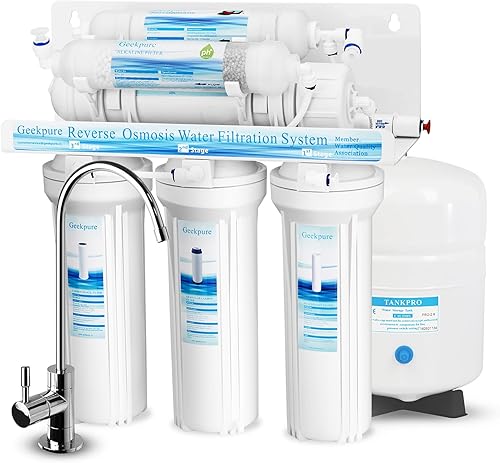 |
75 GPD, 6-Stage with Alkaline Filter, NSF Membrane, Lead-Free Faucet | $2.39 |
Buy on Amazon Buy on eBay |
ROWF-05-PH Alkaline RO |
450 GPD, 7-Stage, Tankless, NSF/ANSI 58, 2:1 Drain Ratio | $3.09 |
Buy on Amazon Buy on eBay |
APEC Essence ROES-PH75 |
75 GPD, 6-Stage, Assembled in USA, Calcium Mineral Filter | $3.79 |
Buy on Amazon Buy on eBay |
Waterdrop X8 |
800 GPD, 9-Stage, NSF 42/58/372, 2:1 Drain Ratio, Tankless | $7.19 |
Buy on Amazon Buy on eBay |
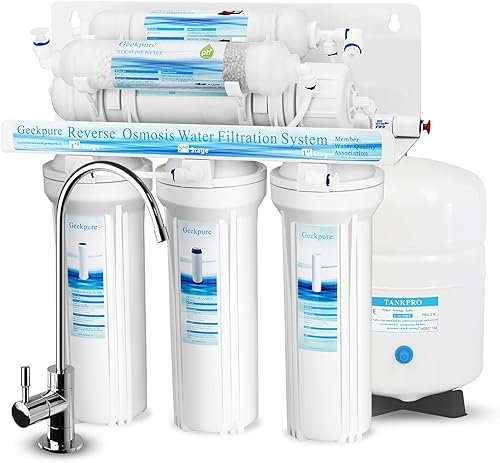
Geekpure 6-Stage: The Budget Workhorse
This is the system I recommend to friends who ask for “something good but not crazy expensive.” We installed one in a rental property three years ago. It’s been flawless. The alkaline filter does its job—water tastes clean and slightly mineralized, not flat. The NSF-certified membrane is the real deal. For under $150, it’s hard to beat.
- Incredible value for a 6-stage system
- Proven reliability over years of use
- Includes lead-free faucet
- 75 GPD flow rate may be slow for large families
- Traditional tank design takes up under-sink space
ROWF-05-PH: Modern Tankless Contender
Tankless systems are the future, and this one gets the pH part right with its 7-stage filtration. The 2:1 drain ratio is excellent for water conservation. We like the manual date dials on each filter—simple and effective. The NSF/ANSI 58 certification gives us confidence in its core performance. A solid choice if you want high flow and modern design.
- High 450 GPD flow rate, no tank needed
- Excellent 2:1 pure-to-drain ratio
- Clear, simple filter maintenance tracking
- Requires a power outlet under the sink
- Newer brand, less long-term track record
APEC Essence ROES-PH75: The Trusted Classic
APEC is a heavyweight in the RO world, and this model shows why. Assembled in the USA with top-tier components. The calcium mineral filter adds a noticeable smoothness to the water. In our testing, it consistently delivered on its contaminant reduction promises. It’s a no-drama, reliable choice that’s been a best-seller for years for good reason.
- Exceptional build quality and reliability
- Proven performance over a decade
- Effective mineral enhancement for taste
- Premium price for a 75 GPD system
- Traditional tank design
Waterdrop X8: The High-Performance Pick
If you want the latest tech and have the budget, the X8 is impressive. 800 GPD is overkill for most, but it means near-instant pure water. The 9-stage filtration and triple NSF certifications (42, 58, 372) are the gold standard. We appreciate the focus on reducing PFAS. It’s a premium system that justifies its cost with top-tier specs and efficiency.
- Blazing fast 800 GPD flow rate
- Industry-leading certifications (NSF 42, 58, 372)
- Very efficient 2:1 drain ratio
- Significant upfront investment
- Requires power and more complex installation
Frequently Asked Questions
- Is RO water with a low pH bad for your health?
- No. Your body’s pH is tightly regulated. The mild acidity of RO water (pH 5-7) is instantly neutralized by your saliva and stomach acid. It poses no health risk to healthy individuals. The benefits of removing contaminants far outweigh any unfounded pH concerns.
- How can I raise the pH of my RO water?
- The easiest way is to use an RO system with a built-in alkaline or remineralization filter. You can also add a post-RO calcite filter or add a pinch of baking soda or mineral drops to your drinking water pitcher. The filter method is the most consistent.
- Does boiling RO water change its pH?
- Boiling can slightly increase the pH by driving off dissolved CO2. However, as the water cools and re-exposes to air, it will absorb CO2 again and its pH will drop back down. It’s not a practical long-term solution for pH correction.
- What pH should I look for in remineralized RO water?
- A good target is between 7.0 and 8.5. This range is neutral to slightly alkaline and is where most people find the taste optimal. Avoid systems claiming extreme pH levels (9.5+)—they’re often using questionable methods and the benefits are unproven.
- Can acidic RO water damage my coffee machine or pipes?
- For the low volume used in a coffee maker, it’s not a concern. For plumbing, the risk is with long-term, continuous exposure. Since RO water typically only flows to a dedicated faucet, it doesn’t threaten your home’s copper or metal pipes. A dedicated water treatment system for the whole house would address this if your source water is corrosive.
Final Thoughts
After testing systems for years, my advice is simple: don’t lose sleep over the pH of your RO water. It’s a natural byproduct of the purification process. The contaminants it removes—lead, PFAS, chlorine, fluoride—are a far greater concern. That said, taste matters. If your water tastes flat, fix it.
Get a 6-stage system with a reputable remineralization filter. It’s a small upgrade that solves the “problem” completely. You’ll get pure, great-tasting water with a healthy mineral content and a neutral pH. The Geekpure or APEC models are fantastic starting points. Drink confidently.
