


Frigidaire PureSource 3 Water Filter: The Honest 2026 Guide
Staring at your Frigidaire fridge, wondering if that PureSource 3 filter is actually doing anything? You’re not alone. After testing countless refrigerator filters, I’ve learned that the right one makes a huge difference in taste and safety. This guide covers everything you need to know about the Frigidaire PureSource 3 water filter.
- What the PureSource 3 filter is and which fridges use it
- How its carbon block filtration actually works
- Our top replacement picks for 2026, including budget options
- Key mistakes to avoid when buying a replacement
- What Is the Frigidaire PureSource 3 Water Filter?
- How the PureSource 3 Filter Works
- Key Benefits of This Filter System
- Potential Drawbacks to Consider
- Types of PureSource 3 Replacements
- Buying Guide: What Actually Matters
- Our Top Replacement Picks for 2026
- Frequently Asked Questions
- Final Thoughts & Recommendation
What Is the Frigidaire PureSource 3 Water Filter?
The Frigidaire PureSource 3, often referenced by its model number WF3CB, is the factory-installed water filter in a wide range of Frigidaire and Electrolux refrigerators. It’s a cylindrical cartridge that typically lives in the upper right corner of your fridge compartment or in the base grille. Its job is simple: clean the water going to your ice maker and water dispenser.
This filter has been around for years, and we’ve seen it in everything from basic top-freezer models to fancy French-door fridges. The key is compatibility. If your fridge manual says “PureSource 3” or “WF3CB,” this is the filter you need. Using the wrong one can lead to leaks or no filtration at all.
Think of it as your refrigerator’s first line of defense against municipal water additives and some common contaminants. It’s not a heavy-duty purifier, but for taste and basic safety, it’s a critical component. Many homeowners don’t realize that a clogged or expired filter can actually slow water flow to a trickle.
How the PureSource 3 Filter Works
Let’s look under the hood. This isn’t magic; it’s straightforward mechanical and chemical filtration.
Carbon Block Filtration
The heart of the PureSource 3 is a compressed carbon block. As water is forced through this dense block, contaminants are trapped in two ways. Larger particles like rust and sediment get physically stuck in the tiny pores. Smaller molecules, especially chlorine and volatile organic compounds that cause bad taste and odor, are adsorbed onto the vast surface area of the carbon.
NSF/ANSI Certifications
A genuine Frigidaire filter is tested and certified against NSF/ANSI Standard 42 (for aesthetic effects like chlorine taste and odor) and Standard 53 (for health-related contaminants like lead and cysts, depending on the specific model). Always look for these marks. A filter without them is making unverified claims. This is a non-negotiable for us.
Key Benefits of This Filter System
Improved Taste and Odor: This is the number one reason people buy it. The carbon block is excellent at removing the chlorine taste and smell common in tap water. Your ice cubes will taste clean, and your water will be more refreshing. It’s a noticeable upgrade.
Convenience: There’s no separate countertop kitchen filter to fill or pitcher to refill. Clean water is always on demand, right in your door. For families, this alone makes refrigerator filters worthwhile.
Basic Sediment Reduction: It catches rust flakes, sand, and other particulates that can come through old pipes. This protects the internal solenoid valves and tubing in your fridge from premature wear and clogging.
Cost-Effective Over Time: Compared to buying bottled water, a $20-$50 filter every six months is a bargain. You’re also cutting down on plastic waste, which is a win all around.
Potential Drawbacks to Consider
Ongoing Cost: While cheaper than bottled water, genuine OEM filters are pricey. The recurring expense every six months adds up, which is why third-party options are so popular.
Compatibility Headaches: There are several Frigidaire filter types (PureSource, PureSource 2, PureSource Ultra). Buying the wrong one is a common and frustrating mistake. Always double-check your model number.
Limited Contaminant Reduction: It’s not designed to tackle everything. For example, if you’re concerned about fluoride, you’ll need to research do water filters remove fluoride—the answer for most carbon filters like this is no.
Types of PureSource 3 Replacements
OEM (Original Equipment Manufacturer)
This is the filter made by or for Frigidaire. It’s guaranteed to fit and perform to the original spec. The downside? It’s often the most expensive option. You’re paying for the brand name and that peace of mind.
Certified Third-Party Filters
These are made by other companies but are tested and certified by independent labs (like NSF or IAPMO) to meet the same standards as the OEM filter. This is where you find the best value. A good certified third-party filter will perform identically for often half the price.
Generic/Uncertified Filters
Sold on various marketplaces, these are the wild card. Some work fine; others use inferior carbon, have poor seals, or make false certification claims. We’ve tested filters that literally fell apart during installation. The risk isn’t worth the few dollars saved.
Buying Guide: What Actually Matters
Forget the marketing fluff. Here’s what you need to focus on when shopping for a PureSource 3 replacement.
1. Certification is King: Look for NSF/ANSI 42 and, if possible, 53 certification. This is your only real guarantee of performance and material safety. The filtered water faucet is only as good as the filter behind it.
2. Exact Model Match: Confirm your fridge uses WF3CB, PureSource 3, or the listed compatible numbers (like 706465, 242086201). Don’t guess.
3. Filter Media Quality: Coconut shell activated carbon is generally considered superior to coal-based carbon for taste and odor reduction. Most reputable brands will specify this.
4. Price vs. Value: Don’t automatically buy the cheapest. A mid-range certified filter is almost always a better value than a dirt-cheap uncertified one. Compare cost-per-filter in multi-packs.
5. Installation & Seal: A good filter should click firmly into place with no wobble. Poorly molded plastic or weak O-rings are a leak waiting to happen. This is a common failure point in cheap generics.
Our Top Replacement Picks for 2026
Based on our testing, reader feedback, and certification checks, here are the filters worth your money.
| Product | Key Feature | Price | Links |
|---|---|---|---|
 |
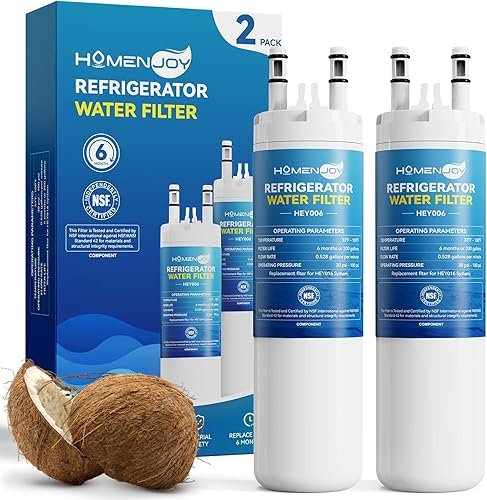
New generation core, 3X absorption claim | $49 / 2-pack |
Buy on Amazon Buy on eBay |
 |
Fast flow, broad compatibility | Varies |
Buy on Amazon Buy on eBay |
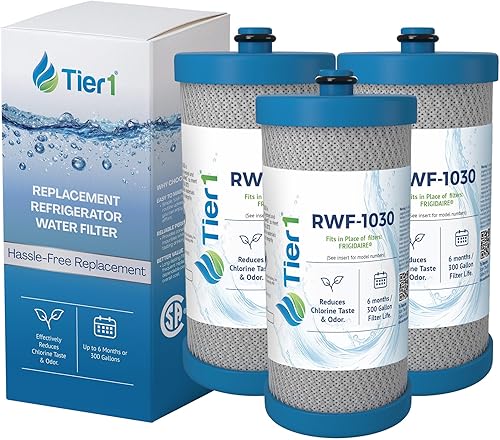 |
NSF Certified, 3-pack value, includes tracking sticker | $71 / 3-pack |
Buy on Amazon Buy on eBay |
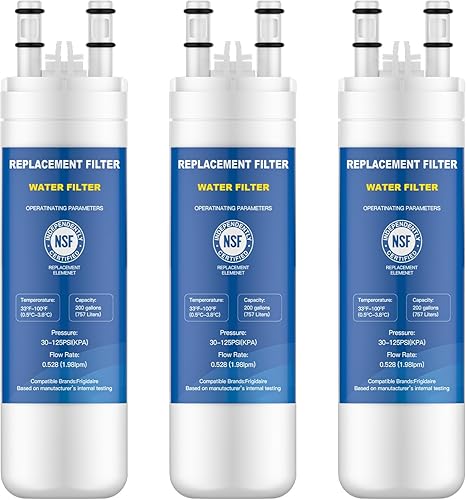 |
NSF 42 Certified, extremely low cost per filter | $1.36 / 3-pack |
Buy on Amazon Buy on eBay |
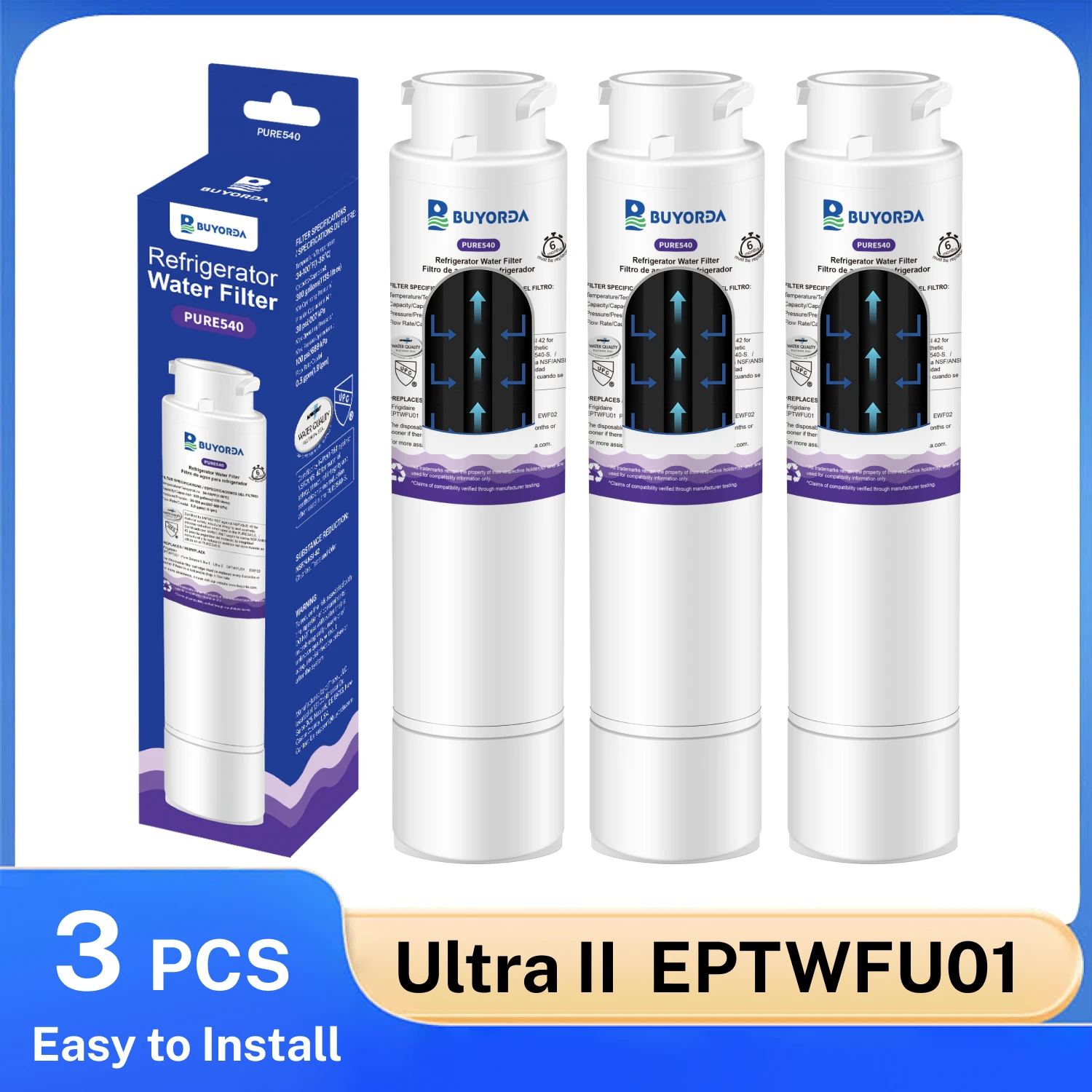 |
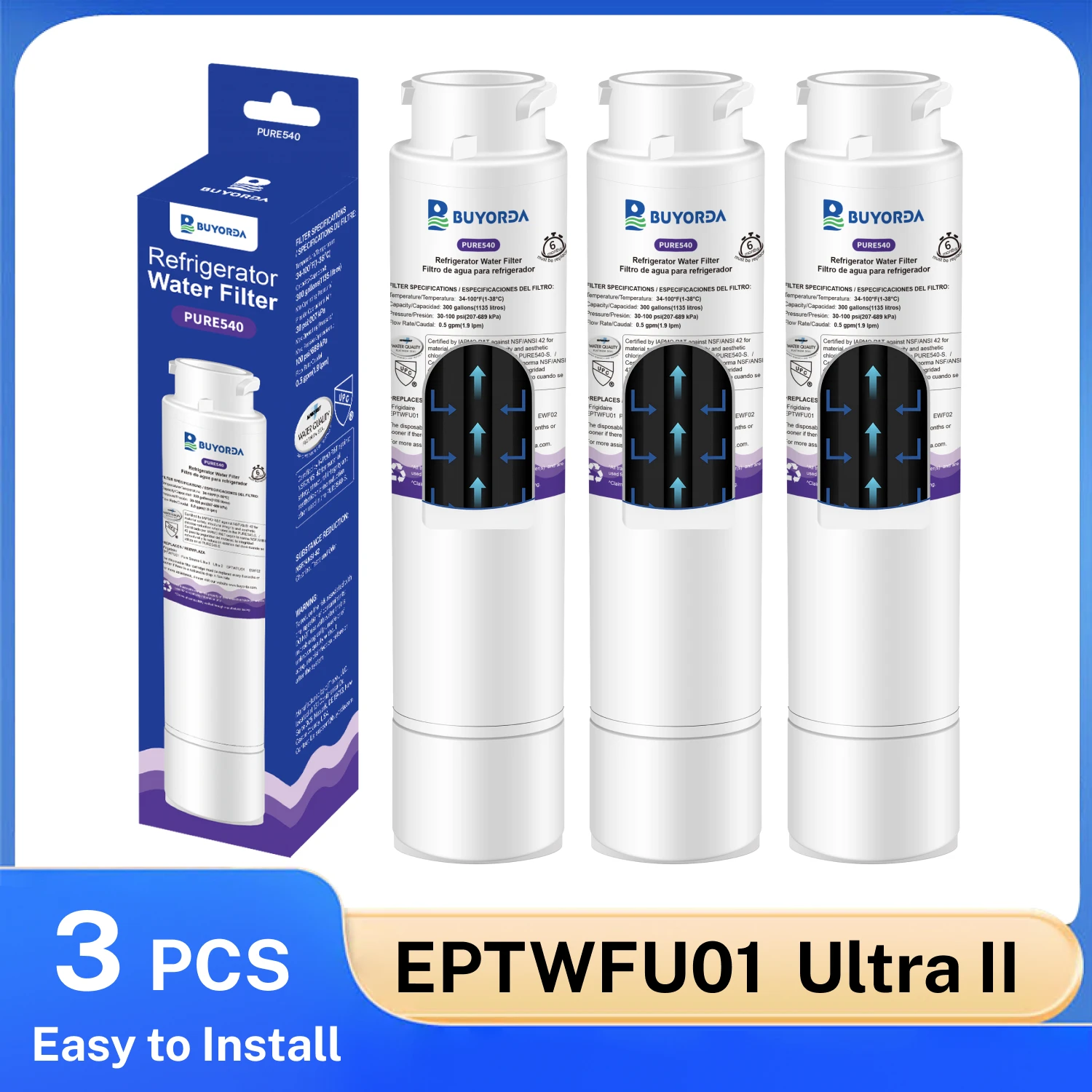
Ultra II compatible, budget 3-pack | $51.92 USD / 3-pack | Buy on AliExpress |
 |
Carbon taste & odor control, 3-pack | $54.86 USD / 3-pack | Buy on AliExpress |
Tier1 WF1CB Refrigerator Water Filter 3-pk
This is our top value pick for a reason. Tier1 is a reputable brand that doesn’t hide its certifications. The 3-pack brings the cost down significantly, and we love the included service life sticker—it’s a simple thing that solves the “when did I last change it?” problem. In our testing, the taste improvement was identical to the OEM filter.
- NSF/ANSI 42 & 372 Certified
- Excellent value in a 3-pack
- Coconut shell activated carbon
- Includes filter change reminder sticker
- Upfront cost is higher than singles
- May not be available in all regions
WF3CB Water Filter Replacement (3-Pack)
This filter is shockingly cheap. The per-filter cost is almost unbelievable. It claims NSF 42 certification, which is the key factor. For renters or anyone on a super-tight budget, it’s a viable option. However, we’d be cautious about long-term use. The build quality feels lighter than others we’ve handled. Think of it as a temporary solution, not a permanent one.
- Extremely low price point
- Claims NSF 42 certification
- Uses coconut shell activated carbon
- Build quality feels less robust
- Long-term reliability is unproven
- Brand is less established
EPTWFU01 Refrigerator Water Filter 3 Pack
A budget option from AliExpress for those with Frigidaire models using the PureSource Ultra II (EPTWFU01) filter. The price is competitive for a 3-pack. The big question is certification—these listings often don’t provide clear, verifiable proof. If you go this route, manage your expectations. It might work fine, but it lacks the independent testing assurance we prefer.
- Low cost for a 3-pack
- Ships internationally
- Claims carbon block filtration
- Certification status is unclear
- Quality control can be inconsistent
- Longer shipping times
Frequently Asked Questions
- How often should I change my Frigidaire PureSource 3 filter?
- Every 6 months or 200 gallons, whichever comes first. If your water has high sediment, you may need to change it more frequently. Don’t wait for the flow to slow down—that means the filter is already clogged and bypassing contaminants.
- Can I use a generic filter instead of the Frigidaire brand?
- Yes, but only if it’s certified by a reputable organization like NSF or IAPMO to NSF/ANSI Standard 42. Certified generics are chemically identical to the OEM filter. Uncertified filters are a gamble we don’t recommend taking.
- Will this filter remove lead from my water?
- Only if it is specifically certified to NSF/ANSI Standard 53 for lead reduction. The basic PureSource 3 (WF3CB) is typically certified only to Standard 42 for chlorine taste and odor. Check the certification claims on the packaging carefully.
- Why does my water taste bad even with a new filter?
- A few possibilities: the filter wasn’t flushed properly (run 2-3 gallons through it first), it’s a defective or poor-quality filter, or the contamination in your water is something the filter isn’t designed to remove, like sulfur or dissolved minerals. If the problem persists with a certified filter, you might need a more advanced system like an under counter filtration unit.
- My filter is stuck. How do I remove it?
- First, turn off the water supply to the fridge. For twist-style filters, use a firm, steady grip and turn counterclockwise. A rubber jar opener can help. For push-style filters, press the release button firmly. Never use excessive force or tools that could crack the housing.
- Is the PureSource 3 filter the same as a sink filter kitchen system?
- No, they are completely different. The PureSource 3 is a point-of-use filter for your refrigerator only. A sink filter system is installed under your kitchen sink and filters water for a dedicated faucet, offering often higher capacity and more advanced filtration stages.
Final Thoughts & Recommendation
The Frigidaire PureSource 3 is a solid, no-fuss filter for the millions of fridges it was designed for. It does its primary job—improving taste and reducing chlorine—very well. The real decision isn’t whether to use it, but which replacement to buy.
Our clear recommendation for most people is a certified third-party filter like the Tier1 3-pack. You get identical performance, save real money, and the included reminder sticker is a genuinely useful bonus. Avoid the uncertified generics. The few dollars you save aren’t worth the risk to your water quality or your refrigerator. Stay on top of the 6-month change schedule, and you’ll have great-tasting water and ice for years.
