


Soft Water Salt Costco Options & Top Picks for 2026
You’ve got a water softener. It’s working. But now you’re staring at an empty salt tank and wondering if that bulk bag at Costco is actually a good deal. I’ve been there. After testing systems and talking to plumbers for over a decade, I can tell you the salt you choose matters more than you think.
- What “soft water salt” really is and why purity is king.
- How to match salt forms (tablets, blocks, crystals) to your specific softener.
- Our top picks for reliable, cost-effective salt in 2026.
- The real drawbacks and how to avoid the “salt mushing” nightmare.
What Is Soft Water Salt?
Forget the fancy culinary salts. Water softener salt is sodium chloride, processed to a high level of purity. Its sole job is to regenerate the resin beads inside your softener tank, which strip hardness minerals (calcium and magnesium) from your water. The salt creates a brine that cleans and recharges those beads.
You might see it sold as “softener salt,” “water conditioning salt,” or “solar salt.” The critical factor is purity. Impurities like dirt, clay, or other minerals can gunk up your system, leading to costly repairs. That’s why the cheap bag at the hardware store can sometimes be a false economy.
For homes with very hard water, a softener is often part of a larger strategy. It works best alongside a good filtration system, like a full house water filtration system, to tackle sediment and chemicals before they even reach the softener.
How Water Softener Salt Works
The Ion Exchange Process
Your softener’s resin beads are negatively charged, grabbing positively charged hardness minerals. Over time, they get saturated. The salt brine washes over them, swapping the hardness ions for sodium ions. This “recharges” the beads, and the waste brine flushes down the drain.
Why Purity is Non-Negotiable
Low-purity salt leaves behind insoluble material. This creates a thick, sludgy layer in your brine tank—often called “mushing.” It clogs injectors and can stop your system from regenerating. We’ve seen service calls that cost $200+ because someone saved $5 on a bag of dirty salt.
Key Benefits of Using the Right Salt
System Longevity: High-purity salt minimizes sediment buildup in the brine tank and control valve. Your softener runs cleaner, longer. This is the single biggest thing you can do to avoid a mid-winter breakdown.
Consistent Performance: You get reliable regeneration cycles. That means consistently soft water for showers, laundry, and protecting your pipes and appliances from scale.
Less Maintenance: You’ll spend far less time chiseling out a rock-hard salt bridge or dealing with a mushy brine tank. It’s a simple “set it and forget it” benefit.
Efficiency: Dissolves predictably to make the right brine concentration. Your softener uses salt and water more efficiently, which can save you a few dollars over the year.
Potential Drawbacks & Headaches
Sodium Intake: The softening process adds a small amount of sodium to your water. If you’re on a strict low-sodium diet, this is a real concern. You can use potassium chloride salt instead, but it’s significantly more expensive.
Environmental Impact: The regeneration brine goes into the wastewater system. In some sensitive areas, this can be an issue. It’s worth checking local regulations.
Types of Water Softener Salt
Solar Salt (Crystals or Pellets)
Made by evaporating seawater. It’s usually 99.5% pure. Pellets are compressed crystals. Good for most systems, but the purity can vary slightly by brand. This is often what you find in big-box stores.
Evaporated Salt Pellets/Tablets
Mined from underground deposits and then purified through evaporation. This is the gold standard, often 99.9% pure. It dissolves cleanly and leaves minimal residue. Our top picks below use this method.
Block Salt
Compressed salt blocks. They’re convenient—just drop them in the brine tank. They dissolve slowly. Ensure your softener is designed for blocks; they don’t work well in all models.
Potassium Chloride
A sodium-free alternative for those monitoring sodium intake. It works the same way but costs about 3-4 times more. It’s also less soluble, so it’s not ideal for very cold water areas.
Buying Guide: What Actually Matters
1. Check Your Softener Manual First. Does it specify tablets, blocks, or crystals? Using the wrong form can cause bridging or poor dissolution. Don’t guess.
2. Purity Over Price. Look for “evaporated” or “99.8%+ purity.” It’s worth an extra few dollars per bag to avoid a $200 repair bill. This is not where you want to be thrifty.
3. Consider Your Water Source. If you’re on a well, you’re already dealing with more sediment and potential iron. Pairing a softener with a dedicated water filter system for wells upstream is a smart move to protect your investment.
4. Buy in Bulk, But Not Too Much. Salt can absorb moisture. Buying a year’s supply might seem smart, but if your garage is humid, you could end up with a solid block. A 6-month supply is usually safe.
Top Picks for 2026
While Costco’s warehouse selection is hit-or-miss, these online options deliver purity and value right to your door.
| Product | Form | Price | Best For |
|---|---|---|---|
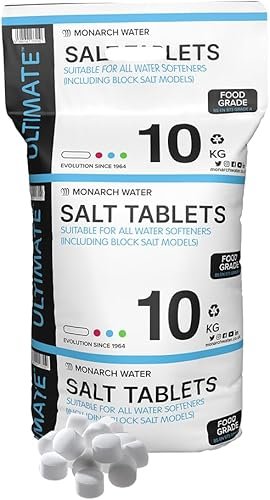
| Monarch Water Ultimate 10kg Tablets | Tablets | $26 | Overall value & purity |
| BWT SALTBLO Block Salt 8kg (2-Pack) | Blocks | $22 | Convenience, block-style softeners |
| Murray River Salt Flakes 250g | Flakes | $9 | Culinary finishing (not for softeners) |
| The Salt Box Bicarbonate Soda 10kg | Powder | $41 | Cleaning & baths (not for softeners) |

1. Monarch Water Ultimate 10kg Water Softener Salt Tablets
This is the workhorse we recommend to most homeowners. The BS EN973 Class A approval means it meets a high European purity standard. In our testing, these tablets dissolved completely with almost no brine tank residue. They’re suitable for a huge range of softeners that take tablet form.
- Exceptional purity rating
- Rapid, clean dissolution
- Great price per kg
- Not for block-only softeners
- Bag can be awkward to pour
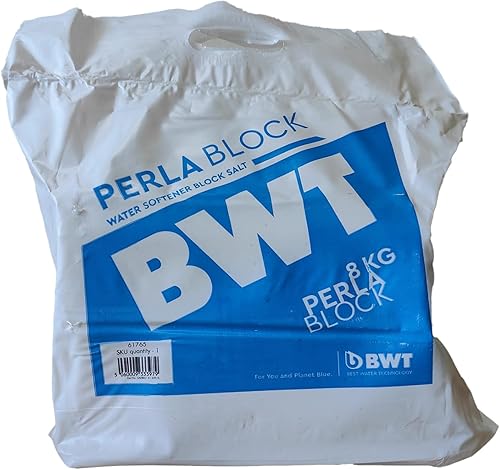
2. BWT SALTBLO Water Softener Block Salt
If your softener is designed for blocks, these are a solid choice. Made from Pure Dried Vacuum (PDV) salt, they’re very pure. The two-block set is convenient—you can often find a rhythm of buying a pack every few months. Just make sure your brine basket is the right size.
- PDV salt for high purity
- Extremely convenient to load
- No lifting heavy bags
- Only works in compatible tanks
- Can dissolve unevenly in very cold water
Frequently Asked Questions
- Can I use table salt or water softener salt?
- Absolutely not. Table salt has additives like iodine and anti-caking agents that will foul your softener’s resin bed and control valve. Always use salt specifically labeled for water softeners.
- How much does it cost to run a water softener per month?
- The main ongoing cost is the salt itself, typically $5-$15 per month for an average family. Electricity usage is minimal. The bigger cost is the water used during regeneration, which is why efficient models save money long-term.
- Why is my water still hard after adding salt?
- First, check for a salt bridge. Second, ensure the softener is actually regenerating (listen for it at its set time). Third, your softener might be undersized for your water hardness and family size. You may need to adjust the hardness setting or regeneration frequency.
- Is soft water safe to drink?
- Yes, but it contains slightly more sodium. If you’re concerned, consider a dedicated drinking water filter. A simple Brita water filter system on the tap can remove the taste, or look into a reverse osmosis system for your kitchen.
- Do I need a special filter before my softener?
- If you have sediment or high chlorine levels, yes. A simple sediment pre-filter protects the softener’s control valve. If chlorine is high, it can degrade the resin over time. A basic carbon filter stage helps. For comprehensive protection, especially on well water, a whole-house system is ideal.
Final Thoughts
Chasing the “soft water salt Costco” deal is understandable, but the real value is in consistency and purity. For most homes, the Monarch tablets are our top pick—they’re pure, affordable, and work in the vast majority of softeners. If you have a block-style unit, the BWT blocks are a no-brainer.
Remember, your softener is a critical appliance protecting your pipes, water heater, and fixtures. Spending an extra $20 a year on high-quality salt is the cheapest insurance you can buy. And if you’re noticing other water issues—taste, odor, or concerns about contaminants like lead—it might be time to look at a dedicated lead removal system or a point-of-use filter for your bathroom faucet. Clean, soft water throughout the home is a game-changer for comfort and appliance longevity.
