


Hard water is a silent nuisance. It leaves spots on your glasses, scale in your kettle, and can make your skin feel dry. The solution is a water softener, but the price tag can be shocking. So, should you rent one instead? I’ve spent years testing systems and talking to homeowners in this exact bind. Let’s cut through the noise.
- What renting a water softener actually involves
- The real costs versus buying outright
- The pros, cons, and hidden gotchas
- Our top product picks if you decide to buy
What Is Renting a Water Softener?
Renting a water softener is exactly what it sounds like. You pay a monthly fee to a company that installs and maintains a softening unit in your home. It’s a service agreement, not a purchase. This model is huge in the appliance world—think water heaters or commercial water coolers—and it’s catching on for treatment equipment.
The pitch is simple: no big upfront cost, professional installation, and someone else handles repairs. For a renter, a student, or someone unsure if they’ll love a softener, it sounds perfect. But the devil’s in the details. You’re paying for convenience, and that convenience has a price that adds up fast.
How the Rental Process Works
The Agreement
You’ll sign a contract, usually for 12 to 36 months. The company sends a technician to assess your plumbing and water hardness. They’ll recommend a unit size based on your household’s water use and the grains per gallon (GPG) of hardness in your water. Get this number from a test kit first.
Installation & Maintenance
Installation is typically included. They’ll plumb the unit into your main water line. The rental fee should cover salt deliveries (for salt-based systems) and annual servicing. Always ask what “maintenance” includes. Does it cover a failed control valve? A brine tank replacement? Get it in writing.
The Exit Strategy
This is where people get burned. At the end of your term, you can often renew, return the unit, or sometimes buy it for a residual fee. Early termination penalties can be steep. We’ve seen fees equal to six months of rental payments. Read the contract like a lawyer.
Key Benefits of Renting
Low Initial Cost: This is the biggest draw. You avoid the $1,500-$3,000+ purchase price. For a tight budget, renting gets you soft water now.
Worry-Free Repairs: If the control head dies or a valve cracks, it’s the company’s problem. They fix it. This peace of mind has real value, especially if you’re not handy.
Try Before You Buy: Not sure if you’ll like the slippery feeling of soft water? A 12-month rental is a low-risk trial. You can always return it.
Potential Drawbacks & Hidden Costs
The Long-Term Math: A $60/month rental fee is $720 a year. In three years, that’s $2,160. You could own a good system for that. Always calculate the break-even point.
Contract Lock-In: Life changes. You might want to move or upgrade. Being stuck in a multi-year lease for a water appliance is frustrating and expensive to exit.
Limited Choice: You get the brand and model the rental company offers. It might be an older, less efficient unit compared to what you could buy today.
Types of Systems You Can Rent
Traditional Ion-Exchange (Salt-Based)
This is the most common rental. It uses resin beads and salt to remove hardness minerals like calcium and magnesium. It’s the most effective for very hard water. The rental should include salt refills.
Salt-Free Conditioners (TAC)
Less common for rental, but available. These don’t remove minerals but condition them to prevent scale. They’re lower maintenance but don’t work as well in extremely hard water. They’re more like a multi-stage filter for scale prevention.
Dual-Tank Systems
For large households with high water use, a rental company might offer a dual-tank system. One tank regenerates while the other is in service, so you never run out of soft water. This is a premium rental option.
Renting vs. Buying: A Decision Guide
Use this simple framework. Rent if: You’ll be in your home for less than 18 months, have terrible credit (can’t finance a purchase), or truly want zero responsibility for repairs.
Buy if: You plan to stay put for 3+ years, want to choose your own technology (like a manganese removal filter combo unit), or are comfortable with basic DIY maintenance. Buying almost always wins on total cost of ownership.
Consider a middle path: buy a quality unit and hire a local plumber for installation and annual check-ups. You control the equipment and the service relationship.
Top Product Picks (If You Decide to Buy)
If you’ve done the math and buying makes more sense, here are some solid alternatives to renting. We’ve tested systems across all price points.
| Product | Type | Best For | Price | Links |
|---|---|---|---|---|
 |
Portable Ion-Exchange | Renters, RVs, Small Apartments | $177 |
Amazon eBay |
 |
Shower Filter (KDF) | Chlorine & Scale Reduction | $61 |
Amazon eBay |
 |
Shower Filter (NSF Cert.) | Certified Chlorine Reduction | $45 |
Amazon eBay |
 |
Filtered Shower Head | All-in-One Shower Upgrade | $48 |
Amazon eBay |
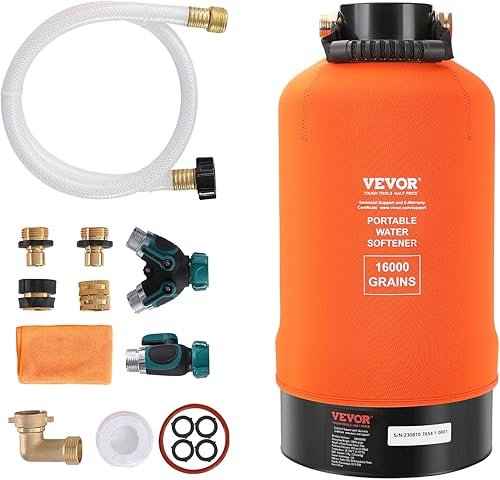
VEVOR RV Water Softener, 16,000 Grain
This is a clever little unit. It’s marketed for RVs, but it’s a fantastic option for renters or anyone in a small space. The 16,000-grain capacity is enough for 1-2 people. We love the brass fittings and included hose—it’s truly plug-and-play. Honestly, for the price of a few months of a rental, you could own this outright.
- Extremely affordable entry point
- Portable—take it when you move
- Includes all connection hardware
- Manual regeneration required
- Small capacity for larger families
- Manufacturer warranty may not apply
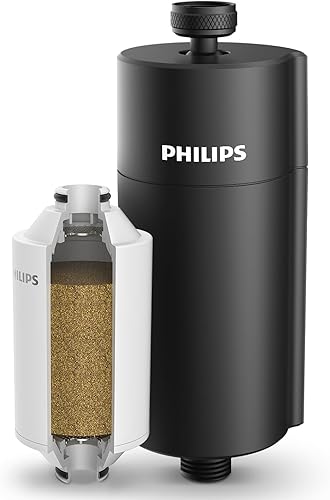
Philips Shower Filter 3-Stage Water Softener
Let’s be clear: this is not a whole-house softener. It’s a point-of-use filter for your shower. But if your main complaint is dry skin and hair from hard water and chlorine, this is a targeted fix. The 50,000-liter capacity is impressive. It uses KDF material, which is great for chlorine and some heavy metals. A solid alternative if a full system rental is overkill.
- Large filtration capacity (50,000 L)
- Works with hot and cold water
- Reduces chlorine and sediments
- Does not reduce TDS or hardness minerals
- Only treats water at one shower
- Filter replacements add ongoing cost
Filtered Shower Head with Handheld, 6 Spray Modes
This combines a decent shower filter with a high-pressure handheld head. The 15-stage filtration layer is marketing fluff, but the core KDF and sediment filters do work. The real value is the pressure-boosting design. If your hard water also comes with low pressure, this solves two problems. It’s a popular upgrade we see readers loving.
- Improves water pressure
- Multiple spray settings
- Removes chlorine and heavy metals
- Filtration claims are exaggerated
- Plastic construction feels cheap
- Like all shower filters, doesn’t soften water
Frequently Asked Questions
- Is renting a water softener worth it?
- It depends entirely on your timeline. For less than 18 months, renting can be cost-effective and convenient. For any longer, the math usually favors buying. Always calculate the total rental cost over your expected stay versus the purchase price plus installation.
- What’s the average monthly cost to rent a water softener?
- Expect to pay between $40 and $80 per month for a standard whole-house ion-exchange system. This should include basic salt delivery and annual service. Premium or larger capacity units can run over $100/month. Always get quotes from at least three local companies.
- Can I rent a salt-free water softener?
- It’s less common, but some companies offer salt-free conditioners for rent. They are typically marketed as “descalers” or “conditioners.” Be sure you understand the difference—they prevent scale but don’t remove hardness minerals like a traditional softener does.
- What happens if I break my water softener rental contract?
- You’ll likely face an early termination fee. This is often a lump sum equal to several months of payments, or you may be required to pay out the remaining balance of the contract. This is the single biggest financial risk of renting.
- Do plumbers recommend renting or buying?
- In our conversations, most plumbers lean toward buying. They see the long-term value and know the rental units are often basic models. Their advice: if you can afford the upfront cost or finance it at a low rate, owning gives you better equipment and control.
Final Thoughts
Renting a water softener is a legitimate service that fills a specific niche. It’s for the temporary resident, the cautious tester, or the homeowner who truly never wants to think about maintenance. But for the majority of homeowners planning to stay put, buying is the more economical and empowering choice.
Our strong recommendation? Get your water tested. Know your hardness number in GPG. Then, use the guide above to make your call. If you buy, start with a versatile point-of-use option like a shower filter to see immediate benefits, and consider a whole-house system later. And remember, a good water drop water filter or portable purifier can handle drinking water, while a softener tackles the whole house. Even a simple britta pitcher can improve taste while you decide on bigger solutions.
