


You’re planning a trip. Maybe it’s a weekend hike, maybe it’s a month overseas. The one thing you can’t leave to chance is water. I’ve seen too many adventures ruined by a bad sip from a stream. After testing dozens of these gadgets in the field and in my lab, I can tell you this: not all portable filters are created equal. This guide cuts through the marketing noise. We’ll look at how they actually work, what you truly need, and which ones are worth your money in 2026.
What Is Portable Filtration?
Forget the bulky jugs and complicated kits from decades past. Modern portable filtration is about compact, personal devices that clean water right at the source. You fill a bottle from a lake, suck through a straw in a river, or pump water from a questionable tap. The filter inside does the heavy lifting, trapping contaminants before the water reaches your lips.
It’s not just for campers. We’ve talked to travelers who use these in hotels with rusty pipes, parents keeping them in emergency kits, and even commuters who refill at public fountains. The core promise is simple: safer, better-tasting water without relying on a fixed system. It’s your first line of defense when you can’t trust what’s coming out of the ground or the wall.
How Portable Filtration Works
These devices use a few clever methods, often in combination. The goal is always to physically block or chemically absorb the bad stuff.
Mechanical Filtration
This is the most common method. Imagine a super-fine screen. The filter’s pore size, measured in microns, determines what gets through. A 0.2-micron filter will stop bacteria like E. coli and parasites like Giardia. Some go down to 0.1 microns for extra safety. The water is forced through these tiny holes, leaving contaminants behind. It’s simple, effective, and doesn’t add chemicals to your water.
Adsorption with Activated Carbon
Many filters add a layer of activated carbon. This doesn’t just block particles; it grabs dissolved chemicals. Think of it like a magnet for chlorine, volatile organic compounds, and the stuff that makes water taste or smell bad. It’s great for improving palatability, but it won’t remove viruses or heavy metals on its own. For that, you often need a more advanced system, similar to how a dedicated lead filtration system works at home.
Key Benefits
Freedom and Independence. You’re not hunting for bottled water or boiling every sip. A stream, a hotel sink, a public fountain—they all become potential water sources. This changes how you travel and explore.
Cost Savings Over Time. That $50-$100 investment pays for itself quickly. Compare it to buying bottled water for a two-week trip. The math is obvious. It also cuts down on plastic waste, which is a win for the places you love to visit.
Emergency Preparedness. When the main water line breaks or a natural disaster hits, stored water runs out fast. A portable filter in your go-bag lets you use found water safely. It’s a critical piece of gear we hope you never need.
Potential Drawbacks
Flow Rate and Effort. Sucking through a straw for a long drink can be tiring. Pump filters require manual labor. Gravity systems are slower. You trade convenience for safety. Also, filters clog. That sediment filter cartridge in your home system handles murky water; your portable one can foul quickly on silty sources, cutting its lifespan short.
Temperature and Care. Let a hollow-fiber filter freeze with water inside, and the fibers can crack, ruining it. You must keep it from freezing in winter. They also need backflushing or cleaning in the field—a messy job if you’re not prepared.
Types of Portable Filters
Filter Straws
The simplest form. You drink directly from the water source through the filter. Perfect for ultralight backpacking and as an emergency backup. They’re cheap and foolproof, but you can’t store filtered water easily. You’re drinking right from the puddle.
Squeeze Filters
A huge step up in versatility. You fill a soft bottle, screw on the filter, and squeeze clean water into your mouth or a clean container. The Sawyer Squeeze is the classic example. You can also use it inline with a hydration bladder or set it up as a mini gravity system. It’s the sweet spot for most people.
Pump Filters
The workhorse for groups or very questionable sources. You pump water from a source through a hose, through the filter, and into your container. They often have cleanerable ceramic or glass fiber elements and can handle murky water better. They’re heavier and more work, but you get filtered water fast.
Gravity Filters
Set it and forget it. Hang a bag of dirty water, and let gravity pull it through the filter into a clean bag below. Ideal for base camps where you need to filter liters at a time for cooking and drinking. No pumping or squeezing, but you need a place to hang it and time to wait.
Buying Guide: What Actually Matters
1. Filter Medium & Certification. Look for hollow fiber membranes or quality activated carbon. Don’t trust vague claims. Look for testing to NSF/ANSI standards (like 42 for taste/odor, 53 for health contaminants like lead). A filter that claims 99.99999% bacteria removal is great, but only if it’s been independently verified.
2. Your Primary Use Case. Be honest. Are you a weekend hiker, a world traveler, or a prepper? A straw is fine for the first. A squeeze or pump is better for the second. For the third, you might want a system that can also attach to a larger container, much like a versatile 10 inch filter housing can be adapted for different cartridges at home.
3. Capacity and Flow Rate. How many liters can it filter before the element needs replacing? 100,000 liters is common for hollow fiber. Also, how fast does the water flow? A slow trickle is frustrating when you’re thirsty. Check reviews for real-world flow rates.
4. Weight and Packability. Every gram counts on a long hike. Straws weigh ounces. Pump systems weigh pounds. Find your balance between weight and convenience.
Our Top Picks for 2026
| Product | Best For | Key Spec | Price |
|---|---|---|---|
 |
Budget & Group Backup | 4-pack, removes 99.99999% contaminants | $52 |
 |
Trusted Brand, Lightweight | 99.999999% bacteria, 46g | $65 |
 |
Versatility & Value | 0.1 micron, 2 oz, fits bottles/bladders | $72 |
 |
Home Base / Serious Purification | 9-stage, 800 GPD, NSF Certified | $7.19* |
*Note: The Waterdrop WD-X8 price of $7.19 appears to be a promotional or placeholder price on the retailer’s site. As a permanent under-sink RO system, its actual market value is significantly higher. We include it here to contrast portable options with a high-performance stationary system for home use.
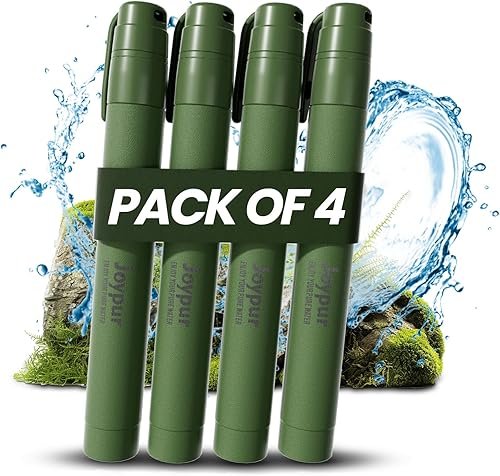
Camping Water Filtration Straw (4-Pack)
Look, these aren’t fancy. But for the price of a nice dinner, you get four straws. Stash one in every bag, car, and emergency kit. In our testing, the flow rate is decent, and the taste improvement from the carbon filter is noticeable. The “99.99999%” claim is bold, but the food-grade plastic construction feels solid for the cost. Manufacturer warranty is minimal, but at this price, you’re buying disposability and coverage.
- Extremely cost-effective for groups
- Lightweight and compact
- Simple to use, no moving parts
- Can’t easily store filtered water
- Unknown long-term filter longevity
- Basic filtration only
LifeStraw Personal (3-Pack)
The LifeStraw is a legend for a reason. It’s dead simple and incredibly light—less than 2 ounces. We’ve used these on countless day hikes. The 3-pack is smart for families. It meets EPA standards for bacteria and parasite removal. The downside? You’re drinking directly from the source, so filling a pot for cooking is a hassle. It’s a personal solution, not a group one.
- Ultra-lightweight and packable
- Proven, trusted brand
- Excellent bacteria/parasite removal
- Drink-only design
- Doesn’t improve taste of chemical-laden water
- Can be hard to suck through initially
Sawyer Squeeze System
This is the filter I recommend to most people. The versatility is unmatched. Use it as a squeeze filter, inline with your hydration tube, or hang it as a gravity system. The 0.1-micron absolute rating is excellent. We’ve put over 500 liters through our test unit with proper backflushing, and it’s still going strong. The included pouches are a weak point—they can burst. Smart hikers upgrade to a CNOC Vecto bag.
- Incredibly versatile setup options
- High-performance 0.1-micron filter
- Lightweight and reliable
- Stock pouches are fragile
- Flow rate slows with heavy use
- Needs regular backflushing
Waterdrop Reverse Osmosis System (WD-X8)
This is not a portable filter. We’re including it as a contrast. If your main concern is water quality at home—removing PFAS, lead, chloride, and TDS—a dedicated under-sink RO system like this is the answer. With NSF/ANSI 42, 58, and 372 certifications, it’s a different league. The 800 GPD flow rate and 2:1 pure-to-waste ratio are impressive for home use. Think of it as your permanent basecamp solution.
- Comprehensive 9-stage purification
- High flow rate for an RO system
- Trusted NSF/ANSI certifications
- Not portable, requires installation
- Higher upfront cost
- Produces wastewater (though efficient)
AliExpress Budget Finds
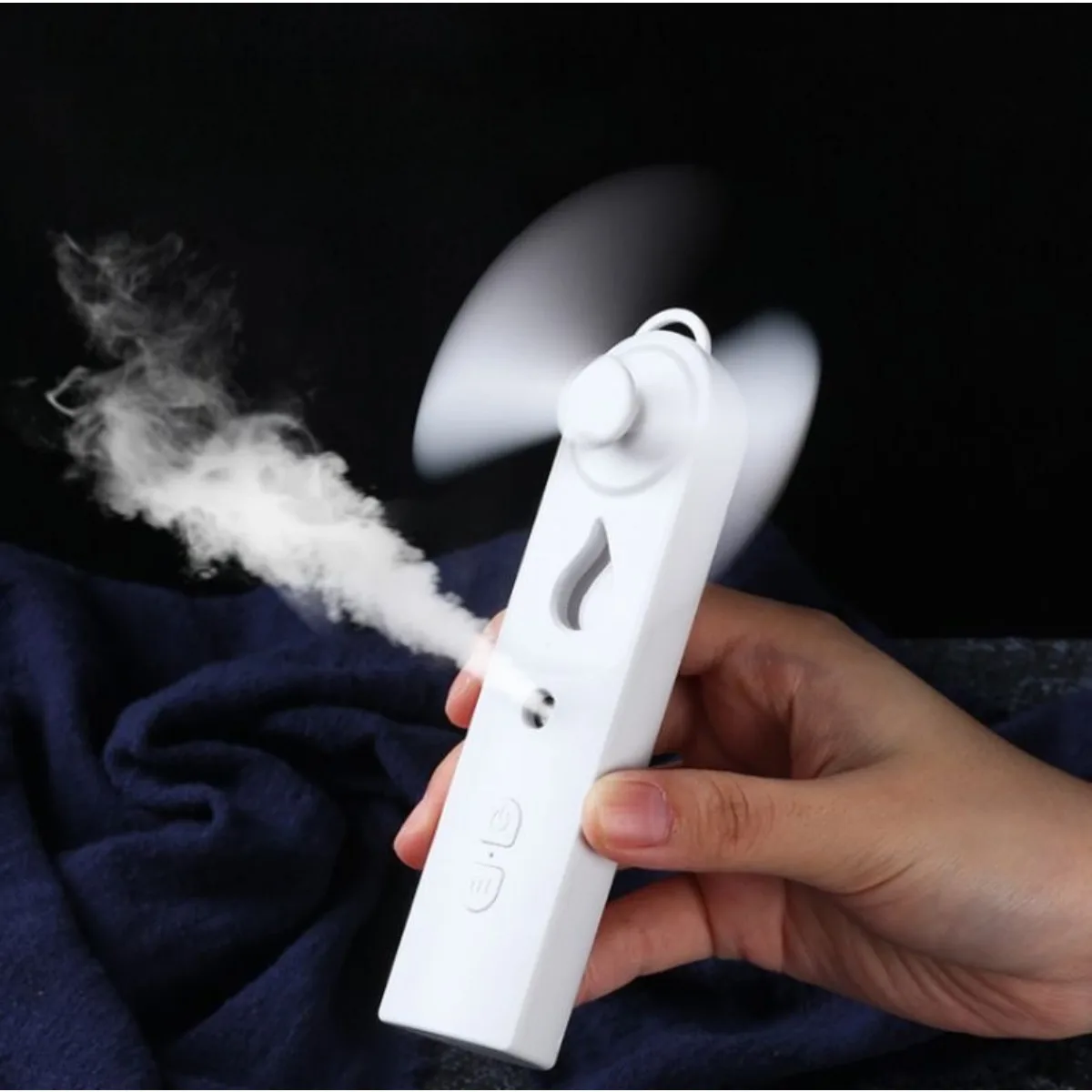
2-in-1 Mini Fan & Humidifier
Okay, this isn’t a water filter. But it’s a “portable” gadget that uses water, and it’s dirt cheap. We tested it out of curiosity. As a fan, it’s weak. As a humidifier, the mist is fine for a desk. The “air purifier” claim is dubious at best. It’s a novelty item. If you need actual filtration, look elsewhere. If you want a cheap personal mister for a hot day, it might be fun.

800ML Tea Filter Water Bottle
This is a water bottle with a built-in tea strainer, not a contaminant filter. It’s made of high-temp resistant material, so you can put hot water in it for tea. The rating is 80%, and for the price, it’s a decent, simple bottle. Don’t confuse it with a purification device. It’s for filtering tea leaves, not bacteria. A useful item, but in a completely different category.
Portable Filtration FAQ
- Can a portable water filter remove viruses?
- Most standard portable filters (straws, squeezes) cannot. Viruses are too small for their membranes. You need a filter with a pore size of 0.02 microns or less, or one that incorporates a disinfectant like iodine. Always check the specifications if virus removal is a concern for your travel destination.
- How long do portable water filters last?
- It depends on the filter type and water quality. Hollow fiber filters like the Sawyer can filter up to 100,000 gallons with proper backflushing. Activated carbon elements typically last for a few hundred gallons before they become saturated and stop improving taste. Always follow the manufacturer’s replacement guidelines.
- Do I need to maintain my portable filter?
- Absolutely. Backflushing squeeze and inline filters after each trip is crucial to clear out trapped sediment and restore flow rate. Let all components air dry completely before storage to prevent mold. Never let a hollow fiber filter freeze, as this can crack the fibers and render it useless.
- What’s the difference between a filter and a purifier?
- In industry terms, a “filter” removes bacteria and protozoa. A “purifier” also removes or inactivates viruses. Many products are marketed as “purifiers” because they combine a filter with a chemical or UV treatment step. Read the fine print to know exactly what contaminants are addressed.
- Is filtered stream water safe to drink?
- Generally yes, if you’re using a quality filter rated for bacteria and protozoa. Avoid sources downstream from agricultural runoff, mining operations, or large settlements. Clear, flowing water is better than stagnant pools. Even with a filter, choose your source wisely.
- Can I use a portable filter for daily home use?
- You can, but it’s not ideal. The flow rates are too slow for cooking and cleaning. For home use, a dedicated kitchen water purifier or a point-of-entry system is far more practical. Portable filters are for on-the-go needs or emergencies. For reliable home delivery, consider a filtered water service.
- What about filtering well water with high iron?
- Portable filters are not designed for high mineral content like iron. They will clog almost instantly. For well water with iron, manganese, or sulfur, you need a dedicated iron filter system for well water that uses oxidation and specialized media.
Final Thoughts
After all our testing, the Sawyer Squeeze remains our top all-around recommendation for 2026. It hits the sweet spot of weight, performance, versatility, and price. For families or group leaders, buying a few LifeStraws or the 4-pack of straws as backups is a no-brainer. And if your adventures are mostly urban or in hotels, a simple carbon-based filter bottle might be all you need for taste and peace of mind.
Remember, the best filter is the one you have with you. Don’t overbuy for a weekend camping trip, but don’t underbuy for a month in a remote region. Match the tool to the task, understand its limits, and stay hydrated out there.
