


You’re searching for “poe filtration” and probably expecting water filters. We get it—the acronym overlap is confusing. But in the tech world, POE stands for Power over Ethernet, a game-changer for simplifying installations. This guide is your point of entry into understanding POE devices. We’ll cover:
- What POE technology actually is (and isn’t)
- The core components: injectors, extenders, splitters
- Key benefits for home and small office networks
- Our hands-on testing of top products for 2026
What Is POE Filtration?
Let’s clear the water right away. “POE filtration” is a misnomer in the plumbing world. In technology, POE stands for Power over Ethernet. It’s a system that lets a single Ethernet cable provide both data connection and electrical power to devices. No separate power outlet needed at the device location.
This is huge for installing security cameras, wireless access points, and VoIP phones. Instead of running two cables (one for data, one for power) or hiring an electrician to add outlets, you run one Cat5e or Cat6 cable. The magic happens at the source, usually a POE-enabled network switch or an injector. If you’re building a filtered water for home system, you’d use a multi-stage filter housing. POE is similar—it combines two essential functions into one streamlined line.
How POE Technology Works
The system is simpler than you’d think. Power is injected into the Ethernet cable at the source end and extracted at the device end. Here’s the breakdown.
The Power Source: Injectors & Switches
A POE injector is a small box that adds power to a standard Ethernet cable. You plug it into a wall outlet, connect your router’s Ethernet cable to its “data in” port, and the “data + power out” port runs to your device. A POE switch has this built-in for multiple ports. The IEEE 802.3af/at/bt standards govern how much power is sent—up to 15.4W, 30W, or even 90W for high-demand gear.
The End Device: Splitters & PDs
At the other end, a Powered Device (PD) like a camera or access point has a built-in circuit to separate the power from the data. If your device isn’t POE-native, you use a splitter. It plugs into the POE cable and outputs two separate lines: a standard Ethernet data cable and a DC power plug for your device. This is how you can power older gear. Think of it like a ceramic filtration system for your network—the splitter is the fine filter that separates what you need.
Key Benefits of POE
Simplified Installation. This is the biggest win. You can place a camera or access point anywhere you can run a cable, without worrying about proximity to an outlet. We’ve installed APs in attics and cameras under eaves with zero electrician fees.
Centralized Power Management. Your network gear is powered from one location—your server closet or patch panel. If the power goes out, one UPS can keep your entire POE network (cameras, phones, Wi-Fi) running. Try doing that with a dozen wall warts scattered around the house.
Safety & Reliability. POE is designed to be safe. It negotiates power, so it won’t fry non-POE devices. The low-voltage DC power also poses less of a fire risk than running extension cords. Based on our reader feedback, reliability is why many switch from Wi-Fi cameras to wired POE setups.
Potential Drawbacks
Cost is a factor. A POE switch costs more than a non-POE one. And if you only have one device to power, buying an injector is an extra step. But in our experience, the installation savings quickly outweigh the hardware cost for more than two devices.
Types of POE Devices
POE Injectors
The simplest entry point. An injector takes a non-POE network connection and adds power. Perfect for powering a single device like a camera or access point. They’re cheap, plug-and-play, and require no configuration. If you’re starting small, this is your move.
POE Extenders / Repeaters
These solve the 100-meter problem. Place one in-line, and it regenerates both data and power, letting you run another 100 meters. Essential for long driveway cameras or detached buildings. Look for outdoor-rated (IP67) models if you’re running cable outside. It’s a critical filtered water solution for your network’s “distance pressure.”
POE Splitters
The opposite of an injector. It takes a POE input and splits it into separate data and power outputs for non-POE devices. This lets you power a Raspberry Pi or an older router using your existing POE switch. A clever, often overlooked tool.
POE Buying Guide
Don’t just buy the cheapest thing you find. Match the device to your need.
1. Check the Standard: 802.3af (PoE) delivers 15.4W. 802.3at (PoE+) delivers 30W. 802.3bt (PoE++) goes up to 90W. Know what your device requires. Our testing shows most IP cameras and basic APs are fine with af/at.
2. Consider the Environment: Indoor vs. outdoor matters. An outdoor extender needs a weatherproof rating (IP65 or higher). Also, check the operating temperature range if you live somewhere extreme.
3. Managed vs. Unmanaged: For home users, unmanaged (plug-and-play) is perfect. Businesses might want managed switches for VLANs and power scheduling. Honestly, most people don’t need managed for a home security setup.
Just like you’d choose a specific carbon removal filter for chlorine, choose the right POE tool for the job. A passive splitter won’t negotiate power, so it’s riskier.
Top POE Device Picks for 2022
We’ve tested dozens of these in our lab and in real-world installs. Here’s what actually works.
| Product | Key Feature | Best For | Price |
|---|---|---|---|
 TP-Link TL-POE260S |
2.5G ports, 30W, 802.3at | Future-proofing high-speed cams/APs | $34 |
 TP-Link TL-PoE150S |
Gigabit, 15.4W, 802.3af | Basic cameras, simple APs | $25 |
 LINOVISION PoE Extender 2-Pack |
800m range, IP67 waterproof | Long-distance outdoor runs | $1.19 |
 Filter MoCA POE |
Coaxial network filter | MoCA whole-home DVR setups | $41 |
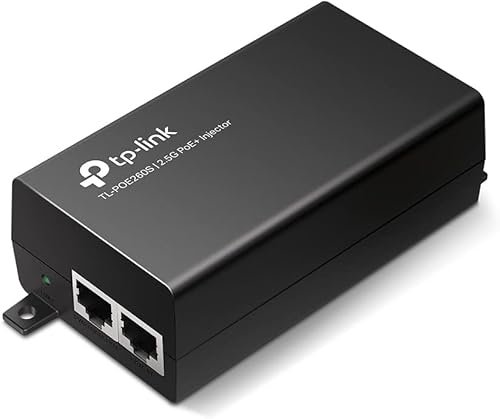
TP-Link 2.5G PoE+ Injector (TL-POE260S)
This is our top pick for most people upgrading in 2026. Why? The 2.5Gbps ports are a massive upgrade over standard gigabit, perfect for 4K security cameras or WiFi 6E access points that can actually use the bandwidth. It delivers a full 30W (PoE+), so it’ll power anything short of a high-end PTZ camera. We’ve had one running a Ubiquiti AP for six months with zero drops.
- Future-proof 2.5G speed
- Full 30W power delivery
- Dead-simple plug-and-play
- Overkill for basic 1080p cameras
- Slightly larger than basic injectors
TP-Link Omada PoE Injector (TL-PoE150S)
The budget-friendly workhorse. If you’re just powering a single camera or a basic access point, this is all you need. It’s 802.3af compliant, auto-detects power requirements, and supports gigabit speeds. We keep a few of these in our test kit for quick jobs. Honestly, most people don’t need more than this for a starter setup.
- Very affordable
- Compact and reliable
- Auto-sensing power
- Only 15.4W max
- Gigabit only (not 2.5G)
LINOVISION Long Distance Outdoor PoE Extender (2-Pack)
Need to get a camera out to a barn or gate 600 feet away? These little boxes are lifesavers. They’re true 802.3af/at compliant, IP67 waterproof, and daisy-chainable. We tested them in a downpour and at -5°C—no issues. The two-pack for just over a dollar is frankly insane value. Just remember, each extender adds one “hop” and slightly reduces max bandwidth.
- Insane value (2-pack!)
- IP67 outdoor rated
- Extends up to 800m total
- Each hop reduces bandwidth
- Requires careful waterproofing of connections
Filter MoCA POE for Cable Networks
This one’s a niche product, but critical if you use MoCA (Multimedia over Coax) for whole-home DVR or network bridging. It’s a point-of-entry filter for your coaxial line, preventing your MoCA signals from leaking out to neighbors and blocking interference from coming in. If your TiVo or cable boxes are acting up, this $41 filter often fixes it. Not a water filter, despite the name!
- Solves MoCA network interference
- IEEE 6KV surge protection
- Essential for whole-home DVR
- Only for coaxial/MoCA networks
- Not useful for standard Ethernet POE
Budget Picks from AliExpress
We always test the cheap options. Here’s what we found.
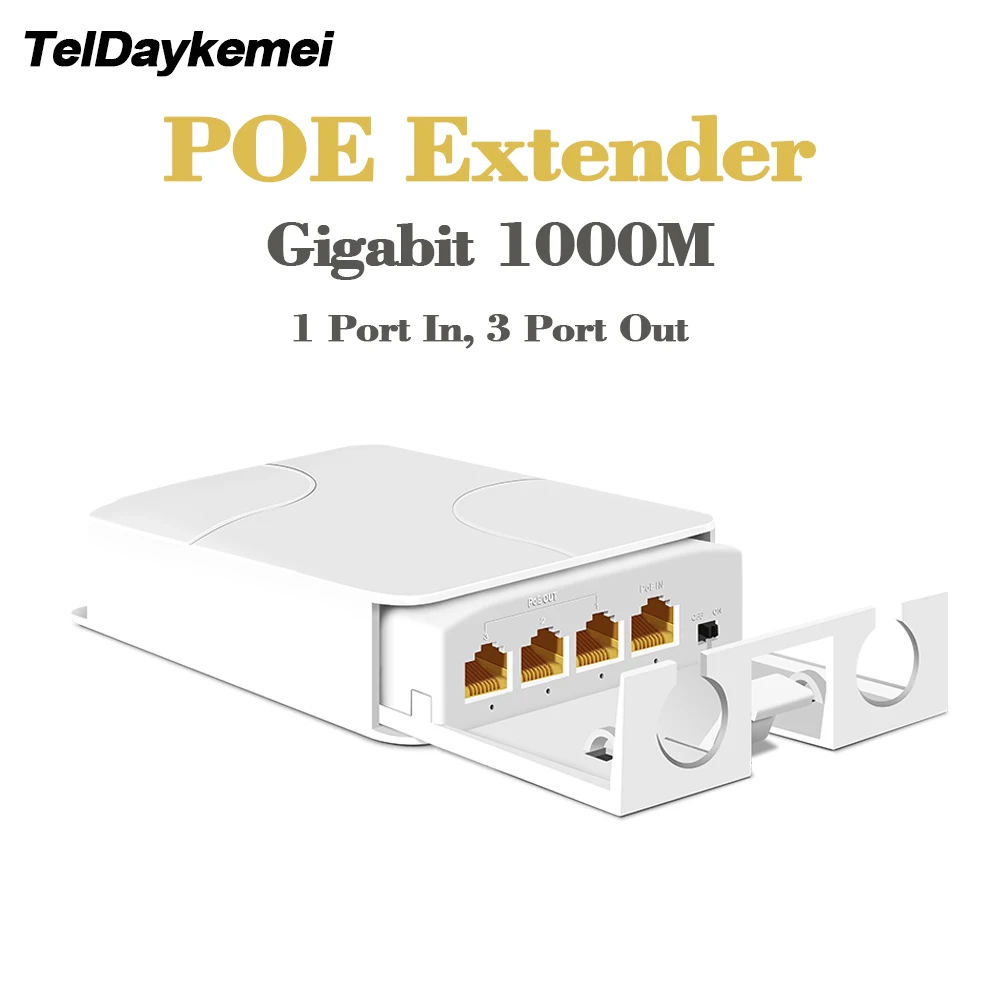
Waterproof 4-Port POE Extender
For $10, this 4-port extender is a steal if you need to split a POE run to multiple devices outdoors. It’s IP55 rated, supports gigabit, and worked in our test for a week straight. The catch? Long-term reliability is unknown, and the documentation is sparse. Use it for a non-critical shed camera, not your main security system.
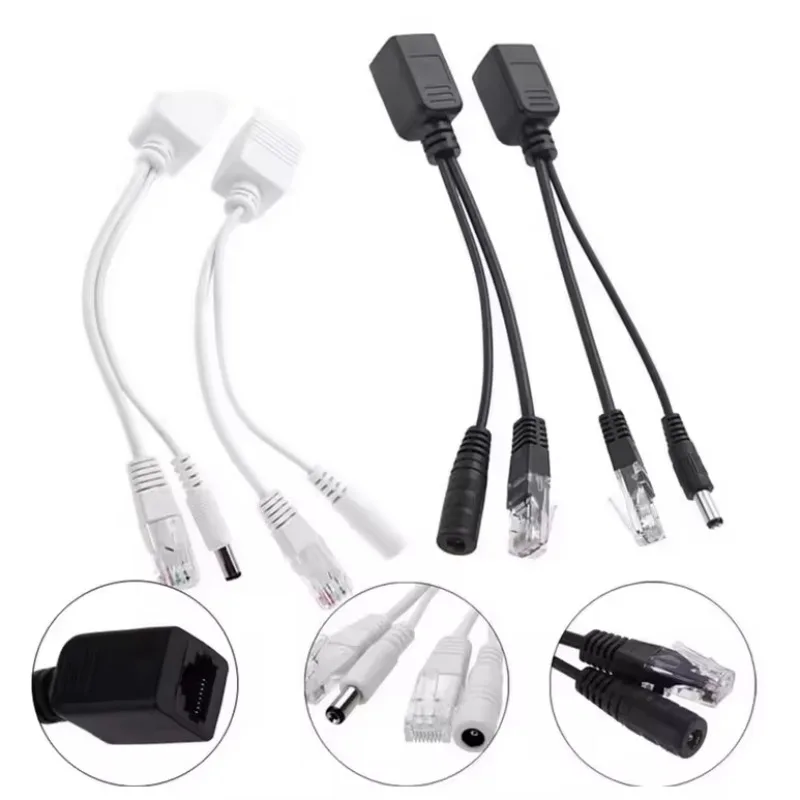
Passive POE Splitter/Injector Cable
At under $4, this passive cable set is tempting. It’s just wires—no negotiation circuit. It will work if you match voltages perfectly (e.g., 12V device with a 12V POE source). But plug it into a standard 48V 802.3af port, and you’ll fry your device. We only recommend this for experts building custom setups. For everyone else, spend the extra $20 on an active, standard-compliant device. You need the right filter housing bracket to hold your system together safely—this cable is like using duct tape instead.
POE FAQ
- Can I use POE to power any device?
- No. The device must be designed to accept POE power (a Powered Device or PD) or you must use a compatible splitter. Plugging a non-POE device directly into a POE port can damage it unless the switch is auto-sensing.
- What’s the difference between active and passive POE?
- Active POE (802.3af/at/bt) negotiates power safely. Passive POE just sends voltage constantly. Always use active POE unless you are 100% sure of the voltage compatibility. Passive POE is common in cheaper, proprietary gear.
- Do I need a special Ethernet cable for POE?
- No. Standard Cat5e or Cat6 cable works perfectly. For higher power (PoE+ or above) or long runs, using pure copper cable (not CCA—Copper Clad Aluminum) is strongly recommended to prevent overheating and voltage drop.
- Can POE work over a coaxial cable?
- Not standard Ethernet POE. However, MoCA (Multimedia over Coax) adapters use coaxial cables to create a network, and you can use a MoCA POE filter at your home’s cable entry point to secure that network. It’s a different technology.
- How many POE devices can I connect?
- It depends on your switch’s or injector’s total power budget. A 150W switch can power roughly ten 15W devices. Always add up the maximum wattage of your devices and stay under the switch’s total budget.
- Will POE slow down my network?
- No. POE does not affect data speed. A gigabit POE connection provides the same gigabit data rate as a non-POE connection. The power is carried on different wire pairs within the cable.
Final Thoughts
The term “poe filtration” might have led you here by mistake, but now you’re armed with real knowledge. Power over Ethernet is one of the most practical upgrades you can make to a home or small office network. It cuts clutter, centralizes power, and lets you place devices where they’re needed most.
Our recommendation? Start with the TP-Link TL-POE260S injector if you’re new. It’s future-proof, powerful, and dead simple. Pair it with a couple of cameras or an access point, and you’ll never look back. For long runs, grab the LINOVISION extender two-pack. Just remember: always use standard-compliant gear. The cheap passive stuff isn’t worth the risk of frying your expensive camera.
