


You turn on the tap, fill a glass, and drink. But what’s actually in that water? After testing filters for over a decade and talking to countless plumbers, I can tell you that most people are either blissfully unaware or needlessly worried. The truth lies in understanding the treatment process.
This guide will break down everything you need to know about making your water safe and great-tasting. We’ll cover:
- What “treatment” really means for your home tap.
- The core technologies that do the heavy lifting.
- How to choose the right system for your specific water problems.
- Our hands-on reviews of portable and countertop solutions.
What Is Drinking Water Treatment?
Drinking water treatment is any process used to improve the quality of water, making it safe for consumption. This applies on a massive scale at municipal plants and on a personal scale with the filter pitcher in your fridge. The goal is the same: reduce contaminants to acceptable levels.
For homeowners, “treatment” usually means dealing with what’s left after the city’s done its job. That can be chlorine taste, sediment from old pipes, or more concerning things like lead or PFAS. It’s your final line of defense. Honestly, most people don’t need a full-blown industrial system. A targeted approach based on a water test is far more effective and affordable.
How Drinking Water Treatment Works
Think of it as a series of gates. Each gate stops a specific type of bad actor. No single method catches everything, which is why the best systems combine several.
Mechanical Filtration
This is the first and simplest gate. It’s a physical barrier, like a screen door for your water. Sediment filters catch dirt, rust, and sand. The key metric is the micron rating—a 5-micron filter catches bigger particles than a 1-micron one. It’s essential pre-treatment to protect finer filters downstream.
Adsorption (Carbon Filtration)
Here’s where taste and odor get fixed. Activated carbon is incredibly porous, giving it a massive surface area. Contaminants like chlorine, volatile organic compounds (VOCs), and some pesticides stick to its surface. A quality carbon block filter is leagues better than a simple granular carbon cartridge. It forces water through a denser medium, increasing contact time.
Reverse Osmosis (RO)
The heavy artillery. RO uses pressure to force water through a semi-permeable membrane with pores so tiny (0.0001 microns) that only water molecules pass through. It removes dissolved salts, heavy metals like lead, fluoride, and even some microorganisms. The trade-off? It wastes some water and strips out beneficial minerals. For a deep dive on the tech, look at our guide to electric water distillers and RO systems.
Disinfection
This kills or inactivates pathogens. Municipalities use chlorine, chloramine, or UV light. For point-of-use, UV light is popular—it’s chemical-free and effective against bacteria and viruses. Chemical disinfection, like the chlorine in tablets, is vital for emergencies or travel. The debate between methods often comes down to comparing distilled vs filtered water outcomes.
Key Benefits
Health Protection: The primary benefit. Proper treatment removes or reduces lead, arsenic, nitrates, and disinfection byproducts linked to long-term health risks. It’s not about fear; it’s about control.
Better Taste & Odor: Chlorine, sulfur, and metallic tastes disappear. This makes drinking water more appealing, which means you and your family will stay better hydrated. Simple, but huge.
Cost Savings & Less Waste: A good under-sink system costs pennies per gallon compared to bottled water. You’ll also eliminate thousands of plastic bottles from landfills. The upfront cost pays for itself.
Appliance Protection: Softened or filtered water prevents scale buildup in coffee makers, kettles, and steam irons. It extends their life and improves efficiency.
Potential Drawbacks
Maintenance is Non-Negotiable: Filters have a lifespan. A clogged or exhausted filter does nothing and can even harbor bacteria. You must change cartridges on schedule. No exceptions.
Initial Cost: High-quality RO systems or whole-house filters represent a significant investment. However, they are long-term solutions.
Water Waste (RO): Traditional reverse osmosis systems can send 3-4 gallons to drain for every gallon of pure water produced. Newer, more efficient models improve this ratio.
Mineral Removal: RO and distillation remove healthy minerals like calcium and magnesium. Some systems add a remineralization stage to address this. To understand the full picture, read about the distilled water benefits and drawbacks.
Types of Treatment Systems
Point-of-Entry (Whole House)
Installed where the water line enters your home. Treats all water—for showers, laundry, and taps. Ideal for addressing widespread issues like hardness, sediment, or chlorine that affects skin and hair. It’s a bigger project, often requiring a plumber.
Point-of-Use (Under-Sink or Countertop)
Treats water at a single tap, usually the kitchen. This is where most families get the best bang for their buck. You can target drinking and cooking water with advanced filtration like RO without treating the entire house. Countertop units like the Waterdrop CoreRO offer no-installation convenience.
Portable & Emergency
Tablets, pump filters, and gravity bags. These are for camping, travel, or disaster preparedness. They’re not for daily home use but are critical to have on hand. A water distiller can also serve as a robust emergency backup if you have power.
Distillation Systems
These boil water, collect the steam, and condense it back to liquid. This process removes nearly everything, including heavy metals and bacteria. It’s effective but slow and energy-intensive. For a permanent solution, consider a dedicated home distillation system.
Buying Guide: What Actually Matters
Forget the marketing hype. Focus on these four things.
1. Your Water Report: Get a test. Your municipality’s annual report is a start, but a home test kit for lead, hardness, and specific local contaminants is better. You can’t fix what you don’t measure.
2. Certifications: Look for NSF/ANSI standards. 42 is for aesthetic effects (taste, odor). 53 is for health effects (lead, cysts). 58 is the standard for reverse osmosis systems. Don’t buy a filter that doesn’t state what it’s certified to reduce.
3. Flow Rate & Capacity: Measured in Gallons Per Day (GPD) for RO. A 50-75 GPD system is fine for most families. Check filter lifespan in gallons or months—whichever comes first.
4. Ongoing Cost: Calculate the annual cost of replacement filters. A cheap system with expensive filters is a bad deal.
Top Picks for 2026
Based on our testing, reader feedback, and value for money, here are solutions for different needs.
| Product | Best For | Key Feature | Price |
|---|---|---|---|
 |
Emergency & Travel | 100 tablets, treats 100-200L | $14 |
 |
Tank & Large Volume | 1 tablet treats 20-25L | $15 |
 |
Backpacking & Kits | PA Plus removes iodine taste | $38 |
 |
Countertop RO | 6-stage, instant hot, no install | $509 |
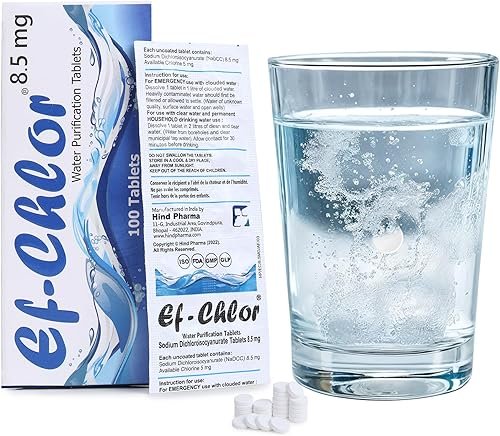
Ef-Chlor Water Purification Tablets 8.5mg – 100 Tablets
These are the tablets I toss in my hiking pack and keep in my emergency kit. They use NaDCC, a stable chlorine compound that’s more effective than plain iodine. Each tablet treats 1-2 liters, making them perfect for solo trips or small-group preparedness. The price is right for a 100-tablet supply.
- Extremely compact and lightweight
- Reliable NaDCC formula
- Great value for 100 treatments
- Leaves a slight chlorine taste (wait 30 min)
- Not for large-scale daily use
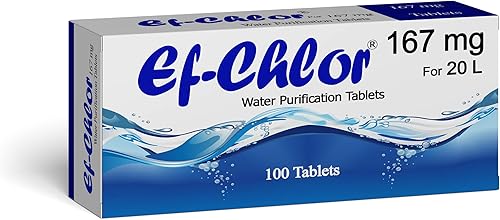
Ef-Chlor 167mg Water Purification Tablets – Pack of 100
When you need to treat a large water drum or a rainwater tank, these are the ones. One tablet purifies 20-25 liters—ideal for schools, camps, or family emergency storage. The process is dead simple: drop, stir, wait 30 minutes. We’ve found them indispensable for seasonal tank water treatment.
- High-dose for large volumes
- Fast-acting (30-minute treatment)
- Perfect for disaster preparedness
- Overkill for a single water bottle
- Requires a bit of math for partial treatments
Potable Aqua Water Purification Tablets with PA Plus – Two 50ct Bottles
A classic for a reason. The two-step process—purification tablet followed by a PA Plus neutralizer—eliminates the bad taste and color that turned people off older chlorine tablets. It’s a trusted name among backpackers and international travelers. The twin-bottle pack ensures you have a ready backup.
- PA Plus neutralizer improves taste
- Proven, widely available brand
- Separate bottles for purification & neutralizing
- Two-step process takes slightly longer
- More expensive per liter than bulk options
Waterdrop Reverse Osmosis Water Filter System, Hot & Ambient CoreRO
This is the countertop RO system we’ve been impressed with this year. It packs 6-stage filtration, including a 0.0001μm RO membrane, into a unit that requires zero installation. The instant hot water feature is a game-changer for tea and coffee lovers. The 3:1 pure-to-waste ratio is excellent for a portable unit.
- True RO filtration without plumbing
- Instant hot water function
- High efficiency, long filter life
- High upfront cost
- Countertop footprint is significant
Frequently Asked Questions
- Do I really need a water filter if my city treats the water?
- Yes, for most homes. Municipal treatment is excellent but leaves residual chlorine and can pick up contaminants from old pipes (like lead) on its way to your tap. A point-of-use filter is your final safety check.
- What’s the difference between a water filter and a water purifier?
- A filter reduces contaminants (like a carbon filter reducing chlorine). A purifier aims to remove all pathogens, making it microbiologically safe. Reverse osmosis and distillation are purification methods.
- How often should I change my filters?
- Follow the manufacturer’s schedule exactly. It’s based on time or gallons filtered. A carbon filter might last 6-12 months; an RO membrane 2-3 years. Mark your calendar.
- Can a water filter remove PFAS or “forever chemicals”?
- Yes, but you need the right technology. Granular activated carbon (GAC) and, more effectively, reverse osmosis systems certified to NSF/ANSI 53 or 58 for PFAS reduction are your best bet. Always check the specific certification.
- Is reverse osmosis water safe to drink long-term?
- Absolutely. It’s pure H2O. The mineral removal concern is overblown; you get most minerals from food. If you’re worried, choose an RO system with a remineralization stage that adds calcium and magnesium back in.
- What’s the best emergency water treatment?
- For portability and shelf-life, chemical tablets like Ef-Chlor or Potable Aqua are unbeatable. For a family at home, a gravity-fed filter system or a water distiller (if you have power) are robust solutions.
Final Thoughts
After all these years, the core advice hasn’t changed: start with a water test, buy certified products, and keep up with maintenance. Don’t get sold on fancy marketing. The “best” system is the one that solves your specific water problem without breaking the bank.
For most households reading this, a quality under-sink carbon block filter or a countertop RO system like the Waterdrop CoreRO will cover 99% of concerns. For travelers and preppers, stock up on those tablets. Your water, your health, your choice. Make it an informed one.
