


Drinking Water Testing: The Homeowner’s Guide to What’s Really in Your Glass (2026)
You turn on the tap and fill a glass. Looks clear. Tastes… okay. But is it really safe? After testing water from hundreds of homes, I can tell you: looks deceive. The only way to know what you’re drinking is to test it.
This guide covers:
- What home water testing actually checks for
- How test strips and digital meters work (and their limits)
- The real benefits—and honest drawbacks—of DIY testing
- How to choose the right kit for your concerns
- Our hands-on reviews of the top kits for 2026
What Is Drinking Water Testing?
It’s a simple analysis of your tap, well, or filtered water to find out what’s dissolved or floating in it. We’re talking minerals, metals, chemicals, and microbes. Think of it like a blood test for your plumbing.
Most people test because they notice a change—a funny taste, rusty stains, or a new baby in the house. Others test proactively, especially if they rely on well water, which isn’t treated by a municipal plant. The goal isn’t to panic. It’s to get facts. If you’re investing in a ceramic filter cartridge or a whole-house system, you need to know what you’re filtering for.
A basic test won’t tell you if you have a dangerous bacteria outbreak (you’d need a lab for that), but it will flag common issues like high lead, chlorine, or nitrates that impact your home drinking water quality every day.
How Home Water Testing Works
The Test Strip Method
This is the most common DIY approach. You dip a treated paper strip into a water sample for a couple of seconds, wait about 30 seconds, and compare the color changes to a chart. Each pad on the strip reacts with a specific contaminant—like chlorine or nitrate—changing hue based on concentration.
It’s fast and cheap. But it’s subjective. Is that shade of pink “1.0 ppm” or “1.5 ppm”? Lighting and your eyesight matter. In our testing, we’ve found strips great for spotting problems, not for quantifying them with lab precision.
The Digital Meter Approach
A TDS (Total Dissolved Solids) meter is a different animal. It measures electrical conductivity in your water, which correlates to the amount of dissolved ions—things like calcium, sodium, and sulfates. It gives you a number in ppm (parts per million).
Key Benefits of Testing Your Water
Peace of mind, backed by data. No more guessing. You’ll know if that metallic taste is actually iron or just your imagination.
Saves money on filters. Why buy a $500 system for problems you don’t have? Testing tells you if you need a simple chlorine filter system or a more advanced setup for heavy metals.
Catches problems early. Well water can change with the seasons. City water can be affected by old pipes. A yearly test is a cheap insurance policy against creeping contamination.
Verifies your filter’s performance. Installed a new under-sink unit? Test before and after. It’s the only way to know it’s actually doing its job.
Potential Drawbacks & Limitations
Test strips have a shelf life. Old strips give bad readings. Always check the expiration date.
Color charts are frustrating. Telling apart “safe” from “borderline” on a yellow-to-green gradient can feel like a guessing game. Our advice? If it looks concerning, send a sample to a lab to confirm.
They can cause unnecessary worry. A high “total hardness” reading isn’t a health threat—it’s just why your kettle gets scaly. Context is everything.
Types of Home Water Test Kits
Multi-Parameter Test Strips
The all-rounders. A single strip can test for 10-18 things at once: pH, hardness, chlorine, lead, nitrate, copper, and more. Perfect for a first-time test or annual checkup. They’re the most popular for a reason.
Single-Parameter Kits
These target one specific contaminant, like lead or bacteria. More accurate for that one thing, but you’ll need multiple kits if you have several concerns. Useful for follow-up testing if a strip flagged a potential issue.
Digital TDS & EC Meters
As mentioned, these measure conductivity. Essential for anyone with a reverse osmosis system. A low TDS reading (under 50 ppm) tells you the RO membrane is working. A high reading means it’s time for a replacement. They’re also great for checking aquarium or electric water distiller output.
Buying Guide: What to Look For
Parameters: Don’t just buy the cheapest strip. Match the tests to your worries. City dweller? Focus on chlorine, lead, and copper. Well owner? You need nitrate, iron, and hardness at a minimum.
Accuracy & Sensitivity: Look for strips that detect lead at levels below 15 ppb (the EPA action level). Read independent reviews—some cheap strips are wildly off.
Ease of Use: Clear instructions and an easy-to-read color chart are non-negotiable. Some kits now include apps that use your phone’s camera to read the colors. They’re worth it.
Quantity: A 100-strip pack sounds great until you realize you need to test multiple sources (kitchen tap, bathroom, fridge) multiple times. 125 strips is a solid starting point for a home.
Certifications: While home kits aren’t certified like lab equipment, some brands validate their strips against NSF/ANSI standards. It’s a good sign of quality control.
Our Top Picks for 2026
We’ve used all of these in our own homes and on reader-submitted samples. Here’s how they stack up.
| Product | Best For | Key Features | Price | Links |
|---|---|---|---|---|
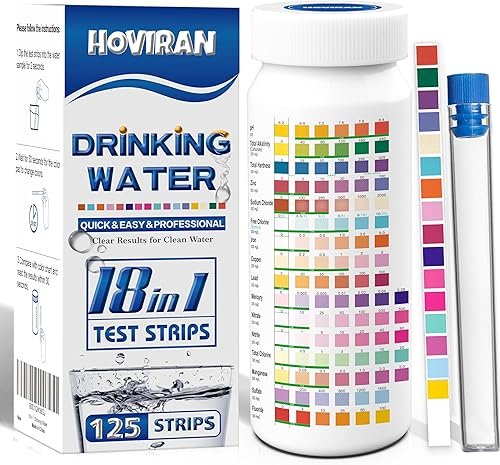
| 18-in-1 Water Quality Test Strips (125ct) | Comprehensive Annual Check | Tests 18 parameters incl. lead, mercury, hardness. 3-step process, results in 30 sec. | ~$27 |
Amazon eBay |
| 16-in-1 Drinking Water Test Kit | Beginners & Families | Clear instructions, 2-minute results, includes exclusive ebook for understanding results. | ~$26 |
Amazon eBay |
| 4-in-1 TDS Meter Digital Tester | RO System Owners | Measures TDS, EC, and Temp. 0-9999 ppm range. Quick verification of filter performance. | ~$19 |
Amazon eBay |
| All-New 18-in-1 Drinking Water Test Kit (125 Strips) | Value & Speed | 18 parameters, 30-second results. Specifically good for hardness testing around the home. | ~$23 |
Amazon eBay |
Individual Reviews

18-in-1 Water Quality Test Strips, 125ct
This is the kit we recommend to friends who ask, “What should I buy?” It covers all the major bases—lead, mercury, copper, nitrates—in one dip. The color chart is one of the clearer ones we’ve used, though you’ll still want good lighting. Perfect for that annual checkup on your ceramic candle filter or whole-house supply. The 125-strip count means you can test multiple taps and re-test questionable results.
- Most comprehensive parameter list for the price
- Fast, 30-second results
- Good strip count for ongoing monitoring
- Lead and mercury pads can be hard to distinguish at low levels
- Not a substitute for a lab test

16-in-1 Drinking Water Test Kit
A very close second. What sets this kit apart is the included ebook. It actually explains what each result means for your health and plumbing, which is huge for beginners. In our side-by-side tests, its accuracy was on par with the 18-in-1 kits. The instructions are exceptionally clear. If you’re feeling overwhelmed by water testing, start here.
- Excellent educational support with ebook
- Very clear, step-by-step guide
- Reliable and consistent results
- Tests two fewer parameters than top pick
- Slightly higher cost per strip

4-in-1 TDS Meter Digital Water Tester
This isn’t a strip kit, but it’s an essential tool. We keep one in our desk drawer. It instantly tells you the TDS of any water source. Use it to check your refrigerator filter, your new ionizing water filter, or the water at a hotel. It won’t identify specific contaminants, but it’s the fastest way to see if your water’s total dissolved solids are in a normal range (typically 50-300 ppm for tap water).
- Instant digital readout
- Great for tracking filter performance over time
- Very affordable
- Only measures total dissolved solids, not specific contaminants
- Requires calibration for best accuracy

All-New 18-in-1 Drinking Water Test Kit (125 Strips)
A solid budget alternative to our top pick. It performs nearly identically in our experience, testing for the same 18 key parameters. Where it slightly falls short is the color chart’s print quality—it’s a bit smaller and can be trickier to read in dim light. But for $4 less, it’s a fantastic value if you’re cost-conscious. It’s especially good for testing water hardness throughout your home.
- Excellent value for 18 parameters
- Very fast 30-second results
- Includes a test tube
- Color chart is slightly less clear
- Brand is less established
Frequently Asked Questions
- How often should I test my drinking water?
- For city water, test annually or if you notice a change in taste, odor, or color. For well water, test every year for bacteria and nitrates, and every 3-5 years for a full panel. Always test after flooding or nearby construction.
- Can home test strips detect bacteria like E. coli?
- No. Standard home test strips are for chemical parameters only. Bacteria testing requires a sterile sample sent to a certified lab. Some kits include a vial to mail in, but the strip itself won’t give you a bacteria reading.
- My test shows high lead. What should I do?
- First, don’t panic. Run your cold water for 2-3 minutes before using it to flush the pipes. Retest. If it’s still high, stop drinking the water and contact your local water authority or a certified lab for a confirmatory test. Consider a filter certified to NSF/ANSI 53 for lead reduction.
- What’s the difference between TDS and hardness?
- TDS measures all dissolved solids—good minerals and bad. Hardness is a subset of TDS, specifically calcium and magnesium. A TDS meter won’t tell you hardness. You need a strip or titration kit for that.
- Are more expensive test kits more accurate?
- Not always. We’ve found $25 strip kits that perform as well as $60 ones. The key is the manufacturer’s quality control and the freshness of the strips. Look for kits that specify detection levels (e.g., “detects lead at 5 ppb”) rather than vague claims.
- Do water test strips expire?
- Yes. The reactive chemicals on the pads degrade over time, usually within 1-2 years. Always check the expiration date on the bottle. Expired strips will give inaccurate, often falsely low, readings.
Final Thoughts
Testing your drinking water isn’t about fear. It’s about control. For under $30 and five minutes of your time, you move from guessing to knowing. That knowledge is powerful—it tells you if your water is safe, if your filter is working, and where you might need to make a change.
Based on a decade of testing, our top recommendation for most homeowners is the 18-in-1 Water Quality Test Strips (125ct). It offers the best balance of comprehensive testing, ease of use, and value. Pair it with a TDS meter if you have a reverse osmosis system, and you’ll have a complete picture of your water’s health. Start there. Test annually. And drink with confidence.
