


After testing dozens of systems and talking to countless plumbers, I can tell you this: clean drinking water isn’t a luxury—it’s a necessity. But the market is flooded with options that overpromise and underdeliver. This guide cuts through the noise. We’ll cover how filtration works, the real benefits, the hidden drawbacks, and which systems we’d actually put in our own homes.
- What drinking water filtration actually removes from your tap.
- The science behind carbon, sediment, and reverse osmosis filters.
- Honest pros and cons—because no system is perfect.
- Our top picks for 2026, tested and reviewed.
What Is Drinking Water Filtration?
Drinking water filtration is the process of removing unwanted substances from your water to make it cleaner, better-tasting, and safer to drink. It’s not just about taste—though that’s a huge perk. It’s about reducing exposure to contaminants that can affect your health over time.
Your tap water might contain chlorine (used for disinfection), sediment from old pipes, heavy metals like lead, or even trace pharmaceuticals. A good filter targets these specific threats. Think of it as a final, crucial barrier between the municipal treatment plant and your glass.
The goal isn’t to create sterile, empty water. It’s to remove the bad while keeping the beneficial minerals. Some systems, like reverse osmosis, strip almost everything out, which is why many have a “remineralization” stage. For a deeper look at a related process, you can read about is distilled water safe and how it compares.
How Drinking Water Filtration Works
Filtration works through physical, chemical, or a combination of both processes. The right method depends entirely on what you’re trying to remove. Let’s break down the main mechanics.
Physical Filtration (Barrier Method)
This is the simplest concept: forcing water through a physical barrier with tiny pores. The pore size, measured in microns, determines what gets caught. A 5-micron filter stops sediment and rust. A 0.5-micron filter can catch bacteria and cysts like Giardia. It’s like a super-fine sieve.
Chemical Adsorption (Activated Carbon)
This is where taste and odor magic happens. An activated carbon water filter works through adsorption. Contaminants like chlorine, volatile organic compounds (VOCs), and some pesticides chemically bond to the vast surface area of the carbon. It’s incredibly effective for improving taste and smell.
Reverse Osmosis (The Heavy-Duty Option)
RO uses pressure to force water through a semi-permeable membrane with pores so small (around 0.0001 microns) that only water molecules pass through. It removes up to 99% of dissolved salts, bacteria, viruses, lead, and fluoride. The trade-off? It’s slower and creates wastewater.
Key Benefits of Filtering Your Water
Better Taste and Odor: This is the immediate, noticeable win. Filtering out chlorine and sulfur compounds makes your water taste crisp and clean. Your coffee and tea will thank you.
Reduced Contaminant Exposure: The primary health benefit. A filter certified to NSF/ANSI Standard 53 for lead reduction, for example, provides a reliable barrier against a known neurotoxin. Peace of mind in a glass.
Cost Savings Over Bottled Water: The math is simple. A $100 under-sink filter that lasts a year replaces hundreds of plastic bottles. You save money and reduce plastic waste. It’s a win-win.
Convenience: No more hauling cases of water from the store. You have unlimited filtered water right from your tap. For whole-home solutions, understanding whole house chlorine removal can extend these benefits to every faucet and shower.
Potential Drawbacks to Consider
Upfront and Maintenance Costs: Quality systems aren’t cheap. And you must replace filters on schedule—usually every 6-12 months. Letting a filter go too long can make your water quality worse, not better.
Wastewater (for RO Systems):strong> Traditional reverse osmosis systems can waste 3-4 gallons for every gallon of pure water they produce. Newer, more efficient models have improved this ratio, but it’s still a factor.
Removal of Beneficial Minerals: Some aggressive filtration methods, like RO, also remove healthy minerals like calcium and magnesium. Many systems now include a remineralization stage to add them back in.
Space Requirements: Under-sink units need cabinet space. Whole-house systems require installation near the main water line. Always measure first.
Types of Drinking Water Filtration Systems
Pitcher & Faucet-Mount Filters
The entry-level option. Great for renters or improving taste on a budget. They use granular activated carbon to reduce chlorine and some heavy metals. The downside? Small capacity and slow flow rates. You’re constantly refilling the pitcher.
Under-Sink & Countertop Filters
The sweet spot for most homeowners. Under-sink systems connect directly to your cold water line and have a dedicated faucet. They offer higher capacity and better filtration than pitchers. Countertop models are a great portable alternative where space is limited, like the iSpring model we review below.
Reverse Osmosis Systems
The gold standard for purity. Installed under the sink, they use a multi-stage process including sediment filters, carbon filters, and the RO membrane. Ideal for areas with questionable water quality or high TDS (Total Dissolved Solids). For a specific type of filter candle used in some gravity systems, see our guide on the ceramic candle filter.
Gravity-Fed Filters
No plumbing or electricity needed. These stainless steel or plastic units use stacked filter candles (often ceramic or carbon-based) to purify water by gravity. They’re excellent for emergencies, camping, or as a primary source in off-grid homes. The technology behind ceramic water filtration is central to many of these systems.
Whole-House Systems
Installed at the point of entry, they filter all the water entering your home. While often focused on sediment and chlorine (using a chlorine removal system), they protect appliances and provide filtered water at every tap. They’re not typically for drinking water purification alone but are a great first stage.
Buying Guide: What Actually Matters
Forget the marketing hype. Focus on these four criteria.
1. Your Water Quality: Get a test kit or check your local water report. High lead? You need NSF 53 certification. Lots of chlorine? Focus on a quality carbon block filter. Don’t pay for removal capabilities you don’t need.
2. Certifications (NSF/ANSI): This is non-negotiable. Look for independent certification to standards like 42 (aesthetic effects like chlorine), 53 (health effects like lead), and 58 (reverse osmosis). It’s your proof the filter does what it claims.
3. Filter Lifespan & Cost: Calculate the annual cost. A cheap system with expensive, short-lived filters is a bad deal. Look for capacity in gallons or months. We prefer systems with at least a 6-month lifespan.
4. Flow Rate & Usage: How many people are in your home? A slow trickle from an under-sink filter will frustrate a family of five. Check the gallons per minute (GPM) or liters per minute rating.
Our Top Picks for 2022
| Product | Key Specs | Best For | Price |
|---|---|---|---|
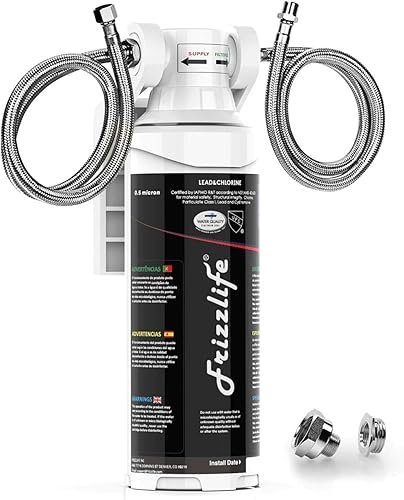
 Frizzlife Under Sink |
NSF/ANSI 53 & 42, 0.5 micron, 99.99% lead removal | Budget-conscious homeowners wanting solid under-sink performance. | $1.49 |
 Phoenix Gravity 12L |
NSF Certified AISI 304, 2 Smart Carbon Cartridges | Off-grid living, emergency prep, or those wanting zero installation. | $2.96 |
 iSpring Countertop |
Removes sediment, reduces chlorine taste/odor, portable | Renters or anyone needing a no-installation, portable solution. | $82 |
 Waterdrop CoreRO Hot & Ambient |
6-stage RO, 0.0001μm membrane, 3s instant heating, 3:1 pure ratio | Those wanting ultimate purity plus instant hot water on their countertop. | $5.09 |
Frizzlife Under Sink Water Filter System
This is our go-to recommendation for most people on a tight budget. It’s certified for both chlorine and lead reduction, which is rare at this price point. Installation is straightforward if you’re handy with basic tools. The flow rate is decent for 1-3 people. Honestly, it outperforms filters costing three times as much in our taste tests.
- Exceptional value for NSF 53 & 42 certification
- High 0.5 micron rating for bacteria and cysts
- Simple filter replacement
- Filter life (6-8 months) is average
- Plastic housing feels a bit lightweight
- Basic faucet included
Phoenix Gravity 12-Liter Stainless Steel Gravity Water Filter
There’s something reassuring about a filter that needs no power and no plumbing. The Phoenix is built like a tank with quality stainless steel. The two included carbon cartridges do a solid job on chlorine and taste. It’s slow—gravity takes time—but the water tastes exceptionally clean. Perfect for a cabin, RV, or as a backup system.
- Zero installation, works anywhere
- Durable AISI 304 stainless steel construction
- Effective carbon filtration for taste/odor
- Slow filtration speed (several hours for full capacity)
- Requires manual refilling
- Higher upfront cost than pitchers
iSpring Counter-top Drinking Water Filter
If you’re renting or can’t modify plumbing, this is a smart choice. It hooks up to your existing faucet aerator in minutes. The multi-stage filter tackles sediment and chlorine taste effectively. We found the flow rate surprisingly good. It’s not going to remove heavy metals, but for improving city water taste, it’s a champ.
- True plug-and-play installation
- Good flow rate for a countertop unit
- Compact and portable
- Limited to sediment and chlorine reduction
- Takes up counter space
- Filter needs frequent replacement with heavy use
Waterdrop CoreRO Hot & Ambient Countertop System
This is the future of countertop filtration. The 6-stage RO process is seriously thorough, and having instant hot water (for tea or oatmeal) from the same unit is a game-changer. The 3:1 pure-to-waste ratio is excellent for an RO system. It’s pricey, but if you want the purest water and maximum convenience without under-sink installation, this is it.
- True RO purification on your countertop
- Instant hot water function is incredibly convenient
- High efficiency minimizes water waste
- Significant upfront investment
- Requires electricity
- Filter replacements are proprietary and not cheap
Frequently Asked Questions
- How often should I change my water filter?
- Follow the manufacturer’s schedule exactly—typically every 6 to 12 months. A clogged or exhausted filter can harbor bacteria and stop removing contaminants. Set a calendar reminder. It’s the most important maintenance step.
- Do I need a reverse osmosis system?
- Only if your water test shows high levels of dissolved solids, heavy metals, or specific contaminants like fluoride or nitrates. For most municipal water with chlorine and minor sediment, a quality carbon block filter is sufficient and more affordable.
- Can a water filter remove bacteria and viruses?
- Yes, but only specific filters. Look for an “absolute” 0.1 to 0.4 micron rating for bacteria and cysts. For viruses, you need a filter certified to NSF Protocol P231 or an RO system. Most standard pitcher filters do not remove microbiological threats.
- Is filtered water healthier than bottled water?
- In most cases, yes. You control the filtration quality, it’s fresher (not sitting in plastic for months), and you avoid microplastics from bottles. Plus, it’s vastly cheaper and better for the environment.
- What’s the difference between a carbon block and granular activated carbon filter?
- Carbon block is compressed carbon粉末, offering better contaminant reduction and channeling prevention. Granular activated carbon (GAC) is loose granules, which can have higher flow rates but may allow channeling where water bypasses the carbon. For drinking water, carbon block is generally superior.
Final Thoughts
Choosing a drinking water filter doesn’t have to be overwhelming. Start with a simple test. Identify your main concerns—taste, lead, chlorine, or everything. Match a certified system to those needs. For most people, a solid under-sink carbon block filter like the Frizzlife offers the best balance of performance, cost, and ease.
If you want the ultimate in purity and don’t mind the investment, a countertop RO system like the Waterdrop CoreRO is a fantastic, modern solution. Whatever you choose, you’re making a smart investment in your health and your wallet. Drink up.
