


So you’re thinking about testing your own water. Smart move. After years of visiting treatment plants and talking to homeowners, I can tell you this: what you don’t know about your water can, in fact, hurt you. The good news is, you don’t need a chemistry degree to get answers. This guide covers everything you need to know about DIY water testing.
- What a home test kit can and can’t tell you
- How to pick the right kit for your needs
- Our top picks for 2026, from budget to comprehensive
- Step-by-step tips for getting accurate results
What Is DIY Water Testing?
It’s exactly what it sounds like: using a kit at home to check your water for specific contaminants or properties. Think of it as a health screening for your tap. You get a snapshot, not a full MRI. These kits use chemical reagents, test strips, or simple meters to react with substances in your water, giving you a color change or a digital reading.
The single biggest mistake we see? People ignoring their water until something tastes or smells funny. By then, you’ve been drinking it for who knows how long. Regular DIY testing puts you ahead of the curve. It’s for anyone on city water who worries about old pipes, or anyone on a well who knows they’re their own water manager.
How DIY Water Testing Works
The process is straightforward, but a few details make all the difference between a useful result and a wasted test.
The Basic Process
Most kits follow a similar path. You collect a sample, introduce a test element (a strip, a tablet, or a reagent drop), wait for a reaction, and compare the result to a chart. The science behind it is solid—it’s the same principles labs use, just packaged for simplicity.
Getting an Accurate Sample
This is where most people mess it up. Don’t just grab water from a tap that’s been sitting. Run the cold water for a full two minutes first. This flushes the line and gives you a sample of what’s actually coming from the main, not what’s been leaching from your household plumbing. For lead tests especially, this first-draw versus flushed-sample distinction is critical.
Key Benefits
Peace of Mind, Fast. You don’t have to wait a week for lab results. Many tests give you an answer in 10 minutes. That’s huge if you’re worried about a specific issue like lead after a plumbing change.
Spot Trends Over Time. Test every six months. You’ll see if hardness is creeping up or if chlorine levels change with the seasons. This data is gold if you ever need to talk to your utility or a filtration expert.
Pinpoint Problems. Your water tastes metallic? A test for iron and copper can confirm it in minutes. This tells you exactly what kind of filter you need, saving you from buying the wrong one.
Potential Drawbacks
They also have limits. Most kits test for a set menu of contaminants. If you’re worried about something obscure like PFAS or specific pharmaceuticals, you’ll need a lab. And for a full-home solution, knowing your lead levels might lead you to research whole house lead removal systems, which is a separate, bigger conversation.
Types of DIY Test Kits
Test Strips
The most common and affordable. You dip a treated strip into water, wait, and compare colors. Great for broad checks on pH, hardness, chlorine, and nitrates. The downside? They can be less precise, and reading subtle color differences is tricky.
Reagent Drop Kits
These use liquid chemicals you add drop-by-drop to a water sample until a color changes. They’re often more accurate than strips for specific tests like dissolved oxygen or chlorine. The classic pool test kit is a good example.
Digital Meters
For pH and total dissolved solids (TDS), a digital meter is king. No color charts, just a number. They’re fast and repeatable. But they only test for one thing (or a few), so you’ll need multiple meters or a combo kit for a full picture.
Comprehensive Multi-Parameter Kits
These are the all-in-one boxes. They combine strips, reagents, and sometimes a meter to test for a dozen or more things. They cost more but give you the broadest view. If you’re on well water, this is where you should start.
Buying Guide: What Actually Matters
Forget the marketing hype. Here’s what we look at after testing dozens of these.
Parameter Count vs. Your Needs: Don’t buy a 14-parameter kit if you only care about lead. But if you’re on a well, get the most comprehensive kit you can afford. It’s cheaper than a lab visit.
Test Count per Kit: A kit with 120 total tests is a better value than one with 10, even if the upfront cost is higher. You’ll want to retest to confirm results.
Certifications & Credibility: Look for brands that have been validated by third parties. The Good Housekeeping Seal is a solid indicator that the product works as advertised.
Clarity of Instructions: This is huge. Confusing instructions lead to bad results. We love kits with clear illustrations and simple language.
Depending on what you find, you might need a specific filter. High chlorine? Look into chlorine filtration. Hardness issues? That points to a softener or a ceramic filter for sediment.
Our Top Picks for 2026
| Product | Best For | Key Specs | Price |
|---|---|---|---|
 Safe Home Basic Kit |
General city/well screening | 12 parameters, 120 tests | $29 |
 Safe Home Ultimate Kit |
Comprehensive testing | 14 parameters, 302 tests | $62 |
 Safe Home Lead Test |
Targeted lead screening | 10-minute lead test | $45 |
 18-in-1 Test Strips |
Budget multi-parameter | 18 parameters, 125 strips | $27 |
 Digital pH Meter |
Accurate pH monitoring | 0-14 pH, digital readout | $6 |
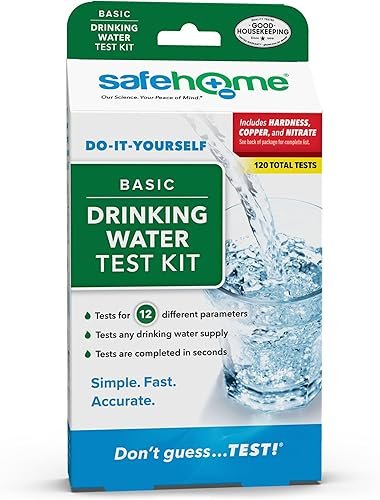
Safe Home Drinking Water Test Kit – Basic
This is the kit we recommend to most people starting out. It covers the big ones: hardness, copper, nitrate, fluoride, and iron. The fact that it has 120 tests means you can retest to confirm a result without stressing about cost. It earned the Good Housekeeping Seal for a reason—the instructions are clear, and the results are consistent in our experience.
- Excellent value per test
- Covers common contaminants
- Clear, trilingual instructions
- No lead or bacteria testing
- Color charts can be subtle
Safe Home® Ultimate DIY Drinking Water Test Kit
If you want the full picture, this is it. It includes the #1 selling lead and bacteria tests, which are the two things that keep people up at night. With 302 tests across 14 parameters, you can monitor your water for years. Honestly, for well water owners, this is the one to get. It’s a serious kit for serious peace of mind.
- Most comprehensive home kit available
- Includes critical lead & bacteria tests
- Massive test count
- Higher upfront cost
- More steps than simple strips
Safe Home® DIY LEAD in Drinking Water Test Kit
Worried about lead from old pipes or solder? This is the focused answer. It’s been named “Best DIY Lead Test Kit” by multiple outlets, and we agree. The 10-minute result is a game-changer for quick screening. It tells you if you’re above or below the EPA action level. Simple, fast, and trustworthy.
- Fast, specific lead results
- Easy to interpret (above/below threshold)
- Highly reputable brand
- Only tests for lead
- Single-pack, no retests
18-in-1 Water Quality Test Strips
For the price, this is an incredible deal. 125 strips covering 18 parameters, including lead and mercury. It’s our top budget pick. The catch? Reading the color blocks for heavy metals requires good light and a steady hand. It’s a fantastic screening tool, but if you get a positive for lead, follow up with a more specific test.
- Unbeatable price per strip
- Tests for a huge range of contaminants
- Very simple dip-and-read process
- Less precise for some parameters
- Color comparison can be subjective
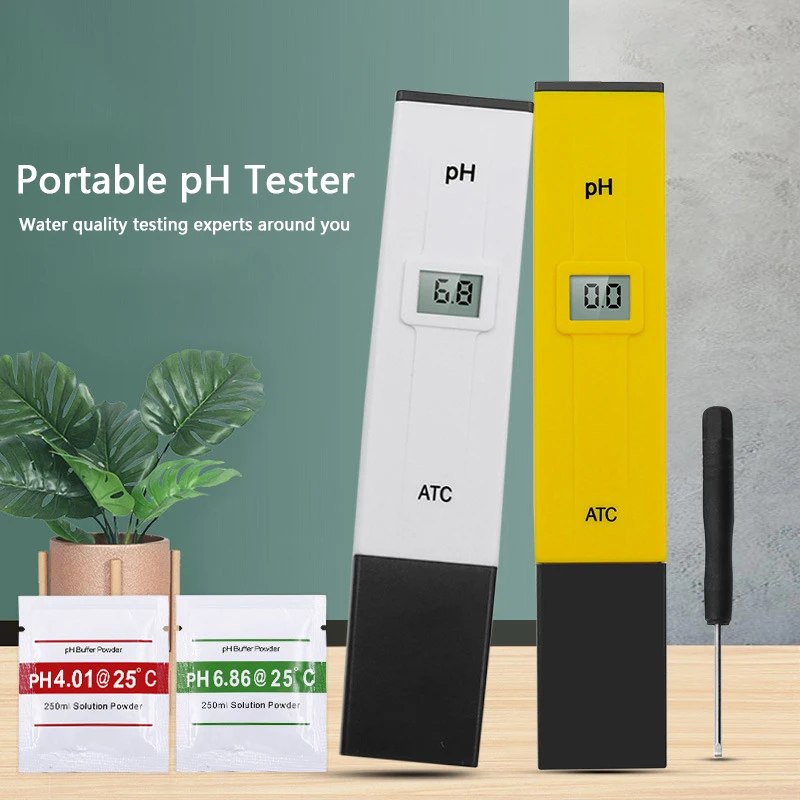
Digital pH Meter (AliExpress Budget Pick)
If all you care about is pH—and for hydroponics, homebrewing, or aquariums, you might—this $6 meter works. It’s not lab-grade, but it’s consistent. Calibrate it with the included solution, and it’ll give you a reliable number. For drinking water, pH matters for taste and pipe corrosion. A handy, cheap tool.
- Extremely affordable
- Digital readout eliminates guesswork
- Good for hobbyist use
- Only tests pH
- Requires calibration
- Build quality is basic
Frequently Asked Questions
- How accurate are DIY water test kits?
- For screening purposes, they’re quite reliable. They’re excellent at telling you if a contaminant is present above or below a common safety threshold. However, they are not as precise as a certified lab test and shouldn’t be used for legal or official compliance.
- How often should I test my water at home?
- Test annually for general maintenance. Test immediately if you notice a change in taste, odor, or color, after any plumbing work, or if there’s a local news report about water main breaks or contamination events.
- Can these kits test well water?
- Absolutely. In fact, well owners should test more frequently since there’s no utility monitoring. A comprehensive kit testing for bacteria, nitrates, and hardness is a great starting point for any private well.
- What should I do if my test shows a positive result?
- First, don’t panic. Retest to confirm. If confirmed, consider a certified lab test for verification. Then, use that information to choose the right point-of-use filter, like a countertop water distiller for broad contaminant removal or a specific filter for the contaminant you found.
- Do test strips expire?
- Yes, they do. The chemical reagents degrade over time, especially if exposed to heat, moisture, or sunlight. Always check the expiration date and store them in a cool, dry place.
Final Thoughts
After all my years in this space, here’s my honest take: everyone should test their water at least once. It’s a small investment of time and money that demystifies what’s coming out of your tap. The Safe Home Ultimate kit is our top overall pick for its sheer comprehensiveness. But if you’re on a tight budget, the 18-in-1 strips will tell you more than you know right now.
Use DIY testing as your first line of defense. It empowers you to ask the right questions and make smarter decisions about filtration—whether that’s a simple pitcher filter or a full home distillation system. Knowledge is power, and in this case, it’s also peace of mind.
